
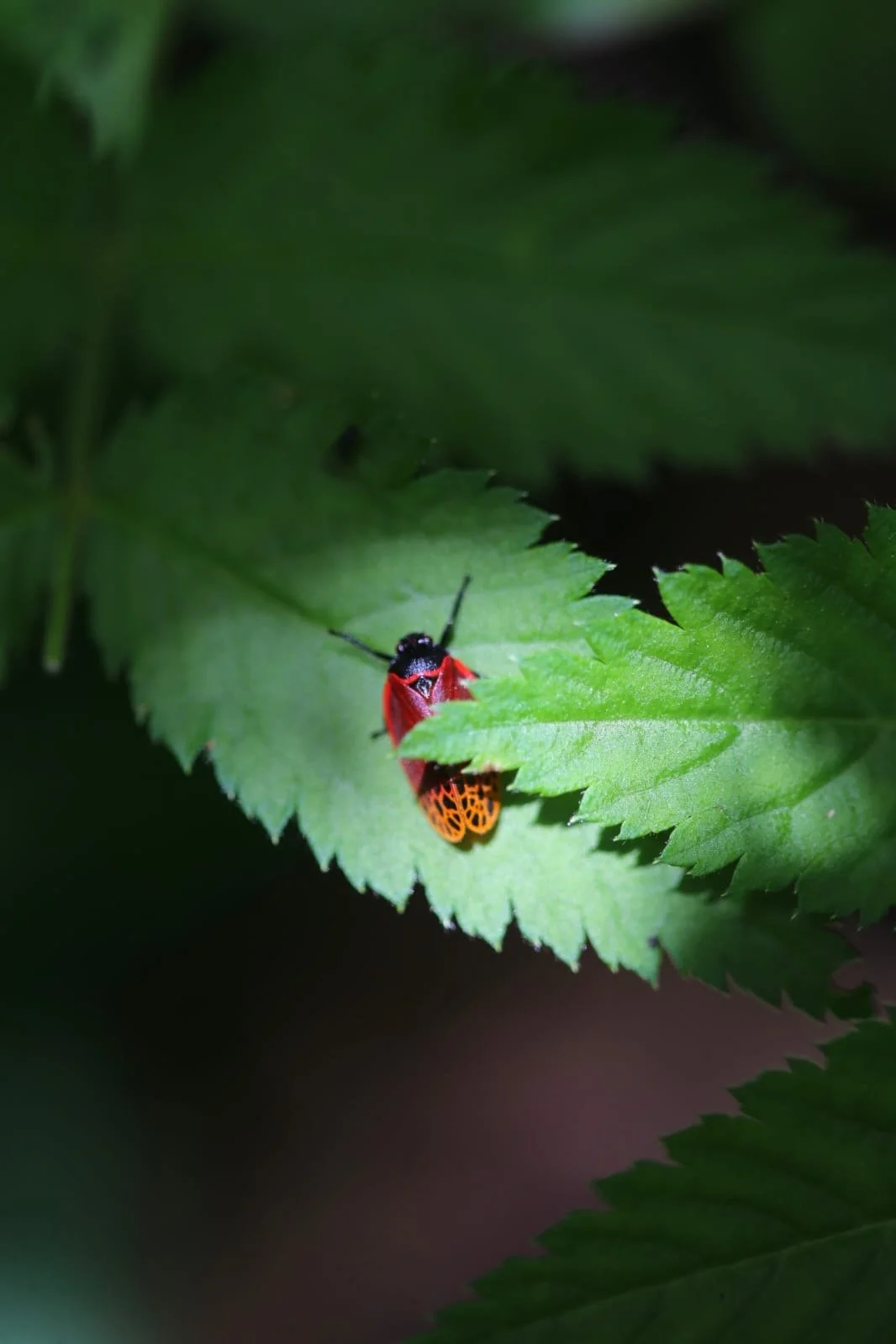
If you are coming to Panama for the first time, there are plenty of things you expect to encounter. Monkeys swinging through the trees. Hummingbirds around flowers. Toucans flying overhead. Huge butterflies appearing out of nowhere. Perhaps a tarantula if you are particularly lucky.
And then there are cockroaches.
Seeing a cockroach in Panama can be an unpleasant surprise, especially if you have just arrived from a colder country where these insects are much less common. But in a tropical country like Panama, cockroaches are simply part of the environment. They have been here for a very long time, they are remarkably well adapted to the climate, and there are considerably more types than the familiar little brown kitchen cockroach many people imagine.
The important thing to understand is that seeing a cockroach in Panama does not automatically mean a place is dirty. Tropical forests, gardens, drains, buildings, restaurants, farms and even extremely clean homes can all provide suitable habitat for different species.
And some of the cockroaches you encounter in Panama are absolutely enormous.
Why Panama is practically cockroach paradise
Cockroaches love warmth, moisture, shelter and food.
Panama provides all four in abundance.
The country's tropical climate means that cockroaches don't have to spend months surviving freezing temperatures. In many parts of Panama, temperatures remain warm throughout the year, while humidity provides another resource that these insects thrive on.
Add tropical vegetation, decaying leaves, underground spaces, drains, sewers, buildings and an enormous variety of food sources and you have an environment in which cockroaches can flourish.
This is why visitors who are used to colder climates can have a bit of a shock.
In Canada, for example, a cockroach can seem like an extraordinary event. In tropical Panama, it is much less remarkable.
The American cockroach: the big one
One of the most recognizable cockroaches you can encounter in Panama is the American cockroach, Periplaneta americana.
Despite its name, it is not actually native to North America and is now found throughout tropical and subtropical parts of the world.
This is the classic large reddish brown cockroach that can make somebody jump when it suddenly appears on the floor.
Adults can become surprisingly large, and they have long antennae and wings. They are also capable of flying or gliding short distances, although their sudden movement can make it seem as though they have developed considerably more impressive flying abilities than they actually possess.
They often live in warm, damp places such as drains, sewers, basements, utility areas and other sheltered locations.
And yes, they can get into buildings.
In Panama, opening a door at night can occasionally produce an unexpected visitor.
The German cockroach: the tiny one you really don't want indoors
The German cockroach, Blattella germanica, is very different.
It is much smaller, usually light brown, and often has two dark stripes behind its head.
These are the cockroaches people generally associate with kitchens, restaurants and buildings.
Unlike some of the larger outdoor species, German cockroaches are particularly well adapted to living around humans. They like warmth, food and moisture, which means kitchens are basically five star hotels from their perspective.
They can multiply rapidly, which is why a small indoor problem can become a much bigger problem surprisingly quickly.
This is also why keeping food sealed, cleaning cooking areas and fixing water leaks can make such a difference.
The Oriental cockroach
The Oriental cockroach, Blatta orientalis, is another species that has spread around the world.
It is usually dark brown or almost black and tends to prefer cool, damp and sheltered environments.
Compared with some other cockroaches, it is not an especially strong flyer. It is more likely to be found crawling around damp areas, drains and similar locations.
In tropical Panama, however, you may encounter many other species outdoors, so not every dark cockroach you see should automatically be assumed to be an Oriental cockroach.
The giant forest cockroaches
Now things get interesting.
Panama's forests contain numerous cockroach species that most visitors will never encounter in their homes.
Some are large forest-dwelling cockroaches, and certain species can be considerably bigger and more impressive looking than the household varieties.
They live among leaf litter, fallen logs, soil and vegetation, where they play an important role in breaking down organic material.
This is one of the things people sometimes forget about cockroaches.
They aren't all pests.
In the jungle, many cockroaches are simply another part of the ecosystem.
They eat decaying vegetation and other organic material and help return nutrients to the soil. In that sense, they are doing a job rather than invading somebody's kitchen.
Cockroaches that look like they belong in a horror movie
Panama's biodiversity means that you can encounter some seriously impressive insects.
Some tropical cockroaches have enormous bodies, long antennae and substantial wings. Others have unusual colors or patterns.
There are also cockroaches that spend most of their lives hidden beneath leaves, bark, logs and soil and therefore rarely come into contact with people.
If you are walking through a rainforest at night, however, your chances of seeing interesting insects increase dramatically.
This is because nighttime is when many creatures become active.
Turn over a piece of rotten wood and you may discover an entire miniature ecosystem underneath it.
Flying cockroaches are a thing
This deserves its own warning.
If you come from somewhere where cockroaches generally crawl, discovering that some tropical cockroaches can fly can be a memorable experience.
The good news is that they aren't generally interested in flying toward you.
They are usually trying to escape, find food, find shelter or get somewhere else.
Unfortunately, their navigation skills do not always appear particularly sophisticated from a human perspective.
A cockroach suddenly taking flight in your direction can produce an impressive amount of screaming from an otherwise calm adult.
This is especially true when it happens at night.
Why you shouldn't panic when you see one
The biggest mistake is assuming that every cockroach is evidence of an infestation.
It isn't.
A large cockroach wandering through a tropical garden, appearing on a balcony or occasionally getting inside through an open door is not necessarily an indication that the building has a cockroach problem.
In Panama, the outdoors is right there.
There is vegetation everywhere. There are drains, trees, gardens, soil, rain, leaves and countless hiding places.
Sometimes a cockroach simply wanders into the wrong building.
That said, repeatedly seeing numerous small cockroaches inside a kitchen, particularly during the daytime, is a different matter. That can indicate an indoor infestation and deserves attention.
Why you may see more cockroaches at night
Cockroaches are generally more active at night.
During the day, many hide in cracks, vegetation, soil, drains and other protected locations.
After dark, they come out to search for food and water.
This is one reason tropical night walks can be fascinating.
Once you start paying attention to the ground, trees and vegetation after sunset, you discover an entirely different world.
There are spiders, beetles, moths, frogs, katydids, scorpions, whip scorpions and, yes, cockroaches.
A jungle at night is not empty.
It is busy.
Cockroaches are ancient survivors
Perhaps the most fascinating thing about cockroaches is how successful they have been over evolutionary time.
Cockroaches are ancient insects, with their lineage extending back hundreds of millions of years.
They have survived enormous changes in climate and environment and have adapted to living in an extraordinary variety of habitats.
They aren't particularly glamorous, but evolution clearly doesn't care about glamour.
They care about survival.
And cockroaches are very good at it.
So what should you do if you see one in Panama?
If you see a large cockroach outside, there is usually no reason to do anything at all.
Let it continue its journey.
If one comes inside, you can remove it or deal with it as you normally would. Keeping doors and windows screened, reducing standing water, keeping food properly stored and maintaining clean kitchen areas can help reduce indoor encounters.
And if you are staying somewhere surrounded by jungle, understand that you are essentially living next door to millions of tiny creatures.
You may see a cockroach.
You may see a gecko eating a cockroach.
You may see a spider eating something else.
And somewhere nearby, another cockroach is probably hiding under a leaf completely unaware that you are having a crisis about it.
The Panama rule
If you come to Panama expecting the jungle to be completely separated from your living space, you may occasionally be surprised.
If you come expecting nature to be nature, the experience becomes much more interesting.
Don't be surprised if you see a cockroach in Panama.
You don't necessarily have a dirty room.
You don't necessarily have an infestation.
And you certainly haven't discovered something unusual.
You are simply in a tropical country where cockroaches are part of the enormous ecosystem.
The really interesting question isn't “Why is there a cockroach here?”
It is “What kind is it?”
And once you start looking closely, you may discover that the apparently horrible insect running across your floor is actually just one tiny member of an incredibly diverse tropical world.