
One of the easiest mistakes you can make when visiting Panama is assuming that a cloudy day means you don't need sunscreen.
It does not.
In fact, a cloudy Panamanian day can be one of those sneaky situations where you spend hours outside thinking, This is perfect weather. It's not even sunny, only to discover that evening has arrived and your shoulders look like somebody has poured tomato sauce over them.
And the really annoying part is that you may not have felt yourself getting burned.
Ultraviolet radiation is invisible and cannot be felt. The warmth you feel from the sun is not the same thing as UV radiation, which means you cannot rely on how hot or sunny it feels to decide whether you are getting too much UV exposure. The World Health Organization specifically warns that UV levels can remain high under cloud cover, and thin clouds may have surprisingly little effect on exposure.
This matters enormously in Panama.
Panama Is Much Closer to the Equator Than Many Visitors Realize
Panama sits in the tropics, and its proximity to the equator means the sun can be extremely intense.
Visitors arriving from northern Europe, Canada, the northern United States or other places where they have spent months dealing with weaker sunlight can be particularly surprised.
You arrive in Panama.
You walk around Panama City.
You go hiking.
You sit on a Caribbean beach.
You take a boat.
You spend the afternoon exploring a jungle trail.
You think, I'm fine. It's cloudy.
Then you wake up the next morning looking like a lobster.
The CDC specifically advises travelers in Panama to protect themselves from UV radiation, use sunscreen, wear protective clothing and seek shade during the hottest part of the day.
And you don't have to be lying on a beach to get burned.
You can burn while walking around a city, sitting on a bus, hiking through a forest, swimming, boating or sitting outside a restaurant.
The Cloudy Day Trap
This is probably the biggest thing visitors need to understand.
Clouds are not a force field.
They can reduce UV radiation, but they don't necessarily eliminate it. The WHO notes that UV can remain high under cloud cover, while light or thin clouds can have surprisingly little effect and, under some circumstances, scattering can even increase exposure.
So that beautiful gray Panamanian afternoon can be deceptive.
You don't feel the intense heat of direct sunshine.
There is a breeze.
The sky is covered in clouds.
Maybe it even looks like rain.
You think you've been given a free pass.
You haven't.
This is particularly dangerous for travelers who are spending several hours outdoors. A couple of hours of hiking, swimming or exploring can add up to a lot of UV exposure even when the weather doesn't look sunny.
And water can make the situation even more deceptive because UV radiation can reflect from surfaces such as water and sand.
You Can Get Sunburned in the Jungle
This is another one people don't necessarily expect.
You might think that if you're hiking through the Panamanian jungle, you're protected from the sun because there are trees everywhere.
Sometimes you are.
Sometimes you're not.
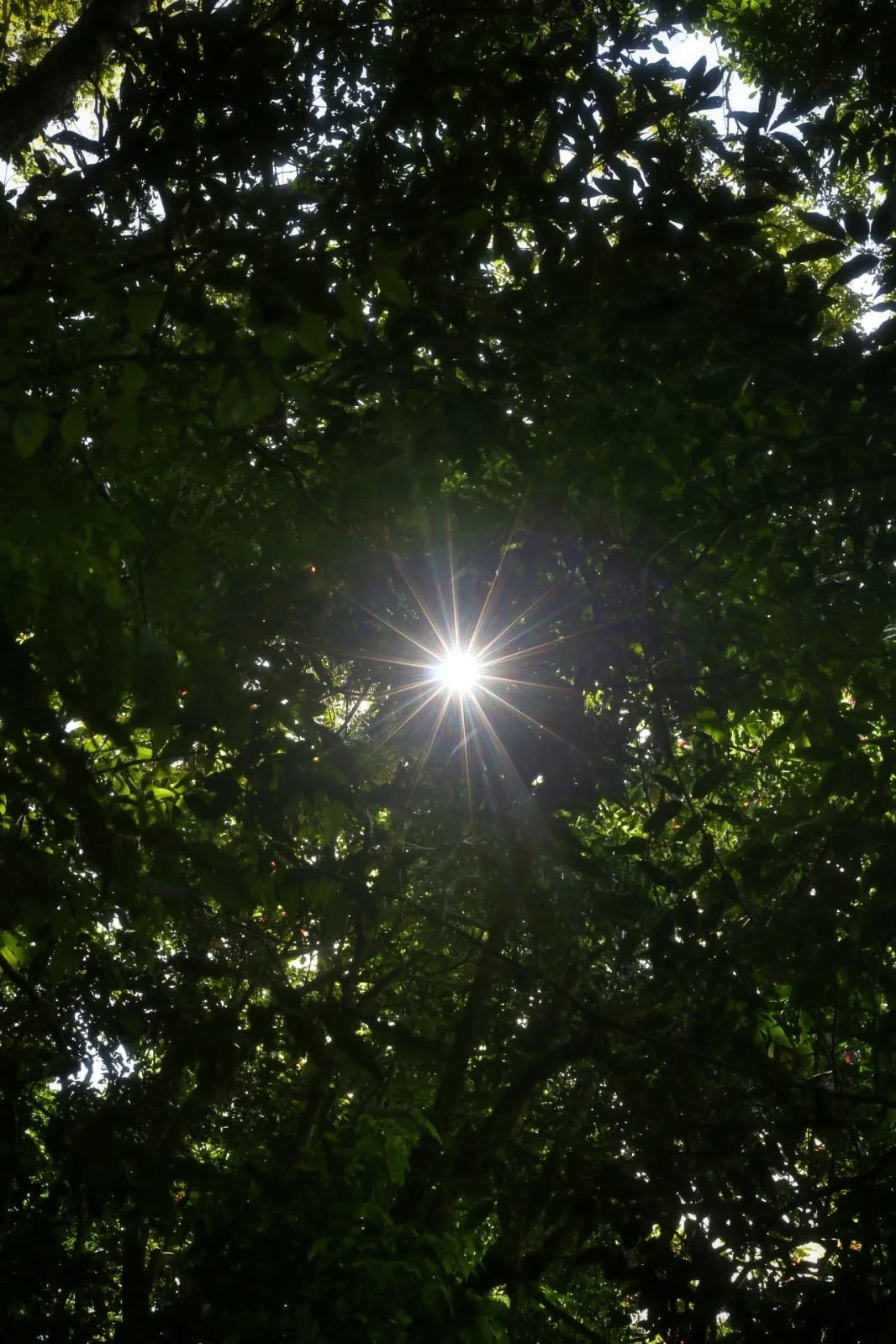
Jungle trails can alternate between dense shade and completely exposed sections. You can walk beneath trees for twenty minutes and then suddenly emerge onto an open hillside, riverbank, waterfall area or viewpoint.
And even in partial shade, UV exposure doesn't automatically disappear.
So if you're heading out for a long hike, don't make the mistake of applying sunscreen only if you see bright sunshine when you leave.
Put it on beforehand.
Bring it with you.
And remember that your neck, ears, shoulders, nose, arms and the backs of your legs can all get exposed without you realizing it.
The Panama Beach Problem
Then there are the beaches.
This is where people really get themselves into trouble.
You arrive at a beautiful Caribbean or Pacific beach. The water looks fantastic. There is a little breeze. Clouds are rolling across the sky.
Perfect.
You spend five hours swimming, walking along the beach and sitting around talking.
You barely notice the sun.
Then you get back to your accommodation and take a shower.
OUCH.
Suddenly the entire holiday changes.
And sunscreen isn't an excuse to stay in the sun indefinitely. The WHO specifically recommends that sunscreen be part of sun protection rather than something used to extend the amount of time you deliberately spend in the sun. Shade, clothing and timing your activities are important too.
Heat Stroke Is a Different Problem
Sunburn and heat illness often get lumped together, but they aren't the same thing.
You can get badly sunburned without developing heat stroke, and you can develop heat illness without getting badly burned.
Panama's heat and humidity create another challenge for visitors who aren't accustomed to tropical conditions.
You might start a hike feeling fantastic.
Twenty minutes later you're sweating heavily.
Then you keep going.
Then you start feeling weak.
Maybe you develop a headache.
Maybe you become dizzy or nauseous.
Maybe you tell yourself, I'm just tired.
That is exactly when you should pay attention.
Heat exhaustion can cause heavy sweating, thirst, headache, dizziness, nausea and weakness. If the body becomes unable to regulate its temperature properly, heat stroke can follow. Heat stroke is a medical emergency and can cause permanent disability or death without rapid treatment.
This isn't something to gamble with.
Don't Wait Until You're Dying of Thirst
One of the simplest ways to make a hot day miserable is to spend hours outside without drinking enough.
If you're hiking, walking around town, visiting ruins, exploring beaches or doing any other activity in the heat, carry water.
And actually drink it.
Don't wait until you are desperately thirsty.
The CDC recommends drinking regularly when traveling in hot climates, and for people spending many hours outside in the heat, replacing salts lost through sweating can also be important.
And remember something else about Panama.
You may sweat far more than you realize.
If you're used to a dry climate, you may be surprised at how much moisture your body loses in Panama's humidity.
Your shirt can become soaked.
Your backpack can become soaked.
Your hair can become soaked.
And you're still thinking, I'm not even doing anything particularly difficult.
Your body is working hard to cool itself.
Take Breaks Before You Need Them
This is particularly important when hiking.
You don't get extra points for suffering.
If you're climbing a steep trail and you're exhausted, stop.
Find shade.
Drink water.
Cool down.
Then decide whether you want to continue.
The CDC recommends resting frequently and planning strenuous outdoor activities for cooler parts of the day when possible.
Panama isn't going anywhere.
That waterfall will still be there.
The viewpoint will still be there.
The trail isn't going to disappear because you took twenty minutes to sit underneath a tree.
The 10 AM to 4 PM Problem
For travelers, the middle of the day deserves particular respect.
The CDC's Panama travel guidance recommends seeking shade during the hottest part of the day, roughly 10 a.m. to 4 p.m.
That doesn't mean you have to lock yourself inside your hotel between those hours.
It means you should understand that this is generally the period when being outside deserves more attention to hydration, shade, clothing and UV protection.
Early morning can be fantastic for hiking.
Late afternoon can be beautiful.
And midday can be perfectly enjoyable too, especially when you're somewhere shaded or taking breaks.
The mistake is treating midday tropical sun as though it were the same as a pleasant summer afternoon somewhere farther north.
It isn't.
Sunscreen Is Your Friend
You don't need to turn your Panama holiday into a military operation.
But sunscreen should become part of your routine.
Use a broad spectrum sunscreen on exposed skin, particularly when you're going to be outdoors for extended periods. The CDC recommends SPF 15 or higher, while many travelers choose a higher SPF for tropical outdoor activities. Reapply according to the product directions, especially after swimming or heavy sweating.
And don't forget the places everyone forgets.
Ears.
Back of the neck.
Nose.
Shoulders.
Top of the feet.
Hands.
The part in your hair.
The backs of your legs.
The tops of your feet are particularly brutal if you're wearing sandals all day.
There is nothing quite like discovering that the straps of your sandals have created a perfect white outline across your freshly burned feet.
A Hat Is Surprisingly Useful
A decent hat can make a huge difference.
A wide brim protects more than just your forehead. It can provide shade for your face, ears and neck, and both the CDC and WHO recommend hats as part of sun protection.
And sunglasses aren't just a fashion accessory either.
Good sunglasses that block UVA and UVB radiation help protect your eyes from excessive UV exposure.
You may look slightly less like a backpacker who has just emerged from an airport and slightly more like somebody's uncle going fishing.
That's okay.
Your skin will appreciate it.
Don't Trust the Temperature Alone
Another mistake is looking at the temperature and deciding whether you need to worry.
Heat illness depends on more than the number on your weather app.
Humidity matters.
Physical activity matters.
How acclimatized you are matters.
How much water you've consumed matters.
How much time you've spent outside matters.
And whether you've been able to cool down matters.
A person walking slowly around a shaded town is experiencing the heat very differently from someone carrying a backpack up a steep jungle trail.
That's why travelers should pay attention to how their body feels rather than simply checking the temperature.
Watch for Warning Signs
If you're outside in Panama and you start experiencing unusual weakness, dizziness, headache, nausea, heavy sweating, muscle cramps or confusion, don't simply push through it.
Get out of the heat.
Find shade or an air conditioned place.
Cool yourself down.
Drink appropriate fluids.
And if symptoms are severe, worsening or suggest heat stroke, seek emergency medical care immediately. Heat stroke is a medical emergency.
Confusion, loss of consciousness and very hot skin are particularly serious warning signs.
This is one situation where being stubborn is not adventurous.
It's just dangerous.
The UV Index Is Better Than Looking Out the Window
One of the smartest habits you can develop while traveling in Panama is checking the UV Index rather than simply looking at the weather forecast.
The UV Index measures the strength of ultraviolet radiation. WHO recommends sun protection when the index reaches 3 or higher, with stronger precautions as the number rises.
So if your weather app says:
Cloudy, 29°C
don't automatically interpret that as:
No sunscreen required.
Look at the UV Index.
That number tells you something your eyes can't.
And Then There Is the Classic Panama Mistake
You arrive.
You are pale.
You have been waiting for this trip for months.
You want a tan.
So you spend your first afternoon sitting directly in the sun for four hours because you think, I'll get a nice base tan.
That is a terrible strategy.
A tan is actually a response to UV damage rather than evidence that your skin is becoming healthier. Excessive UV exposure increases the risk of skin cancer, and sunburn itself is a sign of skin damage.
Panama will give you plenty of sunshine.
You don't need to collect it all in one afternoon.
Enjoy Panama Without Getting Cooked
The good news is that none of this means you should hide indoors.
Quite the opposite.
Panama is an outdoor country.
Go hiking.
Swim.
Visit the islands.
Walk through Casco Viejo.
Explore the mountains.
Go birdwatching.
Sit beside a waterfall.
Take a boat.
Spend the afternoon at the beach.
Just understand the environment you're in.
Wear sunscreen.
Drink water.
Use shade.
Wear a hat.
Take breaks.
Don't underestimate humidity.
And most importantly, don't let clouds fool you.
A gray sky in Panama can look harmless while ultraviolet radiation is still reaching your skin.
And that's probably the biggest lesson for anyone visiting.
If Panama looks cloudy, don't automatically assume the sun has gone away.
Sometimes it has simply put on a disguise.