
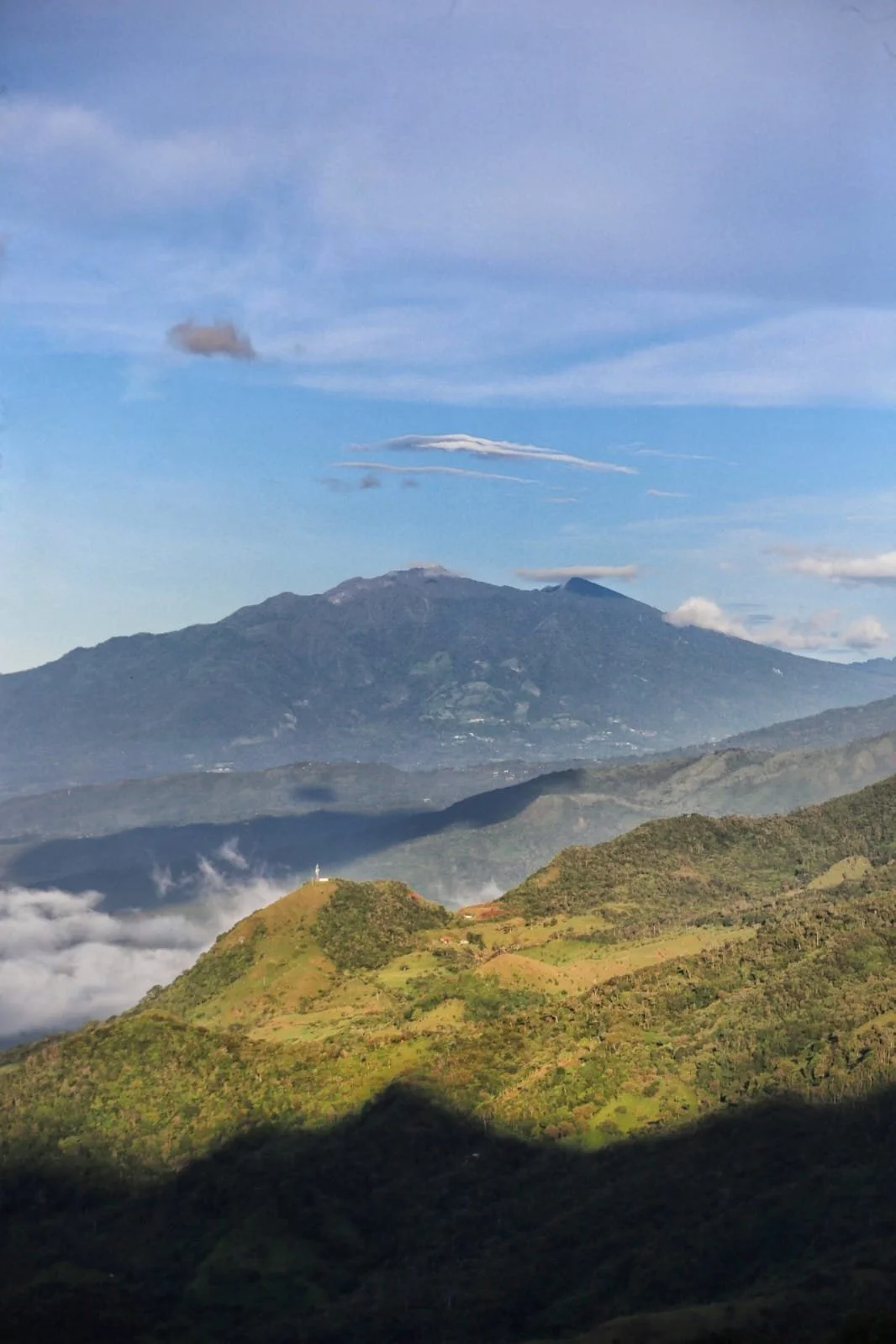
If you travel through Panama, it can be easy to think of the country as nothing but tropical beaches, jungle and palm trees. Then you drive up into the mountains of Chiriquí and suddenly the scenery changes completely. The air becomes cool, the mountains are covered with fields, and instead of tropical fruit trees you see rows and rows of potatoes, onions, carrots, lettuce and cabbage. This is Cerro Punta, one of the most important agricultural areas in Panama and a major reason Chiriquí is often called the country's breadbasket.
Cerro Punta sits in the highlands of Tierras Altas, close to the slopes of Volcán Barú. Its elevation and mountain climate create conditions that are completely different from most of tropical Panama. The area has cool temperatures, abundant rainfall and fertile volcanic soils. Scientific research on farms in Cerro Punta identifies the area's five principal crops as potatoes, carrots, cabbage, lettuce and onions.
Potatoes
Potatoes are one of the most important crops grown around Cerro Punta. They are particularly well suited to the cooler highland conditions and are grown commercially on a large scale. In fact, historical agricultural data cited in research on Tierras Altas indicate that the highlands around Cerro Punta have accounted for a very large share of Panama's national potato production.
For a visitor, seeing potato fields in Panama can be slightly surprising. You are in a country famous for tropical temperatures, bananas and coconuts, yet you can stand in the mountains surrounded by fields that could almost look like they belong somewhere much farther north.
Onions
Onions are another major crop in Cerro Punta. They are an everyday ingredient in Panamanian cooking, so the importance of the crop extends far beyond the mountain communities themselves. Research into Cerro Punta's agricultural production identifies onions among the area's five principal crops.
The onion fields are also part of what gives the countryside its distinctive agricultural appearance. Instead of one enormous monoculture, the landscape can look like a patchwork of different crops growing at different stages.
Carrots
Carrots thrive in the cool conditions of the highlands and are another major Cerro Punta crop. The combination of altitude, volcanic soil and abundant moisture gives farmers conditions that are difficult to reproduce in Panama's hot lowlands.
Carrots, potatoes and onions are particularly important because they are crops that most people associate with temperate climates. Seeing them being grown commercially in Panama is a great reminder that the country has dramatically different climates within a relatively small geographic area.
Cabbage
Cabbage is another important crop, and Cerro Punta is one of the places responsible for putting locally grown vegetables onto tables throughout Panama. Research on the region lists cabbage among the five main crops grown by horticultural farms there.
Large fields of cabbage can make the landscape look almost completely different from the tropical Panama that visitors normally imagine. The green fields climbing through the mountains are one of the most distinctive sights of Tierras Altas.
Lettuce
Lettuce is particularly well suited to the cooler temperatures of Cerro Punta. Heat can make growing lettuce difficult, while the highland climate gives farmers a natural advantage.
The importance of the region's vegetable production becomes obvious when you realize that much of the produce eventually travels far beyond Cerro Punta. Panama City's markets and supermarkets depend heavily on agricultural production from Chiriquí. La Prensa has reported that much of the potatoes, carrots, cabbage and lettuce reaching Merca Panamá comes from Cerro Punta.
Broccoli, Cauliflower and Other Vegetables
The list doesn't stop with the five major crops. Farmers in the highlands also grow broccoli, cauliflower, tomatoes, corn, celery, beets, radishes and other vegetables. The wider Volcán and Cerro Punta area has a remarkably diverse agricultural economy, including vegetables, fruit, flowers, coffee and livestock.
Strawberries are another crop that visitors often associate with Cerro Punta. They are particularly interesting because strawberries seem completely out of place in a country where many people imagine tropical fruit growing everywhere. The cool mountain environment makes them possible, along with other highland fruits such as blackberries.
Why Can So Much Food Grow Here?
The secret is largely underground.
The soils of Tierras Altas are volcanic, originating from the geological history of Volcán Barú. Research on Cerro Punta's farms identifies the soils as Andisols, volcanic soils with characteristics that can be highly productive for agriculture.
Then there is the altitude. Cerro Punta is dramatically higher than most of Panama, giving farmers a cool climate that allows them to grow vegetables that would struggle in the country's hot lowlands. The combination of elevation, rainfall, volcanic soils and year-round agricultural conditions has created an exceptionally productive farming region.
This is why Chiriquí is so important to Panama's food supply. It isn't simply a province where some vegetables happen to be grown. It is one of the country's major agricultural engines.
Chiriquí Is Much More Than Vegetables
Calling Chiriquí the breadbasket of Panama can actually undersell how diverse its agricultural production is. The province produces vegetables, fruits, coffee, bananas, plantains, rice and other agricultural products. The highlands around Volcán and Cerro Punta specialize particularly strongly in cool-climate crops, while lower areas of Chiriquí can support very different types of agriculture.
This geographic variety is one of the province's great advantages. You can travel from tropical lowlands into cool mountain valleys and encounter completely different crops within a relatively short distance.
There is also an important human story behind the food. Farming in Cerro Punta is not simply automated industrial agriculture. The region contains numerous farms and agricultural families, with horticulture providing the principal economic activity for many producers. A 2021 study of 31 horticultural farms found that vegetable production was the sole economic activity for 87% of the farms surveyed.
Why Tourists Should Visit Cerro Punta
For tourists, Cerro Punta offers something completely different from the beaches and tropical forests that dominate Panama's tourism image. You can drive through enormous agricultural landscapes, see farmers working the fields and visit farms where vegetables are grown, harvested and prepared for distribution.
Panama's tourism authority even recognizes agricultural tourism as a formal tourism activity, and registered farms in Cerro Punta offer experiences such as farm tours, visits to packing facilities, greenhouse tours and tastings.
And perhaps the most interesting part is realizing where the food comes from. When you eat a salad in Panama City, buy vegetables in a supermarket or order a meal in a restaurant, there is a good chance that some of those ingredients have travelled down from these cool mountain valleys.
So when you drive through Chiriquí and see the endless fields around Cerro Punta, don't just think of them as pretty mountain scenery. You are looking at one of the places that helps feed Panama.
That is what makes the region so fascinating. In a country famous for tropical forests, beaches and exotic wildlife, the highlands of Chiriquí quietly perform another important job. They turn volcanic mountains, cool temperatures and abundant rain into potatoes, onions, carrots, lettuce, cabbage, strawberries and dozens of other crops that eventually find their way onto Panamanian tables.
Chiriquí may be Panama's breadbasket, but Cerro Punta is one of the places where you can actually see that breadbasket being filled.