
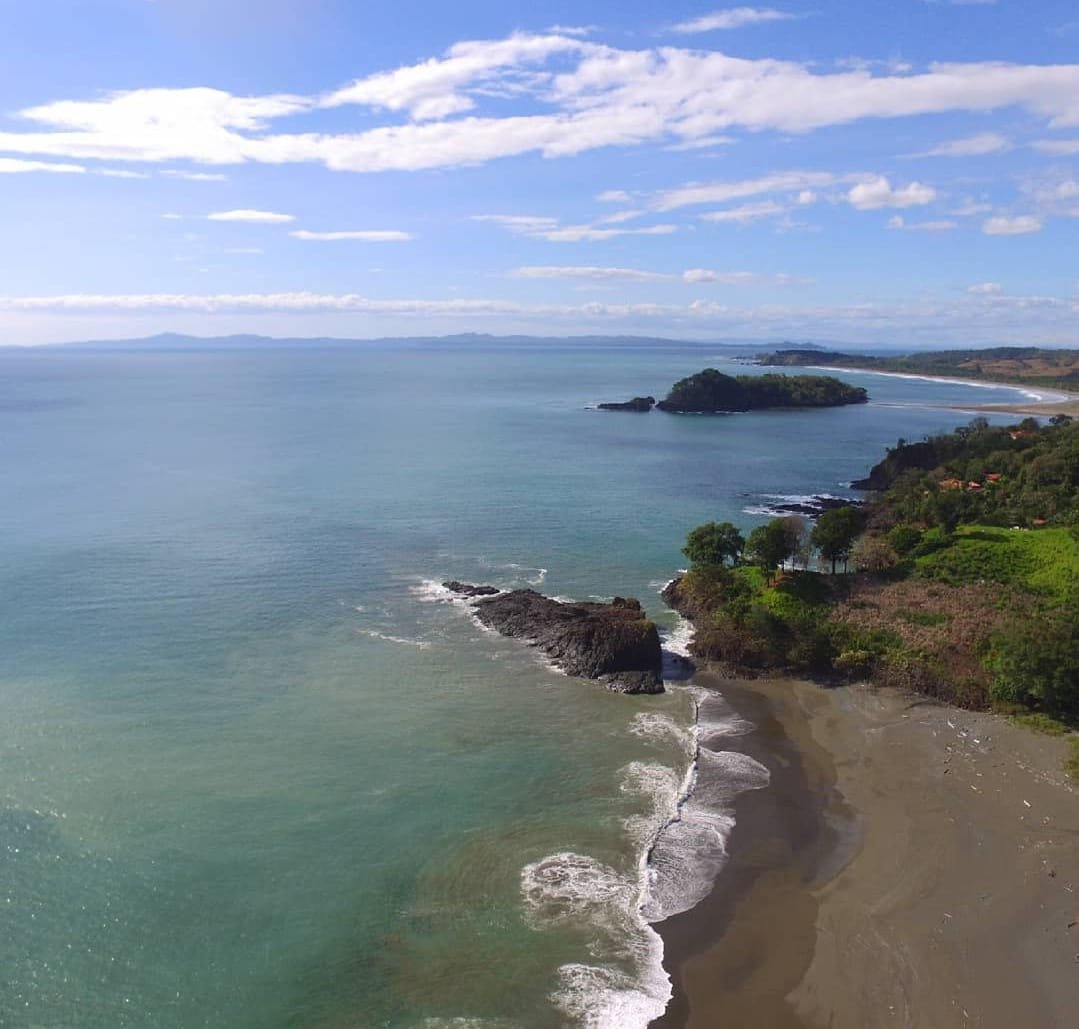
Panama is a fantastic country to learn how to surf because you don't have to travel to one isolated surf resort and spend a fortune just to get started. The Pacific coast is packed with beaches, surf towns, hostels, board rentals and surf schools, and there are waves for complete beginners as well as experienced surfers. For a backpacker, that makes Panama particularly fun because learning to surf can easily become part of a larger trip rather than the entire reason for visiting the country.
The biggest decision is where to start. Some of Panama's most famous surf breaks are powerful and are really meant for experienced surfers, while other beaches have sandy bottoms, smaller waves and surf schools specifically suited to people who are standing on a board for the first time. Choosing the right beach can make the difference between thinking surfing is the greatest thing you have ever tried and spending the afternoon being repeatedly introduced to the Pacific Ocean.
El Palmar: One of the Easiest Places to Start
If you are backpacking around Panama City and want to try surfing without committing to a long journey, El Palmar on the Pacific Riviera is one of the most practical places to start. The beach is known as a beginner friendly surf destination, with surf schools and board rentals right around the beach.
El Palmar is particularly good for someone who has never surfed before because you can arrive, rent a board, take a lesson and spend the rest of the day practicing without needing to organize an elaborate expedition. There are also restaurants and accommodation nearby, so it works well for backpackers who want a simple beach escape from Panama City.
The Pacific Riviera around San Carlos, Chame and El Palmar also gives you plenty of opportunities to move around if conditions aren't perfect at one beach. There are numerous surf spots in this relatively compact stretch of coastline, ranging from easier beach breaks to more challenging waves.
Playa Venao: The Backpacker Surf Experience
If you want to learn to surf while also experiencing one of Panama's great backpacker beach towns, Playa Venao is probably the place that immediately deserves a look.
Venao has developed into a genuine surf community rather than simply being a beach with some waves. There are surf schools, board rentals, surf camps, hostels, restaurants and plenty of other travelers who have arrived with exactly the same idea. The beach has waves suitable for beginners and intermediates while also offering larger surf for people who progress quickly.
This is important for backpackers because you can learn without feeling like you are visiting a dedicated surf camp where everyone already knows what they are doing. You can take a lesson in the morning, meet other travelers afterward, grab some food, head back into the water and then watch the sunset with people you met that day.
Venao also has something that is difficult to manufacture artificially: a surf town atmosphere. Surfing is part of everyday life here. You see boards everywhere, people checking the waves, beginners practicing on the beach and experienced surfers heading into the water. It becomes very easy to get sucked into the lifestyle.
And that is exactly how many backpackers accidentally learn to surf.
They stay for three nights.
Then they stay for a week.
Playa Estero in Santa Catalina: A Great Place to Learn Before Tackling the Big Waves
Santa Catalina is one of Panama's most famous surfing destinations, but there is an important distinction to make. The famous Punta Santa Catalina break is not where you want to take your first ever surfing lesson. The waves there can be extremely powerful and are aimed at experienced surfers.
Fortunately, Santa Catalina has Playa Estero.
Playa Estero has a sandy bottom and smaller waves, making it much more suitable for beginners. There are surf schools and board rentals in the area, so you can learn here before even thinking about the bigger breaks.
This makes Santa Catalina particularly appealing for a backpacker who wants to combine learning with adventure. You can start at Estero, build confidence and improve your technique, while Santa Catalina itself gives you access to one of Panama's great adventure destinations.
And once you are actually good enough, you can stand on the beach and stare at Punta Santa Catalina thinking, "Maybe one day."
That is probably the correct approach.
Playa Guanico: A Surf Camp Kind of Place
Playa Guanico, on the Azuero Peninsula, is another destination worth considering if you want surfing to become a bigger part of your trip. It is located within the enormous collection of surf beaches between Pedasí and Tonosí, an area with more than 70 kilometers of coastline and numerous different surf spots.
Guanico is particularly associated with surf camps, making it an interesting option if you want to spend several days concentrating on improving rather than simply taking one lesson and moving on.
The surrounding coastline also gives you plenty of alternatives. If conditions are different at Guanico, there are other beaches and breaks to explore. This is one of the great advantages of the Azuero Peninsula for surfers. You are not dependent on one beach.
Cambutal: Learn, Improve and Stay a While
Cambutal is farther around the Azuero Peninsula and has developed its own surf culture. It is better known for a combination of surfing, nature and wellness rather than being a huge backpacker party destination.
The coastline around Cambutal has different types of breaks, including beach breaks and point breaks, and the area can receive powerful swells. For a complete beginner, this means taking some local advice before simply paddling out.
For someone who has already taken a few lessons and wants to spend a week improving, however, Cambutal can be a fascinating place to base yourself.
It also has the advantage of feeling much more remote than some of the better known beach towns.
Chame and the Pacific Riviera
Chame and the beaches around the Pacific Riviera are worth mentioning because they are among the easiest surf destinations to reach from Panama City. The area contains numerous breaks, meaning backpackers can explore rather than being stuck with one particular wave.
Just be aware that Punta Chame itself is particularly associated with kitesurfing, while other nearby beaches are more appropriate for conventional surfing. Playa Caracol and other nearby breaks are better places to investigate if your goal is riding a traditional surfboard.
For someone who has only a few days in Panama City and wants to say, "I learned how to surf in Panama," this part of the coast is extremely convenient.
The Beaches Around Pedasí
Pedasí is another excellent base for a backpacker who wants to explore different surf beaches rather than simply stay at one resort.
The coastline around Pedasí and Tonosí contains a remarkable number of surf spots. Playa Venao is the famous one, but there are also Playa Toro, Playa Lagarto, Punta Mala, Los Destiladeros, Playa Ciruelo, Punta Marfil and others. Some are suited to more experienced surfers, while others can offer gentler conditions depending on the swell and tide.
This is where having local advice becomes extremely useful. Surf conditions change, and a beach that is perfect one day may not be the right place for a beginner the next. A local surf school can tell you where the conditions are most appropriate rather than simply sending you into whatever wave looks impressive from the beach.
Las Lajas and Western Panama
For backpackers heading farther west toward Chiriquí, Las Lajas is another Pacific beach worth knowing about. It is famous for its enormous stretch of beach and relatively undeveloped atmosphere. It is not as established as Venao or Santa Catalina as an international surf destination, but that is part of its appeal.
This is a good place for travelers who want to get away from the more obvious backpacker circuit and experience a much quieter Pacific beach. Surfing conditions can vary, so it is worth checking locally rather than arriving expecting a dedicated surf school scene.
Punta Burica: Definitely Not Your First Lesson
Punta Burica sits on the far western Pacific coast of Panama near the Costa Rican border and is a completely different proposition.
It is a remote and exposed surf area with reef breaks and consistent waves that are much more appropriate for intermediate and advanced surfers. Panama's tourism authority specifically describes Punta Burica as an exposed reef break with left and right waves suited to intermediate and advanced surfers.
So if you are backpacking through western Panama with a surfboard and already know what you are doing, Punta Burica is an intriguing destination.
If you have never surfed before, don't make this your first lesson.
Bocas del Toro: Surfing on the Caribbean Side
Although this article is mainly about learning to surf on Panama's Pacific coast, backpackers should know that Bocas del Toro also has famous surf breaks.
The important distinction is that several of Bocas' best known waves are not beginner waves. Playa Bluff, for example, is a famous and powerful surf destination and is much more appropriate for experienced surfers. Silverbacks on Isla Bastimentos is another advanced wave.
That doesn't mean beginners should skip Bocas. It simply means you should find a suitable instructor and ask about current conditions rather than assuming that because you can see people surfing a beach, it is appropriate for your first lesson.
So Where Should a Backpacker Actually Learn?
If you have never stood on a surfboard before, El Palmar, Playa Venao and Playa Estero in Santa Catalina are three particularly useful places to investigate. All have beginner oriented surf opportunities, and all allow you to combine surfing with a broader backpacking experience.
If you want the classic social backpacker experience, Playa Venao is hard to ignore. You can turn learning to surf into a whole lifestyle for a few days.
If you want convenience from Panama City, look toward the Pacific Riviera and El Palmar.
If you are already traveling toward Santa Catalina and want to learn before progressing to bigger waves, Playa Estero makes a lot of sense.
If you want to really concentrate on improving, look into surf camps around Guanico, Venao or Cambutal.
And if you're already an experienced surfer, Panama suddenly opens up a much larger collection of possibilities, including Santa Catalina, Punta Burica, Morro Negrito, Cebaco Island and some of the more powerful breaks around Bocas del Toro.
The Great Thing About Learning to Surf in Panama
The beauty of learning to surf in Panama is that you don't have to make surfing your entire vacation.
You can be backpacking through Panama, stop at the coast for a few days, rent a board, take a lesson and see what happens.
Maybe you stand up once.
Then twice.
Then you catch a wave all the way to the beach.
Suddenly you're hooked.
You take another lesson the next morning.
Then you decide to stay another three days.
That is exactly how backpacking and surfing fit together in Panama. There are enough beaches and surf towns that you can keep improving as you travel, moving from gentle beginner waves toward more challenging breaks as your confidence grows.
And eventually, when you are sitting on a beach in Santa Catalina or Playa Venao watching experienced surfers disappear down a long Pacific wave, you might realize that the backpacking trip you started with has quietly turned into a surfing trip.
That is one of the best things about Panama.
You don't have to arrive as a surfer.
You can become one here.Where to Learn to Surf in Panama: A Backpacker’s Guide to Finding Your First Wave
Panama is a fantastic country to learn how to surf because you don't have to travel to one isolated surf resort and spend a fortune just to get started. The Pacific coast is packed with beaches, surf towns, hostels, board rentals and surf schools, and there are waves for complete beginners as well as experienced surfers. For a backpacker, that makes Panama particularly fun because learning to surf can easily become part of a larger trip rather than the entire reason for visiting the country.
The biggest decision is where to start. Some of Panama's most famous surf breaks are powerful and are really meant for experienced surfers, while other beaches have sandy bottoms, smaller waves and surf schools specifically suited to people who are standing on a board for the first time. Choosing the right beach can make the difference between thinking surfing is the greatest thing you have ever tried and spending the afternoon being repeatedly introduced to the Pacific Ocean.
El Palmar: One of the Easiest Places to Start
If you are backpacking around Panama City and want to try surfing without committing to a long journey, El Palmar on the Pacific Riviera is one of the most practical places to start. The beach is known as a beginner friendly surf destination, with surf schools and board rentals right around the beach.
El Palmar is particularly good for someone who has never surfed before because you can arrive, rent a board, take a lesson and spend the rest of the day practicing without needing to organize an elaborate expedition. There are also restaurants and accommodation nearby, so it works well for backpackers who want a simple beach escape from Panama City.
The Pacific Riviera around San Carlos, Chame and El Palmar also gives you plenty of opportunities to move around if conditions aren't perfect at one beach. There are numerous surf spots in this relatively compact stretch of coastline, ranging from easier beach breaks to more challenging waves.
Playa Venao: The Backpacker Surf Experience
If you want to learn to surf while also experiencing one of Panama's great backpacker beach towns, Playa Venao is probably the place that immediately deserves a look.
Venao has developed into a genuine surf community rather than simply being a beach with some waves. There are surf schools, board rentals, surf camps, hostels, restaurants and plenty of other travelers who have arrived with exactly the same idea. The beach has waves suitable for beginners and intermediates while also offering larger surf for people who progress quickly.
This is important for backpackers because you can learn without feeling like you are visiting a dedicated surf camp where everyone already knows what they are doing. You can take a lesson in the morning, meet other travelers afterward, grab some food, head back into the water and then watch the sunset with people you met that day.
Venao also has something that is difficult to manufacture artificially: a surf town atmosphere. Surfing is part of everyday life here. You see boards everywhere, people checking the waves, beginners practicing on the beach and experienced surfers heading into the water. It becomes very easy to get sucked into the lifestyle.
And that is exactly how many backpackers accidentally learn to surf.
They stay for three nights.
Then they stay for a week.
Playa Estero in Santa Catalina: A Great Place to Learn Before Tackling the Big Waves
Santa Catalina is one of Panama's most famous surfing destinations, but there is an important distinction to make. The famous Punta Santa Catalina break is not where you want to take your first ever surfing lesson. The waves there can be extremely powerful and are aimed at experienced surfers.
Fortunately, Santa Catalina has Playa Estero.
Playa Estero has a sandy bottom and smaller waves, making it much more suitable for beginners. There are surf schools and board rentals in the area, so you can learn here before even thinking about the bigger breaks.
This makes Santa Catalina particularly appealing for a backpacker who wants to combine learning with adventure. You can start at Estero, build confidence and improve your technique, while Santa Catalina itself gives you access to one of Panama's great adventure destinations.
And once you are actually good enough, you can stand on the beach and stare at Punta Santa Catalina thinking, "Maybe one day."
That is probably the correct approach.
Playa Guanico: A Surf Camp Kind of Place
Playa Guanico, on the Azuero Peninsula, is another destination worth considering if you want surfing to become a bigger part of your trip. It is located within the enormous collection of surf beaches between Pedasí and Tonosí, an area with more than 70 kilometers of coastline and numerous different surf spots.
Guanico is particularly associated with surf camps, making it an interesting option if you want to spend several days concentrating on improving rather than simply taking one lesson and moving on.
The surrounding coastline also gives you plenty of alternatives. If conditions are different at Guanico, there are other beaches and breaks to explore. This is one of the great advantages of the Azuero Peninsula for surfers. You are not dependent on one beach.
Cambutal: Learn, Improve and Stay a While
Cambutal is farther around the Azuero Peninsula and has developed its own surf culture. It is better known for a combination of surfing, nature and wellness rather than being a huge backpacker party destination.
The coastline around Cambutal has different types of breaks, including beach breaks and point breaks, and the area can receive powerful swells. For a complete beginner, this means taking some local advice before simply paddling out.
For someone who has already taken a few lessons and wants to spend a week improving, however, Cambutal can be a fascinating place to base yourself.
It also has the advantage of feeling much more remote than some of the better known beach towns.
Chame and the Pacific Riviera
Chame and the beaches around the Pacific Riviera are worth mentioning because they are among the easiest surf destinations to reach from Panama City. The area contains numerous breaks, meaning backpackers can explore rather than being stuck with one particular wave.
Just be aware that Punta Chame itself is particularly associated with kitesurfing, while other nearby beaches are more appropriate for conventional surfing. Playa Caracol and other nearby breaks are better places to investigate if your goal is riding a traditional surfboard.
For someone who has only a few days in Panama City and wants to say, "I learned how to surf in Panama," this part of the coast is extremely convenient.
The Beaches Around Pedasí
Pedasí is another excellent base for a backpacker who wants to explore different surf beaches rather than simply stay at one resort.
The coastline around Pedasí and Tonosí contains a remarkable number of surf spots. Playa Venao is the famous one, but there are also Playa Toro, Playa Lagarto, Punta Mala, Los Destiladeros, Playa Ciruelo, Punta Marfil and others. Some are suited to more experienced surfers, while others can offer gentler conditions depending on the swell and tide.
This is where having local advice becomes extremely useful. Surf conditions change, and a beach that is perfect one day may not be the right place for a beginner the next. A local surf school can tell you where the conditions are most appropriate rather than simply sending you into whatever wave looks impressive from the beach.
Las Lajas and Western Panama
For backpackers heading farther west toward Chiriquí, Las Lajas is another Pacific beach worth knowing about. It is famous for its enormous stretch of beach and relatively undeveloped atmosphere. It is not as established as Venao or Santa Catalina as an international surf destination, but that is part of its appeal.
This is a good place for travelers who want to get away from the more obvious backpacker circuit and experience a much quieter Pacific beach. Surfing conditions can vary, so it is worth checking locally rather than arriving expecting a dedicated surf school scene.
Punta Burica: Definitely Not Your First Lesson
Punta Burica sits on the far western Pacific coast of Panama near the Costa Rican border and is a completely different proposition.
It is a remote and exposed surf area with reef breaks and consistent waves that are much more appropriate for intermediate and advanced surfers. Panama's tourism authority specifically describes Punta Burica as an exposed reef break with left and right waves suited to intermediate and advanced surfers.
So if you are backpacking through western Panama with a surfboard and already know what you are doing, Punta Burica is an intriguing destination.
If you have never surfed before, don't make this your first lesson.
Bocas del Toro: Surfing on the Caribbean Side
Although this article is mainly about learning to surf on Panama's Pacific coast, backpackers should know that Bocas del Toro also has famous surf breaks.
The important distinction is that several of Bocas' best known waves are not beginner waves. Playa Bluff, for example, is a famous and powerful surf destination and is much more appropriate for experienced surfers. Silverbacks on Isla Bastimentos is another advanced wave.
That doesn't mean beginners should skip Bocas. It simply means you should find a suitable instructor and ask about current conditions rather than assuming that because you can see people surfing a beach, it is appropriate for your first lesson.
So Where Should a Backpacker Actually Learn?
If you have never stood on a surfboard before, El Palmar, Playa Venao and Playa Estero in Santa Catalina are three particularly useful places to investigate. All have beginner oriented surf opportunities, and all allow you to combine surfing with a broader backpacking experience.
If you want the classic social backpacker experience, Playa Venao is hard to ignore. You can turn learning to surf into a whole lifestyle for a few days.
If you want convenience from Panama City, look toward the Pacific Riviera and El Palmar.
If you are already traveling toward Santa Catalina and want to learn before progressing to bigger waves, Playa Estero makes a lot of sense.
If you want to really concentrate on improving, look into surf camps around Guanico, Venao or Cambutal.
And if you're already an experienced surfer, Panama suddenly opens up a much larger collection of possibilities, including Santa Catalina, Punta Burica, Morro Negrito, Cebaco Island and some of the more powerful breaks around Bocas del Toro.
The Great Thing About Learning to Surf in Panama
The beauty of learning to surf in Panama is that you don't have to make surfing your entire vacation.
You can be backpacking through Panama, stop at the coast for a few days, rent a board, take a lesson and see what happens.
Maybe you stand up once.
Then twice.
Then you catch a wave all the way to the beach.
Suddenly you're hooked.
You take another lesson the next morning.
Then you decide to stay another three days.
That is exactly how backpacking and surfing fit together in Panama. There are enough beaches and surf towns that you can keep improving as you travel, moving from gentle beginner waves toward more challenging breaks as your confidence grows.
And eventually, when you are sitting on a beach in Santa Catalina or Playa Venao watching experienced surfers disappear down a long Pacific wave, you might realize that the backpacking trip you started with has quietly turned into a surfing trip.
That is one of the best things about Panama.
You don't have to arrive as a surfer.
You can become one here.