
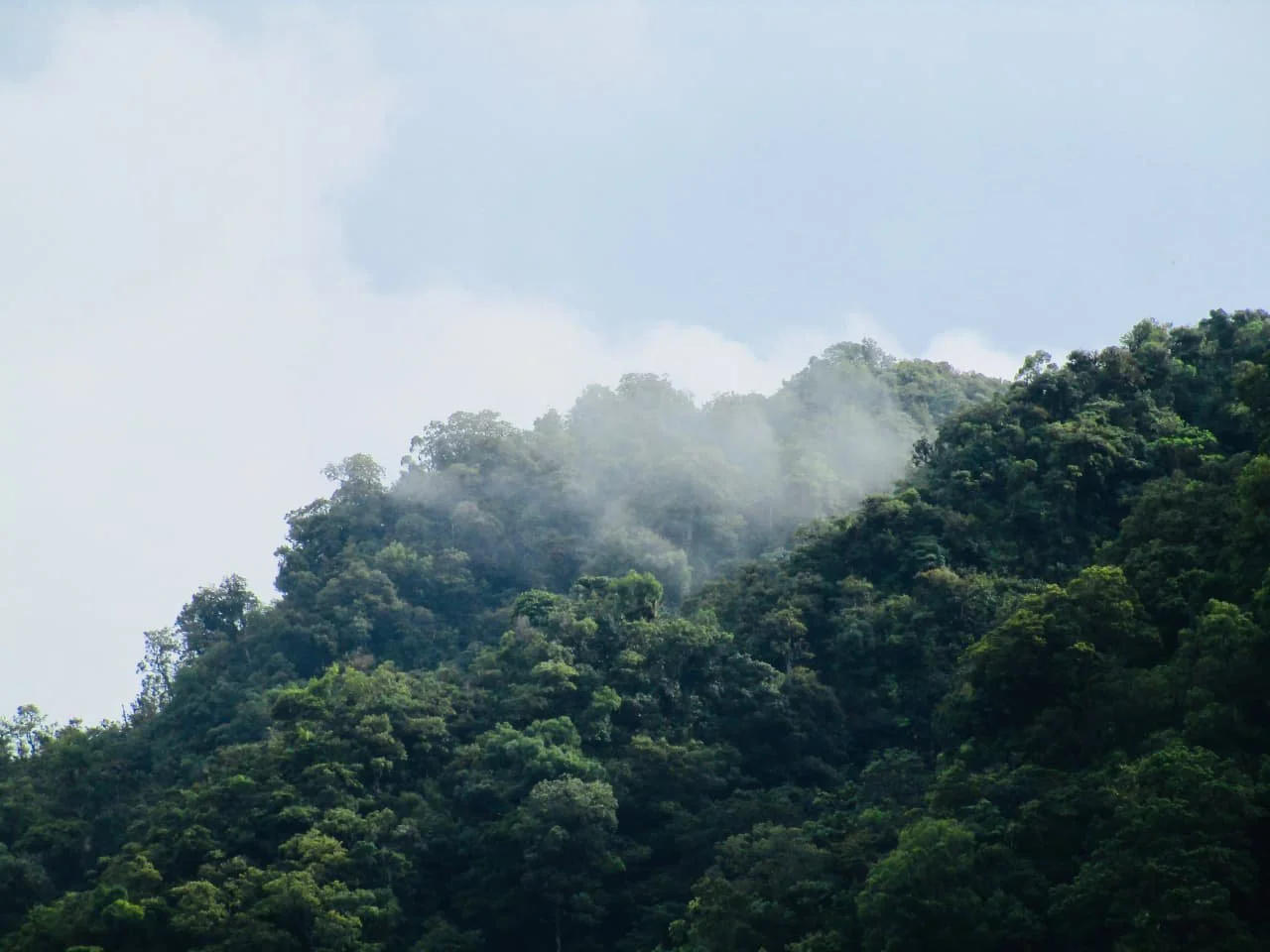
There are plenty of places in Panama that are famous with tourists, but Lago Bayano is one of those places that can be surprisingly easy to overlook. Located east of Panama City, in the direction of the Darién, Lago Bayano is enormous, wild and unusual, and it combines several things that rarely come together in one destination: rainforest, a massive artificial lake, Indigenous communities, wildlife, islands, caves, underground rivers and a fascinating history. It is the kind of place where you can spend a day and feel like you have gone much farther into the wilderness than you actually have.
One of the first interesting things about Lago Bayano is that it is not a natural lake. It was created when the Bayano River was dammed in the 1970s for hydroelectric power. The resulting reservoir covers roughly 350 square kilometers and is the second largest lake in Panama after Gatun Lake. The scale is impressive. What was once a huge river valley became a giant inland landscape of water, forested hills and hundreds of smaller islands and waterways. The construction of the dam also dramatically changed the landscape and the lives of the communities that had lived in the region for generations.
And then there are the trees. When the valley was flooded, large numbers of trees were left standing in the new lake. Today, those dead trunks sticking out of the water create one of the most distinctive landscapes around Bayano. They also became useful habitat for wildlife. Fish eating birds can perch on them above the water, and visitors can see birds such as ospreys, herons and cormorants using the lake. Large groups of cormorants can sometimes be seen fishing together, creating one of the more spectacular wildlife scenes on the lake.
The wildlife is another reason Bayano is so interesting. This is still a tropical environment surrounded by forest, and the lake and its shores support monkeys, sloths, caimans, otters and an impressive variety of birds. You are not visiting a zoo where everything is conveniently waiting for you in one location. This is wild Panama, which means sightings depend on the day, weather, season and a little bit of luck. That is exactly what makes exploring the area so rewarding. A boat trip across the lake can become a wildlife watching trip without ever feeling like one was planned that way.
But the most mysterious part of Lago Bayano may actually be underneath the surrounding forest. The Bayano Caves, sometimes called the Majé Caves, are a network of limestone caves on the southern side of the lake. The largest cave is particularly fascinating because an underground river flows through it, allowing visitors to travel part of the way inside. Once you leave the sunlight behind, the environment changes completely. There is darkness, flowing water, limestone formations and colonies of bats, creating a very different experience from the tropical forest outside.
The caves are a great example of why Panama can be so surprising. You can leave Panama City in the morning, drive east toward the Bayano region, cross a massive lake by boat and then find yourself entering an underground river system beneath the rainforest. It sounds like the plot of an adventure movie, but this is actually a real day trip in Panama. Older accounts of the caves describe stalactites, stalagmites, underground pools, bats and unusual cave creatures, while more recent tourism operators continue to offer guided cave experiences using helmets and lights.
There is also an important human story around Lago Bayano. The region is home to Indigenous communities, including Guna Madugandí and Emberá communities, as well as campesino and other local communities. The creation of the reservoir transformed the traditional landscape and led to major changes in where people lived and how they travelled and made their living. Today, communities around the lake continue to depend on the area for fishing, agriculture, transportation and cultural practices.
This cultural side of Bayano is important because the lake is much more than a pretty body of water. It is a living landscape where nature, infrastructure, Indigenous history and modern communities all overlap. There are opportunities to visit Indigenous communities through organized community based tourism, where visitors can learn about local traditions, crafts and everyday life. Organizations working with Indigenous tourism in Panama specifically identify communities around Bayano as part of the country's community based tourism network.
Another fascinating thing about Bayano is how close this enormous wilderness experience is to Panama City. You do not need to fly to another province or spend several days travelling through remote jungle to reach it. The lake is relatively close to the capital, yet once you are out on the water with forest stretching in every direction, it can feel remarkably remote. That contrast is one of the things that makes eastern Panama so interesting. You can start the day surrounded by skyscrapers and traffic and finish it travelling by boat through rainforest toward caves and Indigenous communities.
For adventurous travellers, Lago Bayano is also a reminder that Panama's best experiences are not always the ones that appear on the standard tourist itinerary. Panama City, the Canal, Bocas del Toro, Boquete and San Blas understandably receive enormous attention, but places like Bayano offer a completely different side of the country. There are no famous Caribbean beaches here and no big resort strip. Instead, there is an enormous freshwater landscape, rainforest, wildlife, caves and communities with deep connections to the region.
There is something almost surreal about travelling across Lago Bayano. The lake was created by human engineering, yet nature has spent decades transforming it into a new ecosystem. Dead trees rise from the water, birds use them as perches, fish occupy the flooded landscape, forests surround the shoreline and people continue to live and work around the reservoir. It is an excellent example of how quickly nature and people can adapt to a dramatically altered environment.
For backpackers and adventurous travellers, that is what makes Lago Bayano so interesting. It is not simply a lake. It is a giant piece of Panama's history, an important source of hydroelectric power, a wildlife habitat, an Indigenous cultural landscape and the gateway to one of the country's most unusual cave systems. And perhaps best of all, it is close enough to Panama City to make the experience accessible while still giving you that feeling that you have stepped well off the beaten path.
If you are travelling through Panama and want to see something that feels genuinely different, Lago Bayano deserves a place on the list. It shows another side of the country that many visitors never see, where rainforest disappears into dark underground rivers, enormous freshwater landscapes stretch between forested hills, wildlife lives among the flooded trees and Indigenous communities remain connected to a landscape that has changed dramatically over the past half century. That combination makes Lago Bayano one of the most fascinating adventure destinations in eastern Panama.