
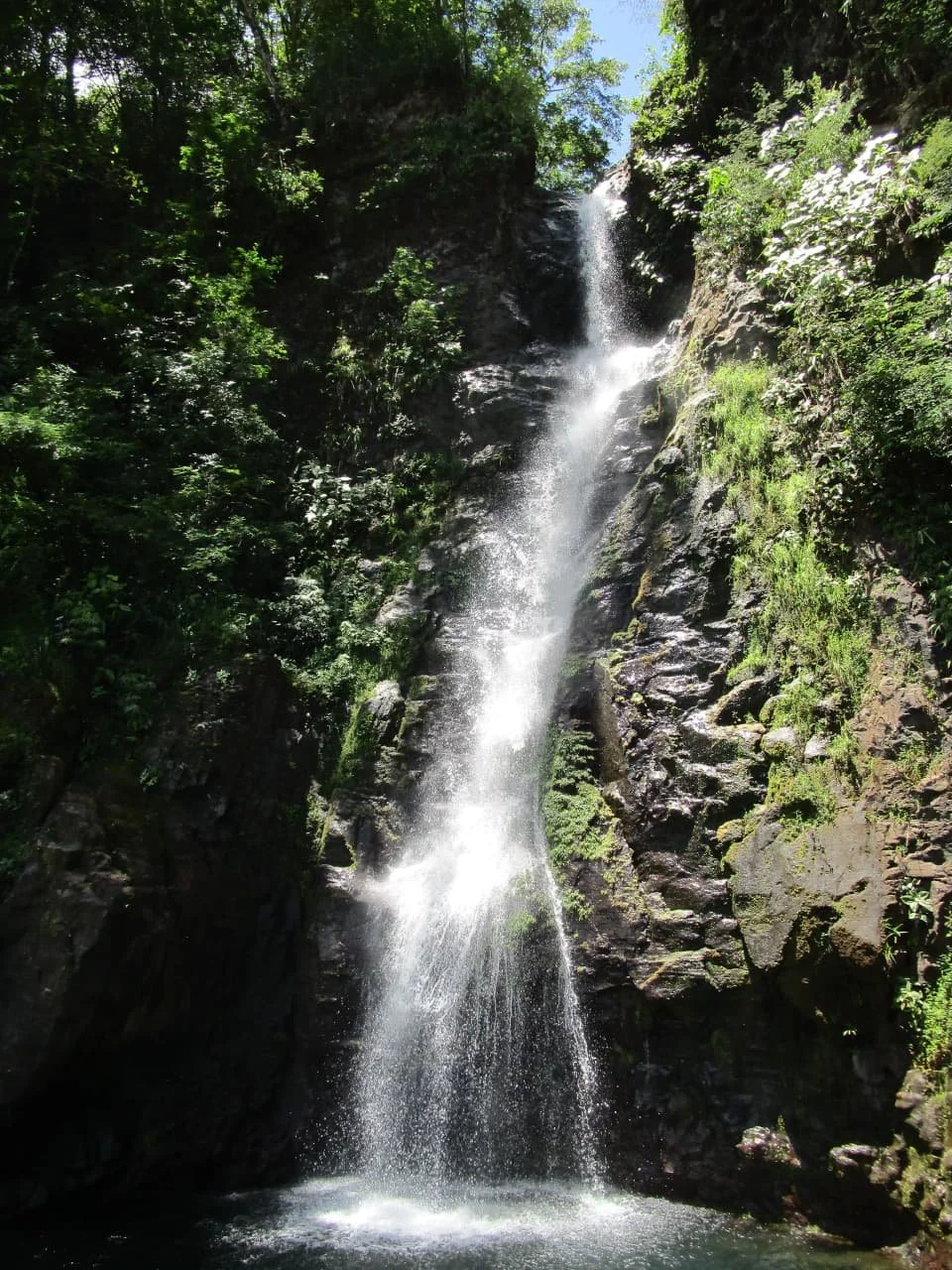
One of the best things about traveling around Panama is that you can get surprisingly far away from the normal tourist trail without actually having to go to the other side of the world. Panama is small enough to cross relatively quickly, but geographically it is incredibly diverse. There are mountains, cloud forests, jungle, rivers, islands, remote Pacific beaches, Caribbean villages, indigenous communities, coffee country and enormous areas where international tourism is still relatively limited.
The trick is knowing how to look.
If you simply search "best places to visit in Panama," you will naturally end up with Panama City, Bocas del Toro, Boquete, San Blas, Santa Catalina, El Valle de Antón and other well established destinations. These places are popular for good reasons, but they are only a fraction of what Panama has to offer. Some of the most memorable experiences can come from deliberately looking for the places that don't appear on every itinerary.
One of the best strategies is to stop searching for destinations and start searching for roads, rivers, villages, trails and communities. Instead of asking Google where the best beach in Panama is, look at a map and start following the coastline. Instead of searching for the best waterfall, look around mountainous areas and investigate the small communities where rivers come down from the hills. Instead of asking where the best hiking is, look for national parks and rural roads around them.
This is particularly effective in Panama because so much of the country remains rural.
The Panama Tourism Authority has increasingly promoted community based tourism, where local communities become hosts for nature and cultural experiences. Its tourism strategy has specifically focused on bringing visitors into rural areas and connecting them with local communities rather than concentrating tourism exclusively in the country's established destinations.
Look at the map differently
One of the simplest ways to find somewhere interesting is to open a detailed map of Panama and deliberately look for places you have never heard of.
Look for little roads that leave the main highway. Look for tiny villages near rivers. Look for beaches that don't have a string of hotels along them. Look for lakes, waterfalls, mountains and protected areas.
Then investigate them.
You may discover that a place has almost no tourism infrastructure. That doesn't necessarily mean there is nothing there. Sometimes it means that nobody has bothered to turn it into a tourist destination yet.
This is one reason areas such as Santa Fe in Veraguas can be so interesting. Santa Fe is surrounded by rainforest, mountains, farms and rural communities, and the local tourism organization specifically promotes hiking, national park exploration, farms and rural roads.
The important distinction is that off the beaten path doesn't always mean secret. A destination can be known to Panamanians while remaining almost invisible to international tourists.
That is often the sweet spot.
Get off the Interamericana
The Pan American Highway is essentially Panama's tourism spine. It connects many of the major towns and makes traveling through the country relatively straightforward.
But if you stay on the main highway, you will miss enormous amounts of the country.
Look at the roads that branch away from it.
Sometimes going twenty or thirty minutes down a secondary road can completely change the experience. The big highway disappears, traffic becomes almost nonexistent and suddenly you are driving through farms, jungle and tiny communities.
You don't necessarily need a four wheel drive vehicle for every adventure, but you should pay attention to road conditions. Some roads that look perfectly respectable on a map can become very different during the rainy season.
The farther you go from major highways, the more important it becomes to ask locals about current road conditions rather than trusting an old online review.
Ask Panamanians where they go
This may be the single best technique of all.
Don't ask someone, "What are the tourist attractions?"
Ask:
"Where do you go on weekends?"
Or:
"Where is a really beautiful place around here that tourists don't know about?"
The answers can be completely different.
A hotel receptionist may recommend the established attractions. A local taxi driver may know a swimming hole. Someone who grew up in the area may know a waterfall that isn't even marked properly on Google Maps. A farmer may know a trail that leads into the mountains.
Panama is full of this kind of local knowledge.
The best discoveries often aren't "attractions" in the conventional sense. They might be a river where people swim, a viewpoint at the end of a dirt road, a tiny beach, a family run farm or an old trail connecting two villages.
Search for communities rather than resorts
Another excellent technique is to look for small communities that are beginning to develop tourism.
This can be much more rewarding than looking for another resort destination.
Panama has been developing community tourism in places where visitors can experience local food, farming, traditional culture, nature and wildlife. The tourism authorities have specifically identified communities as important hosts for tourism experiences.
The Emberá communities around the Chagres region are a good example. Some are relatively close to Panama City, yet the experience can feel dramatically removed from the capital. In 2026, the Panama Tourism Authority highlighted communities including Tusípono, Parará Purú, Purú Biakirú and Emberá Drua as places offering cultural and nature experiences.
This approach can lead you into places that would never appear on a standard "Top 10 Panama Destinations" list.
Follow the waterfalls
If you see mountains on the map, start looking for waterfalls.
This works remarkably well in Panama.
The country receives enormous amounts of rainfall, and its mountains are crisscrossed by rivers and streams. Wherever there is elevation and water, there is a reasonable chance that somebody has discovered a swimming hole, waterfall or river trail.
Some will be well known. Others will be known almost exclusively by people who live nearby.
The trick is to search for the town or region first, rather than searching only for "waterfalls in Panama." Then look for local references to cascadas, saltos, pozos, ríos and senderos.
The same strategy works for swimming holes. "Pozo" can be particularly useful when searching Spanish language information.
Look beyond the famous islands
Most visitors hear about San Blas and Bocas del Toro. Both are spectacular, but Panama has an extraordinary number of other islands and coastal areas.
The Gulf of Chiriquí alone contains numerous islands, including places that receive far fewer international visitors than the country's better known Caribbean destinations. Lesser known islands such as Isla Paridas, Isla Gámez and Isla Bolaños are examples of the kind of places that can provide a much quieter island experience.
You can apply the same idea to the Caribbean.
Instead of simply asking, "How do I get to Bocas?" look at the coastline around Bocas del Toro province. The mainland is enormous compared with the small tourist area that most visitors know.
The Bocas del Toro mainland has long been identified as an area where travelers can find chocolate farms, wildlife, indigenous communities and access to La Amistad.
This is one of the great secrets of Panama: the name of a famous destination often represents only a tiny part of the region.
Follow national parks
National parks are another fantastic starting point.
Don't simply visit the park's most famous entrance or attraction. Look at the communities surrounding it.
National parks often create a huge ring of less explored territory around their best known sites. Small villages, farms, trails and rivers can be just outside the places most tourists visit.
Santa Fe is a good example. The town sits beside Santa Fe National Park and is surrounded by rural communities, coffee farms, trails and mountain roads.
The same approach can be used around La Amistad, Darién, Altos de Campana and many other protected areas.
Search in Spanish
This is an incredibly useful trick for Panama.
If you search only in English, you are often searching through information that has already been filtered for foreign tourists.
Try the same search in Spanish.
Instead of:
"Hidden waterfalls Panama"
try:
"cascadas poco conocidas en Panama"
Instead of:
"Secret beaches Panama"
try:
"playas poco conocidas de Panama"
Instead of:
"Hidden hiking trails"
try:
"senderos poco conocidos Panama"
You can also search for:
pozos naturales
cascadas
senderos
fincas
comunidades
turismo rural
turismo comunitario
aventura
rutas
and lugares poco conocidos.
You will often find completely different information.
Use Facebook groups
This is one area where Panama's local internet culture can be extremely useful.
Search Facebook for groups related to hiking, camping, fishing, four wheel driving, birdwatching, waterfalls, beaches and particular provinces.
Panamanians frequently share information about weekend trips that never makes it onto international travel websites.
Someone may post a photograph of a waterfall with a vague location. Another person will identify it. Someone else will explain how to get there. Suddenly you have a destination.
Facebook can therefore be much more useful for discovering obscure places than a conventional travel guide.
You should still verify current conditions before going, especially when a place involves rivers, remote trails, private property or difficult roads.
Use Google Maps satellite view
This is one of my favorite techniques for discovering places.
Switch to satellite view and start exploring.
Look at the coastline.
Look for beaches without buildings.
Look at rivers.
Look for roads that appear to end near rivers or mountains.
Look for trails around protected areas.
Look for tiny settlements.
Then zoom in.
Sometimes you can identify a fascinating landscape before you even know what it is called.
After finding something interesting, switch back to normal map mode and see whether there are reviews, photographs or businesses nearby.
This is how you can turn a completely random part of Panama into a potential adventure.
Look for agriculture
Agriculture is another fantastic doorway into lesser known Panama.
Instead of looking for a tourist attraction, look for a farm.
Coffee farms around Chiriquí are an obvious example, but Panama has much more than coffee. There are cacao farms, fruit farms, vegetable farms, cattle farms and numerous smaller agricultural operations.
The Panama Tourism Authority maintains information on registered agrotourism farms, including farms where visitors can experience production, food, nature and agricultural activities.
Sometimes the most interesting experience isn't standing in front of a famous attraction. It is sitting down with the person who grows something you have never seen grown before and learning how it gets from the field to your plate.
Look for places that are difficult to reach
There is a useful rule when searching for genuinely off the beaten path Panama:
The more inconvenient it is to get somewhere, the fewer international tourists you are likely to find.
That doesn't mean you should deliberately make travel miserable.
But if somewhere requires a long bus ride, a boat, a rough road, a local guide or a combination of transportation, it is much less likely to be overrun by package tourists.
Some of Panama's most interesting destinations are precisely the places where getting there is part of the adventure.
La Miel on the Caribbean side of the Darién region is an excellent example. The Panama Tourism Authority has described it as a small community with a beautiful beach near Cabo Tiburón, and local tourism advocates have presented it as a little known destination.
The important thing with remote destinations is to understand the difference between adventurous and reckless. Remote Panama can involve rivers, weather, poor roads, limited communications and areas where medical assistance is far away. Research and local knowledge matter.
Follow the new roads and trails
Another interesting way to find tomorrow's destinations is to look at places where tourism infrastructure is currently being developed.
Panama has been working on a national initiative involving 1,000 kilometres of trails, with projects designed to connect natural attractions and rural communities. The Ruta de la Caldera around El Valle de Antón is one example of this approach.
This is particularly interesting because today's "new trail" can become tomorrow's established tourist attraction.
If you want to discover places before they become popular, look at what is being developed now, rather than simply following what was popular five or ten years ago.
Don't underestimate small towns
Perhaps the biggest mistake travelers make in Panama is assuming that every worthwhile destination has to have a tourism industry.
It doesn't.
Sometimes the best reason to visit a town is simply because it is a real Panamanian town surrounded by beautiful countryside.
You might find a local restaurant, a market, a football game, a river, a church, a festival, a small farm or a road leading into the mountains.
The experience becomes less about checking off attractions and more about seeing what is actually there.
That is often what people mean when they say they want "the real Panama."
And talk to people at hostels
Finally, don't underestimate other travelers.
Someone who has just spent three weeks traveling around Panama may know about a completely different part of the country. Backpackers constantly exchange information about beaches, waterfalls, cheap transportation, little villages, hiking trails and places that they discovered accidentally.
This is particularly valuable in Panama because the country's geography makes it possible to combine very different environments into one trip.
Someone might tell you about a beach they found in Veraguas. Another traveler may know a mountain village in Chiriquí. Someone else may have just discovered a river in Coclé.
You start connecting the dots.
And that is probably the best way to explore Panama.
Don't try to find the hidden destination.
Find ten possibilities.
Pick one.
Go there.
Talk to the people who live there.
Then ask them where you should go next.
That is how you get away from the standard Panama itinerary and start discovering the country that exists beyond the brochures.