
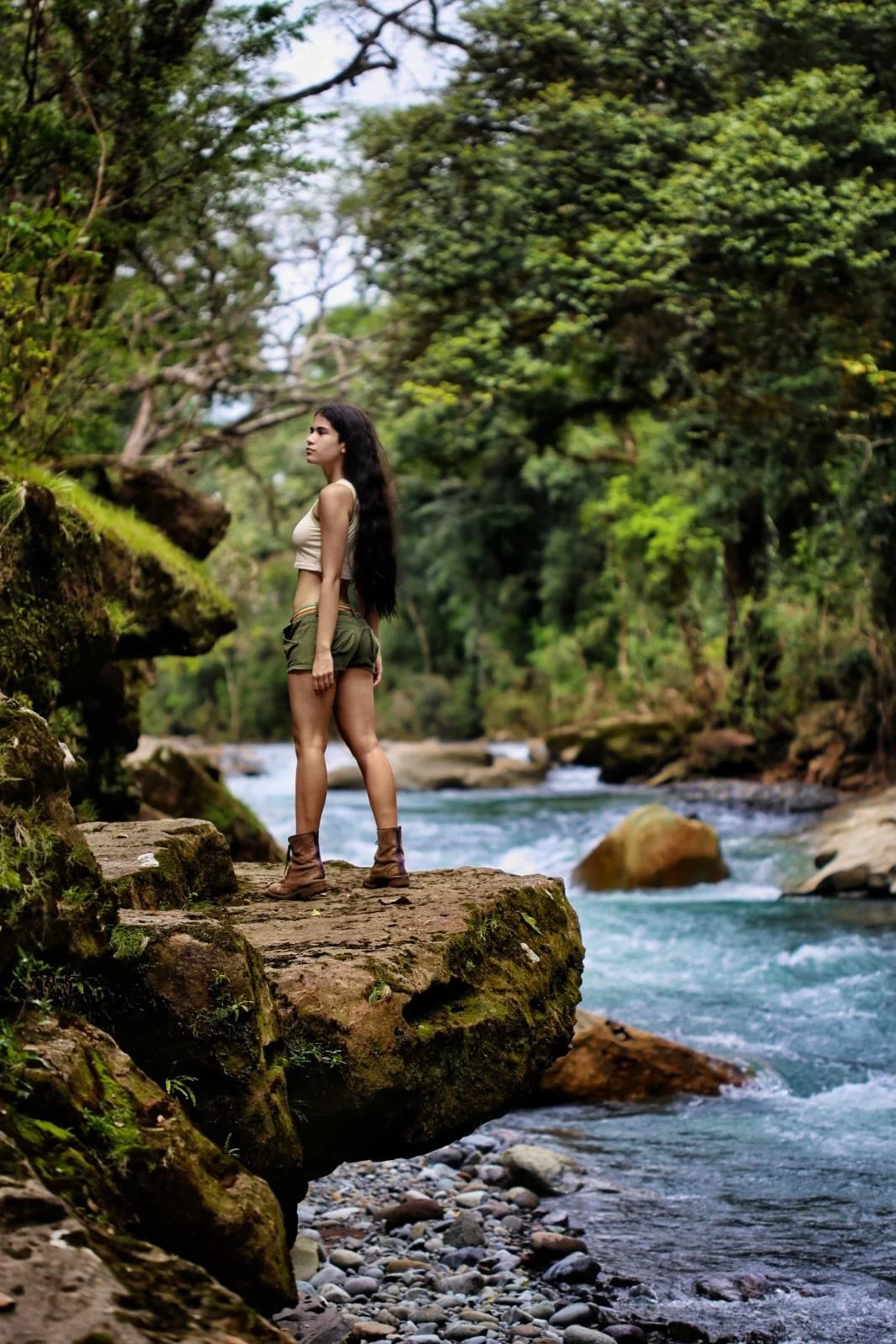
Panama is often thought of simply as the place where ships cross between the Atlantic and Pacific Oceans, but this small country is full of fascinating details that many travelers never realize. Sitting at the narrow bridge between North and South America, Panama has a culture shaped by explorers, Indigenous traditions, global trade, and one of the most important engineering projects in the world. Beyond the beaches and rainforests, there are countless facts about Panama that surprise even experienced travelers.
One of the most amazing things about Panama is that it is the only place in the world where you can watch the sun rise over the Pacific Ocean and set over the Atlantic Ocean from the same country. Because Panama bends slightly in the middle and runs east to west instead of north to south, certain mountain viewpoints allow you to see both oceans from different angles during the same day. The narrow geography of the country is what made the construction of the Panama Canal possible and turned Panama into one of the most strategically important places on Earth.
Another surprising fact is that Panama City is one of the few capital cities in the world that contains a tropical rainforest within its city limits. The protected forest known as Parque Natural Metropolitano sits just minutes from the skyscrapers of downtown Panama City. Inside the park you can find monkeys, sloths, toucans, and hundreds of bird species, making it possible to leave a modern skyline and enter a rainforest in less than ten minutes.
Panama is also one of the most biodiverse countries in the world relative to its size. Even though the country is smaller than South Carolina, it contains more bird species than the entire United States and Canada combined. One of the most famous birds found in the cloud forests around Boquete is the brilliant green and red Resplendent Quetzal, which has long tail feathers and shimmering colors that make it one of the most sought-after sightings for birdwatchers. The combination of Caribbean jungle, Pacific mangroves, mountains, and islands creates an extraordinary range of habitats for wildlife.
Another thing many people don’t realize is that Panama has one of the most modern skylines in Latin America. Panama City’s financial district is filled with towering glass skyscrapers that reflect the country’s role as an international banking and shipping hub. The city is often compared to Miami because of its waterfront towers, luxury condos, and busy international business scene. Yet only a few blocks away sits the historic colonial district of Casco Viejo, where narrow streets, colorful balconies, and centuries-old churches tell the story of Panama’s Spanish past.
Panama is also home to the world’s most expensive coffee. Grown in the cool volcanic soil around Volcán Barú, the rare variety known as Geisha Coffee has shattered international auction records, sometimes selling for hundreds or even thousands of dollars per pound. Coffee experts prize it for its delicate floral aroma and tea-like flavors. Farms in the highlands around Boquete have become famous among coffee enthusiasts who travel from around the world to taste it.
Another fascinating fact about Panama is that the country does not have its own standing army. In 1990, following the U.S. invasion that removed dictator Manuel Noriega, Panama formally abolished its military and instead relies on specialized police and security forces. The decision was written into the constitution and remains one of the most unusual aspects of the country’s political system.
Panama is also one of the few countries in the world that uses the U.S. dollar as its main currency, even though it is an independent nation. The official currency is the Panamanian Balboa, but in practice U.S. dollars are used for nearly all transactions. The balboa exists mostly as coins, while paper money in circulation is the same U.S. dollar bills used in the United States.
Another thing that surprises many travelers is the sheer number of islands Panama has. The country actually has more than 1,400 islands, scattered along both its Caribbean and Pacific coasts. One of the most famous island regions is Bocas del Toro, where colorful Caribbean towns, coral reefs, and jungle-covered islands attract backpackers, surfers, and divers. On the opposite side of the country, the San Blas Islands form a stunning archipelago of tiny white-sand islands managed by the Indigenous Guna people.
Panama is also one of the few places in the world where ships literally climb mountains to cross from one ocean to another. Inside the Panama Canal, enormous vessels enter a series of giant locks that lift them roughly 85 feet above sea level to cross the artificial Gatun Lake before descending back down to the other ocean. Watching the process up close is one of the most impressive engineering sights anywhere in the world.
Finally, Panama is one of the best places on Earth to see whales close to shore. Every year between July and October, thousands of humpback whales migrate through the warm waters of the Pacific coast. One of the best places to see them is around Coiba National Park, a remote marine reserve that is often called the “Galápagos of Central America” because of its rich marine life.
All of these surprising facts show that Panama is far more than a canal or a stopover between continents. It is a country where rainforests meet skyscrapers, rare wildlife thrives alongside major global shipping routes, and centuries of history blend with modern energy. For travelers willing to look a little deeper, Panama reveals itself as one of the most fascinating and underrated destinations in the Americas.