
Traveling through Panama isn’t just about where you go—it’s about how you get there, and in many ways, the journey itself becomes part of the experience. If you really want to understand the rhythm of Panama, you have to step into the world of local buses—the white coaster buses, the long-distance routes, the roadside pickups, and the unspoken system that somehow works with incredible efficiency. This is how locals move. This is how the country flows. And for backpackers, budget travelers, and anyone chasing a more authentic experience, it’s one of the smartest, easiest, and most rewarding ways to travel. Forget rigid schedules, overpriced shuttles, and complicated booking systems—Panama’s buses offer something far more organic: freedom. The kind of freedom where you can stand on the side of the road, raise your hand, and be on your way within minutes.
One of the most unique aspects of Panama’s bus system is its flexibility, especially when it comes to the smaller white coaster buses that run between towns and along highways. Unlike in many countries where you must be at a designated stop, in Panama you can often flag down a bus from almost anywhere—as long as it’s safe for the driver to pull over. See a bus coming? Step to a visible spot, give a clear hand signal, and if there’s space, it will stop. It’s that simple. No ticket in advance, no stress. This system is incredibly useful when you’re not near a terminal or when you’re traveling through more rural or mountainous areas. The same flexibility applies when getting off—just let the driver know or signal, and they’ll stop when it’s safe. It’s informal, but it works beautifully, and once you get used to it, it feels far more intuitive than rigid transport systems that force you into fixed points and schedules.
Take a classic example: traveling from David up into the mountains of Boquete. This is one of the most common and straightforward routes in western Panama, and it perfectly shows how efficient the system can be. Buses run frequently—often every 20 to 30 minutes—from the main terminal in David, and the ride takes roughly 45 minutes to an hour as you climb into cooler air and greener landscapes. But you don’t even have to start at the terminal. If you’re along the route heading out of David, you can simply flag one down. The fare is low, the ride is reliable, and before you know it, you’re winding through hills, coffee farms, and cloud forest scenery. It’s easy, affordable, and incredibly scenic.
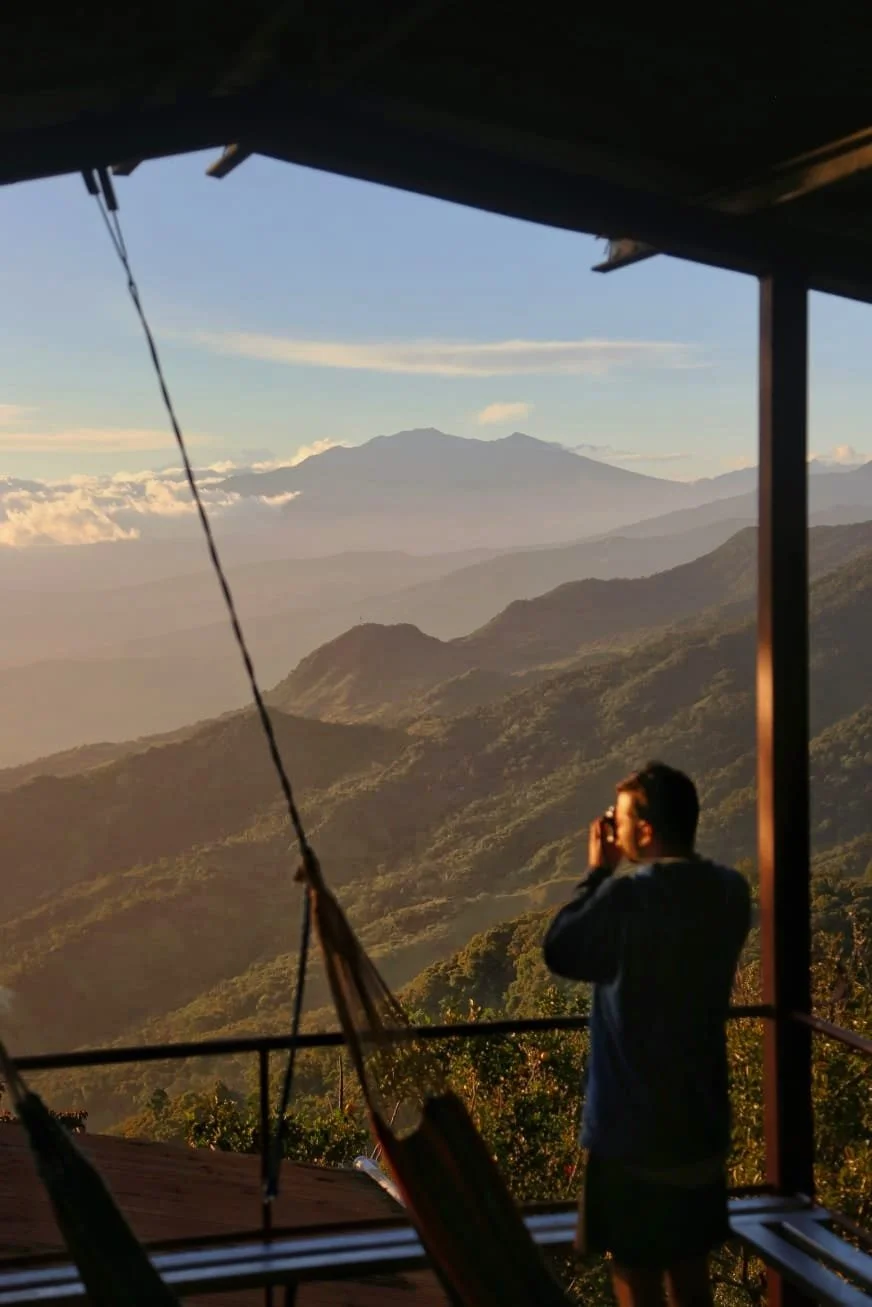
Now let’s take it one step further—because this same system makes reaching more off-the-beaten-path places surprisingly simple. If you’re heading toward Lost and Found Hostel, one of Panama’s most unique backpacker destinations tucked in the mountains between Boquete and Bocas del Toro, you don’t need a private shuttle or complicated logistics. From David, you can catch a bus heading toward the Bocas route, and along the way, you can get dropped near the trailhead. Even better, you can often just let the driver know where you’re going, and they’ll help you out—they’re used to travelers heading that way. And just like that, you’re stepping off the bus and into a completely different world. The ability to connect routes like this without needing strict schedules or bookings is what makes Panama’s bus system so powerful—it adapts to you, rather than forcing you to adapt to it.
Affordability is another major reason why buses are such a strong choice. In a world where transportation costs can quickly eat into a travel budget, Panama stands out for how accessible it is. Short rides between towns often cost just a few dollars—or even less—making it possible to explore widely without constantly worrying about money. Whether you’re commuting locally, heading into the mountains, or moving between regions, buses keep your costs low while still getting you where you need to go. And because these are the same buses locals use every day, they are part of a functioning, trusted system. This isn’t a “budget option” in the sense of being second-rate—it’s the real way people travel.
Frequency is where the system really shines. On popular routes like David to Boquete, buses can run every 20–30 minutes, meaning you rarely have to wait long. Even if one bus is full, another is usually not far behind. This creates a sense of ease and spontaneity—you don’t have to plan your entire day around transport. You can move when you’re ready, adjust on the fly, and keep your itinerary flexible. While there may not always be a clearly posted timetable, the consistency is there. Locals know it, drivers follow it, and travelers quickly pick up on the rhythm. It’s not about precision—it’s about flow, and once you understand that, the system becomes incredibly easy to navigate.
Safety and reliability are also strong points, particularly for short, domestic, interior routes. These buses are used daily by locals—students heading to school, workers commuting, families traveling between towns—which means they are an essential part of everyday life. Drivers know their routes well, the roads are familiar, and the system operates with a quiet dependability that often surprises first-time travelers. As with any form of transport, it’s important to stay aware of your belongings and surroundings, but overall, these buses are considered safe, especially during daytime travel. They may not be luxurious, but they are functional, consistent, and widely trusted.
Beyond the practical advantages, there’s something deeper you gain from traveling this way. Sitting on a local bus, you’re not separated from the country—you’re part of it. You watch landscapes shift in real time, from busy streets to open countryside, from lowland heat to mountain cool. You hear conversations, see daily life unfold, and experience Panama not as an observer, but as a participant. It’s these small, in-between moments that often become the most memorable—the unexpected views, the shared smiles, the sense of movement that connects everything together.
Of course, a few simple tips go a long way. Always make sure it’s safe for the bus to stop before flagging it down, carry small cash for fares, and don’t expect luxury—these are working buses, not tourist shuttles. But if you approach it with openness and a bit of flexibility, you’ll quickly realize just how easy and effective it is.
In the end, catching buses in Panama is more than just transportation—it’s a way of traveling that feels alive, adaptable, and real. Whether you’re cruising from David to Boquete, hopping off en route to Lost and Found Hostel, or simply exploring without a strict plan, the system is there to support you. So stand by the roadside, watch the horizon, raise your hand when you see that white coaster coming—and step into a journey that moves at the pace of Panama itself.