
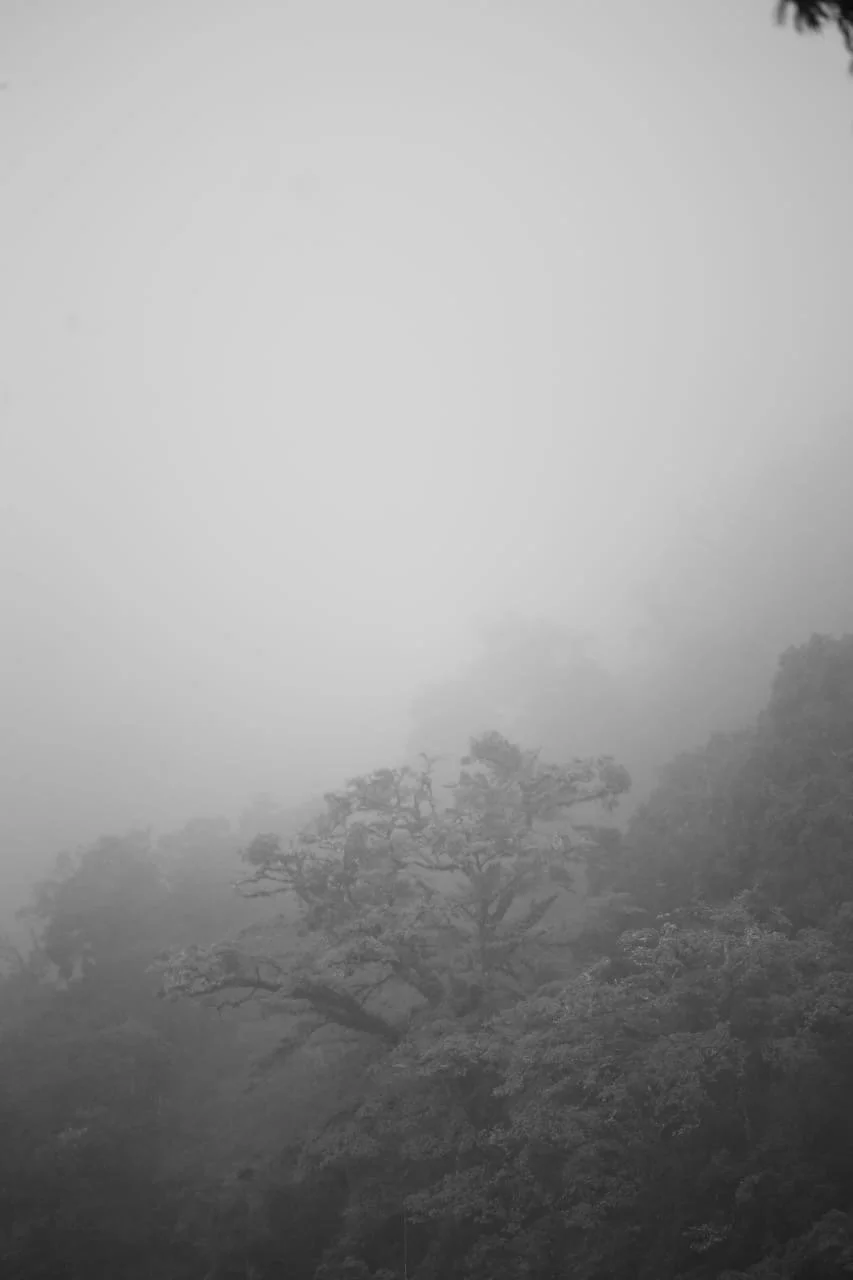
There are certain moments in the jungle that flip a switch in your brain—where everything suddenly feels wilder, stranger, and more alive than you expected. Hearing a bellbird for the first time is one of those moments. You’ll be walking quietly through a misty mountain trail, maybe half-awake, maybe thinking about coffee, when suddenly—CLANG!—a metallic explosion echoes through the forest like someone just hit a steel pipe with a hammer. You freeze. You look around. You wonder if someone is building something deep in the jungle.
They’re not.
You’ve just met the legendary Three-wattled bellbird, one of the loudest, weirdest, and most unforgettable birds in Panama.
And from that moment on, you’re hooked.
A Bird That Sounds Like It Shouldn’t Exist
The bellbird doesn’t sound natural. That’s the best way to describe it. In a rainforest filled with chirps, whistles, buzzes, and distant howls, the bellbird cuts through everything with a sharp, metallic BONK. It doesn’t blend in—it dominates. The sound travels huge distances, bouncing off ridgelines and rolling through valleys like an echo that refuses to fade.
It’s the kind of noise that makes people laugh the first time they hear it. Or swear. Or just stand there in total confusion.
And the craziest part? That sound is coming from a bird about the size of a pigeon.
The Strangest Look in the Canopy
If the call doesn’t convince you this bird is unusual, the appearance definitely will.
The male bellbird looks like someone designed it in a dream. Bright white body. Dark, almost masked face. And then—because why not—three long, black, spaghetti-like wattles dangling from its beak. These fleshy strands can hang down several centimeters and swing around wildly when the bird calls, like loose wires shaking with every metallic note.
When the male belts out his call, he throws his head forward, opens his beak wide, and those wattles go flying. It’s dramatic. It’s ridiculous. It’s unforgettable.
The female, meanwhile, took a completely different approach. She’s olive-green, subtle, and perfectly camouflaged. While the male is out here performing like a jungle rockstar, she’s blending into the leaves, quietly judging his entire act. This extreme difference between male and female is all about survival and attraction—he risks everything to be noticed, she survives by staying invisible.
The Loudest Love Song in the Forest
Let’s be clear—the bellbird isn’t making all that noise for fun. This is romance. Very intense, very competitive romance.
Male bellbirds gather in what’s called a lek—a kind of singing arena in the forest where multiple males perch within earshot of each other and compete to be the loudest, sharpest, most impressive voice in the jungle. It’s like a battle of sound, echoing across the mountains.
Volume matters. A lot.
The louder and more piercing the call, the better the chances of attracting a female. Some studies suggest their calls are so loud at close range that they could actually be uncomfortable—even for other birds. Imagine showing off by basically screaming into the void at maximum volume… and somehow it works.
Only the best performers get chosen. The rest? They just keep yelling.
Where to Hear (and Maybe See) the Bellbird in Panama
Bellbirds are creatures of elevation and atmosphere. They live in Panama’s highland cloud forests, where mist drifts through the trees and everything feels just slightly enchanted.
Some of the best places to experience them include Fortuna Forest Reserve and the surrounding mountains near Boquete. These areas provide the exact mix of altitude, fruiting trees, and dense canopy that bellbirds love.
And then there’s the experience of staying at Lost and Found Hostel.
This is where things get fun.
Perched deep in the forest on the edge of the reserve, the hostel is one of those places where nature doesn’t just surround you—it completely takes over. Early in the morning, when the clouds are still hanging low and the forest is waking up, that metallic bellbird call often rings out across the valley. You might hear it from your hammock. From the trail. Even from the shower if the jungle soundtrack is loud enough.
Guests swap stories about it constantly: “Did you hear that sound this morning?” “Yeah, what was that?” “Apparently it’s a bird… somehow.”
Actually spotting one is a whole different challenge. They usually stay high in the canopy, perched like tiny white sentinels above the forest. You’ll hear them dozens of times before you ever lay eyes on one. But when you finally do—when you track the sound, scan the treetops, and suddenly see that bright white body and those ridiculous wattles—it feels like unlocking a secret.
What Do Bellbirds Actually Do All Day?
Despite their dramatic calls, bellbirds live fairly chill lives outside of their performances.
They are primarily fruit eaters, moving through the canopy in search of ripe trees. Figs are a favorite, along with a variety of other tropical fruits. As they feed, they play an important role in seed dispersal, helping maintain the diversity of the forest. So while they’re out there screaming like tiny jungle alarms, they’re also quietly planting the next generation of trees.
They’re also seasonal travelers. Bellbirds are altitudinal migrants, meaning they move up and down the mountains depending on the time of year and food availability. You might hear them constantly in one season and then… nothing. Gone. Moved on to a different elevation like elusive forest nomads.
Which somehow makes hearing them even more special.
The Soundtrack of a Wild Place
The cloud forests of western Panama are already magical. Moss-covered branches, dripping leaves, cool air, and that ever-present mist that makes everything feel slightly unreal. But the bellbird adds something extra—a soundtrack that doesn’t quite fit, yet somehow makes the entire place feel more alive.
It’s not a gentle, relaxing sound. It’s bold. It’s disruptive. It demands your attention.
And that’s exactly why people love it.
Because it reminds you that this isn’t a quiet, peaceful forest. It’s a wild, competitive, chaotic ecosystem where even a bird has to shout at full volume to be heard.
Why the Bellbird Feels Like a Secret
Not everyone gets to experience a bellbird. You have to be in the right place, at the right elevation, at the right time of year. You have to slow down enough to notice the sounds around you. And even then, you might only hear it and never see it.
But that’s part of the magic.
The bellbird isn’t a checklist animal. It’s an experience. A moment. A sound that sticks in your head long after you’ve left the forest.
And if you spend enough time in places like the Fortuna reserve or around Lost and Found Hostel, you’ll start to recognize it instantly. That metallic note becomes familiar. Almost comforting in a strange way.
It means you’re in the cloud forest.
It means you’re somewhere wild.
And it means the jungle is very much alive.
So next time you’re hiking through the misty highlands of Panama and you hear a sudden CLANG echo through the trees—don’t look for construction workers.
Look up.
The forest is singing.