
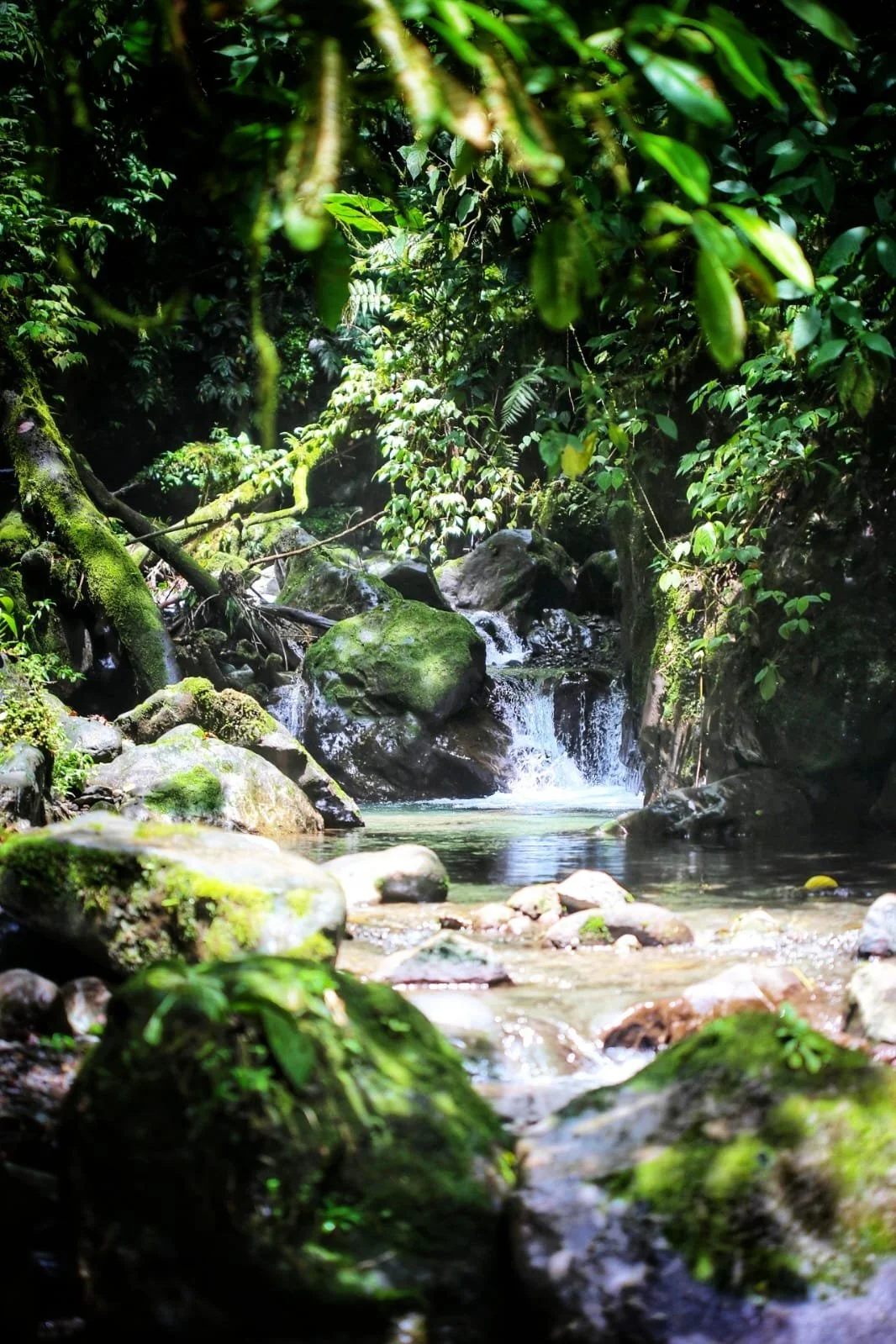
There is a moment, somewhere above the heat and humidity of Panama’s lowlands, where the jungle changes character entirely. The air cools. The light softens. The trees shrink, twist, and begin to wear coats of moss so thick they look ancient. And then the clouds arrive—not above you, but around you.
This is the cloud forest.
Unlike typical rainforests that rely mainly on rainfall, cloud forests are defined by persistent, low-level cloud cover. These forests sit at elevations where warm, moist air rises from the lowlands, cools, and condenses into fog. That fog wraps itself through the trees, dripping quietly from leaves, feeding the forest in a constant, ghostlike mist.
In Panama, these ecosystems exist primarily between 1,200 and 3,000 meters above sea level—and they are among the most biologically rich and visually surreal places in the country.
Panama’s Cloud Forest Strongholds
Some of the most spectacular cloud forests in Panama are found in the highlands of Chiriquí Province:
Boquete
Sendero Los Quetzales
Cerro Punta
Volcán Barú National Park
Lost and Found Hostel
The stretch between Boquete and Cerro Punta—especially along the Quetzal Trail—is one of the most pristine cloud forest corridors in Central America. And tucked right in this region, Lost and Found Hostel sits on the edge of this ecosystem, where the transition into cloud forest begins almost immediately outside your door.
What Makes a Cloud Forest So Unique?
At first glance, it may just look like a foggy jungle. But spend time there, and the differences become overwhelming.
1. The Moisture Comes From the Air Itself
In cloud forests, water doesn’t just fall—it floats. Tiny droplets in the mist cling to every surface:
Leaves drip constantly without rain
Moss absorbs water directly from the air
Tree trunks stay perpetually damp
This process is called horizontal precipitation, and in some places, it contributes as much water as rainfall itself.
2. Trees Become Living Ecosystems
Trees in cloud forests are not just trees—they are entire worlds.
Branches are overloaded with:
Mosses
Ferns
Orchids
Bromeliads
Lichens
These are called epiphytes—plants that grow on other plants without harming them. Some branches become so heavy with life that they sag under the weight.
Bromeliads even form tiny water reservoirs, creating microhabitats where insects, frogs, and microorganisms live entire life cycles without ever touching the ground.
3. The Light Is Soft and Filtered
The constant mist diffuses sunlight, creating:
A dim, green glow
Low contrast shadows
A dreamlike atmosphere
Nothing feels harsh. Everything feels ancient.
4. Temperatures Are Cooler, But Not Cold
Compared to Panama’s lowlands:
Days are mild and fresh
Nights can be cool, even chilly
Humidity remains extremely high
It’s a rare balance—cool air with tropical life.
The Soundscape of the Clouds
Cloud forests are not loud in the way lowland jungles are. Instead of constant buzzing and roaring, the soundscape is more subtle:
Dripping water from leaves
Wind moving through dense canopy
Occasional bird calls echoing through fog
Distant rustling you can’t quite place
It feels quieter—but more mysterious. As if something is always just out of sight.
Wildlife You Might Encounter
Cloud forests are biodiversity hotspots, home to species specially adapted to this cool, wet world.
Birds
The most iconic resident is the Pharomachrus mocinno—a bird so elusive it feels mythical. But it’s far from alone:
Toucans and toucanets
Motmots
Flycatchers
Hummingbirds (many species thrive in the cool climate)
Mammals
You might spot:
Sloths moving slowly through mossy branches
Howler monkeys calling from hidden treetops
Coatis foraging along trails
Occasionally elusive wild cats like ocelots
Amphibians & Reptiles
Thanks to the constant moisture:
Bright green frogs cling to leaves
Glass frogs reveal their internal organs through translucent skin
Salamanders thrive in the damp leaf litter
Insects & Small Life
Butterflies drifting through mist
Beetles, ants, and countless unseen species
Entire ecosystems living inside bromeliads
Every step reveals something—if you slow down enough to notice.
Life at the Edge: Lost and Found & the Quetzal Trail
Staying at Lost and Found Hostel puts you right on the threshold of this ecosystem. Here, the cloud forest isn’t a destination—it’s your surroundings.
Mornings often begin with:
Mist rolling through the valley
Birds calling from invisible perches
Dew soaking everything
And just a short journey away, the Sendero Los Quetzales offers one of the most immersive cloud forest hikes in Central America.
Along this trail, you’ll experience:
Rapid changes in elevation and vegetation
Dense moss-covered tunnels of trees
River crossings and dripping cliffs
The constant possibility of spotting a quetzal overhead
It’s not just a hike—it’s a journey through layers of atmosphere and life.
Why Cloud Forests Matter
Cloud forests are incredibly fragile.
Because they depend on such precise climate conditions:
Small temperature increases can lift cloud layers higher
Forests can dry out if clouds no longer form at the same elevation
Species adapted to this niche have nowhere else to go
They are also vital water sources, capturing and slowly releasing moisture that feeds rivers and communities below.
In many ways, cloud forests are natural water towers—quietly sustaining life far beyond their boundaries.
A World That Feels Unreal
There’s something about a cloud forest that doesn’t quite feel like Earth as you know it. Maybe it’s the silence. Maybe it’s the way trees disappear into fog. Maybe it’s the sense that everything is alive—not just growing, but layered, connected, watching.
You don’t just walk through a cloud forest.
You move through a living, breathing atmosphere—where water floats, trees host entire universes, and somewhere above you, hidden in the mist, a flash of green might be watching you back.