
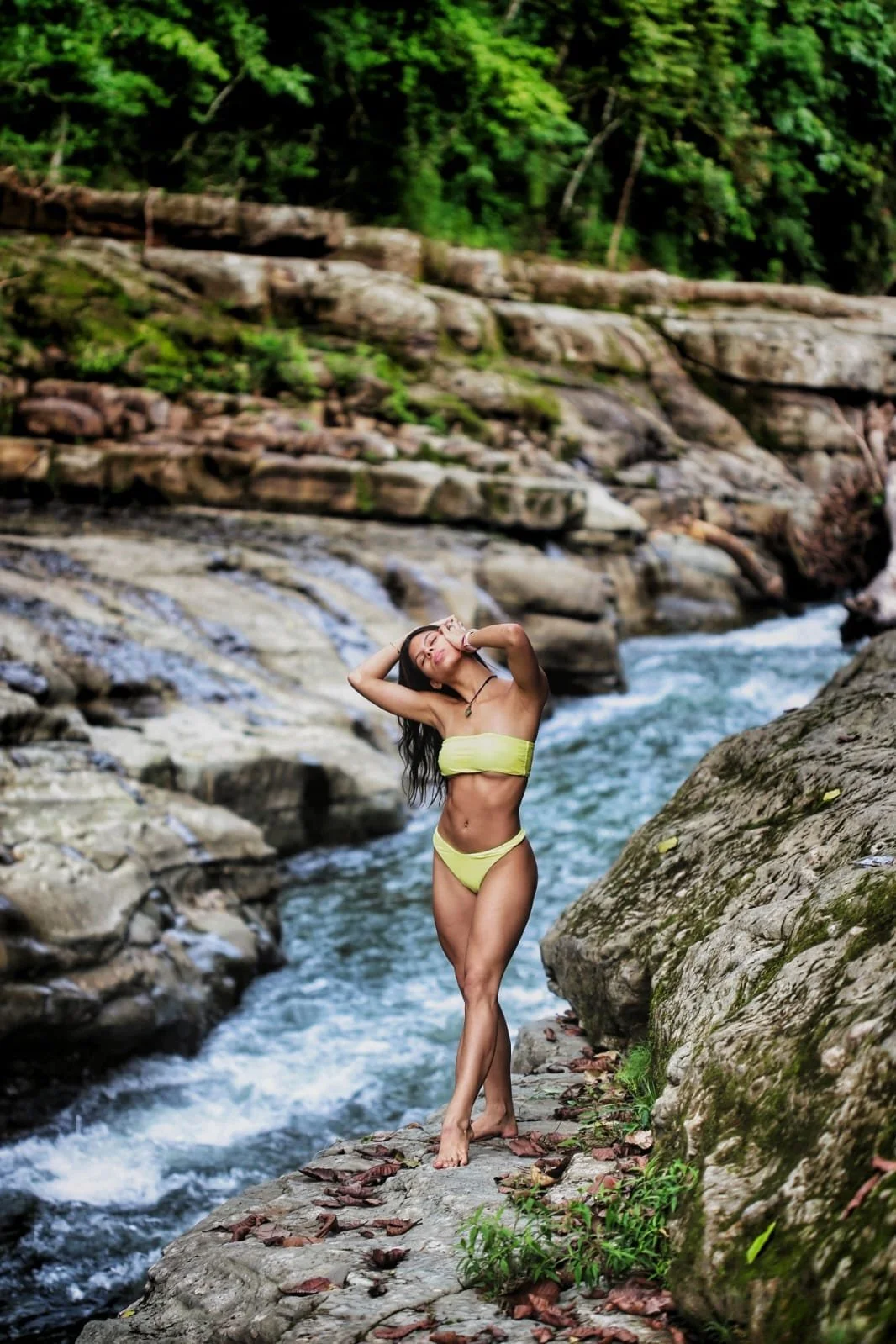
It does heat that wraps around you like a blanket the moment you step outside. It does humidity that clings to your skin before you’ve even taken your first step. It does sunlight so direct and powerful that shadows feel like refuge.
But what makes Panama truly fascinating isn’t just how hot it can get it’s how dramatically, almost unbelievably fast, you can escape that heat.
This is a country where seasons don’t change… but elevation does everything.
The Caribbean Heat: Bocas del Toro Never Cools Down
In Bocas del Toro, the heat feels endless in the most tropical sense of the word. It’s not just about temperature it’s about atmosphere. The air is thick, alive with moisture, and it presses in from all sides.
Daytime temperatures typically sit between 28–32°C (82–90°F), but the humidity pushes the “feels like” temperature far higher. You’ll sweat without moving. You’ll shower and feel warm again minutes later. Clothes stick. Hair curls. Time slows.
The hottest stretches usually come in March to May and again around September to October, when the air becomes heavier and the sun lingers just a little longer between rains. Even when clouds roll in, the heat doesn’t disappear it just softens into a humid glow.
Nights offer little relief. The temperature barely drops, and the humidity stays constant. Sleep comes with fans spinning, windows open, and the sound of waves in the background.
But here’s the thing Bocas isn’t meant to be fought. It’s meant to be adapted to.
You swim multiple times a day. You move slower. You embrace the rhythm. The ocean becomes essential not optional.
Panama City: Where Heat Meets Concrete
Then there’s Panama City a place where tropical heat collides with urban intensity.
Here, the temperature isn’t just felt it’s amplified.
Glass towers reflect sunlight. Pavement radiates heat upward. Traffic adds another layer of warmth that never quite dissipates. The result is an environment where 30–34°C (86–93°F) feels closer to something far more intense.
The peak arrives during the dry season, especially February through April, when rain disappears and the sun dominates the sky without interruption. These are the months when the city feels like it’s holding its breath under the heat.
Midday becomes something to avoid. Locals know it. Streets quiet slightly. People move from shade to shade, from air conditioning to air conditioning. Even a short walk can feel like effort.
And yet, life continues because in Panama, the heat isn’t an obstacle. It’s part of the experience.
The Pacific Coast: The Raw Power of the Dry Season
If Bocas is humid heat and Panama City is amplified heat, then the Pacific coast delivers something else entirely: pure, unfiltered sun.
Places like Santa Catalina, Pedasí, and Las Lajas experience a long, powerful dry season from January to April.
During these months, the sky often stays cloudless for weeks.
The sun rises sharp and strong, climbs high, and stays there. Temperatures regularly exceed 33°C (91°F), and without clouds or frequent rain, there is nothing to soften the intensity. The landscape dries. The colors shift. The air feels lighter than the Caribbean but the sun feels stronger.
This is the kind of heat that defines your day.
You wake early. You move in the morning. By midday, the world slows dramatically. Beaches empty out, hammocks fill, and shade becomes the most valuable resource around.
The ocean? Not just refreshing essential.
The Turning Point: Climbing Into the Clouds
And then everything changes.
You leave the coast. You drive inland. The road begins to climb.
At first, it’s subtle. A slight breeze. A hint of freshness. Then, as you pass 800 meters… 900 meters… 1,000 meters above sea level, it happens.
The heat breaks.
Not gradually. Not slowly.
Instantly.
The air cools. The humidity softens. Your skin stops sweating. You take a deep breath and realize it feels different. Lighter. Cleaner. Almost like stepping into another season entirely.
Welcome to Panama’s highlands.
Places like:
Boquete
Volcán
El Valle de Antón
Santa Fe
Lost and Found Hostel
sit high enough to transform the climate completely. Daytime temperatures hover between 18–24°C (64–75°F). Nights can feel cool sometimes even crisp.
It’s not just cooler.
It’s comfortable.
It’s breathable.
It’s what people mean when they say “perfect weather.”
The One-Hour Escape That Feels Unreal
What makes this even more remarkable is how fast it happens.
In many cases, you can go from sweating on the coast to wearing a light sweater in under an hour. A simple bus ride. A short drive. No flights, no long journeys just elevation.
You leave behind blazing sun and step into drifting clouds.
You go from harsh light to soft mist.
From heat exhaustion to calm energy.
It feels like teleportation.
The Lost and Found Effect: From Heat to Healing
Nowhere does this transformation feel more dramatic than at Lost and Found Hostel, perched high in the mountains near Fortuna Forest Reserve.
You arrive from the lowlands sunburnt, tired, slowed down by heat.
And within minutes, everything shifts.
You’re breathing cool air.
You’re walking through mist.
You’re sitting in a hammock, wrapped in a light chill, looking out over layers of green mountains disappearing into clouds.
It doesn’t feel like relief.
It feels like reset.
Your body relaxes. Your mind clears. Energy returns not the restless kind, but the calm, steady kind that comes with being comfortable again.
Living Between Two Worlds
What makes Panama truly unique is that you don’t have to choose one climate.
You can have both.
You can wake up sweating on a Pacific beach, swim in warm ocean water, and feel the full intensity of tropical sun…
…and by afternoon, be sipping coffee in cool mountain air, wrapped in clouds, listening to nothing but wind in the trees.
Few places on Earth offer that kind of contrast so easily.
It changes how you experience travel.
You don’t just chase destinations you chase temperature, mood, and feeling.
Yes, Panama can be hot.
Intensely, unapologetically hot. The kind of heat that slows you down, forces you into the shade, and makes cold water feel like the greatest luxury in the world.
But that’s only half the story.
Because just beyond that heat sometimes just one hour away—there is a completely different world waiting.
Cooler. Softer. Calmer.
A place where the air feels like spring, even when the coast is burning.
And once you experience that shift, that instant escape, you realize something that changes everything about how you see this country:
In Panama, you’re never stuck in the heat.
You’re always just one mountain away from perfect.