
High in Panama’s mountains, a rare and fascinating ecosystem exists that feels almost like another world. Known as tropical cloud forests, these environments form where warm, moisture-filled air from the lowlands rises into cooler mountain elevations and condenses into mist and drifting clouds. The result is a constantly humid, fog-covered forest filled with moss, orchids, towering trees, and dense vegetation. These unique forests are among the most biodiverse and fragile ecosystems in Central America, and Panama contains some of the most remarkable examples anywhere in the tropics.
Unlike the hot, steamy lowland rainforests many travelers imagine when they think about the tropics, cloud forests are cooler, wetter, and often shrouded in mysterious fog. The landscape is covered in thick moss, delicate plants, and twisted tree trunks draped in vines. Water droplets cling to leaves, branches, and spider webs, while clouds slowly move through the canopy like a living river of mist. The atmosphere feels quiet and magical, with filtered sunlight and a constant cool breeze that makes the environment completely different from the jungles below.
These forests are extremely rare worldwide because they require very specific environmental conditions. Cloud forests usually form between 1,000 and 3,000 meters above sea level, where rising tropical air cools and creates constant condensation. Panama’s mountain ranges provide the perfect elevation and climate for these ecosystems to develop. Some of the best-known cloud forests in the country can be found around Boquete, along the slopes of Volcán Barú, and throughout the mountainous regions near the border with Costa Rica.
One of the most striking features of cloud forests is the enormous number of epiphytes, plants that grow on other plants instead of in soil. Mosses, orchids, bromeliads, ferns, and lichens cling to tree trunks and branches, creating entire miniature ecosystems suspended above the ground. These plants absorb moisture directly from the air and rainfall, allowing them to thrive in environments where clouds provide constant humidity. In some areas, tree branches become so thick with epiphytes that they resemble hanging gardens high above the forest floor.
Because of these conditions, Panama’s cloud forests support incredible biodiversity. Many species living in these ecosystems cannot survive anywhere else. Tiny amphibians, rare insects, specialized birds, and unusual reptiles depend on the cool, moist climate found only at these elevations. Brightly colored hummingbirds zip between flowers, butterflies drift through the mist, and frogs hide among moss-covered rocks near mountain streams.
Birdlife is particularly remarkable in these habitats. Cloud forests are home to many rare and beautiful species that attract birdwatchers and wildlife photographers from around the world. Quetzals, trogons, toucans, and dozens of species of hummingbirds inhabit these highland forests, feeding on nectar, fruits, and insects. Because the forest canopy is often lower and more open than in tropical rainforests, these birds are sometimes easier to spot along mountain trails.
Amphibians also thrive in these damp environments. The constant moisture allows frogs and salamanders to survive in habitats where they might dry out elsewhere. Many species lay eggs in small pools of water that collect on leaves or in tree cavities. These unusual breeding strategies are one reason why scientists consider cloud forests to be evolutionary hotspots for amphibians.
Some of the most important cloud forest ecosystems in Panama are protected within large conservation areas. One of the most famous is La Amistad International Park, a massive wilderness area spanning the border between Panama and Costa Rica. The park contains mountains, rivers, and vast tracts of cloud forest that shelter thousands of plant and animal species. Because of its extraordinary biodiversity, the park has been designated a UNESCO World Heritage Site and remains one of the most important conservation areas in the Americas.
Another key region for cloud forest ecosystems is the Fortuna Forest Reserve, a large protected area of mountains, rivers, and dense tropical forest. This reserve connects directly with the expansive wilderness of Palo Seco Forest Reserve, forming part of a massive biological corridor that links several protected areas across western Panama. Together, these forests create one of the largest uninterrupted ecosystems in Central America, allowing wildlife to move freely across vast mountainous landscapes.
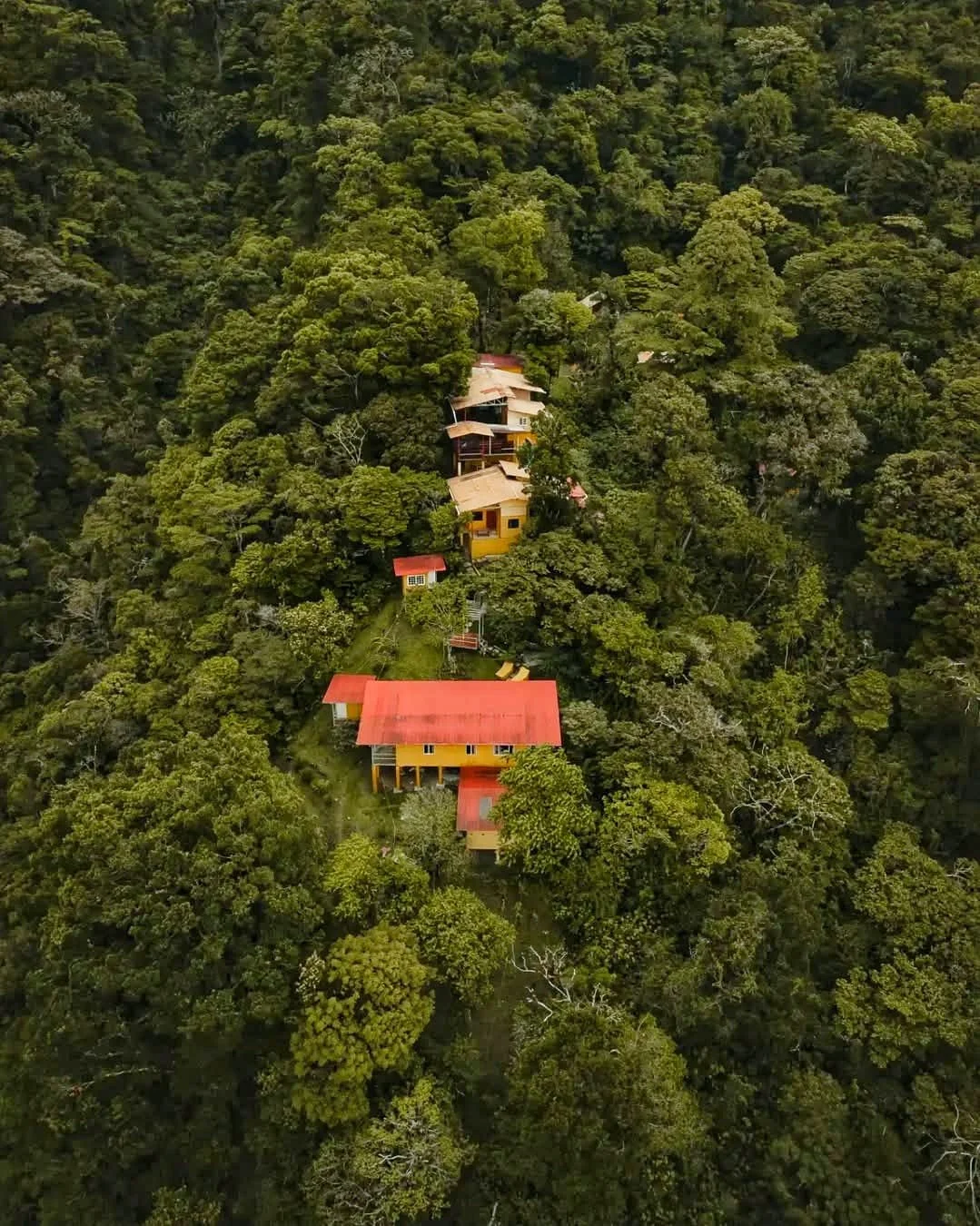
Within this incredible natural setting sits Lost and Found Hostel, a small mountain lodge surrounded by cloud forest. Located deep inside the Fortuna Forest Reserve, the hostel provides access to remote hiking trails that pass through mist-covered ridges, waterfalls, dense jungle, and scenic viewpoints overlooking endless forest. The area’s biodiversity is so rich that scientists studying the surrounding mountains have even identified previously unknown species of reptiles nearby, including a new species of lizard and snake. Discoveries like these highlight how much of Panama’s cloud forest ecosystem remains unexplored.
Cloud forests also play a crucial role in water regulation and climate stability. Because these forests constantly capture moisture from clouds, they function like natural water towers for the surrounding regions. Moss, vegetation, and soil absorb rain and fog, slowly releasing water into streams and rivers below. This process helps supply fresh water to communities, farms, and ecosystems throughout the valleys and lowlands of western Panama.
In addition to supporting wildlife and water systems, cloud forests also help regulate temperatures and store large amounts of carbon in their vegetation and soils. This makes them extremely important ecosystems for combating climate change and maintaining environmental balance in tropical mountain regions.
Unfortunately, cloud forests are also among the most vulnerable ecosystems in the world. Because they depend on such specific climate conditions, even small shifts in temperature or rainfall can disrupt the delicate balance that supports their plants and animals. In many parts of the tropics, deforestation and climate change threaten cloud forest habitats. Rising temperatures may push the cloud layer higher up mountain slopes, reducing the area where these ecosystems can exist.
Despite these challenges, Panama remains one of the best places in the world to experience intact cloud forests. Large protected areas, national parks, and forest reserves help preserve these fragile habitats for future generations. Conservation programs, scientific research, and eco-tourism all play important roles in protecting these rare environments.
For hikers, backpackers, scientists, and nature lovers, walking through a Panamanian cloud forest is an unforgettable experience. The cool mountain air, drifting mist, and dense green vegetation create an atmosphere that feels ancient and mysterious. Every moss-covered tree branch, hidden waterfall, and distant bird call reminds visitors that these forests are among the most extraordinary ecosystems on Earth.
Although they occupy only a small portion of the planet, cloud forests contain a remarkable concentration of life and ecological complexity. Panama’s mountain forests represent one of the last places where these magical ecosystems still thrive on a large scale.
Hidden in the mist above the tropical lowlands, Panama’s cloud forests remain one of the country’s greatest natural treasures—rare, beautiful, and still full of discoveries waiting to be made. 🌿☁️🐸🐦