
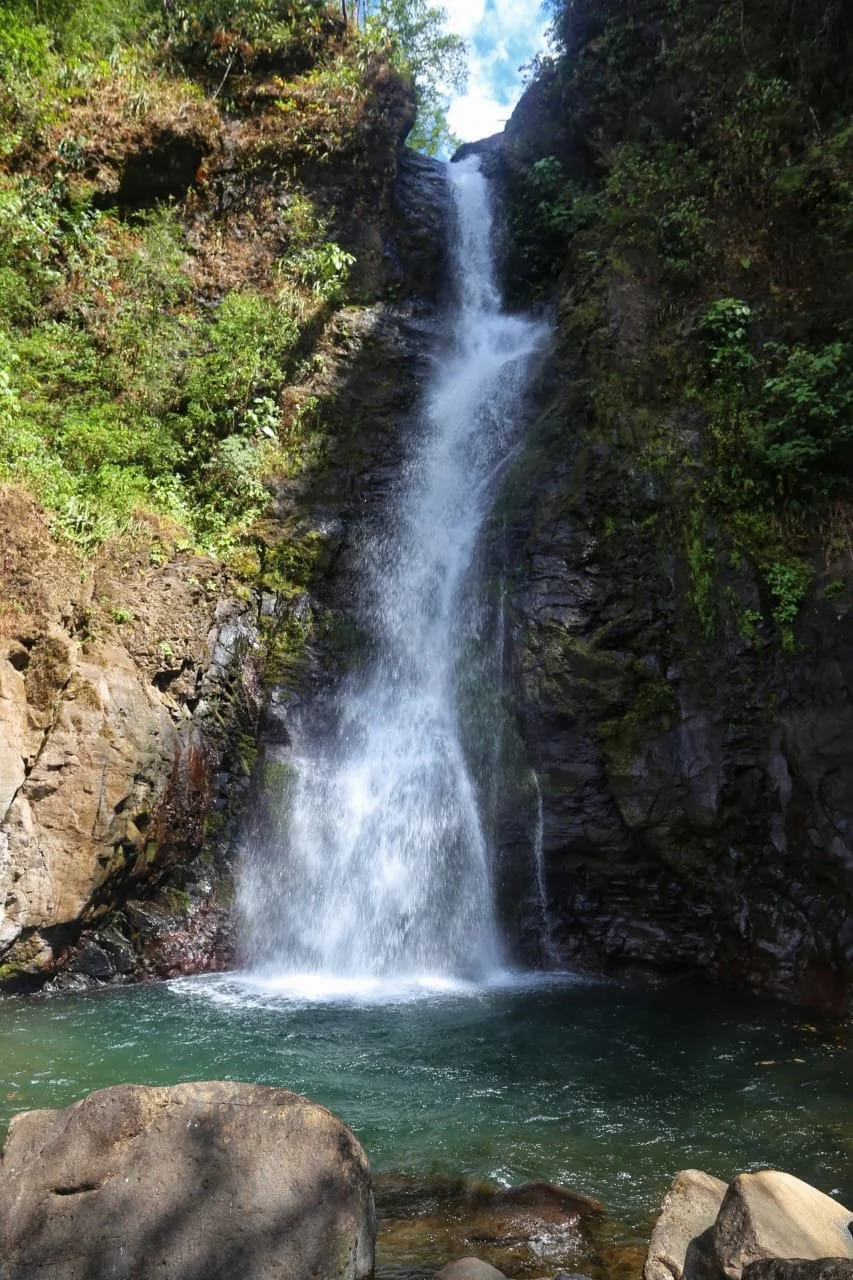
Hidden high in the misty cloud forests of western Panama, the Lost and Found Hostel offers travelers something far more thrilling than just epic views and jungle hikes. Here, nature isn’t just something you admire, it’s something you feel, sometimes quite literally. Among the many creatures that inhabit this rich ecosystem, two stand out as legends of the insect world: the velvet ant and the bullet ant. Both are small, both are easy to overlook, and both carry reputations that make even seasoned travelers tread carefully.
These insects aren’t just random jungle critters, they are evolutionary masterpieces, each armed with one of the most powerful defensive weapons found in nature: an incredibly painful sting.
The Velvet Ant: Bright Colors, Brutal Defense
Despite its name, the velvet ant is not an ant at all. It belongs to the wasp family, specifically the Mutillidae, and what you’re usually seeing is the wingless female. Covered in dense, velvety hairs and often colored in striking shades of red, orange, yellow, or even white, this insect practically advertises its danger. This is called aposematic coloration, a biological warning signal that tells predators, “If you mess with me, you’ll regret it.”
And that warning is no exaggeration.
The velvet ant’s sting is among the most painful of any insect, ranked extremely high on the Schmidt Pain Index (a scale used by entomologists to compare insect sting pain). The nickname “cow killer” comes from folklore suggesting the sting is strong enough to kill livestock. While that’s not actually true, the pain is described as explosive and long-lasting, capable of stopping a person in their tracks.
But the velvet ant doesn’t rely on just one defense. It’s also incredibly tough. Its exoskeleton is so hard that it can resist being crushed by many predators. On top of that, it can produce squeaking sounds (a behavior called stridulation) when threatened, adding yet another layer of defense. Some species even release chemical signals to further deter attackers.
Around Lost and Found Hostel, velvet ants are typically spotted walking along open trails, especially in sunny patches where they hunt for the nests of other insects. They are parasitoids, meaning they lay their eggs in the nests of other bees or wasps. When the larvae hatch, they consume the host, a brutal but effective survival strategy.
The Bullet Ant: Nature’s Ultimate Sting
If the velvet ant is intimidating, the bullet ant is on another level entirely. Known scientifically as Paraponera clavata, this insect has earned global fame for delivering what is widely regarded as the most painful insect sting on Earth.
The name “bullet ant” comes from the sensation of its sting, people often describe it as feeling like being shot. According to the Schmidt Pain Index, the pain is not only intense but also long-lasting, sometimes enduring for 12 to 24 hours. Victims report waves of burning pain, muscle contractions, trembling, and even temporary loss of coordination.
Bullet ants are impossible to miss. They are large, up to an inch (2.5 cm) long, with powerful mandibles and a glossy black or dark reddish body. Unlike velvet ants, they are social insects, living in colonies that can contain hundreds of individuals. Their nests are usually found at the base of trees, making jungle trails prime territory for accidental encounters.
One of the most fascinating aspects of bullet ants is their role in indigenous cultures, particularly in parts of the Amazon. In some tribes, young warriors undergo initiation rituals involving bullet ant stings as a test of endurance and bravery. This alone tells you just how intense their sting truly is.
At Lost and Found Hostel, hikers exploring the surrounding forest may unknowingly pass near a bullet ant colony. While these ants are not aggressive without reason, they are highly defensive. Step too close or disturb their nest, and they won’t hesitate to respond.
The Science of Pain: Why So Intense?
Both velvet ants and bullet ants have evolved their painful stings as a defensive strategy, not for hunting. Their venom contains complex mixtures of proteins and neurotoxins designed to overwhelm the nervous system of predators.
Velvet ant venom causes immediate, sharp pain that acts as a deterrent.
Bullet ant venom contains a peptide called poneratoxin, which disrupts nerve signals and causes prolonged pain and muscle effects.
In both cases, the goal is simple: make the predator remember the encounter, and never try again.
A Side-by-Side Comparison
When you look closely, these two insects are like different versions of the same survival strategy:
Classification: Velvet ants are actually wasps; bullet ants are true ants.
Lifestyle: Velvet ants are solitary; bullet ants live in organized colonies.
Appearance: Velvet ants are colorful and fuzzy; bullet ants are large, dark, and intimidating.
Defense: Both rely on powerful stings, but the bullet ant’s is longer-lasting and more intense.
Behavior toward humans: Velvet ants tend to avoid interaction; bullet ants will defend their territory if disturbed.
Encounters at Lost and Found Hostel
What makes Lost and Found Hostel such a unique destination is how seamlessly it blends adventure with raw, untouched nature. This isn’t a controlled environment, it’s a living, breathing ecosystem where creatures like velvet ants and bullet ants play important roles.
Seeing one of these insects in the wild is both thrilling and humbling. It’s a reminder that even the smallest animals can command immense respect. Guests often report spotting velvet ants crossing trails during hikes or noticing bullet ants near tree bases in the dense forest.
But these encounters don’t have to be dangerous. A bit of awareness goes a long way:
Watch where you step, especially near tree roots
Avoid touching brightly colored or unfamiliar insects
Stay calm and give these creatures space
Respecting the Wild
In the end, velvet ants and bullet ants aren’t villains, they’re survivors. Their painful stings are not acts of aggression, but tools of defense honed over millions of years of evolution. They are part of what makes the forests around Lost and Found Hostel so vibrant, unpredictable, and alive.
For travelers, the experience is unforgettable. Not because you got stung but because you realized just how powerful nature can be, even in its smallest forms.
So next time you’re hiking through the misty trails and you spot a tiny, brightly colored insect or a large, slow-moving ant, pause for a moment. Take it in. You might just be looking at one of the most formidable insects on the planet.
Just… admire it from a safe distance.