
Panama is a small but extremely important country located in the southern part of Central America, acting as a natural bridge between North and South America. It sits at the narrowest point of the entire Central American isthmus, connecting Costa Rica to the west and Colombia to the southeast. What makes Panama globally significant is not its size, but its geography: it divides the Atlantic Ocean and the Pacific Ocean through one of the most important engineering corridors in the world, the Panama Canal.
The capital city, Panama City, sits on the Pacific side and is one of the most modern urban centers in Latin America, with skyscrapers, financial districts, and a rapidly growing international population. Despite its modern appearance, the country is only about the size of a small US state, meaning you can travel from the Pacific coast to the Caribbean coast in just a few hours.
Panama has a coastline on both the Pacific Ocean to the south and the Caribbean Sea to the north, which creates a rare dual-coast geography. This is why travelers can experience two completely different tropical environments in a single trip: calm Caribbean islands like Bocas del Toro and rugged Pacific surf beaches, all within a short distance of each other.
Key Facts About Panama (Wikipedia Style Overview in Paragraph Form)
Panama has a population of roughly 4.5 million people, making it one of the smaller countries in Central America in terms of population size, but one of the most economically significant due to global trade passing through the Panama Canal. The population is heavily concentrated around Panama City and the surrounding metropolitan area, where most of the country’s financial, political, and commercial activity takes place.
The official currency is the Panamanian balboa, but in everyday life the country primarily uses the United States dollar (USD) for cash transactions. The balboa exists mostly in coin form and is pegged 1 to 1 with the US dollar, which makes Panama one of the few countries in the world where US currency is fully integrated into the economy. This makes travel simple for visitors, since there is no need to exchange money in most cases.
Politically, Panama is a constitutional democracy and presidential republic, meaning the president is both head of state and head of government. The country has a multi-party system, and elections are held regularly. Government power is centralized in the capital, but Panama also includes several autonomous Indigenous regions, including Guna Yala, which is home to the Guna people. These regions have a degree of self-governance and cultural autonomy, particularly in areas like the San Blas Islands.
Panama’s economy is heavily service-based and strongly influenced by global trade. The Panama Canal is one of the most important maritime shortcuts in the world, connecting the Atlantic and Pacific Oceans and generating a large portion of national revenue. In addition to shipping, Panama has a strong banking sector, logistics industry, tourism economy, and offshore services market. The country uses its geographic position as a global crossroads, meaning many international companies operate regional headquarters in Panama City.
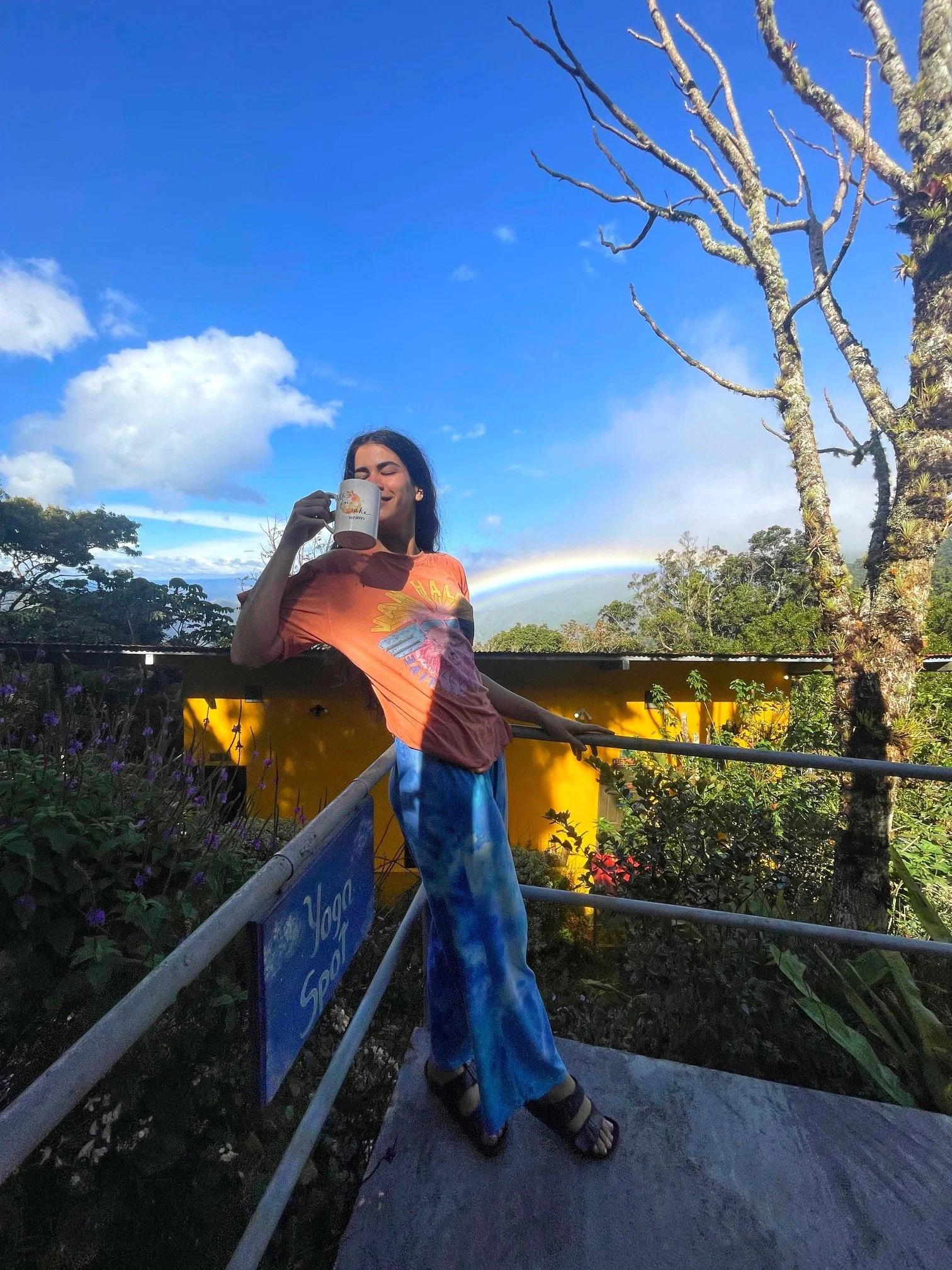
Geographically, Panama is extremely diverse for its size. It contains dense rainforests, high mountain ranges, volcanic regions, Caribbean coral islands, and Pacific coastlines. The western highlands near Boquete are cool and green, while lowland coastal areas are hot and humid year-round. This variation in elevation creates multiple microclimates within just a few hours of travel.
The climate is tropical, with a dry season typically running from around December to April and a rainy season from May to November. Even during the rainy season, rainfall often comes in heavy bursts rather than constant all-day rain, meaning travel is still very possible year-round.
Geography and Location Explained Simply
Panama sits at the narrowest point of the land bridge between North and South America. To the west is Costa Rica, to the east is Colombia, and to the north is the Caribbean Sea, while the south opens to the Pacific Ocean. This makes it one of the only countries in the world where you can see sunrise and sunset conditions influenced by two major oceans within the same day depending on where you are.
The country’s shape is long and curved, almost like a sideways “S,” which is why travel routes often feel like a straight line from coast to coast. Despite its small size, this geography creates dramatic diversity, from coral islands and mangroves to cloud forests and volcanic mountains.
Know Before You Go (Travel Reality Check)
Traveling in Panama is generally straightforward, especially for tourists. The infrastructure is modern in the capital, with highways, an international airport, and a metro system in Panama City. Outside the city, transport becomes more varied, with buses, shared vans, boats, and domestic flights connecting different regions.
One important thing to understand is that Panama feels like multiple countries inside one. The capital feels modern and international, the Caribbean islands feel remote and rustic, and the mountain regions feel calm and rural. This contrast is part of what makes travel here so interesting.
English is spoken in tourist areas, but Spanish is the dominant language across the country. In Indigenous regions like Guna Yala, traditional languages are also widely spoken alongside Spanish, preserving strong cultural identity.
Safety varies by area, but most tourist regions are well-traveled and widely visited. Like anywhere, awareness is important in cities, but nature destinations and small towns are generally relaxed and welcoming.
In simple terms, Panama is a small country with an outsized global role. It is the physical and symbolic bridge between continents, oceans, and cultures. It combines modern financial hubs, ancient Indigenous territories, Caribbean islands, Pacific surf, and mountain cloud forests within a surprisingly compact space.
For travelers, this means Panama is not just one destination, it is several experiences layered into one journey. You can be in a skyscraper skyline in the morning, a rainforest by midday, and on a Caribbean island by sunset. That rare geographic diversity is what makes Panama one of the most unique countries in the world to explore.
Where is Panama Located? A “Know Before You Go” Guide