
Far out in the Pacific Ocean, separated from the mainland by a stretch of open water that feels far greater than the map suggests, lies Isla Coiba, one of the most extraordinary and least altered places in Panama. Massive in scale, cloaked in dense rainforest, and surrounded by nutrient rich seas, Coiba is not simply an island but an entire living system that has evolved with minimal interruption. Today it forms the heart of Coiba National Park, a protected region that preserves both its wild ecosystems and the powerful human history that unfolded here over the last century.
To understand Coiba is to understand isolation. Geologically, the island separated from the mainland thousands of years ago, and that separation shaped everything that followed. Without constant human settlement or development, the island’s forests matured undisturbed, its rivers carved natural paths through untouched jungle, and its wildlife adapted in subtle but important ways. The result is a place that feels older, deeper, and more intact than almost anywhere else in Central America.
The physical landscape of Coiba is as dramatic as it is varied. Rolling hills rise into forested ridges, valleys collect moisture and life, and rivers cut through thick vegetation before spilling into the sea. Waterfalls appear unexpectedly, especially during the rainy season, cascading into clear pools surrounded by dense foliage. The coastline shifts constantly, from long sandy beaches to rocky points, from calm mangrove inlets to open stretches where waves roll in from the Pacific. Each environment supports a different community of life, creating a patchwork of ecosystems that interact with and depend on one another.
The forests themselves are complex, multi layered, and ancient in structure. Towering canopy trees dominate the skyline, some reaching heights that make them visible from far offshore. Beneath them, a thick understory of palms, shrubs, and vines creates a dense and often impenetrable environment. Epiphytes cling to branches, drawing moisture from the air, while mosses and fungi break down organic material and recycle nutrients back into the soil. The forest floor is alive with movement, insects, small mammals, and microorganisms all contributing to a system that is constantly renewing itself.
For naturalists, Coiba represents one of the richest field sites in the region. The island’s long isolation has led to the emergence of endemic species, animals that exist nowhere else on Earth. The Coiba agouti is one such example, a small rodent that plays a surprisingly important role in maintaining forest health by dispersing seeds. The island’s population of mantled howler monkeys is another highlight, their deep, echoing calls reverberating through the forest at dawn and dusk, creating one of the most distinctive soundscapes in the tropics. White faced capuchin monkeys bring a different energy, moving through the canopy in intelligent, coordinated groups, often observing visitors with curiosity.
Larger mammals, though more elusive, add to the island’s ecological depth. White tailed deer move quietly through less disturbed areas, while wild pigs root through the forest floor. Bats emerge at night in large numbers, feeding on insects and fruit, acting as pollinators and seed dispersers. Their role is critical, linking the forest’s nighttime activity with its long term health and regeneration.
Birdlife on Coiba is both abundant and diverse. Scarlet macaws dominate the skies, their bright red, yellow, and blue plumage impossible to miss as they fly in bonded pairs. Their calls echo across the island, often serving as the first sign of their presence. Parrots and parakeets contribute to the constant chatter of the forest, while birds of prey circle overhead. Along the coastline, pelicans plunge into the water with precision, frigatebirds glide effortlessly on ocean currents, and seabirds nest on cliffs and offshore rocks.
The island’s endemic bird species, including the Coiba spinetail, attract ornithologists from around the world. These birds, often subtle in appearance, represent the unique evolutionary path that Coiba has taken due to its isolation. Seasonal migrations add further variety, with different species passing through at different times of year, ensuring that the island’s birdlife is always changing and dynamic.
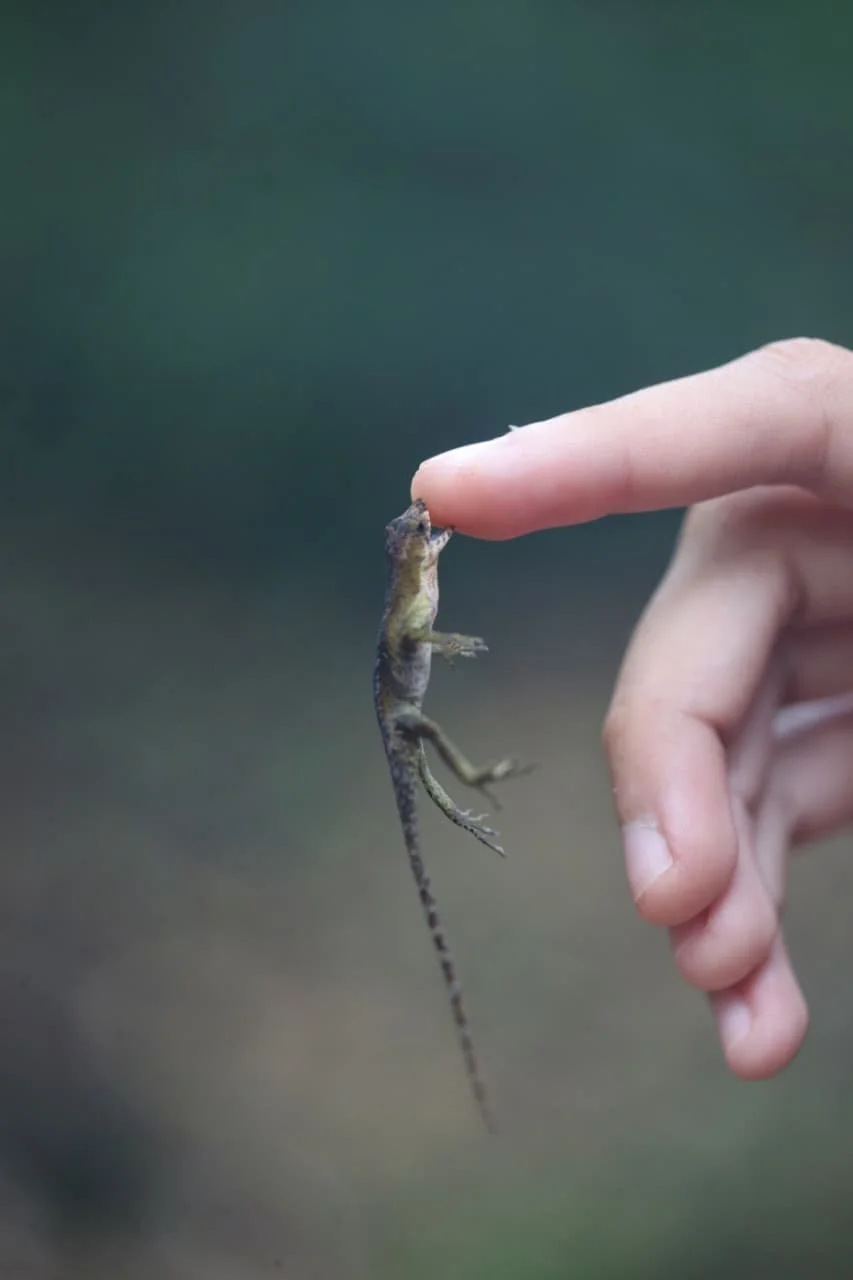
Reptiles and amphibians thrive in the humid, tropical conditions. Iguanas bask in the sun along beaches and forest edges, while smaller lizards dart through the undergrowth. Frogs become especially active during the rainy season, their calls filling the night air in a chorus that can be heard from great distances. Some species display vivid colors, a warning to predators and a reminder of the chemical defenses that exist in even the smallest creatures.
Insects form the backbone of the ecosystem, though they are often overlooked. Butterflies drift through sunlit clearings, ants build complex networks that shape the forest floor, and countless other species contribute to pollination, decomposition, and nutrient cycling. Without them, the entire system would collapse.
Beyond the shoreline, the marine environment expands the island’s biodiversity into another dimension. The waters surrounding Coiba are among the most productive in the eastern Pacific, fed by currents that bring nutrients from deep ocean zones. Coral reefs, though different from those in the Caribbean, are dense with life. Fish move in schools of thousands, creating shifting patterns that reflect light in mesmerizing ways.
Sea turtles are common, particularly hawksbill and green turtles, often seen feeding near reefs or resting in sheltered areas. Reef sharks patrol the waters, their presence a sign of a healthy ecosystem. Larger species, including hammerhead sharks, can occasionally be encountered in deeper waters. Rays glide over the seabed, while eels hide among rocks and coral formations.
Perhaps the most dramatic marine encounters come from the larger migratory species. Whale sharks, the largest fish in the ocean, pass through these waters at certain times of year, their immense size contrasting with their gentle nature. Humpback whales migrate through the region between July and October, often breaching the surface or slapping their tails against the water. Their songs travel through the ocean, adding an acoustic dimension to the experience of being here. Dolphins are frequent companions during boat journeys, riding waves and interacting with vessels in playful displays.
Mangroves add yet another layer to Coiba’s ecological richness. These coastal forests serve as nurseries for fish and invertebrates, providing shelter during early life stages. They also protect the coastline from erosion and help maintain water quality by filtering sediment. Exploring these areas reveals a quieter, more intricate world where life unfolds at a smaller scale.
Yet for all its natural beauty, Coiba’s history is equally powerful and deeply intertwined with its present condition. In 1919, the island was transformed into a penal colony, a decision that would shape its future in unexpected ways. For decades, it functioned as one of the most isolated and feared prisons in the region. Its location made escape nearly impossible, the surrounding ocean, dense jungle, and lack of infrastructure created natural barriers that few could overcome.
Life on the island during this period was harsh and often unforgiving. Prisoners were used as laborers, clearing land, constructing buildings, and maintaining the limited infrastructure that existed. Conditions were difficult, and oversight was minimal. Stories from former inmates describe a place where survival depended on both physical endurance and the ability to navigate a complex social environment.
Different camps were established across the island, some more isolated than others. In certain areas, prisoners were left to manage themselves, creating micro societies within the larger prison system. Violence, cooperation, and adaptation all played roles in daily life. The jungle itself became both a threat and a resource, providing food and shelter for those who could learn to use it.
Despite the hardship, or perhaps because of it, large scale development never took place. There were no major roads, no industrial operations, and no widespread deforestation. The prison system, while severe, inadvertently acted as a protective barrier against the kinds of environmental destruction seen elsewhere. This paradox lies at the heart of Coiba’s story, human suffering contributed to ecological preservation.
When the prison was finally closed in 2004, the island entered a new chapter. It was officially designated as a national park and later recognized as a UNESCO World Heritage Site. Conservation efforts intensified, and access was carefully regulated to ensure that the island’s ecosystems would remain intact.
Today, remnants of the prison era can still be found scattered across the island. Crumbling buildings, rusting infrastructure, and overgrown paths tell the story of what once existed. Walking through these areas creates a powerful contrast, nature reclaiming space once dominated by human control. Trees grow through old foundations, vines wrap around abandoned structures, and wildlife moves freely through what were once confined spaces.
Reaching Coiba remains an intentional challenge. Most travelers begin in Santa Catalina, a small coastal town that serves as the primary gateway. From there, boats make the journey across open water, a trip that can take one to two hours depending on conditions. Along the way, dolphins, turtles, and seabirds often appear, offering a preview of the biodiversity that awaits.
Tourism is limited and carefully managed. There are no large hotels or resorts, only basic facilities that encourage minimal impact. Visitors typically arrive on guided tours focused on nature and exploration. Activities include snorkeling, diving, hiking, and wildlife observation. Overnight stays are simple, often involving ranger stations or basic cabins.
On land, the experience is immersive and demanding. Trails cut through dense forest, crossing rivers and navigating uneven terrain. The heat and humidity are constant, insects are ever present, and the environment requires attention and respect. Yet these challenges are part of what makes Coiba so compelling, they reinforce the sense that this is a place where nature still operates on its own terms.
For tourists, Coiba offers something increasingly rare, a genuine encounter with the wild. For historians, it provides a layered narrative of isolation, hardship, and transformation. For naturalists, it is a living laboratory filled with species and systems that continue to evolve.
Isla Coiba stands as a powerful reminder that places shaped by difficulty can become places of preservation. Its forests, its waters, and its history are inseparable, each informing the other in ways that make the island unique. It is not an easy destination, nor is it meant to be. But for those who make the journey, it reveals a world that feels both ancient and immediate, a place where the past lingers quietly and nature speaks with undeniable force.