
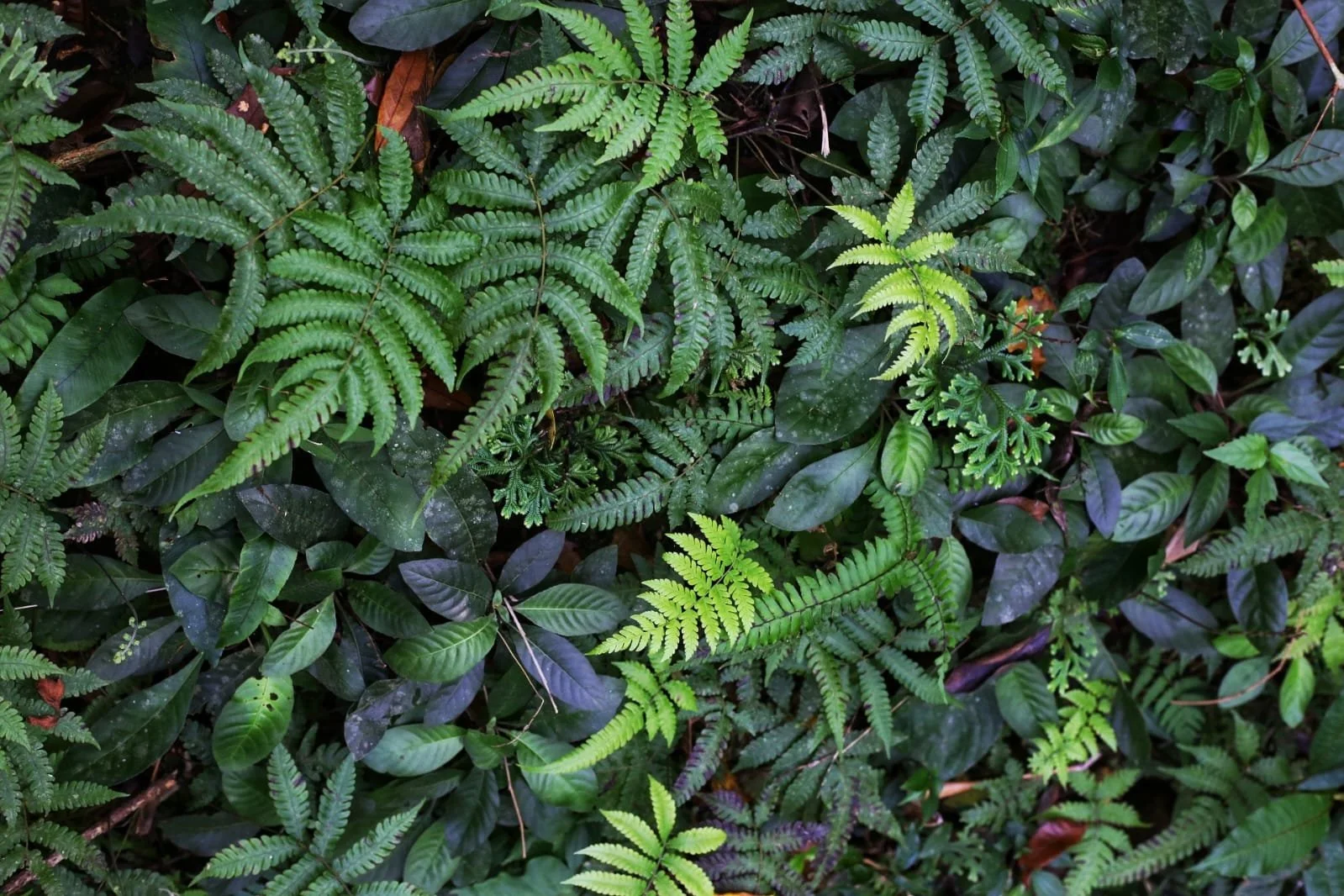
In the dense green mosaic of the American tropics, where towering rainforest meets open pasture and tangled riverbanks, there exists a wild cat that rarely draws attention yet thrives almost everywhere it goes. The Jaguarundi is one of the least recognized felines in the world, not because it is rare, but because it is so easily overlooked. It does not carry the bold patterns of a jaguar or the striking beauty of an ocelot. Instead, it slips through landscapes like a shadow, long, low, and fluid, often mistaken for something else entirely. And yet, in places like Panama, it is very much part of the natural fabric, quietly shaping ecosystems in ways most people never notice.
At first glance, the jaguarundi hardly looks like a typical cat. Its body is elongated, almost tubular, with short legs and a long tail that acts like a rudder as it moves. Its head is small and flattened, its ears rounded and low, giving it a streamlined, almost aerodynamic profile. Many people who catch a brief glimpse think they have seen an otter, a large weasel, or even some unknown creature rather than a feline. Adults typically weigh between three and nine kilograms, but their unusual proportions can make them appear larger or smaller depending on the angle and movement.
One of the most distinctive features of the jaguarundi is its coat. Unlike most wild cats, which rely on spots or stripes for camouflage, the jaguarundi wears a solid color. Individuals are usually either a dark charcoal gray or a rich reddish brown, often referred to as the red phase. These two color forms can exist within the same population, and even within the same litter, which historically led to confusion about whether they were separate species. Today, they are understood to be simply variations of the same adaptable animal.
The jaguarundi’s range is vast, stretching from northern Mexico through Central America and deep into South America. In Panama, it occupies an especially interesting position because of the country’s unique geography. Acting as a biological bridge between two continents, Panama hosts an incredible diversity of habitats within a relatively small area. Jaguarundis take full advantage of this. They can be found in lowland rainforests, along the edges of mangroves, in secondary growth forests, in dry tropical regions, and even in agricultural zones where forest meets farmland.
In Panama, sightings are most likely to occur in transitional areas rather than deep jungle. Regions such as the Caribbean slope near Bocas del Toro, the edges of Darién, and even the patchwork landscapes between farmland and forest in Chiriquí can all support jaguarundis. They are especially fond of areas with dense ground cover, access to water, and a mix of open and closed spaces. This preference makes them masters of edge habitats, places where many other predators struggle to adapt.
One of the most unusual traits of the jaguarundi is its daily activity pattern. While most wild cats are active at night or during twilight hours, the jaguarundi is primarily diurnal. It hunts during the day, especially in the early morning and late afternoon. This gives it access to a different set of prey and reduces competition with other predators such as ocelots and larger cats. In Panama’s forests, where multiple predators share overlapping territories, this time shift is a key survival strategy.
Its diet reflects its adaptability. The jaguarundi feeds on a wide range of small animals, including rodents, birds, reptiles, amphibians, and occasionally fish. In wetter regions of Panama, it may hunt along streams and flooded areas, while in drier zones it focuses more on terrestrial prey. Its body is perfectly suited for this kind of hunting. It can slip through thick undergrowth, pursue prey into tight spaces, and move quickly over short distances with impressive bursts of speed.
Rather than relying on brute force, the jaguarundi is a hunter of precision. It stalks quietly, keeping low to the ground, then launches a quick, decisive attack. Its long tail helps maintain balance, especially when navigating uneven terrain or making sudden turns. This combination of stealth and agility allows it to exploit niches that larger predators cannot.
Socially, the jaguarundi is a solitary animal. Each individual maintains a territory, which it marks using scent and occasionally vocalizations. Compared to other cats, it is surprisingly vocal. It produces a variety of sounds, including chirps, whistles, and chatters, some of which resemble bird calls. These vocalizations are thought to play a role in communication between individuals, especially in dense habitats where visual contact is limited.
Reproduction can occur throughout the year in tropical regions like Panama. After a gestation period of roughly seventy to seventy five days, the female gives birth to one to four kittens in a hidden den. These dens are often located in dense vegetation, hollow logs, or abandoned burrows, places that provide protection from predators and environmental exposure. The young develop quickly, beginning to explore their surroundings within a few weeks and gradually learning to hunt under their mother’s guidance.
From an evolutionary perspective, the jaguarundi is particularly interesting because it belongs to the same genus as the much larger Cougar. Despite the dramatic difference in size and appearance, these two species share a close genetic relationship. This highlights the diversity within the cat family and shows how different species can evolve to fill very different ecological roles while remaining closely related.
In Panama, the jaguarundi plays an important but often invisible role in maintaining ecological balance. As a mid sized predator, it helps control populations of small mammals, birds, and reptiles. This in turn influences plant life and the broader ecosystem. Because it thrives in edge habitats, it can persist in areas where larger predators may struggle, making it an important species in landscapes that have been altered by human activity.
However, this adaptability does not make it immune to threats. Habitat loss remains the biggest challenge for jaguarundis across their range. In Panama, deforestation for agriculture, road development, and urban expansion can fragment habitats and isolate populations. While the species is currently considered to be of least concern globally, local declines can occur where suitable habitat is reduced or heavily disturbed.
Human interactions with jaguarundis are relatively rare. They are elusive and tend to avoid people whenever possible. In rural areas, they may occasionally prey on poultry, which can lead to conflict, but these incidents are generally limited. Most people who live in jaguarundi territory will never knowingly see one, even if the animal is present nearby.
What makes the jaguarundi so compelling is its subtlety. It does not announce itself, it does not dominate the landscape, and it does not fit the image most people have of a wild cat. Instead, it exists in the margins, moving quietly through forests, fields, and riverbanks, adapting to whatever environment it encounters. In a country like Panama, where biodiversity is both rich and constantly under pressure, the jaguarundi stands as a symbol of resilience and quiet survival.
To truly appreciate the jaguarundi is to look beyond the obvious, to notice the animals that do not demand attention but earn it through their ability to persist. It is a reminder that the natural world is not only shaped by the iconic and the dramatic, but also by the small, the adaptable, and the nearly invisible creatures that continue their lives just out of sight, day after day, in the ever changing landscapes of the Americas.