
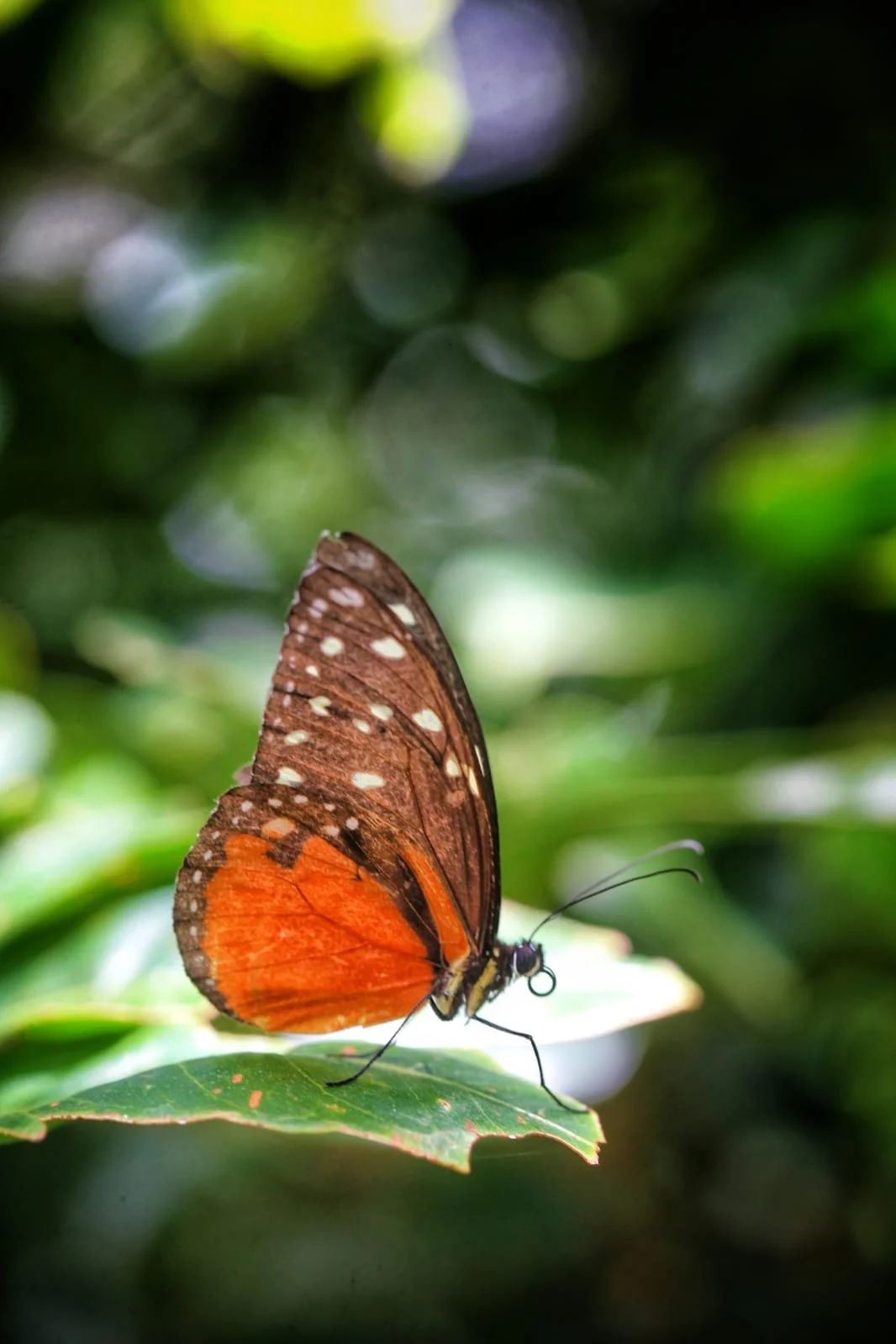
When darkness settles over Panama’s rainforests, a different world takes flight. The daytime chorus of birds fades, replaced by the soft flutter of wings and the hum of nocturnal life. Among the most mesmerizing of these nighttime creatures are the giant moths, some of the largest and most mysterious insects in the Americas. Drawn to lights and hidden among tree trunks, these silent fliers can be as large as a dinner plate, and in some cases, even larger.
Panama, sitting at the crossroads of North and South America, is one of the richest places on Earth for insect diversity. Its warm climate, dense forests, and year round plant growth create the perfect conditions for moths to thrive, and for a few species, to grow to astonishing sizes.
The White Witch, Queen of the Night
The undisputed giant of Panama’s moth world is the White Witch moth. This legendary insect is often described as the largest moth in the world by wingspan, with individuals reaching up to 30 centimeters across. Seeing one in the wild is unforgettable.
Its wings are pale gray to creamy white, covered in delicate, swirling patterns that resemble tree bark. When it rests flat against a trunk, it becomes almost invisible, a perfect example of camouflage evolved over millions of years. But when it takes flight, the illusion disappears, and what you see instead is something ghostlike and enormous drifting through the night air.
Stories from across Central America describe people mistaking the White Witch for bats or even birds. In some rural areas, it has picked up a reputation as an omen or spirit, simply because of its size and silent, haunting flight. Despite its dramatic presence, it is completely harmless to humans.
The Heavyweights, Giant Silk Moths
Closely following the White Witch in terms of impact are the giant silk moths, members of the Saturniidae. These moths may not always match the White Witch in sheer wingspan, but they make up for it with thick, furry bodies and bold, eye catching patterns.
In Panama, genera like Rothschildia and Automeris are especially common. Many of these species reach wingspans between 12 and 18 centimeters, and their wings often feature dramatic eye spots that mimic the eyes of predators. When threatened, they may flash these markings to startle birds or other attackers.
One of the most fascinating aspects of these moths is their short adult life. Unlike butterflies, many silk moths do not eat once they emerge. Their mouthparts are reduced, and they rely entirely on the energy they stored as caterpillars. Their sole purpose is to reproduce, often living just a few days to a week.
Their caterpillars, however, are a different story entirely. Large, colorful, and sometimes covered in spines, they spend weeks feeding on leaves and growing rapidly. In Panama’s lush forests, food is abundant, allowing them to reach impressive sizes before transforming into adults.
The Speed Demons, Hawk Moths
Not all large moths drift slowly through the night. Members of the Sphingidae are built for speed and precision. Known as hawk moths or sphinx moths, these insects are powerful fliers with long, narrow wings and streamlined bodies.
Species in the genus Manduca are common in Panama and can reach wingspans of 10 to 15 centimeters. They are famous for their ability to hover in front of flowers, much like hummingbirds, while extending a long proboscis to feed on nectar. Watching one in action at night can feel almost surreal, as it appears to hang motionless in mid air before darting away in an instant.
These moths are important pollinators, especially for plants that bloom at night. In many cases, the relationship between the moth and the flower is highly specialized, with the shape of the flower matching the length of the moth’s feeding tube.
Hidden Giants of the Forest
Beyond the well known groups, Panama is home to a variety of lesser known large moths that rarely get attention. Families like Notodontidae include species that may not be record breakers, but still reach impressive sizes and display unique shapes and patterns.
Some have angular wings that resemble dead leaves, others have bold stripes or unusual textures that help them blend into bark or foliage. These moths remind you that in a place as biodiverse as Panama, even the “less famous” species can be extraordinary.
Why Panama Produces Giant Moths
The secret behind these oversized insects lies in Panama’s environment. The country’s tropical climate provides consistent warmth and moisture, which allows plants to grow continuously. This, in turn, supports large populations of caterpillars, giving them the resources they need to grow bigger than their temperate counterparts.
In addition, the dense rainforest creates a complex web of predators and prey. To survive, moths have evolved a range of defenses, including camouflage, mimicry, and sheer size. Being larger can sometimes deter predators or make it harder to capture them mid flight.
The abundance of nighttime flowers also plays a role. Many plants rely on moths for pollination, and larger moths can travel farther distances, helping maintain the health and diversity of the forest.
Where and How to See Them
Visiting Lost and Found Hostel in the cloud forest jungle is a great place to start!
Spotting giant moths in Panama is surprisingly achievable if you know where to look. Your best chances are in forested areas, especially near national parks like Parque Nacional Soberanía.
Lights are your greatest ally. Moths are naturally attracted to artificial light, so staying near a bright porch, lodge, or even a streetlamp in a rural area can yield incredible sightings. Warm, humid nights during the rainy season are particularly productive.
Sometimes, you will find them resting during the day, pressed flat against a tree trunk or wall. At first glance they look like part of the surface, but once you notice the outline, the illusion disappears and the size becomes striking.
A Final Glimpse into the Night
Panama’s giant moths are more than just oversized insects. They are living pieces of an ancient and complex ecosystem, perfectly adapted to life in the shadows. From the ghostly glide of the White Witch to the bold patterns of silk moths and the rapid flight of hawk moths, each species tells a story of survival, adaptation, and quiet beauty.
Next time you find yourself in Panama after dark, pause by a light and look closely. Out of the blackness, wings may appear, soft, silent, and impossibly large, reminding you that some of the most extraordinary wildlife in the tropics does not roar or call, it simply drifts through the night like a witch on the wind.