
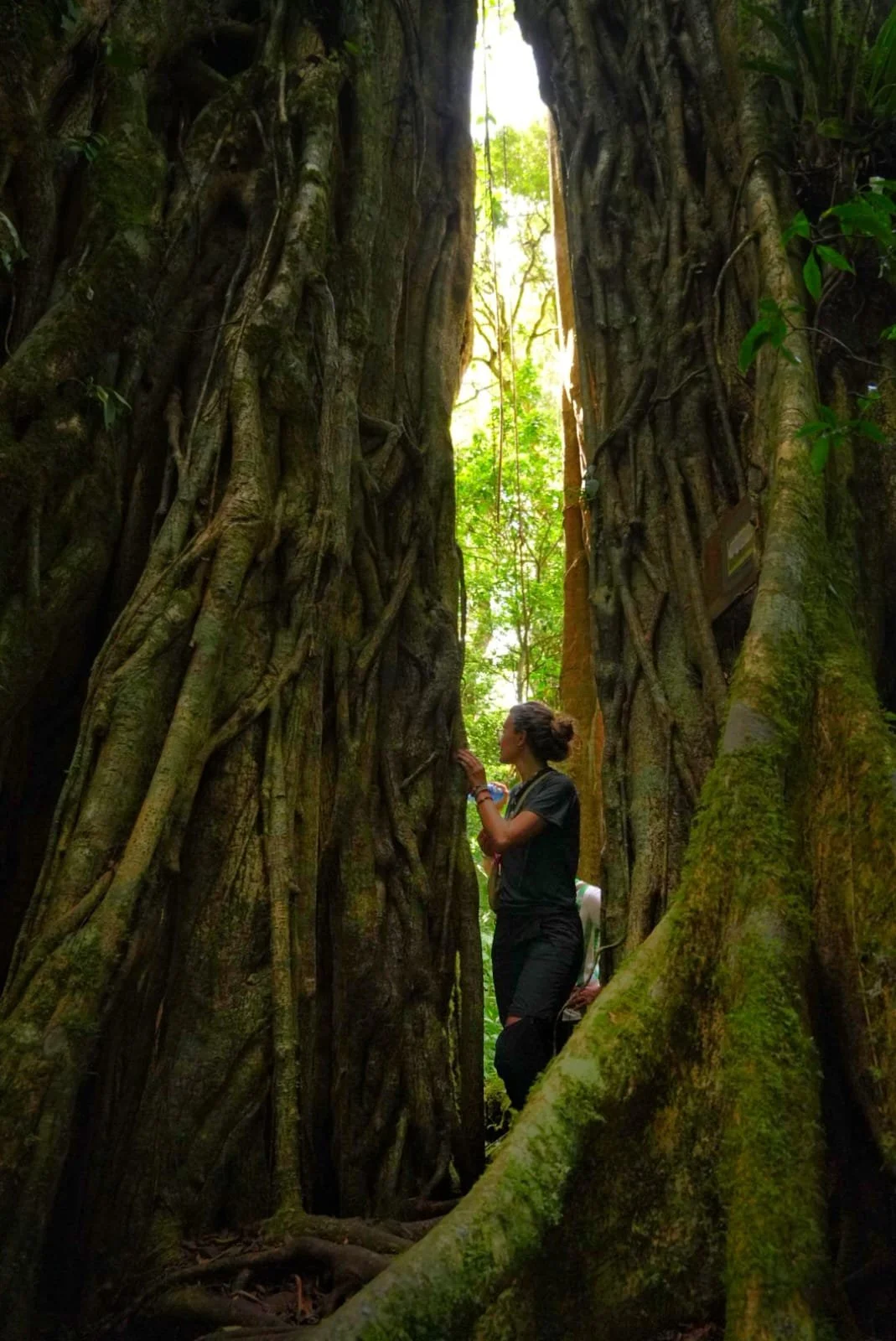
Panama is one of the few places on Earth where nature still feels genuinely oversized.
Not oversized in the sense of landmass, because Panama is actually quite narrow and compact, but oversized biologically. The country feels almost absurdly alive. Rainforest spills down mountainsides into mangroves. Rivers vanish into jungle. Coral reefs glow offshore. Clouds wrap around volcanic highlands while two oceans crash against opposite coasts only hours apart.
And because Panama sits directly between North and South America, it became one of the greatest wildlife crossroads on the planet.
Species from two continents collided there.
The result is extraordinary.
Massive cats prowl the jungle. Gigantic whales move through tropical seas. Huge snakes vanish into riverbanks. Venomous spiders hide beneath leaves. Harpy eagles patrol rainforest skies like prehistoric creatures. Tiny frogs carry poison potent enough to stop predators instantly.
Panama often feels less like a country and more like nature experimenting with excess.
And once you begin asking questions about the extremes, the country becomes even more fascinating.
What is the biggest? The fastest? The heaviest? The deadliest? The loudest? The strangest? The most terrifying thing that might quietly exist beside the trail while you are taking jungle photos?
The answers become wonderfully unsettling.
Let us begin offshore with the true giants.
The biggest mammal regularly found in Panamanian waters is the magnificent Humpback whale.
During migration season, humpback whales pass through Panama’s Pacific coast in spectacular numbers. Places like Coiba National Park, the Gulf of Chiriquí, and the Pearl Islands become incredible whale watching regions.
And seeing a humpback whale in person changes your understanding of size immediately.
Photographs never prepare people properly.
A humpback suddenly erupting from tropical water feels impossible. The sound alone is enormous. Water explodes upward. The whale twists through the air with shocking grace for something weighing tens of thousands of pounds.
Their tails alone can appear larger than small cars.
And humpbacks are not even the absolute largest creatures capable of entering Panamanian waters.
Rarely, the colossal Blue whale may pass through the eastern Pacific.
The blue whale is the largest animal known to have ever existed in Earth’s history.
Not largest mammal. Largest anything.
Larger than the biggest dinosaurs. Larger than any prehistoric marine reptile. Larger than every predator humans have ever feared.
Its tongue can weigh as much as an elephant. Its heart can weigh hundreds of pounds.
Just imagine floating in warm Pacific water knowing something the size of an apartment building may exist somewhere beneath the horizon.
Then there are the fastest creatures in the sky.
The fastest bird in Panama is the legendary Peregrine falcon.
Actually, it is the fastest animal on Earth entirely.
During hunting dives, peregrine falcons can exceed speeds of over 200 miles per hour. Watching one attack feels less like observing a bird and more like witnessing a missile.
Other birds panic instantly when peregrines appear.
And Panama’s location makes it one of the world’s greatest bird migration corridors. Massive numbers of raptors funnel through the country seasonally. Entire skies can fill with migrating hawks, vultures, falcons, and eagles spiraling on thermal currents.
Then comes Panama’s most powerful bird.
That title belongs to the breathtaking Harpy eagle.
The harpy eagle does not look entirely real.
It looks designed by mythology.
Massive talons. A huge hooked beak. Powerful yellow legs. Piercing eyes. A dramatic feathered crown that rises when alert.
This eagle is strong enough to hunt monkeys and sloths directly from rainforest canopies. Its claws rival the size of grizzly bear claws. Seeing one perched silently in the jungle canopy would feel like discovering a surviving dinosaur.
And because Panama still retains substantial rainforest habitat, harpy eagles survive there better than in many neighboring countries.
Then we move into the jungle shadows themselves.
The largest wild cat in Panama is the legendary Jaguar.
Very few travelers ever see one.
And honestly, perhaps that is part of what makes them so frightening.
Jaguars are ghosts of the rainforest.
Silent. Muscular. Invisible.
They move through dense jungle with astonishing stealth. Indigenous communities and experienced jungle guides speak about jaguars with deep respect because they understand how completely these predators dominate their environment.
Unlike many big cats, jaguars are immensely powerful for their size. They possess one of the strongest bite forces among all cats and are capable swimmers that move easily through swamps and rivers.
A jaguar does not chase prey dramatically across open plains.
It ambushes.
Quietly.
Somewhere in the dense forests of the Darién region, jaguars still move through rainforest almost entirely unseen by humans.
Then comes the smallest wild cat in Panama.
That distinction belongs to the elusive Oncilla, also called the little spotted cat.
The oncilla looks almost deceptively adorable.
Tiny. Beautifully patterned. Large eyed. Barely larger than a house cat.
Yet it is a true rainforest predator.
Many people never realize Panama contains several different species of wild cats: Jaguars. Pumas. Ocelots. Margays. Jaguarundis. Oncillas.
The jungles are filled with secretive feline predators people almost never glimpse.
And perhaps the strangest among them is the Jaguarundi, a long bodied, unusual looking cat that resembles a cross between a cougar, an otter, and something entirely invented.
Then come the snakes.
Panama contains some truly enormous serpents.
The longest regularly encountered snake is the Boa constrictor.
Large boas in Panama become astonishingly muscular. Travelers often imagine snakes mainly in terms of length, but encountering a genuinely large tropical boa changes that perception instantly.
The thickness is what shocks people.
A giant boa crossing a trail at night looks less like a snake and more like a moving section of jungle itself.
After feeding, the body bulges grotesquely around swallowed prey. They move slowly, confidently, without urgency, like creatures completely aware they occupy the top tier of the rainforest food chain.
But the most dangerous snake is unquestionably the infamous Fer-de-lance.
Locally feared across Central America, the fer-de-lance combines nearly every terrifying characteristic possible: Large size. Potent venom. Camouflage. Aggressive defensive behavior. A habit of inhabiting areas humans frequently walk through.
Many bites occur because hikers or farmers never even saw the snake before stepping dangerously close.
Under rainforest leaves they become almost invisible.
Experienced guides in Panama constantly scan the ground because of them.
Then there are the giant spiders.
The biggest spiders in Panama are the enormous tropical tarantulas that emerge during humid nights.
Seeing one unexpectedly beneath a flashlight beam can cause an instant full body adrenaline response even in people who normally claim not to fear spiders.
Some species grow large enough to cover a dinner plate with their legs extended.
Hairy. Slow moving. Heavy bodied.
And then there are the terrifyingly fast wandering spiders, which feel far more psychologically disturbing because of their speed.
A tarantula sitting still is alarming. A giant spider suddenly sprinting across jungle floor feels like a direct attack on human emotional stability.
Panama also contains enormous orb weaver spiders that construct giant golden webs across forest paths at night. Backpackers hiking early morning trails occasionally discover these webs directly with their faces, producing moments of pure primal panic.
Then there are the insects.
Panama’s insect life sometimes feels completely unreasonable.
The most infamous is the Bullet ant.
The sting is legendary.
People compare it to: Being electrocuted. Being burned. Being shot.
Hence the name.
The pain can last for hours and radiates through entire limbs. Jungle hikers occasionally discover bullet ants accidentally by touching the wrong tree trunk or leaning against vegetation.
Then come the army ants.
Entire rivers of aggressive ants moving across jungle floor consuming nearly everything in their path. Small animals flee them. Insects scatter. The forest itself seems to shift around their movement.
And then there are the mosquitoes.
Tiny compared to Panama’s larger predators, yet statistically far more relevant to travelers. Jungle mosquitoes can become relentless in humid regions, especially near standing water and mangroves.
Some nights in tropical Panama feel like entering negotiations with airborne vampires.
Then comes the loudest animal.
The Howler monkey.
Tourists hearing howlers for the first time often assume some enormous prehistoric beast lurks in the jungle.
The sound is astonishing.
Deep roaring bellows echo across valleys at sunrise and dusk like distant monsters.
Then you finally spot the source: A surprisingly lazy looking monkey lounging in a tree.
The contrast is genuinely funny.
Then there are Panama’s aquatic predators.
The largest reptilian predator is the American crocodile.
Huge individuals inhabit estuaries, mangroves, rivers, and muddy coastal systems.
At night their eyes reflect red beneath flashlight beams.
Most avoid humans, but experienced locals treat crocodile habitat with enormous respect. Swimming in certain rivers after dark becomes a very different psychological experience once you know giant crocodiles inhabit them.
And offshore, Panama’s oceans contain massive pelagic predators too.
Hammerhead sharks gather near islands like Coiba National Park.
Whale sharks occasionally appear, enormous gentle giants larger than buses gliding through tropical water.
Sailfish explode through the ocean at incredible speeds. Marlin patrol offshore depths. Manta rays soar beneath the surface like underwater spacecraft.
Then come the smallest extremes.
Tiny poison dart frogs smaller than coins hide among rainforest leaves.
Some glow electric blue. Others blaze yellow or red.
Their colors act as warnings.
Nature advertising danger openly.
Certain species contain toxins powerful enough to discourage predators immediately.
They look almost cartoonishly beautiful against wet jungle moss.
And perhaps the strangest truth about Panama is this:
The extremes are not isolated.
They overlap constantly.
You can wake up hearing howler monkeys roar through misty jungle canopy, hike beneath enormous rainforest trees filled with poison frogs and tarantulas, watch toucans fly overhead, encounter bullet ants beside the trail, then finish the day watching humpback whales breach against a Pacific sunset.
Very few places on Earth compress so much biological intensity into such a small country.
Panama feels concentrated.
Hotter. Wilder. Louder. Deadlier. More alive.
It is a place where nature still feels dominant, unpredictable, and sometimes faintly terrifying in the best possible way.
And once travelers begin noticing the extremes hidden all around them, Panama stops feeling like merely another tropical destination.
It begins to feel like a living wilderness museum where evolution simply decided to show off.