
Along the Caribbean side of western Panama lies one of the largest and least understood protected regions in Central America. Stretching across remote mountains, river valleys, Indigenous territories, cloud forests, swamps, and jungle covered coastline, Palo Seco Protected Forest remains overshadowed by more famous destinations nearby. Most travelers heading toward Bocas del Toro pass through the region without realizing that beside them exists a massive wilderness connected to some of the richest ecosystems in the hemisphere.
Palo Seco is enormous. Covering hundreds of thousands of hectares, it forms a critical buffer zone surrounding La Amistad International Park, the giant transboundary protected area shared between Panama and Costa Rica. Together, these forests create one of the largest uninterrupted tropical ecosystems in Central America.
Yet unlike heavily visited national parks with clearly marked entrances and tourist infrastructure, Palo Seco feels mysterious and difficult to define. In many places there are no obvious borders announcing that you have entered protected land. The wilderness simply begins swallowing the roads, rivers, and mountains around you.
The geography of Palo Seco is astonishingly varied. The protected forest stretches from humid Caribbean lowlands upward into steep mountains wrapped in cloud forest. Rivers crash through deep jungle valleys before flowing northward toward the Caribbean Sea. Some areas are hot and swampy while others become cool, misty, and almost alpine at higher elevations.
This enormous range of environments creates incredible biodiversity. Scientists consider the region one of the most biologically important landscapes in all of Central America. Thousands of plant species grow there, many found nowhere else on Earth. The forests shelter jaguars, pumas, tapirs, monkeys, sloths, poison dart frogs, toucans, harpy eagles, and countless insects still poorly studied by science.
Part of what makes Palo Seco so fascinating is how alive it feels. The rainforest there is not quiet. It hums constantly with insects, bird calls, dripping water, and distant animal sounds echoing through the jungle.
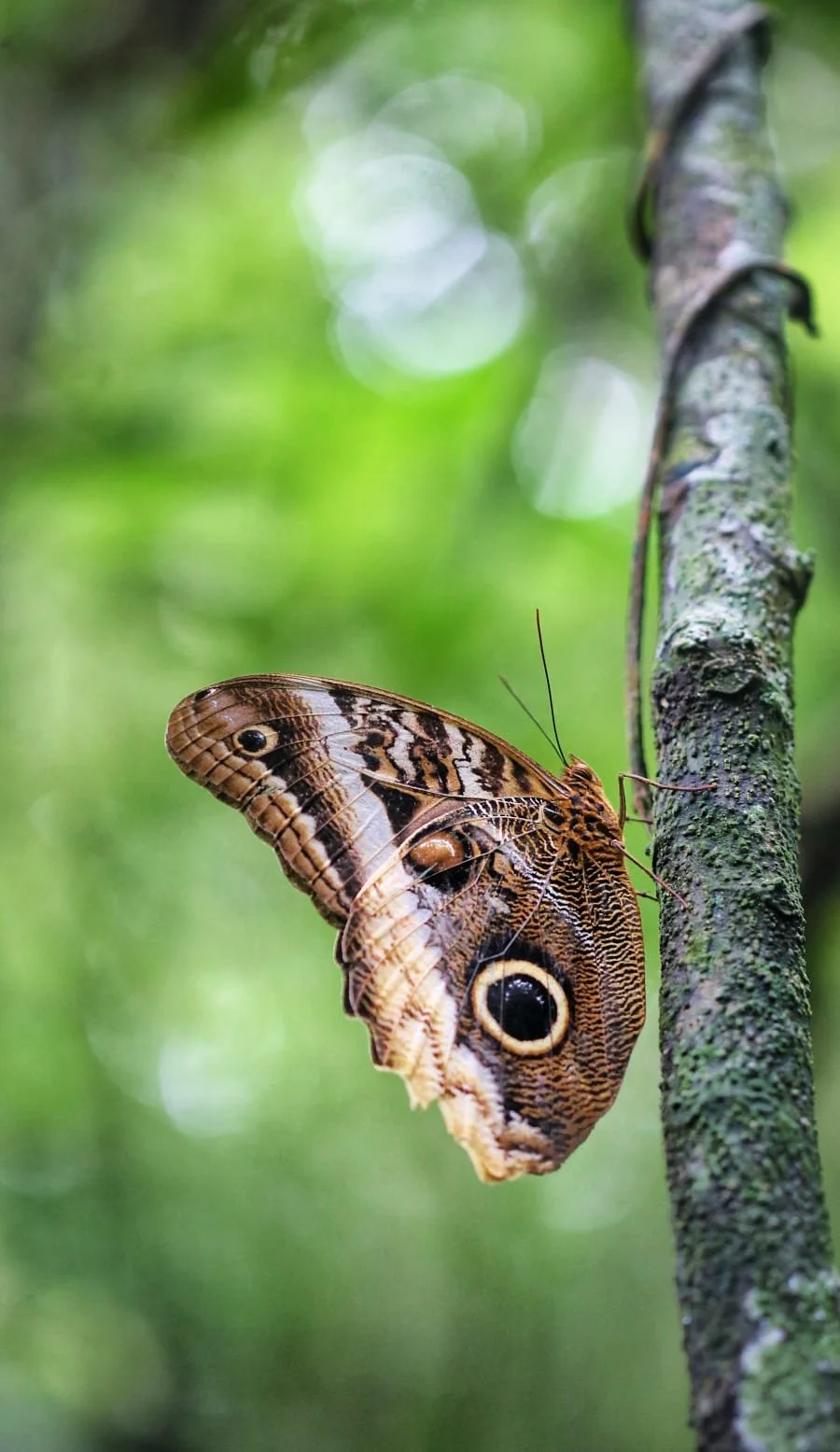
At dawn, howler monkeys roar from the canopy with calls so deep they resemble distant engines. Hummingbirds flash between tropical flowers while butterflies drift through shafts of sunlight cutting into the forest. At night the jungle transforms entirely. Frogs begin calling from hidden pools, insects create endless layers of sound, and darkness settles heavily beneath the trees.
The rainfall in Palo Seco is immense. Moisture blowing inland from the Caribbean collides with the mountains, creating some of the wettest conditions in Panama. Storms can last for hours or even days. Rivers rise rapidly. Mist clings to the slopes. Moss and ferns grow over nearly every surface.
This relentless humidity helps create the region’s famous cloud forests. At higher elevations, the forest becomes surreal. Trees disappear beneath thick layers of moss, orchids, bromeliads, and vines. Clouds drift directly through the canopy, sometimes reducing visibility to only a few meters. The atmosphere feels ancient and almost primeval.
The human history of Palo Seco is equally fascinating. Long before modern conservation boundaries existed, Indigenous peoples lived throughout these forests and river systems. Much of the protected area overlaps with territories traditionally used by the Ngäbe and Naso peoples, whose cultures remain deeply connected to the rivers, mountains, and forests of western Panama.
The Naso people in particular are strongly associated with remote forested regions near the Caribbean side of Bocas del Toro. Their communities historically relied on rivers for transportation through landscapes where roads were almost nonexistent. Even today, some settlements remain accessible mainly by boat or rough jungle routes.
For generations, these forests were never truly isolated from human presence. Indigenous hunting trails, river travel routes, and small agricultural clearings existed deep within areas outsiders often considered untouched wilderness. The relationship between people and forest here has always been complex and ancient.
Modern conservation efforts brought new tensions. Protecting biodiversity became increasingly important as logging, hydroelectric projects, ranching, and development pressures expanded into western Panama. Yet local communities also depended on the land for survival. Balancing conservation with Indigenous rights and economic realities remains an ongoing challenge throughout the region.
The rivers flowing through Palo Seco are among its defining features. Some begin high in misty mountain valleys before descending through steep jungle canyons toward the Caribbean coast. During dry periods they can run clear and beautiful, reflecting dense green forest along their banks. During the rainy season they become immense torrents of brown water carrying logs, sediment, and debris downstream with astonishing force.
One of the most famous waterways connected to the region is the Teribe River, which cuts through remote jungle landscapes associated with Naso territory. Traveling by boat through these river systems can feel like entering another century. Dense forest walls rise on both sides while tropical rain hammers the canopy overhead.
Wildlife researchers consider Palo Seco critically important because it forms part of a biological corridor connecting ecosystems across Central America. Large mammals such as jaguars require vast territories to survive, and these connected forests allow animals to move between regions without becoming trapped in isolated habitat fragments.
Bird diversity is especially spectacular. Western Panama contains some of the richest birdlife in the hemisphere, and Palo Seco protects habitats ranging from Caribbean lowland rainforest to high elevation cloud forest. Resplendent quetzals inhabit cooler mountain forests nearby, while toucans, trogons, parrots, and hawks move through lower elevations.
Amphibians are another major feature of the region. The wet forests provide ideal habitat for frogs and salamanders, including species found nowhere else. Scientists continue discovering new or poorly understood amphibians in western Panama’s mountains.
Yet the region also carries an atmosphere of vulnerability. Climate change, deforestation pressures, mining interests, and infrastructure expansion threaten ecosystems throughout Central America. Heavy rainfall patterns are shifting. Rivers face increasing pressure from development. Roads push deeper into previously isolated areas.
Because Palo Seco remains less famous internationally than many protected areas, it often receives less public attention despite its enormous ecological importance.
For adventurous travelers and researchers, part of the region’s appeal lies in its difficulty. Palo Seco is not a polished tourist destination. Many areas lack infrastructure entirely. Trails can disappear into mud and jungle. Rivers may become impassable after storms. Some regions remain genuinely remote even today.
This difficulty preserves a sense of mystery increasingly rare in the modern world. There are valleys in Palo Seco where very few outsiders have ever walked. Entire mountain slopes remain biologically underexplored. The forest still feels larger and more powerful than the human presence within it.
In some parts of the protected forest, the jungle canopy stretches uninterrupted to the horizon. Clouds drift above endless green ridges while rivers carve through landscapes almost unchanged for centuries.
That is what makes Palo Seco so remarkable. It is not merely a protected area on a map. It is one of the last immense tropical wildernesses in Panama, a place where rainforest, rivers, mountains, wildlife, and Indigenous history still remain deeply intertwined.
For most travelers heading toward the beaches and islands of Bocas del Toro, the forests rise silently in the background, enormous and largely unseen.
But beyond those mountains lies one of the wildest regions in Central America, where the rainforest still feels ancient, endless, and alive.