
Panama looks simple on the surface: a narrow strip of land connecting two continents, famous for its canal and tropical weather. But the further you dig into it, the more it starts to feel like a country built out of contradictions, geographical tricks, cultural overlaps, and biological extremes. It’s one of those places where you can drive for a few hours and feel like you’ve crossed multiple countries without ever leaving the same nation.
Here are ten genuinely strange, surprising, and sometimes mind-bending things about Panama that tend to blow people’s expectations apart once they actually spend time here.
1. You can be surrounded by rainforest inside a capital city
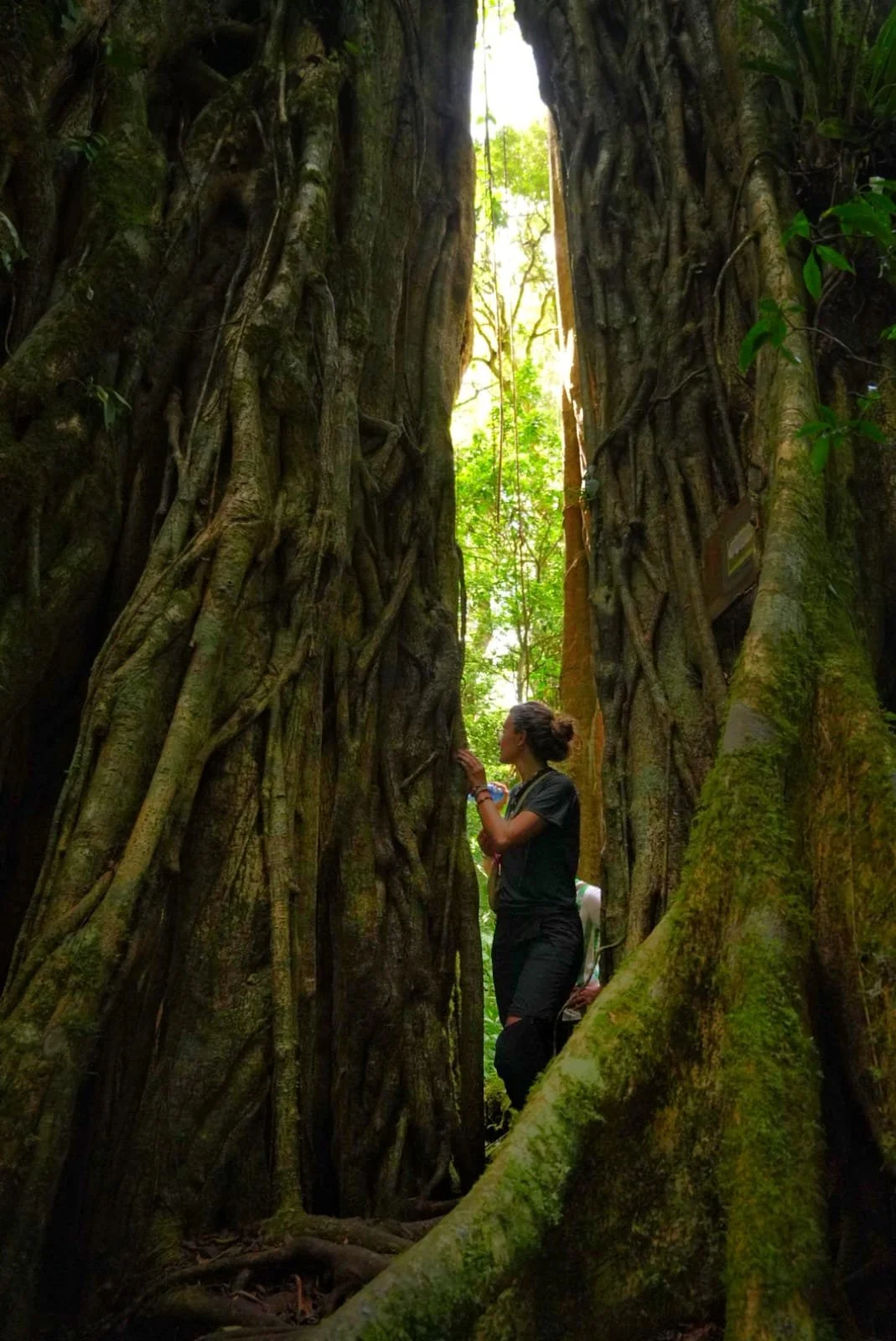
Most capitals separate themselves from nature. Panama City does the opposite. Within minutes of leaving downtown skyscrapers, you can be deep inside dense jungle where the soundscape shifts from traffic horns to howler monkeys and tropical birds.
Places like Soberanía National Park are practically embedded into the city’s edge. In some areas, the jungle is so close that fog rolls over highways in the morning and monkeys can be heard from suburban neighborhoods. It creates a strange dual reality where ultra-modern finance districts coexist with ancient rainforest ecosystems.
2. The country is so narrow you can cross it in a few hours but it feels like multiple worlds
Panama is famously narrow, but what surprises people is not the distance, it’s the diversity compressed into it. In a single day, you can go from Caribbean-style islands, to cloud forests, to Pacific beaches, to dry savannas.
This extreme variation is one reason Panama has such high biodiversity, but it also creates cultural fragmentation. Coastal Caribbean communities, highland Indigenous villages, and urban metro areas can feel like entirely different countries.
3. The sun can behave strangely depending on where you are
Because of Panama’s position near the equator and its unusual coastline curves, sunrise and sunset don’t always behave the way people expect. In some coastal regions, especially near curved shorelines, the sun appears to rise and set over the same ocean depending on angle and geography.
It’s not magic, but it feels like it when you experience it without expecting it.
4. There are Indigenous island nations inside Panama with their own laws and identity
One of the most surprising realities is that Panama contains semi-autonomous Indigenous territories where governance, culture, and daily life operate differently from the rest of the country.
In regions like Guna Yala, island communities maintain their own traditions, language structures, and governance systems. Some islands feel more culturally aligned with Caribbean island nations than mainland Central America.
Visitors often describe it as stepping into a parallel version of Panama that follows its own rules and rhythm.
5. A major ocean shipping route cuts through a rainforest continent
The Panama Canal is one of the most surreal engineering environments in the world. Massive cargo ships from Asia, Europe, and the Americas pass through a narrow tropical isthmus where monkeys, crocodiles, and toucans live just meters away.
It’s one of the few places where global trade physically intersects with untouched rainforest ecosystems in real time.
6. Some churches still in use are older than most countries in the Americas
In towns like Natá and Panama Viejo, there are churches that date back to the early 1500s. Many of them are still active religious spaces rather than just historical ruins.
That means you can attend a modern service inside a building that has existed since the earliest period of European colonization in the Americas. It creates a strange layering of time where colonial history is not distant, it is still functioning.
7. Panama has more bird species than the United States and Canada combined
Despite its size, Panama sits at a biological intersection between North and South America. This creates one of the richest bird populations on the planet.
The country has hundreds of bird species packed into relatively small ecosystems, from coastal wetlands to mountain cloud forests. Birdwatchers often describe it as one of the most intense biodiversity experiences anywhere in the Western Hemisphere.
8. There is a mountain range where you can feel like you’ve entered another climate zone entirely
In western Panama, especially in the highlands of Chiriquí, temperatures drop dramatically compared to the rest of the country. In places like Boquete, you can go from tropical heat to cool, misty mountain air in a matter of hours.
Coffee grows in cloud forests, fog rolls through valleys daily, and the ecosystem feels closer to temperate regions than tropical ones, even though you’re still in Central America.
9. Hammocks are not a lifestyle trend, they are real infrastructure
In many rural parts of Panama, hammocks are not decorative or recreational. They are functional sleeping systems designed for heat, humidity, and airflow.
In some homes, hammocks are preferred over beds because they stay cooler, are easier to maintain in humid climates, and can be moved or adjusted depending on weather conditions. In traditional settings, multiple hammocks may hang in a single open-air space like normal furniture.
10. Carnival rivalries are so intense they operate like year-round cultural organizations
In towns like Las Tablas, Carnival is not just a festival, it is a structured, long-term cultural competition.
Two main groups prepare all year, designing costumes, planning floats, and organizing music performances in secrecy. The rivalry is so embedded that it influences community identity, social networks, and even local pride.
During Carnival, the entire town becomes a staged performance space where music, color, and spectacle dominate every street for days.
Panama is not just a bridge between continents. It is a bridge between ecosystems, cultures, climates, and time periods. It compresses extremes into a small geographic space, which is why it often feels larger and stranger than it appears on a map.
One moment you’re in a modern financial district. A short drive later, you’re in ancient rainforest, Indigenous island territory, or colonial architecture still in use. The transitions are abrupt, and that is exactly what makes it unforgettable.
Panama doesn’t just connect places.
It stacks them on top of each other.