
Hidden high in the mountains of western Panama lies one of the most famous hiking routes in Central America, the Quetzal Trail. Known in Spanish as Sendero Los Quetzales, this misty mountain path cuts through the dense cloud forests of Volcán Barú National Park, connecting the cool mountain town of Boquete with the quieter agricultural region around Volcán. For many travelers, hiking this trail becomes one of the unforgettable highlights of visiting Panama because it feels completely different from the tropical beaches and hot lowlands that most people associate with the country.
The Quetzal Trail is not simply a walk through the forest. It is a journey into one of the most biologically rich mountain ecosystems in Central America. The trail winds through dripping moss covered trees, giant ferns, hidden streams, hanging vines, bamboo groves, and dense fog that can transform the forest into something that feels almost prehistoric. Every few minutes the atmosphere changes. One moment sunlight breaks through the mist and lights up the green canopy, and the next moment thick clouds roll through the forest so heavily that visibility drops to only a few meters.
The trail gets its name from the resplendent quetzal, one of the most legendary birds in the Americas. The quetzal is famous for its shimmering green feathers, bright red chest, and long flowing tail feathers on the males. Birdwatchers travel from all over the world hoping to see one here. The cloud forests around Boquete and Volcán are considered some of the best places in Panama to spot quetzals, especially during breeding season when the birds are more active near wild avocado trees. Even hikers who know little about birds quickly understand why the quetzal became so culturally important throughout Central America. Seeing one glide silently through the misty forest can feel almost unreal.
One of the reasons the Quetzal Trail is so famous is because it offers an unusual backpacking experience in Panama. Most travel in the country revolves around buses, islands, beaches, surf towns, and jungle lodges. The Quetzal Trail instead feels like a true mountain crossing. You are literally hiking from one side of the continental divide to the other through a remote protected forest at elevations often above 2000 meters. The air is cool, wet, and fresh. At times it hardly feels like tropical Central America at all.
The trail itself is usually considered moderately difficult, though conditions can quickly make it much harder. In perfect weather, experienced hikers often complete the route in around four to six hours. But weather in the cloud forest changes constantly, and mud is one of the defining characteristics of the trail. During the rainy season the path can become extremely slippery, deeply muddy, and physically exhausting. Some sections turn into near swamps where boots sink deep into thick mud. Fallen trees, wet roots, and steep inclines can slow hikers dramatically. Travelers expecting a smooth easy forest walk are often surprised by how rugged the route can become.
The total distance varies slightly depending on the starting point and route conditions, but most hikers cover around 9 to 15 kilometers. What makes the hike feel harder than the distance suggests is the terrain itself. The trail is rarely flat. Instead it constantly climbs, descends, twists through roots, crosses streams, and navigates uneven muddy ground. Good hiking shoes are almost essential. Many travelers underestimate how wet the trail can be and regret attempting it in ordinary sneakers.
One of the most common questions travelers ask is which direction is easier, hiking from Boquete to Volcán or from Volcán to Boquete. This topic is debated constantly among backpackers and guides, but most experienced hikers agree that hiking from Boquete toward Volcán is generally easier overall.
The Boquete side begins at a higher elevation, usually near the ranger station area around Bajo Mono or Pipeline Road access points, depending on the exact route being used. From there much of the trail trends gradually downhill toward the Volcán side. There are still climbs and difficult muddy sections, but the overall descent makes the trek physically less punishing for most people.
Starting from Volcán and hiking toward Boquete is generally considered more difficult because you spend more time climbing uphill through muddy terrain at high altitude. The elevation gain becomes much more noticeable, especially in wet conditions. Hikers coming from Volcán often finish the trek far more exhausted than those hiking the opposite direction.
Because of this, many travelers choose a practical strategy. They stay in Boquete, arrange transportation to the trailhead, hike toward Volcán, and then take transport back afterward. Some hostels and tour companies even help organize luggage transfers or shuttle pickups on the opposite side.
Despite being famous, the Quetzal Trail is not a wilderness expedition in the extreme sense. Plenty of travelers hike it independently without guides, especially during the dry season. The path is reasonably well known, and there is regular foot traffic. However, conditions can still become serious if weather deteriorates. Dense fog sometimes reduces visibility dramatically, and heavy rain can transform the trail into a difficult muddy obstacle course. Independent hikers should ideally download offline maps beforehand because trail intersections and alternate routes can occasionally create confusion.
Hiring a guide remains popular for several reasons. Guides know where quetzals are nesting, understand changing weather patterns, help with navigation, and can explain the incredible biodiversity of the cloud forest. Travelers interested in birds, orchids, frogs, and ecology often get much more out of the experience with a knowledgeable local guide. Some guides carry spotting scopes, allowing hikers to see distant quetzals perched high in the canopy.
The beauty of the Quetzal Trail is not dramatic in the same way as towering mountains or giant waterfalls. Instead its beauty feels immersive and atmospheric. Everything is alive with moisture and texture. Moss grows over nearly every surface. Tiny streams appear from nowhere and disappear back into the forest. Strange fungi grow from fallen trees. The air smells earthy and cold. Birds call invisibly from deep in the fog. Sometimes clouds drift through the trees so slowly that the forest appears to breathe.
Many travelers say the trail feels ancient. The cloud forest environment creates an almost dreamlike mood because visibility constantly changes. One moment you can see deep green valleys below, and the next moment the entire world disappears into white mist. This shifting atmosphere is one reason photographers love the hike so much. Every hour the trail looks completely different.
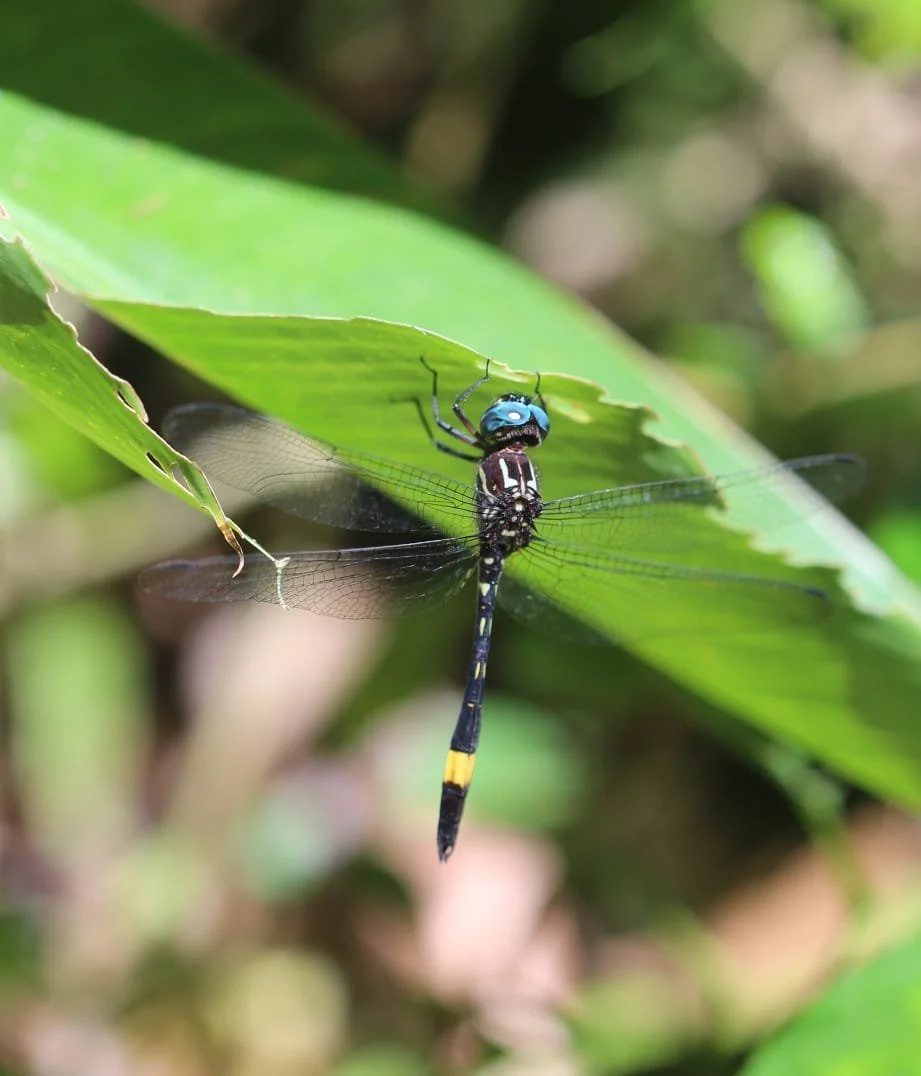
Wildlife is another major attraction. Besides quetzals, hikers may encounter toucanets, hummingbirds, black faced solitaires, monkeys, coatis, and countless species of insects and amphibians. The forests of Volcán Barú National Park contain some of the richest biodiversity in Panama. Even people who are not dedicated birdwatchers often become fascinated because the environment feels so alive.
Weather plays a huge role in the experience. During the dry season, usually from around December through April, the trail is generally easier and safer. Conditions are still muddy in places because cloud forests remain wet year round, but the route becomes far more manageable. During the rainy season, however, hikers should expect serious mud, slippery descents, and heavy rainfall. Some sections can become surprisingly difficult even for experienced hikers.
Travelers often underestimate the temperature as well. Boquete and Volcán sit at much higher elevations than most of Panama, and the cloud forest can feel genuinely cold, especially with wind and rain. A lightweight rain jacket is almost mandatory, and many hikers appreciate having an extra dry layer packed away in waterproof bags.
Food and water preparation are important because there are no shops or facilities along most of the trail itself. Most people carry several liters of water, snacks, and a basic lunch. Energy disappears quickly while hiking through mud at altitude. Trekking poles are also very useful, especially during wet conditions, because they help stabilize hikers on slippery descents.
The trail attracts a fascinating mix of people. Hardcore birdwatchers walk slowly and quietly searching the canopy for quetzals. Backpackers tackle it as an adventure challenge between destinations. Nature photographers spend hours capturing misty forest scenes. Some hikers train for bigger mountain treks elsewhere in Latin America. Others simply want to experience one of Panama’s most legendary natural areas.
One reason the Quetzal Trail remains so memorable is because it feels genuinely wild without being inaccessible. You do not need advanced mountaineering skills or expensive equipment, but you still experience the excitement of crossing a remote mountain forest under your own power. In a world where many famous hiking routes have become crowded or commercialized, the Quetzal Trail still feels relatively raw and authentic.
For many travelers, the hike changes their perception of Panama completely. Before arriving, they imagine canals, skyscrapers, beaches, and tropical heat. Then suddenly they find themselves deep inside a cold misty cloud forest surrounded by moss covered trees while searching for one of the world’s most beautiful birds. That contrast is part of what makes the country so fascinating.
And when hikers finally emerge from the forest after hours of mud, mist, and mountain air, they often feel the same thing: exhaustion mixed with amazement. The Quetzal Trail is not just a path between Boquete and Volcán. It is one of those rare hikes where the journey itself becomes the destination.