
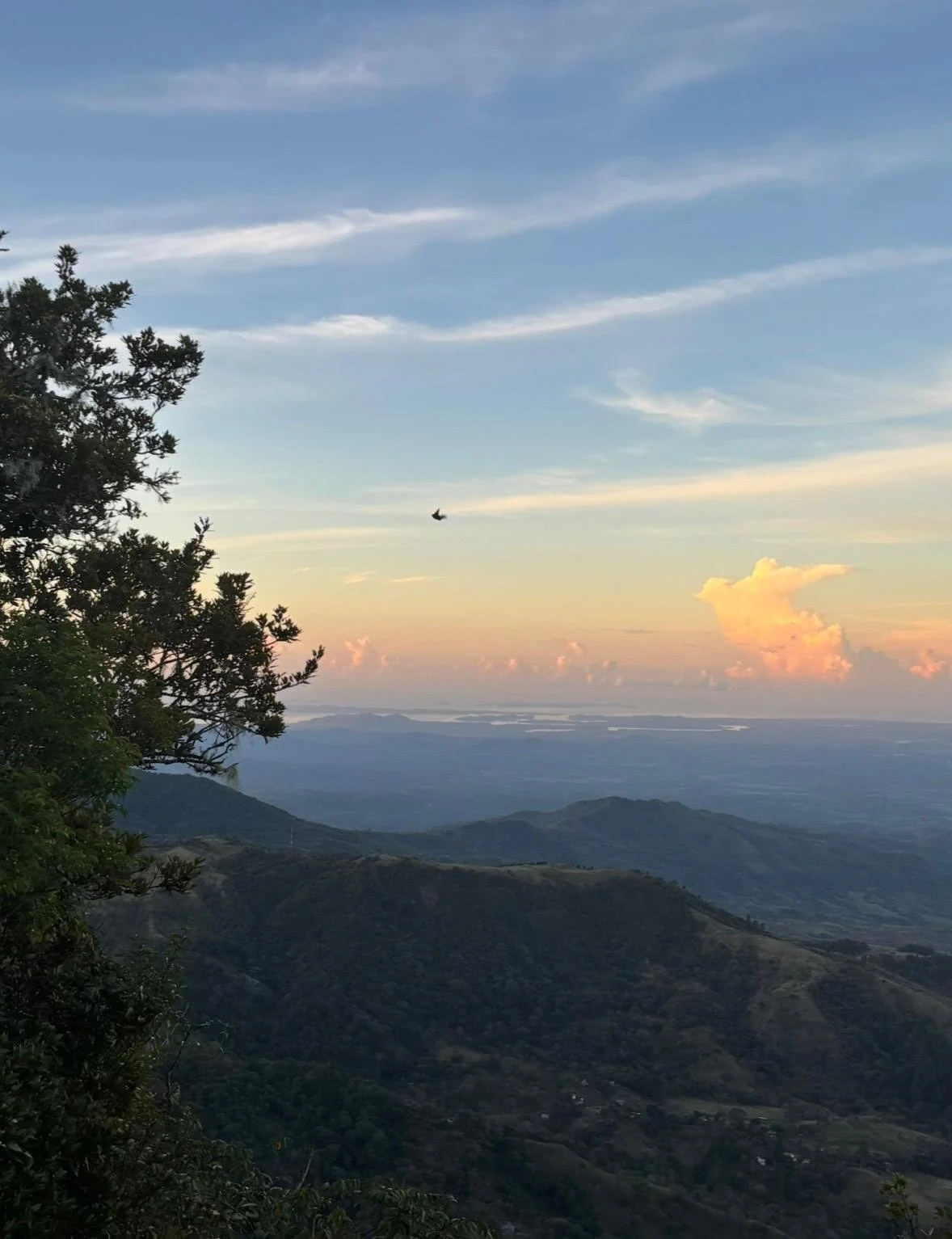
The religious history of Panama is not a simple progression from one belief system to another. It is a deep and overlapping story made of Indigenous spirituality, Spanish Catholic expansion, African cultural survival, global migration, and modern religious diversification. Instead of replacing each other, these systems of belief stacked on top of one another over centuries, creating a spiritual landscape that is still evolving today.
To understand religion in Panama is to understand how people have continuously adapted belief to changing political power, geography, migration, and community life.
The spiritual world before colonization
Long before European arrival, the isthmus of Panama was home to a wide range of Indigenous peoples including the Guna, Ngäbe, Buglé, Emberá, Wounaan, Naso Tjër Di and others. Each group had its own language and traditions, but they shared a fundamental understanding that the natural world and spiritual world were deeply connected.
For these communities, rivers forests animals and mountains were not simply physical resources. They were living parts of a spiritual reality. The world was animated by forces that required respect balance and understanding. Human wellbeing depended on maintaining harmony with these forces.
Spiritual leaders often acted as healers and intermediaries. They interpreted dreams guided ceremonies and worked with medicinal plants. Illness was frequently understood as a disruption in spiritual balance rather than only a physical problem.
Knowledge was preserved through oral tradition. Stories songs rituals and daily practices carried spiritual teachings across generations. This created a flexible system that could adapt over time while still preserving core beliefs.
Even today in regions such as Guna Yala and the Emberá territories many of these traditions continue to exist alongside other religious influences.
The arrival of Catholicism and the colonial transformation
With Spanish colonization in the early sixteenth century Catholicism entered Panama as part of a larger system of imperial expansion. Religion was closely tied to political authority and economic control. Churches were built alongside colonial settlements and missionaries worked to convert Indigenous populations.
Catholicism became the dominant public religion and structured much of colonial life. Religious holidays marked the calendar and church institutions became centers of education and governance.
However conversion was not absolute or uniform. Indigenous people did not simply abandon their beliefs. Instead many adapted Catholic symbols into their own spiritual frameworks. Saints were sometimes associated with older spiritual figures and Christian rituals were blended with Indigenous understandings of nature and healing.
This blending created a layered form of religious life where official Catholic doctrine existed alongside local interpretations and practices.
Hidden survival of Indigenous belief systems
Even under colonial pressure Indigenous spiritual systems survived in both open and subtle ways. Some practices continued within communities with little change while others were adapted into Christian forms to avoid suppression.
Ritual healing knowledge agricultural ceremonies and cosmological stories continued to be passed down orally. In many cases Indigenous spirituality became embedded within Catholic festivals or local traditions so that external observers might see Catholic practice while deeper meanings remained rooted in older belief systems.
This process allowed Indigenous identity to remain spiritually alive even under intense cultural change.
African spiritual influence and cultural endurance
The forced migration of Africans to Panama during the colonial period brought another powerful spiritual influence. Enslaved Africans came from many regions of West and Central Africa carrying diverse religious traditions centered on ancestor reverence spirit communication rhythm and community ritual.
Under conditions of slavery and colonial control these traditions were often suppressed or forced into secrecy. However they did not disappear. Instead they transformed and blended with Catholic practices and Indigenous influences.
Drumming dance and oral tradition became important ways of preserving spiritual memory and identity. In many Afro Panamanian communities religious expression developed as a fusion of Catholic saints Christian prayers and African derived cultural practices.
While Panama did not develop widely recognized formal Afro diasporic religions in the same way as some Caribbean nations the influence of African spirituality remains deeply present in cultural and religious life particularly in coastal and urban communities.
Independence and the expansion of religious diversity
After Panama separated from Colombia in 1903 the country entered a new phase of development that further diversified its religious landscape. Roman Catholicism remained dominant but no longer unchallenged.
The construction of the Panama Canal brought tens of thousands of workers from the Caribbean Europe Asia and North America. These migrations introduced new Protestant denominations including Methodist Baptist Anglican and Adventist churches.
Caribbean laborers in particular played a major role in establishing Protestant communities especially in canal zone settlements and urban neighborhoods. These churches became important centers of social life education and cultural identity.
Religious diversity increased as Panama became more connected to global economic and migration networks.
The canal era and global spiritual crossroads
The Panama Canal transformed the country into one of the most important crossroads in the world. This did not only affect trade and transportation but also religion.
People from many different cultures settled temporarily or permanently in Panama bringing with them their faith traditions. Jewish Muslim Hindu Buddhist and other religious communities began to establish themselves particularly in Panama City.
The Jewish community became especially significant with long standing institutions schools and synagogues contributing to national life. Other smaller communities also added to the country’s growing religious mosaic.
Panama became a place where global religions met and coexisted within a relatively small geographic space.
Modern religious life and evangelical growth
In recent decades evangelical and Pentecostal Christianity has grown significantly throughout Panama. These movements emphasize personal spiritual experience healing prayer and emotionally expressive worship.
Their popularity reflects broader trends across Latin America where charismatic forms of Christianity have expanded rapidly. In many communities evangelical churches now exist alongside Catholic parishes often serving different social or generational groups within the same family.
Catholicism remains culturally important especially in national celebrations family rituals and historical identity. However religious practice has become more fluid and individualized over time.
Many people move between denominations or combine formal religious affiliation with personal spiritual beliefs that do not fit neatly into a single category.
Indigenous spiritual continuity in contemporary Panama
Indigenous spiritual traditions continue to play a vital role in Panama’s religious identity. In regions such as Emberá Wounaan Comarca and Ngäbe Buglé territories spiritual practices remain closely connected to land community and ancestral knowledge.
Ceremonies healing practices and cosmological beliefs are still actively practiced and passed down through generations. These traditions often coexist with Christianity rather than being replaced by it.
Indigenous spirituality remains a living system that continues to adapt while preserving its core connection to nature and ancestry.
Religion in everyday life and cultural blending
One of the most distinctive features of religion in Panama is how flexible it is in daily practice. Religious identity is often not exclusive but layered.
A person may participate in Catholic rituals attend evangelical services and also rely on traditional healing practices depending on family history community context or personal belief.
Religious festivals often function as both spiritual and social events. They bring together food music dance and communal participation in ways that blur the line between sacred and cultural expression.
This blending reflects a long history of adaptation where religion is shaped as much by community life as by formal doctrine.
The religious history of Panama is a story of accumulation rather than replacement. Indigenous spiritual systems laid the foundation. Catholicism arrived and became dominant but also adapted to local realities. African traditions persisted through cultural expression. Global migration introduced new faiths and expanded diversity.
Today Panama is a country where multiple spiritual worlds coexist often within the same communities and even the same individuals.
Rather than a single religious identity Panama reflects a broader truth about its history. It is a place shaped by movement encounter and adaptation where belief systems have never existed in isolation but have always shared space.