
For travelers moving through Central America, there comes a point when the heat becomes overwhelming.
After enough sweating through Caribbean towns, sticky jungle nights, crowded beach hostels, tropical buses, mosquitoes, saltwater, and humidity, backpackers begin dreaming about mountains.
Cool air.
Mist.
Forests.
Coffee.
Sweaters at night.
And eventually two names begin appearing over and over again:
Monteverde and Boquete.
Both have become legendary mountain destinations on the Central America route. Both sit high in lush green elevations where temperatures drop dramatically and cloud forests replace palm trees. Both attract backpackers, retirees, nature lovers, hikers, birdwatchers, digital nomads, coffee enthusiasts, and travelers seeking relief from the tropical lowlands.
And both inspire surprisingly intense loyalty from people who visit them.
Some travelers become obsessed with Monteverde’s mystical cloud forests and raw eco-tourism atmosphere.
Others fall in love with Boquete’s volcanic scenery, coffee farms, rivers, flowers, and relaxed mountain-town comfort.
The comparison becomes inevitable.
Should you visit both?
Are they too similar?
Which feels more authentic?
Which is more beautiful?
Which has better hiking, wildlife, weather, coffee, nightlife, infrastructure, atmosphere, and value?
And perhaps most importantly:
Which one actually feels better to live in for a while?
The truth is that Monteverde and Boquete share certain mountain-town DNA, but emotionally they feel very different once you spend real time inside them.
One feels like a misty biological laboratory suspended in the clouds.
The other feels like a comfortable mountain valley where people accidentally stay far longer than planned.
First Impressions: Forest vs Valley
The first difference hits immediately upon arrival.
Monteverde Feels Wild Immediately
Getting to Monteverde already feels like entering another world.
The roads twist upward through mountains and often become rough, foggy, muddy, and dramatic. Rain lashes the windows. Clouds move across the road itself. Forest closes in from every direction.
You arrive feeling slightly isolated from civilization.
Monteverde is not a polished mountain resort town.
It feels scattered, steep, damp, and deeply tied to the surrounding cloud forest ecosystem. Buildings disappear into mist while cool wet wind blows constantly through the hills.
The atmosphere feels scientific, ecological, and almost mystical.
Boquete Feels Comfortable Immediately
Boquete feels more open and welcoming from the beginning.
The town sits inside a broad green valley beneath the looming presence of Volcán Barú, Panama’s highest volcano.
Flowers line roads.
Coffee farms spread across hillsides.
Rivers run through town.
The air feels cool but gentler than Monteverde’s wet chill.
Instead of dramatic cloud forest isolation, Boquete feels like a mountain town people genuinely live in comfortably.
The atmosphere feels calmer, sunnier, and more balanced.
The Climate: Mist vs Springtime
This may be the single biggest difference between the two places.
Monteverde: The Kingdom of Clouds
Monteverde feels permanently wet.
Not necessarily constant heavy rain, but moisture everywhere.
Mist drifts through forests daily. Clouds swallow entire hillsides. Wind pushes fog through trees while everything grows thick with moss, orchids, and dripping vegetation.
Even indoors, the climate feels damp.
Shoes struggle to dry.
Clothes remain slightly moist.
Windows fog constantly.
And honestly, this atmosphere is exactly why many people adore Monteverde.
The cloud forest ecosystem creates a magical feeling difficult to replicate elsewhere. Walking through Monteverde often feels like wandering through the inside of a living breathing rainforest machine.
The air itself feels alive.
Boquete: Eternal Spring
Boquete’s climate feels dramatically more comfortable for most people long-term.
Days often remain warm but pleasant. Nights become cool enough for sweaters. The valley receives rain, especially during rainy season, but sunshine appears far more regularly than in Monteverde.
The result feels almost spring-like much of the year.
Flowers bloom everywhere.
Coffee grows beautifully.
People comfortably sit outside in cafés without constantly battling mist and dampness.
Boquete’s climate explains why so many retirees and long-term expats settle there permanently.
It feels physically easy to live in.
Which Is More Beautiful?
This becomes highly subjective because the beauty feels fundamentally different.
Monteverde’s Beauty Feels Mysterious
Monteverde’s beauty comes from atmosphere.
Clouds moving through forest canopies.
Massive trees dripping with moss.
The sound of unseen birds echoing through fog.
Suspension bridges vanishing into mist.
The landscape feels ancient and slightly eerie.
Visibility constantly changes. One moment you see distant green mountains. Ten minutes later the entire world disappears inside white cloud.
Monteverde creates emotional beauty more than postcard beauty.
Boquete’s Beauty Feels Expansive
Boquete delivers more obvious visual beauty.
Green valleys.
Rivers.
Flower gardens.
Coffee plantations.
Mountain views.
Volcán Barú dominating the horizon.
The scenery often feels brighter and more panoramic than Monteverde’s enclosed forests.
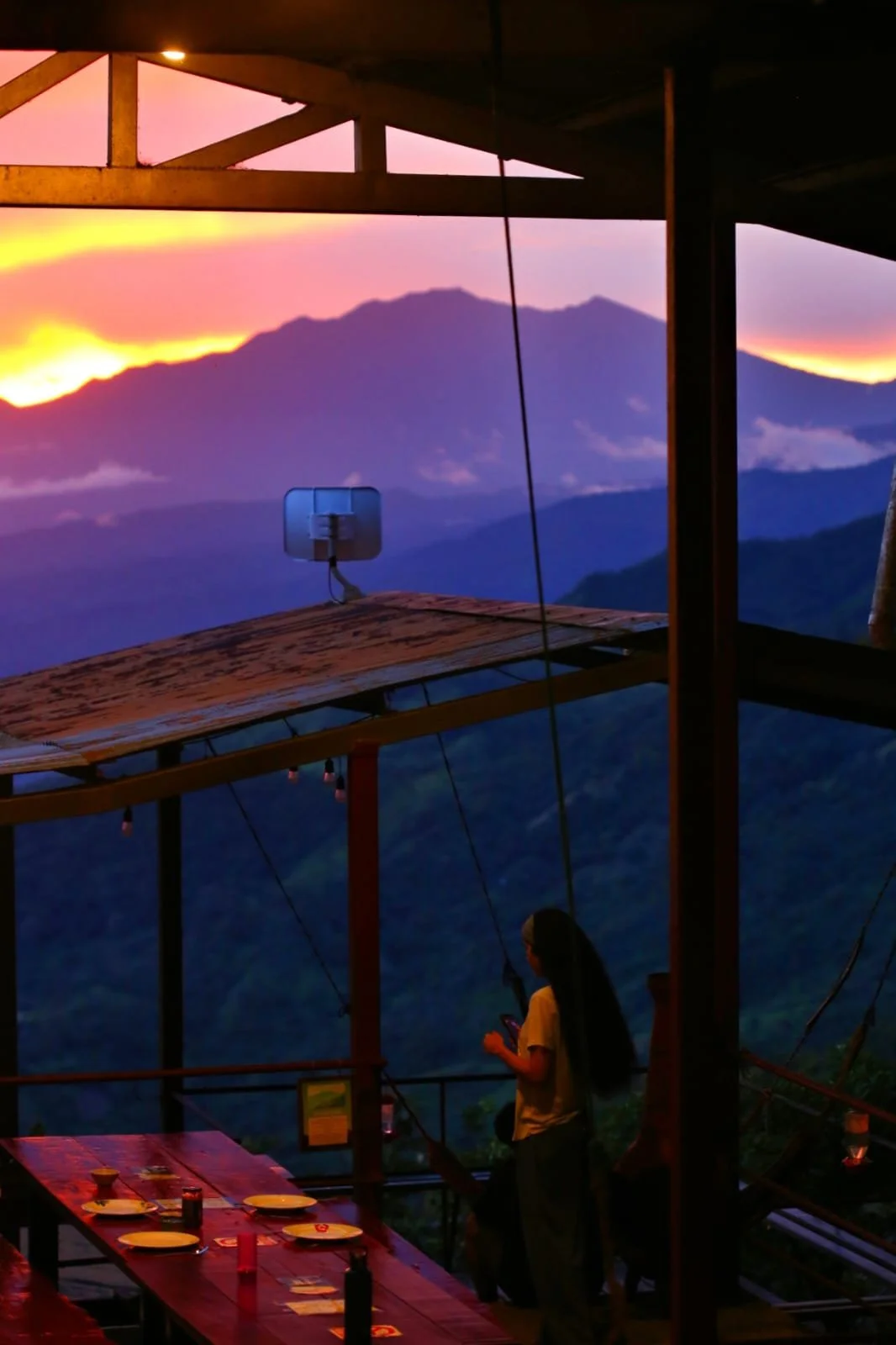
Sunsets in Boquete can become spectacular when clouds clear around the volcano.
The town feels scenic in a classic mountain-valley way.
Hiking and Nature
Both places are nature destinations, but the experience differs enormously.
Monteverde: Immersion in Ecosystems
Monteverde hiking focuses on cloud forest immersion.
Trails move through dense wet forest where every branch supports layers of moss, orchids, fungi, and epiphytes. The biodiversity becomes overwhelming.
Everything grows on top of everything else.
Wildlife spotting revolves around birds, insects, amphibians, and subtle forest life rather than dramatic large animals.
The famous Monteverde Cloud Forest Biological Reserve feels globally significant because the ecosystem itself feels unique.
Even casual walks can feel profound.
Boquete: Adventure and Variety
Boquete offers more varied outdoor adventure overall.
Hiking.
Waterfalls.
Coffee tours.
River canyons.
Hot springs nearby.
Rock climbing.
Horseback riding.
Volcano treks.
The famous Volcán Barú hike dominates the area’s adventure reputation. Watching sunrise from the summit and potentially seeing both the Pacific Ocean and Caribbean Sea simultaneously became almost a backpacker rite of passage.
Boquete’s nature experience feels broader and more activity-oriented.
Wildlife
Monteverde Wins for Pure Biodiversity
Monteverde probably wins for serious wildlife enthusiasts.
The cloud forest contains extraordinary biodiversity, especially birds. The region became world-famous among birdwatchers partly because of species like the resplendent quetzal.
Frogs, insects, hummingbirds, snakes, monkeys, and countless species thrive in the dense ecosystem.
Monteverde feels biologically dense in an almost overwhelming way.
Boquete Feels Gentler
Boquete still offers excellent birdlife and nature, but wildlife encounters generally feel less intense and less central to the town’s identity.
The surrounding environment feels more agricultural and human-integrated compared to Monteverde’s dense ecological focus.
Tourism Style
Monteverde: Eco-Tourism Capital
Monteverde helped pioneer eco-tourism in Central America.
The town revolves heavily around conservation, biology, sustainability, guided nature experiences, and forest education.
Everything feels tied to the ecosystem.
Visitors arrive specifically for the cloud forest experience.
Boquete: Mountain Lifestyle Tourism
Boquete tourism feels broader.
Some visitors come for hiking.
Others for coffee.
Others for climate.
Others for retirement scouting.
Others simply to relax.
The town supports many different travel styles simultaneously.
Coffee Culture
Both places produce excellent coffee, but Boquete reaches another level internationally.
Boquete Coffee Is Legendary
Boquete sits inside one of the most famous coffee-growing regions in Central America.
The area became globally known for high-end Geisha coffee varieties, some of the most expensive and celebrated coffees in the world.
Coffee farms surround the valley.
Tours happen everywhere.
The climate and volcanic soil create extraordinary growing conditions.
Coffee culture feels deeply integrated into Boquete’s identity.
Monteverde Coffee Feels Smaller Scale
Monteverde also has good coffee, but it does not dominate the town culturally to the same degree.
The cloud forest overshadows agriculture in terms of international identity.
Which Is More Developed?
Boquete Feels More Comfortable
Boquete generally feels more developed and livable.
Better roads.
More restaurants.
More grocery options.
More comfortable long-term accommodations.
More services.
More retirees and expat infrastructure.
The town feels capable of supporting long-term life easily.
Monteverde Feels More Rustic
Monteverde still retains rougher edges.
Roads can be rough.
Weather complicates infrastructure constantly.
The town feels more rugged and ecologically isolated.
This creates charm for some travelers and frustration for others.
Backpacker Culture
Monteverde Backpackers
Monteverde attracts nature-oriented backpackers.
People discuss wildlife sightings, hikes, conservation, birds, and forest reserves.
The social atmosphere feels calmer and more outdoors-focused.
Boquete Backpackers
Boquete backpackers often stay longer than intended.
The town develops a strangely addictive comfort.
People settle into cafés, hiking routines, hostel friendships, coffee shops, and mountain life surprisingly quickly.
The social atmosphere feels warmer and more relaxed.
Cost
Both destinations cost more than many Central American backpacker areas.
But generally:
Monteverde feels more expensive overall
Costa Rica pricing affects everything
Boquete often offers better value
Accommodation stretches further in Boquete
Nightlife
Neither destination is party-focused like Caribbean backpacker towns.
But:
Boquete Has More Social Energy
Boquete has more bars, restaurants, social hostels, breweries, and casual nightlife overall.
The town stays lively without becoming chaotic.
Monteverde Nights Feel Quiet
Monteverde nights revolve more around rain, forest sounds, tea, conversation, and early mornings for wildlife activities.
The atmosphere feels quieter and sleepier.
Should You Visit Both?
Honestly, yes — if you have time.
Because despite obvious similarities, the emotional experience becomes completely different.
Monteverde Feels Like Visiting Nature
You go to Monteverde to experience cloud forest ecosystems and biological wonder.
Boquete Feels Like Living in the Mountains
You go to Boquete and suddenly imagine staying for months.
One feels like immersion in wild ecology.
The other feels like discovering an ideal mountain lifestyle.
The Final Verdict
Monteverde and Boquete represent two different visions of mountain travel in Central America.
Monteverde is wetter, wilder, mistier, more ecological, more mysterious, and more intensely tied to cloud forest identity.
Boquete is sunnier, more comfortable, more scenic, more socially livable, and more diverse in activities and lifestyle.
Monteverde feels like stepping into a living rainforest laboratory suspended in clouds.
Boquete feels like finding the mountain town you secretly wish existed back home.
And somewhere tonight in Central America, mist is drifting silently through Monteverde’s cloud forests while cool air settles over Boquete’s valley beneath the dark silhouette of Volcán Barú.