
If you zoom out on Panama, it looks small, almost deceptively simple. A narrow bridge of land connecting two continents, surrounded by ocean on both sides. But the moment you zoom in and start moving province by province, the illusion collapses completely.
Panama is not one landscape. It is many. It is a rainforest metropolis, a Caribbean archipelago, a volcanic coffee kingdom, a colonial coastline, an agricultural time capsule, and a jungle frontier that still feels like it is actively resisting the idea of roads.
This second deeper journey goes further into each province, adding more layers, more strange details, and more of the surprising reality that even many Panamanians do not fully appreciate about their own country.
Panama Province The Capital That Accidentally Grew Into a Jungle Experiment
Panama is often reduced to Panama City, but that is like describing a forest as just trees. It is the political, financial, and cultural core of the country, yet it is also one of the most ecologically unusual capital regions in the world.
One of the most surprising realities is that the capital sits directly on a major biological corridor. This means that large mammals like sloths, coatimundis, and monkeys can and do move through areas surprisingly close to dense urban development.
There are neighborhoods where you can hear howler monkeys in the morning while traffic builds up on multilane highways a few kilometers away. The city does not fully dominate the environment. It coexists with it in a way that feels almost improvised.
The Panama Canal remains the province’s most globally significant feature. It is not just a shipping route but a hydraulic system that literally reshaped the planet’s trade patterns. Entire ecosystems were flooded and recreated to build it, meaning parts of the province are artificially engineered landscapes that still function as natural habitats.
Another lesser known fact is that Panama Province contains historical layers of three different capital cities: the original Panama Viejo, the colonial Casco Viejo, and the modern skyline city. It is rare for one province to contain so many eras of itself stacked within a few kilometers.
Colón Province The Loud Caribbean Gateway With a Forgotten Golden Age
Colón has one of the most misunderstood reputations in Panama. It is often associated with port infrastructure and economic inequality today, but historically it was one of the most strategically important cities in the Americas.
During the construction and early operation of the Panama Railroad and later the Canal, Colón was a global commercial hotspot. Ships, goods, and people from Europe, the Caribbean, Asia, and the United States passed through constantly. At its peak, it was one of the busiest port cities in the hemisphere.
A surprising historical fact is that Colón was one of the earliest multicultural urban centers in the region, long before globalization became a modern concept. Entire neighborhoods formed based on migration waves, creating layered cultural zones that still influence identity today.
Nearby lies Portobelo, once a major Spanish treasure port. Its forts were built to defend against pirates, and remnants of these structures still stand facing the Caribbean Sea, slowly being reclaimed by tropical vegetation.
Colón is also culturally essential to Panama’s Afro Caribbean identity. Music styles, festivals, and spiritual traditions here have deep roots in Caribbean migration and resilience.
Coclé Province Where Ancient Gold Civilization Meets Quiet Farmland Reality
Coclé looks peaceful on the surface, with rolling agricultural landscapes and small towns. But underneath that calm exterior is one of the most significant archaeological regions in Central America.
The El Caño archaeological site has revealed elite burial complexes filled with gold artifacts, ceremonial weapons, and intricate objects that suggest a highly stratified ancient society with advanced metallurgy and ritual systems.
One of the most fascinating discoveries is that Coclé’s ancient cultures developed gold working techniques independently, producing designs that rival those of larger pre Columbian civilizations. These were not isolated hunter gatherer groups. They were complex societies with political and spiritual structures.
Modern Coclé is a contrast to this ancient intensity. It is one of the main food producing regions in Panama, supplying rice, sugar, vegetables, and livestock. In many ways, it feeds the modern nation while sitting on top of the remnants of a far older one.
Chiriquí Province The Cool Highlands That Feel Like Another Country Entirely
Chiriquí is often described as the “cool escape” of Panama, but that understatement barely captures how different it feels from the rest of the country.
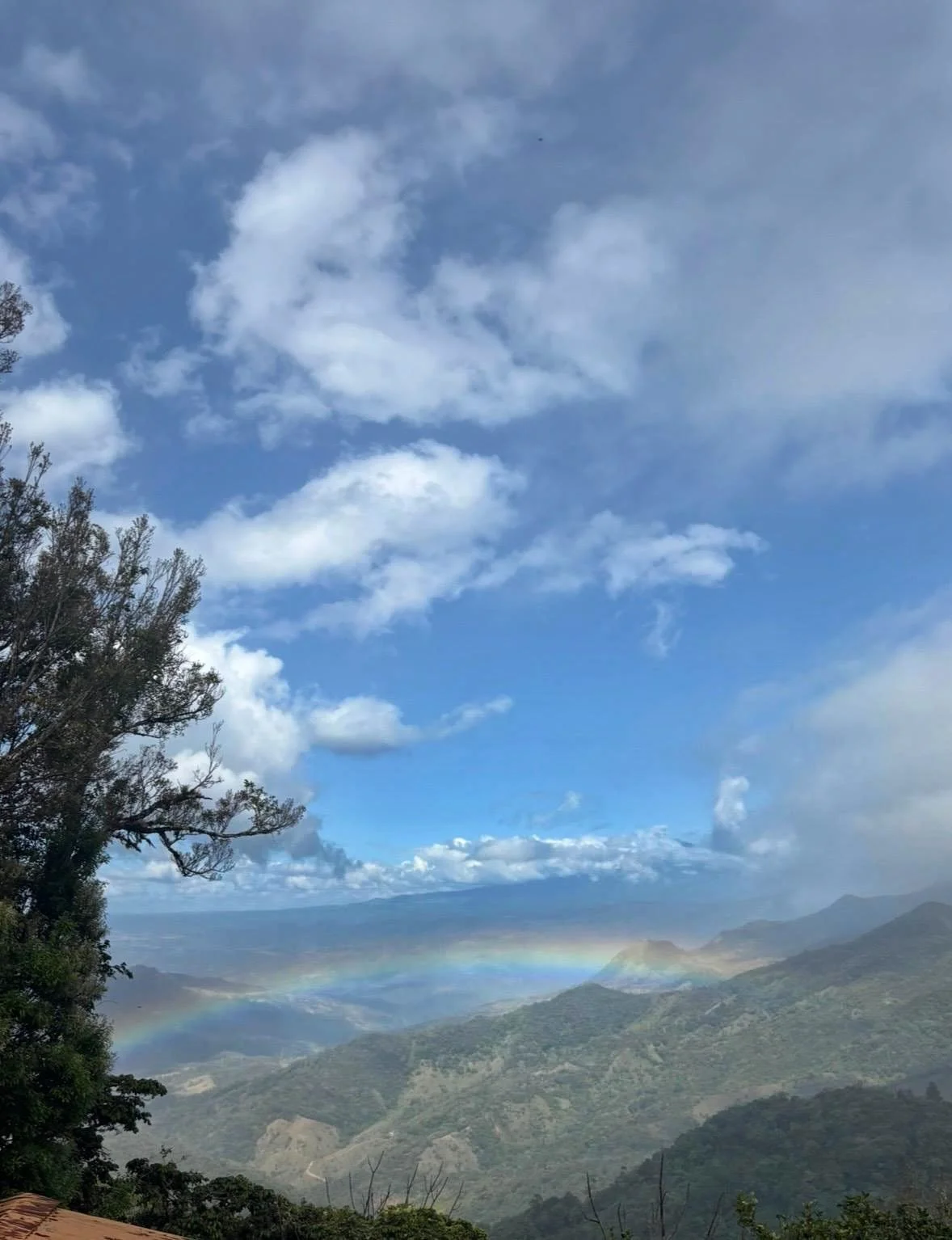
Temperatures here can drop significantly compared to the rest of Panama, especially in high elevation towns like Boquete. Mist rolls through cloud forests in the morning, coffee plantations stretch across volcanic slopes, and the air feels noticeably lighter and fresher.
One of the most astonishing geographical facts is that from the summit of Volcán Barú, Panama’s highest point, it is sometimes possible to see both the Pacific Ocean and the Caribbean Sea simultaneously. This rare dual ocean visibility is a result of Panama’s extremely narrow geography combined with elevation.
Chiriquí is also a global coffee powerhouse. Its high altitude volcanic soil produces beans considered among the best in the specialty coffee world. Entire microclimates exist within short distances, meaning farms only a few kilometers apart can produce dramatically different flavor profiles.
Wildlife is another highlight. The province is one of the last strongholds of the resplendent quetzal, a bird deeply associated with ancient Mesoamerican symbolism.
Veraguas Province The Only Province That Touches Two Oceans and Refuses to Make a Big Deal About It
Veraguas is geographically one of the most unique provinces in the world. It is the only province in Panama that reaches both the Pacific Ocean and the Caribbean Sea.
Despite this rare distinction, Veraguas remains surprisingly quiet and underdeveloped in large areas, giving it a feeling of vast untouched space.
The province contains one of Panama’s most important ecological treasures: Coiba National Park. Once used as a penal colony, Coiba is now a protected marine and terrestrial reserve and a UNESCO World Heritage Site. It is often compared to the Galápagos for its biodiversity and isolation.
Coiba’s waters are home to whales, sharks, turtles, and countless fish species, while its islands preserve dense tropical forest that was largely untouched during its time as a prison zone.
Veraguas as a whole feels like a province where nature still holds the upper hand.
Herrera Province The Smallest Stage for the Loudest Traditions
Herrera is small, quiet, and agricultural, but culturally it plays an outsized role in Panama’s identity.
One of its most important contributions is the preservation of traditional crafts, especially pollera dressmaking. The pollera is one of the most elaborate national dresses in Latin America, requiring months of embroidery and craftsmanship.
Herrera is also known for its strong festival culture. During celebrations, towns transform into highly organized displays of music, dance, and traditional performance, where entire communities participate.
Despite its size, Herrera acts as a cultural preservation zone for many of Panama’s most iconic traditions.
Los Santos Province The Cultural Heart That Treats Tradition Like Law
Los Santos is often described as the most culturally traditional province in Panama. Located on the Azuero Peninsula, it is a stronghold of folkloric identity.
One surprising aspect is how consistent cultural preservation is here. Traditional music styles, clothing, architecture, and festivals are maintained with remarkable continuity across generations.
Los Santos is also known for its dry tropical climate, which creates landscapes very different from Panama’s rainforest regions. This environment shaped its agricultural practices and settlement patterns over centuries.
The province is deeply associated with national identity festivals, where pollera dresses, drums, and traditional dances are not performances but living cultural expressions.
Darién Province The Jungle Frontier That Still Resists Modern Connectivity
Darién is one of the most remote and biologically intense regions in the entire Americas.
It contains the famous Darién Gap, the only break in the Pan American Highway, where dense rainforest and challenging terrain prevent road construction between Panama and Colombia.
One of the most striking facts is that Darién remains one of the least accessible and most biodiverse rainforest regions in the Western Hemisphere. Jaguars, harpy eagles, and countless rare species live here in ecosystems that remain largely intact.
It is also home to Indigenous groups such as the Emberá and Wounaan, whose river based settlements rely heavily on canoes and waterways for transportation.
Darién feels less like a province and more like a self contained ecological world.
Bocas del Toro Province The Caribbean Archipelago That Never Chooses One Identity
Bocas del Toro is a cluster of islands and coastal areas that blends Caribbean culture, Indigenous heritage, and international tourism.
One surprising fact is how linguistically and culturally diverse it is for its size. Afro Caribbean English influenced dialects coexist with Spanish and Indigenous languages, creating a layered communication landscape.
The province is also one of Panama’s most important marine biodiversity zones. Coral reefs, mangroves, and seagrass ecosystems support dolphins, starfish, tropical fish, and sea turtles.
At the same time, Bocas has become a major backpacker and surf destination, creating a unique mix of local life and global travel culture. In some towns, fishing boats and tourist hostels share the same shoreline in direct contrast.
What becomes clear when you explore every province in Panama is that the country is not unified by sameness but by contrast.
One province builds skyscrapers next to rainforest. Another preserves ancient gold civilizations under farmland. Another touches two oceans without making noise about it. Another refuses to connect itself to the rest of the continent by road.
Together they form a country that behaves less like a small nation and more like a compressed continent of environments and identities.
Panama is not just diverse. It is densely diverse. And that density is what makes every province feel like its own world waiting to be explored.