
Few flowers feel more perfectly suited to Panama than hibiscus.
Bright, oversized, tropical, and impossible to ignore, hibiscus flowers seem to belong naturally beside jungle trails, mountain homes, roadside gardens, beach villages, city courtyards, and rainforest rivers. They appear almost everywhere in the country, thriving in the heat, humidity, and heavy rains that define tropical life.
For many travelers arriving in Panama, hibiscus becomes one of the first flowers they truly notice.
The blossoms seem unreal at first. Giant red flowers glowing against deep green leaves. Delicate pink petals dripping with rainwater after afternoon storms. Yellow and orange varieties opening beside fences while hummingbirds hover nearby.
In tropical sunlight, hibiscus flowers almost look artificial because the colors are so intense.
Yet in Panama, they are simply part of everyday life.
They bloom beside small rural homes, luxury hotels, jungle cabins, schools, restaurants, farms, beaches, mountain roads, and city sidewalks. People plant them for beauty, privacy, shade, medicine, decoration, and tradition.
Over time, hibiscus begins to feel woven directly into the atmosphere of the country itself.
A Flower Built for the Tropics
Hibiscus thrives in Panama because the climate is nearly perfect for it.
Warm temperatures, frequent rainfall, rich soil, and strong sunlight allow hibiscus plants to grow aggressively throughout much of the country. In some regions, bushes become enormous, forming dense flowering walls taller than people.
Unlike flowers that bloom only during short seasonal windows, hibiscus in Panama often flowers continuously throughout the year. There may be periods of heavier blooming depending on rainfall and sunlight, but in many areas there is almost always a hibiscus somewhere in bloom.
This constant flowering gives Panama’s landscapes a permanent tropical softness.
Even during cloudy rainy days, bright hibiscus flowers often stand out vividly against dark green vegetation and gray skies.
The Colors of Panama
One of the most fascinating things about hibiscus in Panama is the astonishing range of colors and forms.
Deep crimson red is perhaps the most iconic variety, but hibiscus also appears in pink, orange, yellow, white, peach, purple, and combinations blending several colors together.
Some flowers are huge and dramatic, while others are delicate and elegant. Certain varieties have smooth simple petals while others look layered, ruffled, or almost feathered.
In rural Panama, older traditional hibiscus varieties often dominate gardens, especially the classic red flowering bushes common throughout tropical Latin America.
Meanwhile, in more landscaped urban areas and mountain towns, gardeners cultivate elaborate ornamental hybrids with exotic shapes and unusual color gradients.
Walking through Panama sometimes feels like moving through an endless outdoor botanical garden without anyone intentionally designing it that way.
The Flower and the Hummingbird
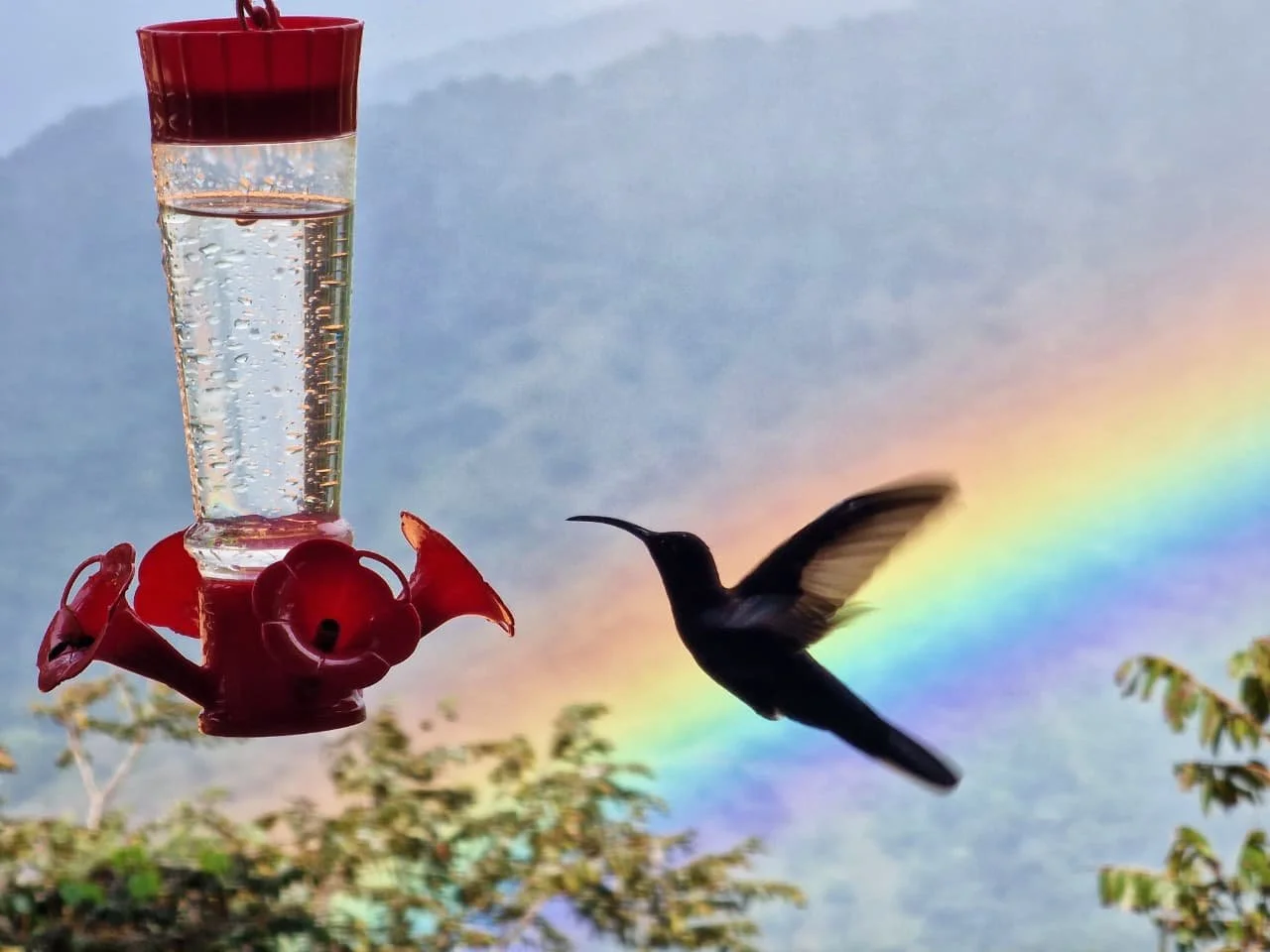
Hibiscus flowers and hummingbirds seem made for each other.
Across Panama, hummingbirds constantly visit hibiscus blossoms searching for nectar. Their long specialized beaks fit naturally into the flower’s trumpet-like shape while pollen dusts their faces and feathers during feeding.
Watching hummingbirds move between hibiscus plants becomes one of the quiet pleasures of tropical life.
The interaction happens incredibly fast. Tiny metallic birds hover in place, wings vibrating almost invisibly while sunlight flashes green, blue, or purple across their feathers.
Then they vanish instantly into the next flowering bush.
In cloud forest regions especially, hibiscus often becomes a magnet for hummingbird activity.
Travelers sitting on porches in mountain towns frequently spend entire mornings watching these tiny birds dart between blossoms while mist drifts through the forest.
Hibiscus in Panamanian Homes
One reason hibiscus feels so deeply connected to Panama is because people actually live with it daily.
In many countries, tropical flowers are treated mainly as exotic decorative plants for resorts or botanical gardens.
In Panama, hibiscus feels ordinary in the best possible way.
Families grow it naturally around homes for shade, beauty, privacy, and color. Rural houses often have hibiscus bushes lining fences or pathways. In towns and villages, flowering hedges brighten streets and courtyards.
Even modest homes may have spectacular hibiscus plants.
This creates a feeling that tropical beauty is not reserved only for luxury spaces. The flowers belong to everyday life.
Rain and Hibiscus
Hibiscus somehow becomes even more beautiful during Panama’s rainy season.
Heavy rain darkens the leaves into rich glossy green while water droplets collect on petals like glass. Storm clouds intensify the brightness of red and orange blooms.
After tropical downpours, hibiscus flowers often look freshly painted.
The plant itself thrives during wetter periods. New growth appears rapidly, and flowering can become especially abundant after long stretches of rain combined with sunlight.
In mountain regions where fog and mist drift constantly through gardens, hibiscus flowers sometimes emerge softly from the clouds like flashes of color suspended in white air.
More Than Decoration
Although many visitors notice hibiscus mainly for its beauty, the plant also has practical and cultural importance throughout tropical regions.
Certain hibiscus varieties are used in teas, herbal drinks, traditional medicine, and natural remedies. Hibiscus tea, made from specific species, is popular across many countries and known for its deep red color and tart flavor.
Some people believe hibiscus preparations help with blood pressure, hydration, and cooling the body in hot climates, though uses vary culturally and medically.
In tropical communities, plants are often appreciated not only aesthetically but also functionally.
This practical relationship with plants reflects a deeper connection between people and tropical landscapes.
The Feeling of Tropical Life
Part of what makes hibiscus so memorable is the atmosphere it creates.
Certain flowers instantly evoke specific climates and emotions. Hibiscus carries the feeling of warmth, humidity, rain, sunlight, and lushness all at once.
Seeing hibiscus beside a road in Panama immediately reinforces the sense that you are truly in the tropics.
Palm trees alone do not create that feeling fully.
Neither do beaches or jungle.
But giant hibiscus flowers glowing beside dripping vegetation somehow complete the atmosphere.
Hibiscus and Travel Memory
Travelers often remember hibiscus without consciously realizing it.
Months later, when thinking back on Panama, flashes of color return to memory:
Red flowers beside jungle roads.
Pink blossoms outside hostel windows.
Orange hibiscus near beaches at sunset.
Rain-covered petals beside mountain cabins.
The flowers become part of the emotional texture of travel.
Unlike landmarks or tourist attractions, hibiscus enters memory quietly through repetition. The flowers simply exist everywhere around daily life until eventually they become inseparable from the experience of being in Panama itself.
Tropical Abundance
Hibiscus also symbolizes something larger about Panama.
The country overflows with life.
Plants grow aggressively. Rain falls heavily. Forests expand rapidly wherever land is left alone. Flowers bloom continuously. Vines consume abandoned structures. Moss covers fences and roofs.
Nature in Panama rarely feels restrained.
Hibiscus fits perfectly into this sense of abundance.
The flowers are large, dramatic, colorful, and unapologetically tropical. They do not bloom subtly.
They explode outward.
And somehow that feels appropriate for Panama, a country where biodiversity and natural energy constantly push against human boundaries.
Why People Love Them
Perhaps the reason hibiscus becomes so beloved is because the flowers create happiness almost automatically.
They soften harsh spaces.
They brighten rainy days.
They attract birds and butterflies.
They make ordinary homes feel alive.
In tropical climates where life can sometimes feel intensely hot, wet, muddy, or exhausting, hibiscus provides constant visual beauty with almost effortless generosity.
The flowers simply continue blooming.
Day after day.
Rain after rain.
Season after season.
The Endless Bloom
In the end, hibiscus flowers in Panama are not rare or exotic in the local sense.
They are everywhere.
And that is exactly what makes them special.
They belong completely to the rhythm of tropical life.
Children grow up beside them. Birds feed from them. Rain falls across them every afternoon. Travelers photograph them constantly. Mountain fog wraps around them. Beaches, villages, jungles, and cities all seem brighter because of them.
And somewhere in Panama right now, beside a quiet road or hidden garden, another hibiscus flower is opening beneath the tropical rain.