
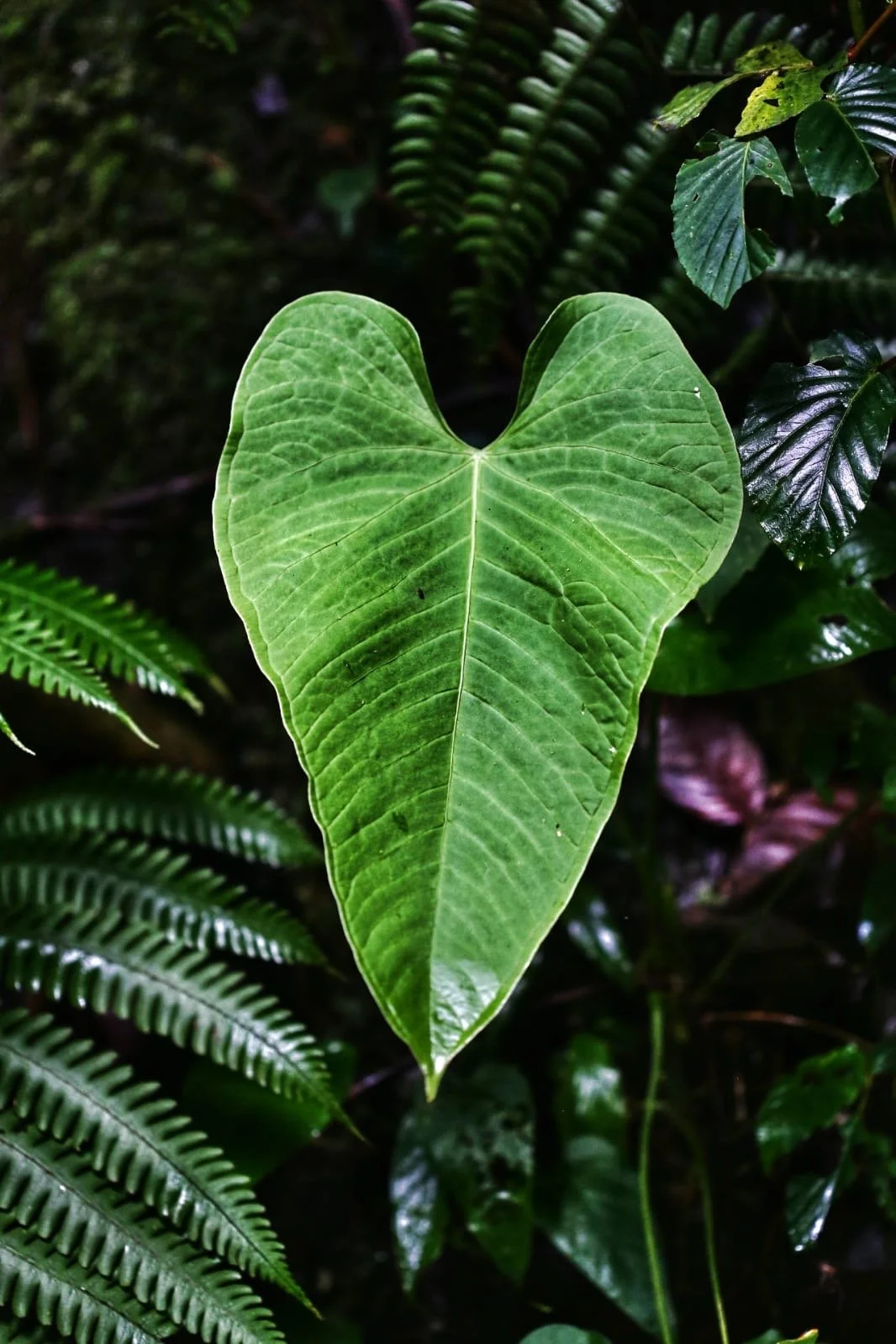
The Darién Gap is one of the most unusual geographical spaces in the world, not because of what has been built there, but because of what has repeatedly failed to be built. It is a vast, roadless stretch of rainforest, swamp, river systems, mountains, and lowland jungle between Panama and Colombia, forming the only break in the entire Pan American Highway system. Over the last 100 years, it has shifted through multiple identities, a failed engineering objective, a conservation stronghold, a geopolitical buffer zone, an indigenous homeland, a migration corridor, and a symbol of the limits of modern infrastructure.
What makes the Darién so fascinating is that it has never been “empty” or “unused.” Instead, it has always been actively functioning, just not in the way industrial development expects. It is a living system that resists simplification, where ecology, hydrology, and human movement interact in ways that repeatedly disrupt attempts at permanent construction.
🌍 Early 1900s to 1930s, The Post Canal World and the First Infrastructure Imagination
In the early 20th century, after the separation of Panama from Colombia in 1903 and the completion of the Panama Canal, global attention turned toward the idea of continental connectivity. The canal proved that Panama could host one of the most important engineering projects on Earth, and this inspired broader ambitions, including a road that would eventually connect North and South America.
At the time, the Darién region appeared on maps as a relatively narrow land bridge. Early planners assumed that, like many other tropical regions, it could be cleared and bridged with enough labor and investment. However, early reconnaissance missions quickly revealed a different reality. The terrain was not just dense forest, it was a constantly shifting system of:
River networks that changed course seasonally
Swamps with unstable ground that could not support heavy infrastructure
Mountain ridges covered in continuous vegetation
Extremely high rainfall levels in some of the highest precipitation zones in the Americas
Thick canopy layers that limited visibility and access
By the 1920s, engineers realized something critical. The problem was not just building a road, it was maintaining one in an environment where nature actively reclaims cleared space within months.
🛠️ 1930s to 1950s, The Pan American Highway Dream Collides with Reality
The idea of the Pan American Highway gained momentum during the mid 20th century, supported by governments across the Americas who saw it as a symbol of modernization, trade, and continental unity. Sections of road were constructed across Central America and northern South America, creating long connected stretches of highway that improved regional mobility.
However, the Darién remained the missing segment.
Multiple surveys attempted to map potential routes through the region. Engineers from Panama and Colombia explored possible corridors, but every proposed path encountered the same structural problems:
Soil that became impassable mud during rainy seasons
Rivers that required constant re engineering of crossings
Lack of stable bedrock in key zones
Rapid regrowth of vegetation after clearing
Extremely high construction and maintenance costs
By the late 1950s, it became clear that completing the road would require continuous industrial intervention, not a one time construction project.
At this stage, the Darién Gap stopped being viewed as a simple gap and began to be understood as a systemic environmental barrier.
🌿 1960s to 1980s, The Environmental Discovery of One of the Last Wild Corridors
During the second half of the 20th century, scientific interest in the Darién region increased significantly. Biologists and conservationists began documenting its biodiversity, and what they found changed the global perception of the region.
The Darién was identified as one of the most important ecological transition zones in the Americas, where North and South American species overlap. It contains:
Jaguars and pumas as apex predators
Harpy eagles, one of the most powerful birds of prey in the world
Tapirs, peccaries, and multiple deer species
Hundreds of amphibians and reptiles
Thousands of plant species, many still undocumented
This biodiversity is supported by the region’s extreme ecological stability. Because large scale agriculture and urban development never fully took hold, the forest maintained continuous canopy structure over vast areas. This makes it one of the few remaining large intact rainforest systems in Central America.
During this period, the debate over the road became increasingly polarized. Engineers saw the Gap as the final obstacle to continental integration. Conservationists saw it as a rare preserved ecosystem that should not be fragmented.
By the 1970s, environmental concerns were no longer secondary arguments. They became central to policy discussions.
🧭 Indigenous Territories and Human Geography of the Gap
Long before modern infrastructure debates, the Darién was home to indigenous communities such as the Emberá and Wounaan peoples. These groups developed highly adapted systems of river navigation, forest agriculture, fishing, and seasonal movement.
Unlike road based societies, mobility in the Darién is often water based rather than land based. Rivers function as primary transportation corridors, and settlements are typically located along waterways rather than roads.
This creates a fundamentally different spatial logic:
Movement follows rivers, not straight lines
Communication is often river network based
Land is not divided into roads and grids, but ecological zones
Seasonal flooding is part of normal planning cycles
When external infrastructure projects entered the region, they often clashed with this existing system rather than integrating into it.
⚠️ 1990s to Early 2000s, Abandonment of the Road Idea and Stabilization of the Gap
By the end of the 20th century, the idea of completing the Pan American Highway through the Darién was effectively abandoned at an official level. The cost, environmental impact, and engineering difficulty made it impractical compared to alternative transportation investments.
At the same time, the region began to stabilize in its role as a natural buffer zone. Instead of being seen as unfinished infrastructure, it was increasingly treated as a protected ecological and political boundary.
Cross border movement remained limited, and the region maintained low levels of permanent infrastructure. This lack of development unintentionally preserved its ecological integrity.
🚶 2000s to Present, The Darién as a Migration Corridor and Global Pressure Point
In the 21st century, the Darién Gap became globally known for a completely different reason, large scale human migration.
As migration routes evolved across South and Central America, the Darién emerged as one of the most direct, but also most dangerous, pathways toward North America. Migrants from Venezuela, Ecuador, Haiti, Africa, and Asia began crossing the region on foot.
This transformed the Gap into a high risk transit corridor, where geography itself dictates movement. Unlike formal border crossings, there are:
No roads or vehicles
No permanent infrastructure
Limited emergency services
Extreme environmental exposure
Crossing involves dense jungle trekking, river crossings with unpredictable currents, steep terrain, and exposure to tropical weather conditions. It is one of the most physically demanding migration routes in the world.
This new role added a humanitarian and geopolitical dimension to the region, alongside its ecological and engineering identities.
🌎 Modern Scientific and Strategic Importance
Today, the Darién Gap is studied across multiple disciplines:
Ecology, for its biodiversity and carbon storage capacity
Hydrology, for its river system dynamics
Anthropology, for indigenous land use systems
Geopolitics, for border control and migration patterns
Engineering, as a case study in extreme environment infrastructure failure
It is also one of the largest continuous rainforest blocks between North and South America, making it important for climate regulation and species migration.
From a systems perspective, the Darién functions as a natural regulator, influencing how species move, how people migrate, and how infrastructure planning is constrained.
Final Perspective, Why the Darién Still Matters After 100 Years
Over the last century, the Darién Gap has never stopped being relevant, it has only changed the lens through which it is viewed.
In the early 1900s it was an engineering problem
Mid century it was a missing highway link
Late century it became an ecological stronghold
Today it is a migration corridor and geopolitical pressure zone
But through all these phases, one fact has remained unchanged, it has never been fully crossed by a continuous road.
In a world where infrastructure increasingly defines geography, the Darién remains one of the few places where geography still defines infrastructure.
It is not simply a gap between countries. It is a reminder that some landscapes resist simplification, and that not all connections are meant to be completed.