
One of the most fascinating things about Panama is how much ecological diversity is packed into such a narrow strip of land. The country sits as a bridge between North and South America, and that geography has turned it into one of the most biodiverse places on Earth. For travelers moving between beaches, mountains, and cities like Panama City, it can feel like the landscape changes almost every hour.
What many visitors do not realize is that “the forest” in Panama is not just one thing. There are multiple distinct forest types, each with its own climate, animals, atmosphere, and even emotional feel. Walking through one can feel completely different from walking through another, even if they are only a few hours apart.
At the broadest level, Panama is dominated by tropical rainforest, but within that category there are important variations shaped by rainfall, elevation, soil, ocean influence, and geography. These differences create entirely different ecosystems, from steamy lowland jungles to cool cloud forests wrapped in mist.
The most famous and widespread forest type is the lowland tropical rainforest. This is what most people imagine when they think of “the jungle.” It is hot, humid, and incredibly dense with life. Trees grow tall and close together, vines hang everywhere, and the forest floor is often shaded and damp. Sunlight struggles to reach the ground, which creates a layered environment full of constant movement and sound.
These forests are especially rich in wildlife. Monkeys, toucans, sloths, frogs, insects, and countless bird species live in the canopy. One of the best-known examples is the rainforest surrounding Soberanía National Park, where the jungle feels so alive that even standing still can reveal something new every minute.
These lowland rainforests exist mostly at lower elevations near the coasts and inland river systems. They are warm year-round and receive heavy rainfall, which allows vegetation to grow continuously. In places like the Darién region, the forest becomes so dense that visibility can be extremely limited just a few meters into the trees.
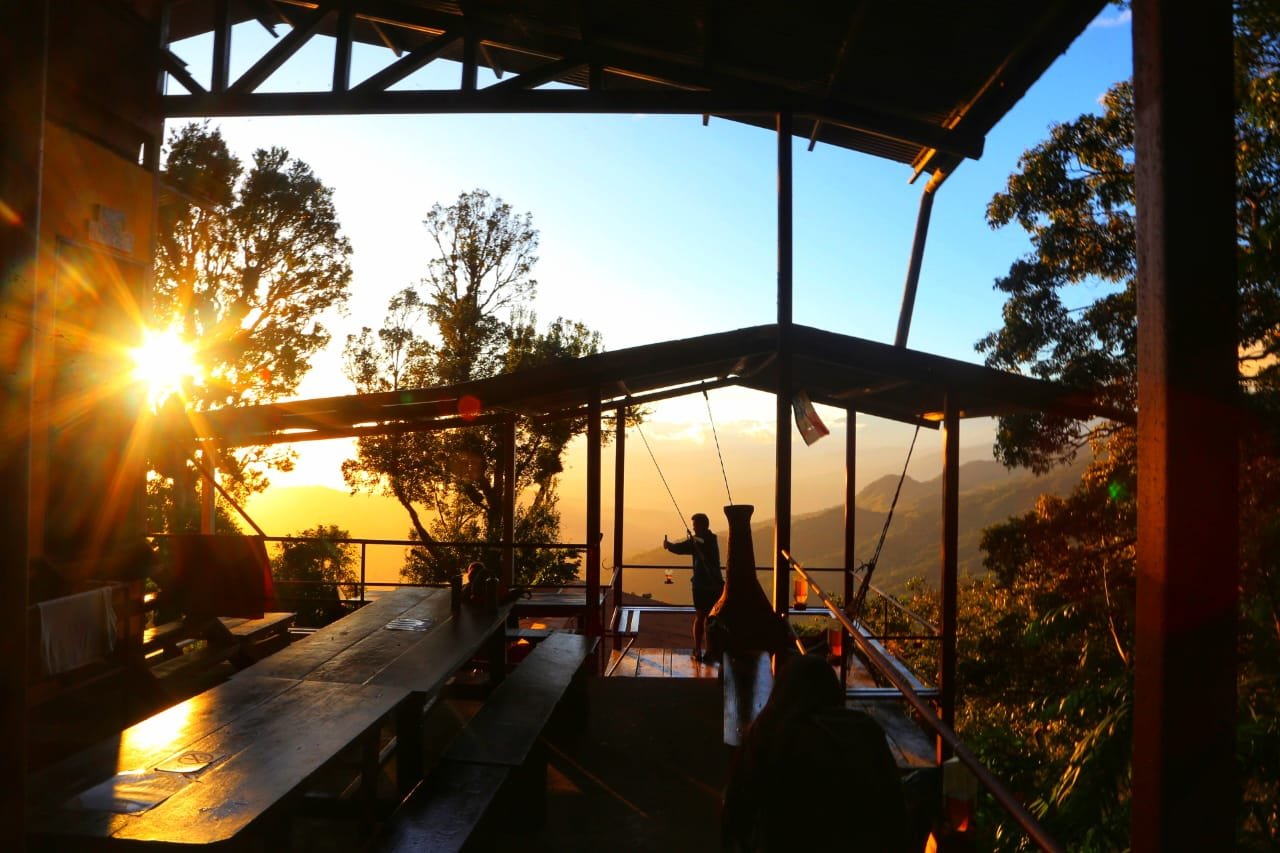
Moving upward in elevation, the forest begins to change dramatically into what is known as cloud forest. One of the best examples is found in areas around Boquete in western Panama. Cloud forests are cooler, mistier, and far more atmospheric than lowland jungle.
Instead of thick heat and humidity, cloud forests often feel like you are walking inside a living fog. Clouds move through the trees at ground level or just above it, constantly reshaping the landscape. The air is cooler, the light is softer, and moss grows heavily on branches, trunks, and rocks.
The vegetation in cloud forests looks almost enchanted. Trees are shorter and often covered in epiphytes, which are plants that grow on other plants. Ferns, orchids, and mosses thrive in the moist environment. Everything feels older, slower, and more mysterious than the lowland jungle.
Wildlife is different too. You are more likely to encounter unique bird species, amphibians, and insects adapted to cooler, wetter conditions. The famous resplendent quetzal is one of the iconic species associated with these highland forests.
Another important forest type in Panama is mangrove forest. Unlike inland rainforests or mountain cloud forests, mangroves grow along coastlines, estuaries, and river mouths where saltwater and freshwater mix. These forests are defined by their tangled root systems, which rise above the water like natural stilts.
Mangroves are incredibly important ecosystems. They protect coastlines from erosion, provide breeding grounds for fish, and serve as nurseries for marine life. They also act as natural filters, improving water quality.
Walking through a mangrove forest feels very different from walking through a jungle. Instead of dense ground vegetation and towering trees, you often see shallow water, exposed roots, and a maze-like structure that feels both calm and slightly eerie.
In places like the Caribbean side near Bocas del Toro, mangroves are a key part of the coastal ecosystem. They often sit between open ocean and rainforest, creating transitional zones where land and sea life meet.
There are also dry tropical forests in Panama, which are much less talked about but equally important. These forests occur in regions that receive less rainfall and experience more seasonal dryness. Compared to rainforests, they have more open space, fewer towering trees, and vegetation adapted to periods without heavy rain.
Dry forests often have deciduous trees that shed their leaves during dry periods to conserve water. The landscape can feel more open, with sunlight reaching the ground more easily. In contrast to the dense, shadowy feel of rainforests, dry forests feel brighter and more spacious.
Even though they are less lush, dry forests are still rich in biodiversity. Many animals and plants have adapted specifically to survive seasonal changes in water availability.
Then there are riverine forests, which form along rivers and freshwater systems. These forests are shaped by constant access to water, which supports lush vegetation and high animal activity. They often act as wildlife corridors, connecting different ecosystems together.
In Panama, rivers cut through many types of terrain, meaning riverine forests often blend into lowland jungle, wetlands, or agricultural areas. They are especially important for species that rely on water access for survival.
What makes Panama especially unique is that all of these forest types exist in relatively close proximity. In a single journey across the country, a traveler can move from mangroves to rainforest to cloud forest to dry forest, often without traveling extremely long distances.
This is one reason Panama feels so ecologically intense compared to larger countries. The transitions are fast, and the biodiversity is constantly changing.
Even within short distances, the emotional feeling of each forest type shifts dramatically. Lowland rainforest feels dense and alive with constant sound. Cloud forest feels quiet, misty, and almost dreamlike. Mangroves feel still, reflective, and tidal. Dry forests feel open, warm, and sunlit.
Together, they create a layered natural world that defines much of Panama’s identity.
And for travelers exploring beyond cities like Panama City or coastal regions, understanding these forest types changes the way you see the country. What once looked like “just jungle” becomes a complex network of ecosystems, each with its own rhythm, atmosphere, and story.