
Most people arrive in Panama thinking about beaches, islands, rainforest adventures, canal ships, or maybe even sloths hanging peacefully in trees. Very few people land in Panama City thinking, “I wonder what the rats are like here.”
And yet, once you spend enough time in the country, especially in warm tropical environments where life is constantly buzzing, moving, and growing, you slowly realize something slightly funny and slightly unsettling.
Rats are everywhere in the ecological background.
Not in a horror movie way, not in a constant visible way, but in a deeply real, biologically important, and surprisingly diverse way.
Panama is basically a perfect rodent country. It is warm all year, has dense urban areas, huge stretches of rainforest, mangroves, farms, rivers, and ports, and sits in a geographic position where species from North and South America overlap. That combination creates a wide and varied rodent population that most travelers never fully appreciate.
And once you start paying attention, you realize there is not just “one kind of rat.” There are entire rat lifestyles happening at the same time, in different ecosystems, almost like parallel underground societies.
In urban areas like Panama City, the most commonly encountered rats are the globally famous commensal species: brown rats and black rats. These are the classic “city rats” that live alongside humans across the world, but in Panama they benefit from year-round warmth and constant food availability. There is no winter slowdown, no seasonal scarcity that limits their activity. Life for them is essentially uninterrupted opportunity.
The brown rat tends to dominate lower, ground-level environments. It is often associated with sewers, drainage systems, port zones, garbage areas, and older infrastructure. It is strong, adaptable, and extremely resourceful. It moves through hidden urban systems that most people never see, navigating pipes, walls, and street-level environments with ease.
The black rat is a very different kind of urban specialist. It is more agile, lighter, and far more comfortable climbing. In Panama, it often lives in elevated spaces like roofs, ceilings, trees, and upper structures. If the brown rat is the underground strategist, the black rat is the rooftop acrobat, moving through vertical spaces with surprising speed and confidence.
What is interesting is how both species have essentially built parallel lives within human environments. Cities in Panama unintentionally provide them with complex three-dimensional habitats: basements, drains, rooftops, construction zones, markets, ports, and green corridors. From a biological perspective, it is almost like an urban jungle designed for adaptability.
But the story becomes much more interesting once you leave the city.
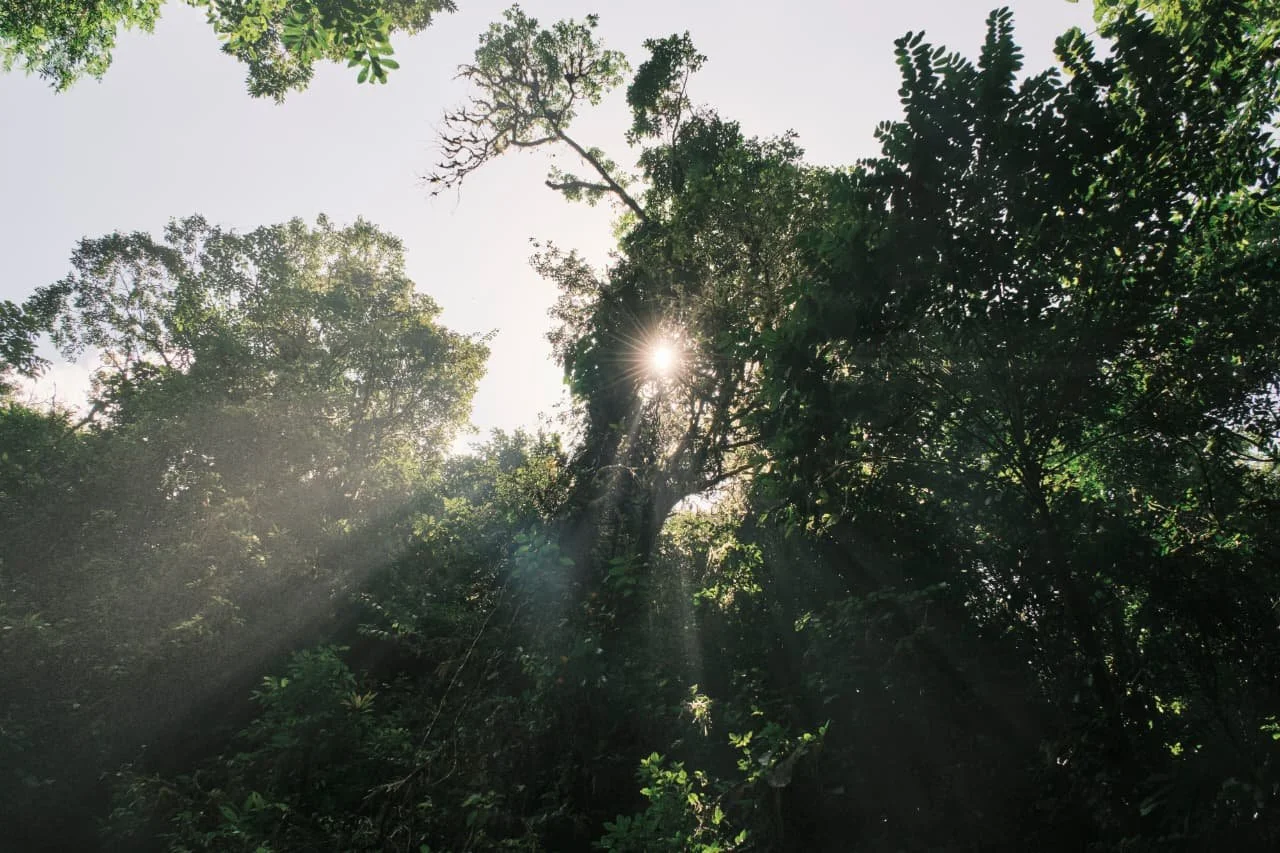
Outside urban areas, Panama transforms into something entirely different. Dense rainforest, wetlands, mountains, and agricultural land create ecosystems where native rodents dominate rather than city-adapted species. These wild rodents are far more diverse, far more specialized, and far less visible to humans.
One major group found throughout tropical regions is spiny rats. Despite the name, they are not closely related to urban rats at all. They are native to the Americas and have evolved specifically for forest life. Their fur is often coarser, their behavior more cautious, and their ecological role much more integrated into natural systems. They are important seed dispersers, meaning they help move plant life through the forest by carrying and consuming fruits and seeds.
In dense rainforest regions of Panama, spiny rats and related species move quietly through leaf litter, fallen branches, and dense undergrowth. They are not flashy or obvious animals. You almost never see them unless you are actively looking. Instead, they exist as part of a hidden forest layer, constantly interacting with plants, insects, and predators.
Then there are rice rats, which are especially associated with wet environments like riverbanks, marshes, and flooded forest edges. These rodents are semi-adapted to water-rich habitats, which makes sense in a country with so many rivers and heavy rainfall systems. They often feed on vegetation and small organisms and play an important role in wetland ecology.
In places like mangrove systems near coastal regions, rice rats and similar species become part of a complex ecosystem that connects land and sea. Mangroves are already strange environments visually, with roots rising out of water and tidal changes constantly reshaping the landscape. Adding small nocturnal rodents into that environment creates a hidden layer of activity that most visitors never realize exists.
As you move into deeper rainforest regions, especially in areas like the Darién, rodent diversity increases even more. The forest becomes thicker, more remote, and less influenced by human activity. Here, rodents occupy extremely specific ecological niches. Some are strictly ground-dwelling, others climb vegetation, and many are active only at night.
These forest rodents are essential to the health of the ecosystem. They are food for predators like snakes, birds of prey, wild cats, and other carnivores. Without them, the entire food web would collapse in complexity. They also contribute to soil turnover and seed dispersal, meaning they quietly help shape the structure of the forest over time.
One of the most fascinating things about Panama’s rodent world is how invisible it is. Even in areas with extremely high biodiversity, most people never directly see these animals. Instead, they experience indirect evidence of their existence: rustling leaves at night, small tracks in mud, or brief movements in peripheral vision that disappear instantly into vegetation.
This invisibility is part of what makes them so ecologically successful. They are constantly present, but rarely exposed.
What ties all of this together is Panama’s geography. As a narrow land bridge between continents, it has acted for millions of years as a corridor for species migration. Animals from North America and South America have mixed, evolved, and diversified in this region, creating a layered biodiversity system that includes rodents of many different evolutionary backgrounds.
That is why Panama’s rodent population is not simple or uniform. It is a mosaic of species shaped by forests, cities, wetlands, mountains, and human development.
Even agriculture plays a role in this story. In rural farming regions, rodents interact with crops like rice, corn, bananas, and root vegetables. This creates a long-standing relationship between humans and rodents that is both practical and ecological. Farmers often deal with rodent populations as part of managing food production, especially in a tropical climate where reproduction cycles are fast and food availability is constant.
And yet, despite their reputation in human culture, rodents in Panama are not simply symbols of nuisance or discomfort. They are essential ecological actors. They feed predators, move seeds, aerate soil, and help maintain balance in ecosystems that would otherwise function very differently without them.
Even urban rats, which people often view negatively, are simply highly successful adapters to human environments. They are not separate from nature; they are part of it, just operating in environments built by humans.
What makes Panama especially interesting is how these different rodent worlds exist side by side. In one direction you have rooftop-climbing city rats navigating urban infrastructure. In another, you have forest rodents quietly moving through ancient ecosystems. In another, you have wetland species navigating mangrove roots and riverbanks. And most of it happens completely out of sight.
So while nobody arrives in Panama dreaming about rats, the reality is that they are one of the most widespread, adaptable, and quietly influential animal groups in the entire country.
They are not the stars of the ecosystem.
But they are everywhere behind the scenes.
A hidden rat kingdom operating constantly beneath, above, and inside nearly every environment Panama has to offer.