
When most foreigners imagine Panama, they usually picture something very modern. They imagine the skyline of Panama City glowing above the Pacific Ocean, giant ships moving through the Panama Canal, rooftop bars filled with music, business towers, luxury condos, and an international atmosphere shaped by global trade and tourism. Panama often presents itself to the world as one of the most modern and globally connected countries in Latin America.
And in many ways, that image is accurate.
But underneath the skyscrapers, modern highways, and cosmopolitan surface exists another Panama entirely. A quieter Panama. A more mysterious Panama. A Panama where old beliefs never fully disappeared.
Because despite modernization, belief in spirits, curses, witches, hauntings, supernatural forces, protective rituals, and unexplained phenomena remains surprisingly common throughout the country.
And what fascinates many visitors is not simply that these stories exist. Every country has ghost stories and legends. What surprises outsiders in Panama is how seriously many people still take them.
You can speak with somebody who works in finance, owns a business, studies at university, or lives in a modern apartment tower, and sooner or later the conversation may drift toward something deeply supernatural. Maybe they mention a haunted road. Maybe they warn you about certain spiritual practices. Maybe they describe a strange encounter they insist truly happened. Maybe they casually explain that there are people who can place curses or work with dangerous spiritual energy.
And they often do not sound like they are joking.
Panama exists in a fascinating cultural space where modern urban life and ancient supernatural beliefs coexist side by side without necessarily conflicting with each other. People may simultaneously believe in Christianity, modern science, technology, and deeply rooted supernatural traditions all at once.
To outsiders this can feel contradictory. But in Panama, it often feels perfectly normal.
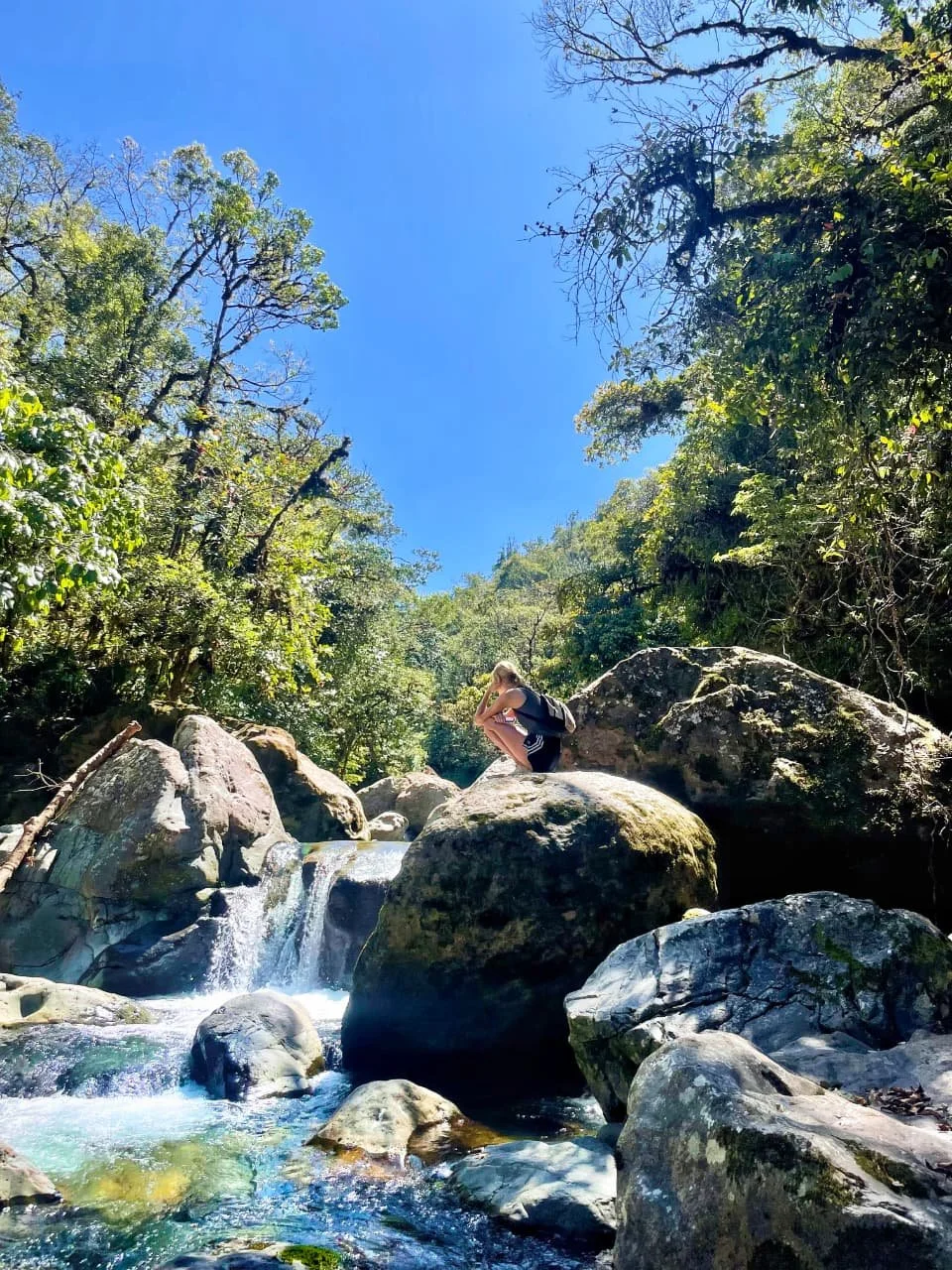
One reason supernatural belief remains so alive in Panama is the country’s geography itself. Panama feels wild in a way many developed countries no longer do. Dense rainforest still covers enormous areas of the country. Mountains disappear into fog. Rivers cut through isolated valleys. Mangroves twist through dark coastal wetlands. Tropical storms arrive suddenly with violent rain and thunder that can shake entire buildings.
And nighttime in tropical environments feels very different psychologically than nighttime in colder urbanized countries.
The jungle is never truly silent.
Something is always moving.
Frogs scream through the darkness. Insects buzz loudly enough to sound mechanical. Strange bird calls echo unexpectedly through the trees. Wind moves giant leaves overhead. Mist drifts between branches while distant animal sounds emerge from places you cannot see.
In environments like this, supernatural stories feel strangely believable even to skeptical people.
You begin understanding emotionally why older generations filled forests and rivers with spirits, creatures, and unseen forces.
Panamanian folklore is filled with legendary supernatural beings, many of which are still widely discussed today. One of the most famous is La Tulivieja, a ghostly female spirit associated with rivers, tragedy, punishment, and nighttime encounters. Different versions of the legend exist, but she is usually described as a terrifying wandering figure connected to sorrow and danger.
People in rural areas still invoke her name when discussing certain isolated places after dark. Some describe hearing cries near rivers at night. Others speak about strange sightings on lonely roads or forest paths.
Whether every person literally believes these stories is almost beside the point. The stories remain emotionally powerful.
And in many communities, there is still a strong sense that some places should be respected cautiously after dark.
Another legendary figure is El Chivato, often described as a frightening goat-like or partially human creature associated with isolated rural areas. Stories involving shapeshifters, wandering spirits, cursed individuals, and strange nighttime encounters remain deeply woven into Panama’s oral storytelling traditions.
One especially interesting aspect of supernatural belief in Panama is how naturally it blends with religion.
Panama is historically a strongly Catholic country, although evangelical Christianity has also grown significantly in recent decades. But religious belief and supernatural belief often overlap rather than compete with each other.
A person may pray regularly, attend church every week, and also strongly believe in curses, spiritual cleansing, evil eye, or witchcraft.
This blending creates a fascinating spiritual atmosphere where many people see the world as containing invisible forces constantly influencing everyday life.
One of the most widespread beliefs throughout Panama and much of Latin America is the concept of “mal de ojo,” or the evil eye. The belief centers around the idea that envy, jealousy, excessive admiration, or negative spiritual energy can unintentionally harm vulnerable people, especially children and babies.
Many Panamanians take this very seriously.
Visitors may notice babies wearing bracelets, charms, or protective symbols meant to guard against negative energy. Some families avoid allowing strangers to excessively admire infants without some form of blessing or protection afterward.
To foreigners these practices may initially seem purely symbolic or superstitious, but emotionally they often feel very real to the people practicing them.
And then there is brujería, or witchcraft.
This is where things become especially fascinating.
Unlike the playful Halloween stereotype of witches common in North America, witchcraft in Panama often carries a genuinely dark emotional reputation. People discussing brujería frequently lower their voices slightly. Certain individuals may develop reputations within communities for practicing rituals, casting curses, or working with dangerous spiritual forces.
Some people seek spiritual practitioners for help with love, revenge, luck, protection, business success, or healing. Others fear these same practitioners deeply.
And while younger urban generations may sometimes laugh at these beliefs publicly, many still avoid dismissing them entirely.
There is often an attitude of cautious uncertainty.
Something like: “I do not know if it is real… but I would rather not mess with it.”
That hesitation itself helps keep the beliefs alive.
In rural Panama especially, supernatural beliefs often become intertwined with personal relationships and social tensions. Stories circulate about people becoming mysteriously ill after conflicts with neighbors. Romantic betrayals may become associated with curses or spiritual retaliation. Unexplained misfortune may lead to whispers about witchcraft involvement.
And because these stories pass orally between generations, they become deeply embedded within local culture.
Panama’s Indigenous communities also contribute enormously to the country’s supernatural worldview. Indigenous groups such as the Guna, Emberá, and Ngäbe-Buglé traditionally maintained rich spiritual systems connected to nature, ancestors, dreams, animals, and unseen realms.
Although modernization transformed many traditions, spiritual relationships with forests, rivers, and natural forces remain important in some communities. Certain places are viewed not simply as physical landscapes but as spiritually significant environments deserving respect.
This perspective influences broader Panamanian culture more than many outsiders realize.
Nature in Panama often feels spiritually charged.
Rivers can feel mysterious rather than simply scenic.
Forests can feel alive in a way that goes beyond biology.
Mountains covered in mist naturally invite imagination.
Travelers staying in remote areas sometimes notice locals behaving cautiously around certain places after dark. A road may have stories attached to it. A river crossing may carry legends. A giant old tree may supposedly contain spiritual energy or strange history.
And often these stories are told with complete sincerity.
One of the reasons supernatural belief survives so strongly in Panama may actually be because the country modernized unevenly. Panama City became highly globalized and urbanized, but huge portions of the country remained rural, forested, and relatively isolated for long periods of time.
This preserved oral traditions and local folklore far more effectively than in heavily industrialized societies.
Even today, there are parts of Panama where jungle still dominates the landscape and communities remain deeply connected to traditional beliefs about nature and spirits.
The country also absorbed influences from many cultures over centuries. Spanish Catholic traditions mixed with Indigenous cosmologies, African spiritual systems, Caribbean folklore, and rural storytelling traditions to create an unusually rich supernatural culture.
Afro-Caribbean communities especially contributed beliefs involving ancestral spirits, protection rituals, mystical practices, and spiritual energy.
The result is a Panama where supernatural belief feels layered and complex rather than belonging to a single tradition.
And perhaps the most fascinating thing is how often even skeptical people end up feeling unsettled themselves in certain environments.
A traveler may laugh at ghost stories while sitting in a café in Panama City. But then later they find themselves driving through foggy mountain roads at night near Boquete, or hearing strange jungle sounds in remote rainforest near Darién Province, and suddenly those old stories feel emotionally possible in a way they did not before.
Panama’s landscapes create atmosphere naturally.
Heavy tropical rain falling through dark forests.
Mist rolling across isolated valleys.
Abandoned buildings overtaken by jungle.
Long empty roads cutting through mountains.
The country often feels cinematic without trying.
And perhaps that is why supernatural belief survives there so strongly.
Because Panama still contains mystery.
Modern life explains many things, but Panama remains wild enough, old enough, and emotionally atmospheric enough that people continue leaving room for the unexplained.
Whether one believes literally in witches and spirits almost becomes less important than understanding the role these beliefs play culturally and emotionally.
They shape how people interpret fear, nature, misfortune, jealousy, death, isolation, and the unknown.
And deep beneath the modern skyline and global business image of Panama, those older invisible worlds still remain very much alive.