
If you backpack through Panama long enough, eventually somebody is going to start talking about “the Bocas bus.” Usually they say it while laughing about how freezing it was, how nobody slept properly, or how delirious everyone looked getting onto the boat at sunrise in Almirante.
The overnight trip between Panama City and Bocas del Toro is one of those classic Central America backpacker journeys that kind of sucks while you’re doing it but somehow becomes one of your favorite memories afterward.
Most people leave from Albrook Bus Terminal, which is absolute chaos the first time you see it. It’s attached to a giant mall, packed with food stalls, random shops, loud announcements, and hundreds of people hauling bags around. Backpackers are usually easy to spot because they’re carrying giant backpacks and trying to look like they understand what’s happening.
You’ll probably buy snacks you don’t need, panic slightly about whether you’re at the right gate, then finally board the bus sometime at night feeling pretty excited.
And then comes the cold.
Everybody warns you about it, but nobody fully believes it until they’re on the bus wrapped in a towel wearing every piece of clothing they own while the air conditioning blasts directly into their soul for ten straight hours. It honestly feels like they’re transporting frozen meat instead of passengers.
The funniest part is boarding in tropical Panama weather wearing shorts and flip flops thinking it’ll be fine. A few hours later everyone looks miserable and half the bus is using backpacks as blankets.
Still, the buses themselves are actually decent. Big reclining seats, smooth roads for most of the trip, bathrooms onboard, usually some terrible dubbed action movie playing quietly in the background. You drift in and out of sleep while the bus pushes west through the country all night.
Somewhere around the middle of the night the bus stops at one of those random highway rest stations. Everyone stumbles out looking destroyed under bright fluorescent lights. People buy coffee, empanadas, chips, sugary drinks, or weird gas station sandwiches while truckers and sleepy families wander around beside them.
Then back onto the ice bus.
If you stay awake during parts of the ride, you slowly notice Panama changing. The city disappears completely. The roads get darker. Mountains start appearing. Sometimes there’s thick fog around the highway near the western highlands. If it’s raining, which happens a lot in Panama, the whole ride feels kind of cinematic with water running down the windows while everybody tries unsuccessfully to sleep.
Then eventually, sometime around dawn, you roll into Almirante.
Almirante is not glamorous.
Nobody arrives there and thinks “wow what a beautiful town.” It’s humid, rough looking, busy, loud, and full of boats, taxis, cargo, and backpackers dragging themselves toward the docks looking half alive after the overnight ride.
But honestly, that’s part of the experience too.
Because then you get on the water taxi.
And suddenly everything changes.
After a whole night trapped on a freezing bus, you’re flying across bright Caribbean water with jungle islands everywhere, reggae playing somewhere in the distance, salty air hitting your face, and pelicans gliding over the ocean beside the boat.
That boat ride into Isla Colón is the moment where it finally hits you that you actually made it to Bocas.
The colors look ridiculous after the overnight journey. Bright green jungle, turquoise water, colorful wooden buildings over the sea. Everybody on the boat suddenly wakes up and starts smiling again.
Then you pull into Bocas Town and instantly see why people get stuck there for way longer than planned.
Backpackers everywhere, dive shops, reggae bars, surfboards, little cafés, boats constantly coming and going, people walking around barefoot carrying beers at noon. Bocas has that dangerous kind of atmosphere where you arrive thinking you’ll stay three nights and suddenly it’s been two weeks.
The trip back to Panama City feels completely different emotionally.
Going toward Bocas feels exciting because adventure is starting. Going back feels like leaving summer camp or something. Everybody’s tired, sunburned, slightly broke, and not emotionally prepared to leave Caribbean island life behind.
The return starts early with water taxis back to Almirante while the islands are still quiet. You’ll probably be carrying damp clothes that never fully dried and a backpack that smells faintly like saltwater and sunscreen.
Then back onto the night bus again.
And somehow it feels even colder the second time.
One thing that makes this route fun is that it’s not just tourists using it. You get locals, students, workers, indigenous families, surfers, random long term travelers, all mixed together for the journey across the country.
People talk to each other more than on a lot of other long distance buses too. Backpackers swap hostel recommendations, border crossing stories, hangover cures, or warnings about how cold the bus is going to get for the people riding it the first time.
Honestly, flying is easier. You can go from Panama City to Bocas in about an hour.
But taking the overnight bus feels more like you actually crossed Panama. You watch the whole country slowly change from skyscrapers and highways into mountains and finally Caribbean islands. You feel the transition happen instead of teleporting there.
And weirdly, the struggle makes arriving better.
Bocas feels earned after that ride.
Lost and Found Hostel Stop
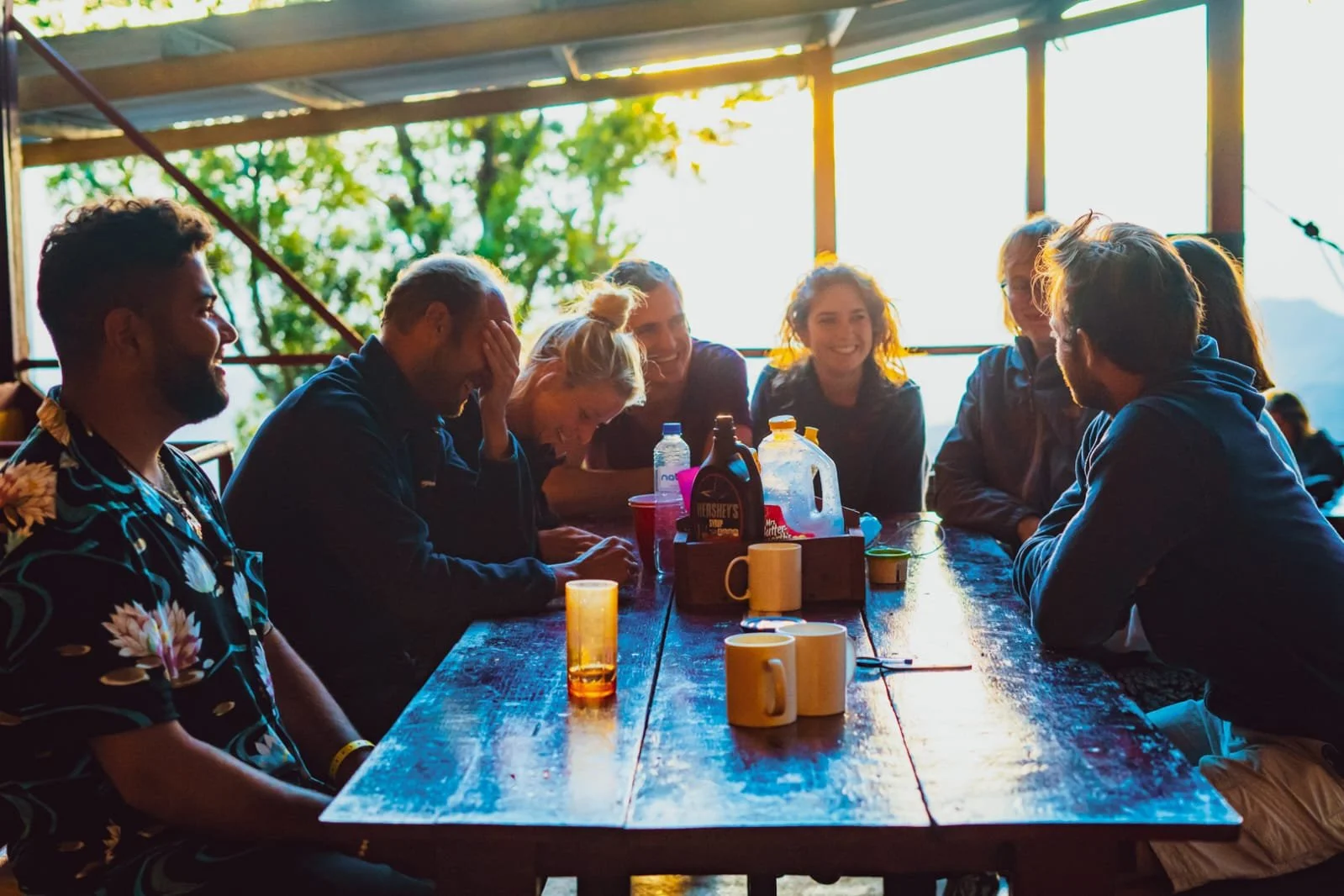
A lot of backpackers also use the route to stop at Lost and Found Hostel, which sits up in the cloud forest mountains between Bocas and Boquete. Most of the long distance buses can drop you nearby if you ask ahead of time. One minute you’re half asleep on the overnight bus, the next minute you’re standing in cool mountain air surrounded by jungle instead of Caribbean heat. It’s actually one of the easiest ways to get there, and a lot of travelers end up staying way longer than they planned.