
Among the countless strange insects living in the forests of Panama, few create as much fascination and nervous curiosity as the tarantula hawk wasp. Long legged, metallic, powerful, and strangely elegant in flight, these enormous wasps are among the most intimidating insects many people ever encounter in the tropics.
And in the cloud forests around Lost and Found Hostel, they are surprisingly common.
Backpackers hiking the jungle trails around the hostel often notice them almost immediately. Large dark wasps glide low across the forest floor with long orange or reddish wings flashing through the humid mountain air. Unlike many insects that move frantically or unpredictably, tarantula hawks fly with a slow controlled confidence that makes them especially noticeable. They often patrol just above the ground, weaving between roots, leaves, rocks, and vegetation while searching the forest carefully.
The first reaction most people have is alarm.
Because these wasps look serious.
They are much larger than ordinary wasps, with some individuals reaching several centimeters in length. Their metallic blue black bodies combined with bright rust colored wings make them impossible to ignore against the green cloud forest backdrop. And when one passes close by at knee level through the jungle, the deep buzzing sound alone is enough to make people stop walking for a second.
Part of their intimidating reputation comes from the fact that tarantula hawks possess one of the most painful insect stings scientifically recorded. Entomologist Justin Schmidt, creator of the famous Schmidt Pain Index, ranked the sting among the most excruciating in the insect world. Descriptions often involve words like blinding, electric, or incapacitating.
Yet despite that terrifying reputation, tarantula hawks are usually remarkably non aggressive toward humans.
Most people who see them around Lost and Found Hostel or other jungle regions of Panama never experience any danger at all. The wasps are generally focused entirely on their own bizarre and highly specialized life cycle, which revolves around one particular target:
Tarantulas.
The name itself sounds almost mythical, but it is completely literal.
Female tarantula hawks hunt tarantulas.
And the process is one of the most extraordinary predator interactions in the tropical rainforest.
The female wasp patrols the forest floor searching for tarantulas hidden inside burrows, beneath logs, or moving through leaf litter. Once she locates one, an intense confrontation begins. The tarantula is vastly larger and physically powerful, armed with venomous fangs and defensive hairs. But the wasp possesses incredible speed, agility, and precision.
If the wasp succeeds, she delivers a highly specialized sting that paralyzes the tarantula without killing it.
This is where the story becomes both fascinating and unsettling.
The immobilized spider is then dragged, sometimes over surprisingly long distances, toward a burrow or prepared nest. There the wasp lays a single egg on the spider’s body before sealing the chamber. When the larva hatches, it feeds slowly on the still living tarantula, carefully consuming non vital organs first to keep the host alive as long as possible.
It is one of nature’s most specialized and brutal reproductive strategies.
And it is happening constantly in Panama’s forests mostly unseen beneath the jungle floor.
Around Lost and Found Hostel, the environment is particularly ideal for tarantula hawks because the cloud forest supports healthy populations of both large spiders and flowering plants. Adult tarantula hawks actually spend much of their time feeding peacefully on nectar. Despite their fearsome reputation, they are also pollinators, visiting flowers throughout the forest while fueling themselves with sugar for energy.
This creates an interesting contrast in their behavior.
One moment a tarantula hawk appears almost graceful, hovering delicately around flowers in mountain mist. The next moment it becomes a specialized predator capable of subduing one of the rainforest’s largest spiders.
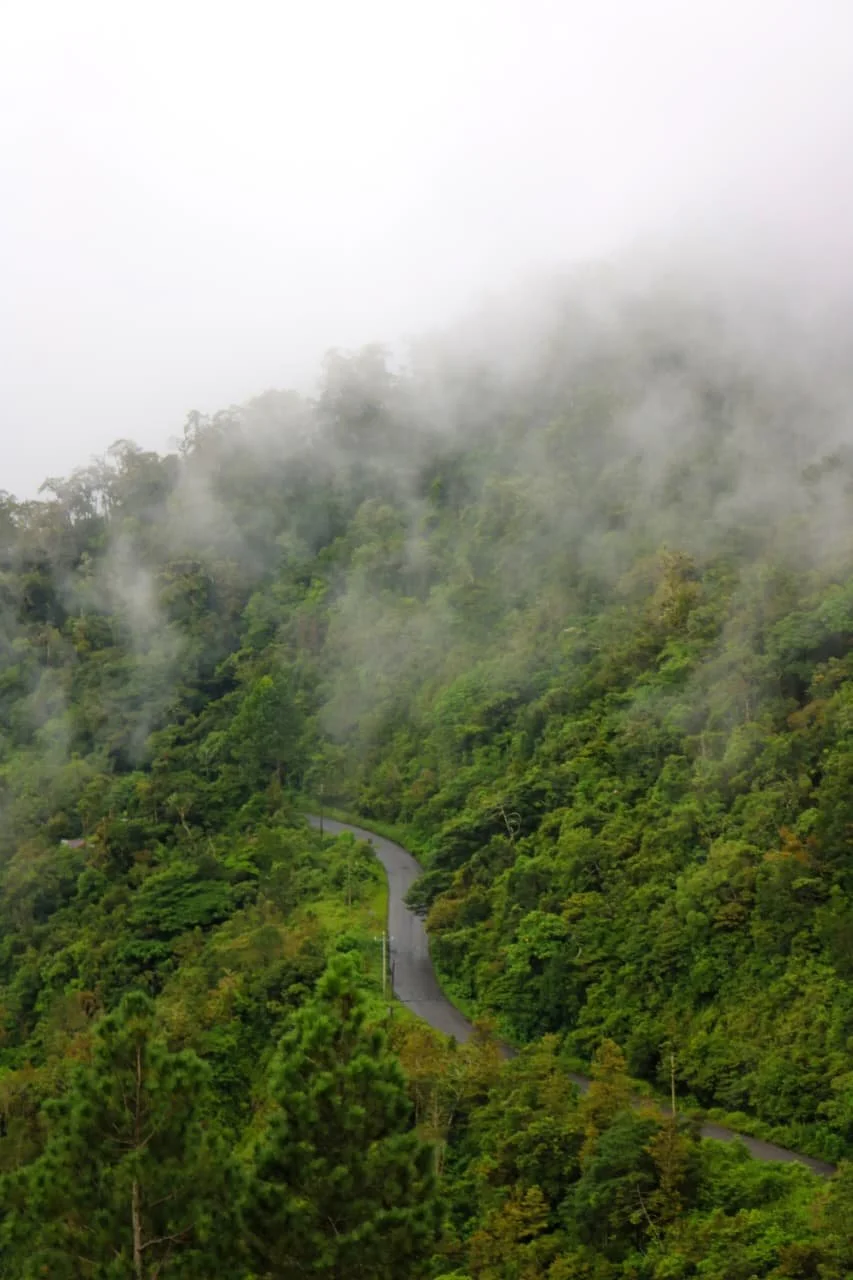
The cool humid cloud forest around Lost and Found enhances the atmosphere dramatically. Mist drifts through the trees while tarantula hawks patrol low over mossy trails and damp leaf litter. Their dark metallic bodies flash briefly in shafts of sunlight cutting through the jungle canopy. Because they often fly close to the ground, hikers encounter them regularly while walking between cabins, trails, and viewpoints.
Interestingly, their flight behavior differs noticeably from many ordinary wasps. Rather than darting aggressively around people or hovering near food sources, tarantula hawks often seem purposeful and investigative. They move slowly through the understory scanning the forest floor for movement or burrows. This low cruising behavior is one reason they are so frequently noticed in tropical forests.
And despite their intimidating appearance, they usually ignore humans completely unless physically threatened or accidentally handled.
That matters because fear often exaggerates the danger.
Yes, the sting is extraordinarily painful if it occurs.
But stings themselves are relatively rare because tarantula hawks are not naturally aggressive insects. They do not defend colonies the way social wasps or bees do because they are solitary hunters. There is no hive mentality pushing them toward defensive attacks. Most would strongly prefer avoiding conflict entirely.
Scientists remain fascinated by tarantula hawks because of how specialized their biology became through evolution. Their venom evolved specifically for targeting large spiders. Their long legs help them maneuver safely around dangerous prey. Their bright coloration likely functions as warning coloration, signaling danger to potential predators. Even birds often avoid attacking them.
The cloud forests of western Panama provide particularly rich habitat for these insects because biodiversity there is so intense. The region contains dense vegetation, stable humidity, abundant insects, spiders, flowering plants, and relatively intact forest ecosystems. Places like Lost and Found Hostel sit directly inside these biologically rich mountain environments, meaning visitors are surrounded constantly by interactions most people elsewhere in the world never witness.
That is part of what makes the region so fascinating scientifically.
Every layer of the forest contains specialized relationships evolved over millions of years. Hummingbirds pollinate flowers. Ants farm fungi. Frogs hide in bromeliads. Tarantulas ambush insects beneath logs. And tarantula hawks patrol the trails searching for the spiders themselves.
The ecosystem feels almost impossibly complex once you begin paying attention to it.
And perhaps that is why the tarantula hawk leaves such a strong impression on people who see one for the first time. It embodies the strange intensity of tropical forests perfectly. Beautiful yet intimidating. Elegant yet ruthless. Peaceful around flowers yet capable of overpowering giant spiders.
In the cool misty forests surrounding Lost and Found Hostel, these enormous wasps continue gliding low through the jungle exactly as they have for countless generations, mostly unnoticed except by the few people who stop long enough to watch carefully.