
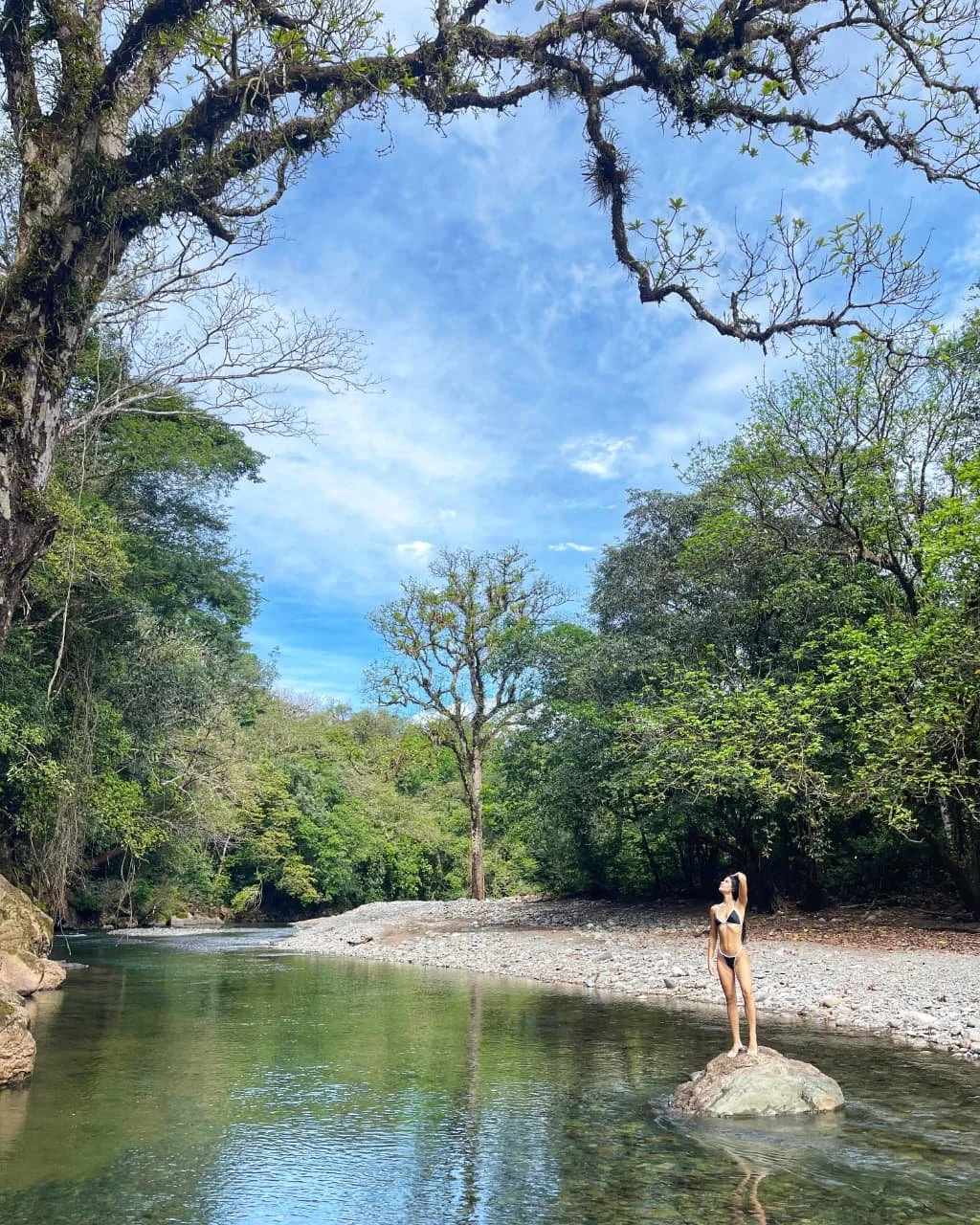
Guanico is one of those places in Panama that quietly exists outside the main tourist spotlight, yet holds a powerful mix of raw Pacific coastline, consistent surf, rural culture, and wide open landscapes that feel untouched compared to more developed beach destinations in the country. Located on the Azuero Peninsula, Guanico sits in a region known for its dry tropical climate, rolling hills, cattle ranching landscapes, and long stretches of coastline that face directly into the Pacific Ocean, making it a magnet for surfers, nature lovers, and travelers looking for something far more rugged and authentic than resort style beach towns.
What makes Guanico especially interesting is its contrast to many other coastal destinations in Panama. While places like Santa Catalina or Bocas del Toro are more developed and internationally known, Guanico remains relatively quiet, with fewer crowds, less infrastructure, and a stronger connection to traditional rural life. The road to reach it often passes through dry forests, farmland, and small communities where life moves at a slower pace, and this transition alone sets the tone for what visitors can expect: a destination that feels grounded, open, and shaped more by nature than by tourism.
The coastline itself is one of Guanico’s most defining features. Long stretches of sand meet powerful Pacific swells that roll in consistently throughout the year, creating conditions that are especially attractive to surfers. The waves here are known for being reliable rather than crowded, and the beaches often feel wide and empty, giving the impression that you are experiencing a coastline that has not been heavily commercialized. Depending on conditions, surfers can find beach breaks and point influenced waves that vary in size and intensity, making the area suitable for different skill levels, although it is generally more appreciated by intermediate and experienced surfers who are comfortable with more natural and less controlled surf environments.
Beyond surfing, Guanico is surrounded by the unique ecology of the Azuero Peninsula, which is one of the most distinct environmental regions in Panama. This area is characterized by a dry tropical forest climate, meaning it receives less rainfall than the rainforest regions of the country, resulting in landscapes that shift dramatically between wet and dry seasons. During the dry season, the hills and fields take on golden and earthy tones, with sparse trees, cactus like vegetation in some areas, and wide open views that stretch toward the ocean. During the rainy season, however, the landscape transforms into a greener and more vibrant environment, with vegetation rapidly regenerating and wildlife becoming more active.
The rural culture surrounding Guanico is also an essential part of its identity. The Azuero Peninsula is often referred to as the cultural heartland of Panama, known for its traditions, festivals, music, and strong agricultural heritage. In and around Guanico, cattle ranching remains a major part of local life, and it is common to see open fields, grazing livestock, and farm roads leading toward the coast. This creates a very different atmosphere compared to tourist heavy beach towns, where development often dominates the coastline. Here, the relationship between land, ocean, and human activity feels more balanced and traditional.
Fishing is another important aspect of life in Guanico. Local fishermen often work the same waters that surfers ride, using small boats and traditional methods to harvest fish from the Pacific. This creates a layered coastal economy where surfing tourism, small scale fishing, and rural agriculture coexist. For visitors, this means that fresh seafood is often locally sourced, and the connection between what is caught in the ocean and what is served on the plate feels direct and authentic.
Wildlife in the region reflects the dry forest ecosystem. While Guanico does not have the dense rainforest biodiversity of places like the Caribbean side of Panama, it offers its own unique set of species adapted to drier conditions. Birds of prey can often be seen circling above open fields, iguanas and lizards are common in warmer areas, and coastal bird species move along the shoreline searching for food. In nearby forest patches, it is possible to find more tropical species, especially where vegetation becomes denser near water sources or seasonal streams.
One of the most appealing aspects of Guanico is its sense of space. The beaches are wide, the coastline is open, and the population density is low. This creates an environment where visitors often feel like they have large stretches of nature almost entirely to themselves. Sunsets over the Pacific are particularly dramatic, with long horizons, open sky, and changing colors that reflect off the ocean surface. Nights are quiet, often broken only by waves, wind, and distant natural sounds, reinforcing the feeling of isolation and simplicity that defines the area.
Unlike heavily developed tourist zones, Guanico does not rely on large resorts or structured entertainment systems. Instead, it attracts travelers who are looking for a more self directed experience. Surf camps, small guesthouses, and local accommodations provide the main infrastructure for visitors, and much of the experience revolves around outdoor activity, exploration, and connection with nature rather than organized tourism packages. This makes Guanico especially appealing to surfers, backpackers, and long term travelers who value simplicity and authenticity over luxury amenities.
Access to Guanico typically involves traveling through the interior of the Azuero Peninsula, passing through towns such as Las Tablas or Pedasi before heading toward the coastline. The journey itself is part of the experience, as it reveals the gradual shift from more populated agricultural zones to increasingly remote coastal environments. Roads may become narrower and more rural as you approach the ocean, reinforcing the sense that you are moving toward one of the quieter edges of Panama’s Pacific coast.
In many ways, Guanico represents a different side of Panama’s identity. While the country is often associated with rainforest biodiversity, canal infrastructure, and urban development in Panama City, places like Guanico highlight the diversity of landscapes that exist beyond those narratives. It is a place defined by open space, surf culture, rural tradition, and a direct relationship with the Pacific Ocean.
Ultimately, Guanico is not a destination built on spectacle or heavy tourism development. Instead, it is defined by atmosphere. Long empty beaches, consistent waves, dry tropical hills, fishing boats on the horizon, and a quiet rural rhythm create an experience that feels grounded and unpolished in the best possible way. For those willing to move beyond the more popular destinations in Panama, Guanico offers something increasingly rare: a coastline that still feels open, natural, and deeply connected to the land and sea that shape it.