
When most people think about the wildlife of Panama, they often imagine sloths hanging lazily from branches, colorful toucans perched in the canopy, troops of monkeys moving through the forest, or perhaps the elusive jaguar roaming remote wilderness areas. Yet one of the most fascinating groups of birds in the country is frequently overlooked despite being heard long before they are seen. Across Panama's forests, cloud forests, mangroves, plantations, and even suburban gardens, woodpeckers spend their days hammering on trees, excavating nests, searching for insects, and filling the air with distinctive drumming sounds that have become part of the soundtrack of tropical nature. These remarkable birds are among the hardest-working residents of Panama's ecosystems and play an essential role in maintaining the health of forests throughout the country.
Panama occupies a unique geographic position as the bridge between North and South America, allowing species from both continents to meet and thrive. This extraordinary location has helped create one of the richest bird populations on Earth, with more than a thousand bird species recorded within the country's borders. Among this impressive diversity are numerous species of woodpeckers, each adapted to a particular niche within the environment. Some are small and easily overlooked, moving quietly through branches in search of insects, while others are large, striking birds whose powerful blows against tree trunks can be heard from hundreds of meters away. Together they form an important but often underappreciated component of Panama's incredible biodiversity.
One of the first things that surprises visitors is how often they hear woodpeckers before spotting them. A rhythmic knocking echoing through the forest may sound like someone using a hammer deep among the trees. This drumming behavior serves several purposes. Woodpeckers use it to communicate with rivals, attract mates, establish territories, and announce their presence. Unlike songbirds that rely primarily on vocal calls, woodpeckers frequently use sound created through percussion. Each species has its own characteristic rhythm and pattern, creating a surprisingly complex language of taps, rattles, and rapid bursts. Experienced birdwatchers can sometimes identify a species simply by listening to its drumming.
Perhaps the most impressive woodpecker found in Panama is the Pale-billed Woodpecker. This large species is often considered one of the giants of the Neotropical woodpecker world. With its dramatic appearance, powerful bill, and loud calls, it commands attention whenever it appears. The bird's pale ivory-colored bill stands out against its dark body and bright red crest, creating a striking silhouette against the forest canopy. Watching a Pale-billed Woodpecker work its way up a massive tree trunk is an unforgettable experience. The force generated by its blows is extraordinary, allowing it to excavate deep cavities and access insects hidden beneath thick bark. These birds often target large trees where colonies of ants and beetle larvae provide rich feeding opportunities.
Equally spectacular is the Crimson-crested Woodpecker, a species that many visitors encounter during their travels through Panama. The brilliant red crest of this bird seems almost too vivid to be real, especially when illuminated by tropical sunlight filtering through the forest canopy. These woodpeckers are highly adaptable and can be found in a variety of habitats, from dense forests to areas modified by human activity. Their loud calls and energetic behavior often reveal their location before they become visible. Watching a Crimson-crested Woodpecker navigate through the forest is a lesson in precision and efficiency. Every movement appears purposeful as the bird investigates cracks, bark crevices, and decaying wood in search of hidden prey.
The Lineated Woodpecker is another species that attracts considerable attention from bird enthusiasts. Resembling a tropical cousin of North America's pileated woodpecker, the Lineated Woodpecker is large, bold, and charismatic. Its dramatic facial markings and prominent crest make it one of the easier species to identify. These birds often occupy mature forests where large trees provide ideal nesting and feeding opportunities. Their powerful drumming resonates through the forest and contributes to the rich soundscape of Panama's wild places. Because they require substantial habitat, sightings of Lineated Woodpeckers can serve as indicators of healthy forest ecosystems.
In western Panama, especially in forested regions near the border with Costa Rica, birdwatchers often search for the beautiful Black-cheeked Woodpecker. This species possesses distinctive facial markings and occupies a variety of forest habitats. Although not as large as some of its relatives, it remains highly active and can often be observed foraging among branches and trunks. Its presence highlights the remarkable diversity of woodpecker species packed into a relatively small geographic area.
Woodpeckers possess a collection of extraordinary adaptations that allow them to survive a lifestyle that would be impossible for most birds. Their skulls are specially designed to absorb repeated impacts that would cause severe injury in other animals. Scientists have studied these structures extensively because they may inspire innovations in protective equipment for humans. The bird's brain sits within a sophisticated system that distributes force during pecking, reducing damage despite thousands of powerful strikes each day. Additionally, their strong neck muscles generate tremendous force while maintaining precise control over each movement.
Their tongues are equally remarkable. Many woodpecker species possess extremely long tongues that wrap around the skull when retracted. This unusual anatomy allows them to reach deep into tunnels and crevices where insects hide. Some tongues are equipped with sticky surfaces or tiny barbs that help capture prey. Watching a woodpecker extract insects from a narrow opening demonstrates just how specialized these birds have become over millions of years of evolution.
The ecological importance of woodpeckers extends far beyond their own survival. Every nest cavity excavated by a woodpecker may later become a home for numerous other species. Once a woodpecker abandons a nesting hole, other birds, bats, reptiles, insects, and small mammals often move in. In this way, woodpeckers function as ecosystem engineers. They create critical housing resources that benefit a wide range of animals. Without woodpeckers continuously producing new cavities, many forest species would struggle to find suitable nesting or shelter sites.
Panama's famous national parks provide excellent habitat for woodpeckers. Areas such as Soberanía National Park are renowned among birdwatchers worldwide. Trails winding through mature rainforest often reveal multiple woodpecker species during a single morning. The famous Pipeline Road has earned an international reputation for bird diversity, and woodpeckers are among the highlights regularly observed there. Birders slowly scanning trunks and branches frequently discover species working methodically through the forest in search of food.
The cloud forests of western Panama offer a different woodpecker experience. Around Boquete and the surrounding highlands, cooler temperatures and unique vegetation create habitat for species adapted to mountain environments. Mist drifting through moss-covered trees provides a magical backdrop for observing these birds. The combination of dramatic scenery and rich birdlife makes the region a favorite destination for wildlife photographers.
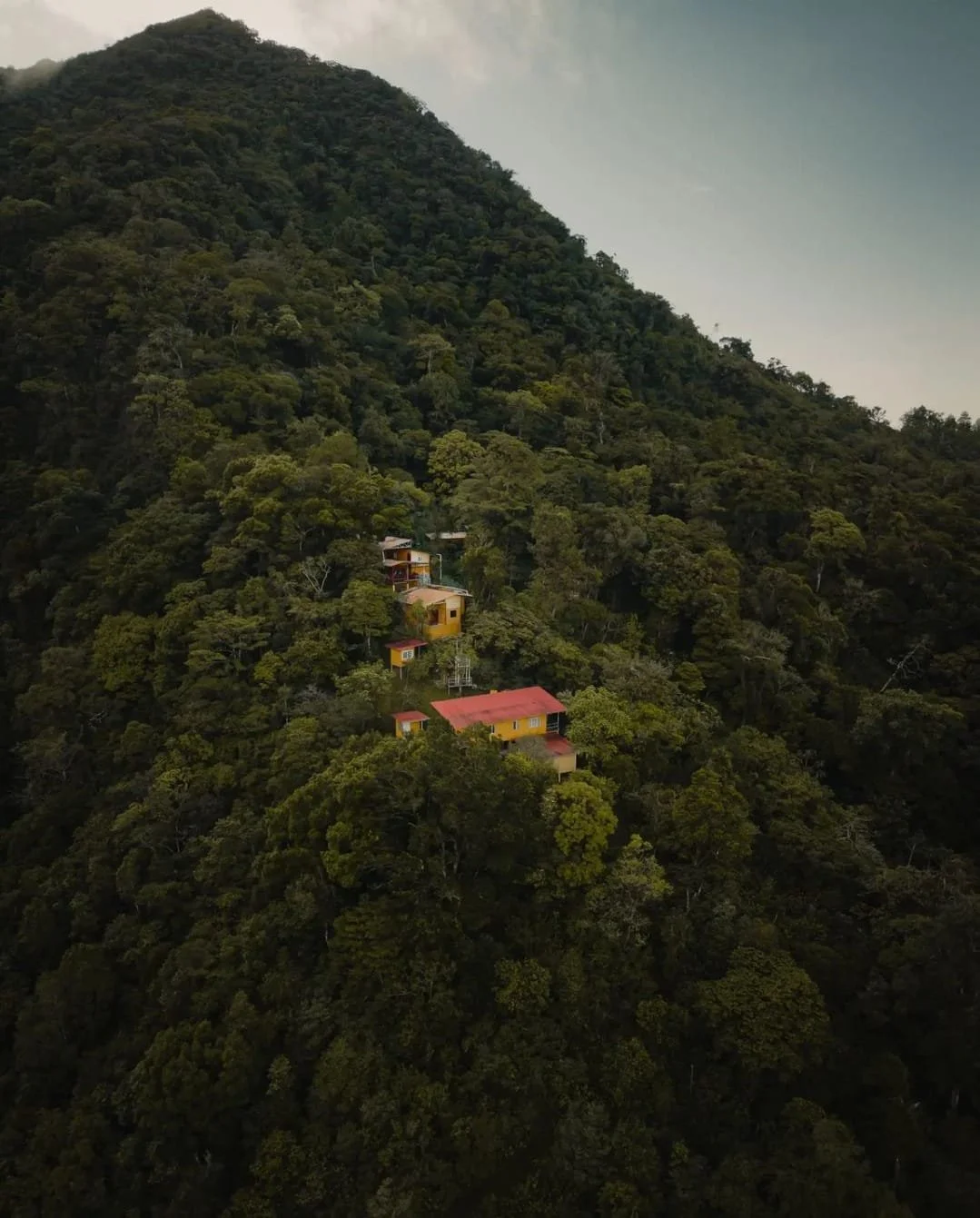
The forests surrounding the Fortuna region, including areas near Lost and Found Hostel, are particularly rewarding for bird enthusiasts. Here, dense forest habitats support a variety of woodpecker species that can often be heard throughout the day. Visitors hiking forest trails may encounter the distant drumming of larger species echoing across valleys while smaller woodpeckers quietly forage among branches overhead. The diverse elevation and habitat types found in the region contribute to impressive bird diversity, making it one of the country's hidden treasures for wildlife observation.
Woodpeckers are not limited to pristine wilderness. Many species demonstrate impressive adaptability and can survive in agricultural landscapes, secondary forests, and even urban environments. In towns and villages across Panama, residents occasionally spot woodpeckers visiting backyard trees or feeding in nearby forest patches. This adaptability helps some species cope with environmental changes, although others remain dependent on large tracts of intact forest.
The relationship between woodpeckers and insects is especially important. By feeding on beetle larvae, ants, termites, and other invertebrates, woodpeckers help regulate insect populations that might otherwise damage trees. Forest managers increasingly recognize the value of these natural pest control services. A healthy woodpecker population often contributes to healthier forests by reducing outbreaks of certain wood-boring insects.
Breeding season reveals another fascinating side of woodpecker life. Males and females work together to excavate nest cavities, a process that may take weeks depending on the hardness of the wood. Once completed, the cavity provides a secure environment for raising young. Both parents typically participate in incubation and chick rearing. Young woodpeckers emerge into a world filled with challenges, learning to forage, communicate, and eventually establish territories of their own.
Photographing woodpeckers presents unique challenges and rewards. Their constant movement and tendency to remain on the opposite side of tree trunks can test even experienced photographers. Patience is often required. However, when conditions align and a woodpecker pauses in good light, the results can be spectacular. The vivid crests, intricate feather patterns, and intense concentration visible during feeding behavior create compelling images that capture the essence of tropical wildlife.
Conservation remains crucial for the future of Panama's woodpeckers. While many species continue to thrive, habitat loss poses challenges in some regions. Mature forests containing large trees are especially important because they provide nesting sites and feeding opportunities that younger forests cannot fully replace. Protected areas, sustainable land management, and conservation initiatives help ensure that these remarkable birds continue to play their vital role within Panama's ecosystems.
For visitors exploring Panama's forests, woodpeckers offer an opportunity to witness one of nature's most specialized and successful evolutionary designs. Every tap against a tree represents millions of years of adaptation. Every cavity carved into a trunk contributes to a larger ecological network that supports countless other creatures. Every flash of a red crest disappearing through the canopy reminds observers that tropical forests are alive with complex relationships and hidden stories.
Whether encountered in the lowland rainforests of the Caribbean, the cloud forests of Chiriquí, the protected wilderness of national parks, or even a backyard tree on the edge of town, Panama's woodpeckers remain among the country's most fascinating birds. They are architects, musicians, insect hunters, engineers, and caretakers of the forest all at once. Their drumming echoes across the nation from sea level to mountain peaks, providing a constant reminder that some of nature's most extraordinary wonders are not always the loudest or the most famous, but they are often among the most important.