
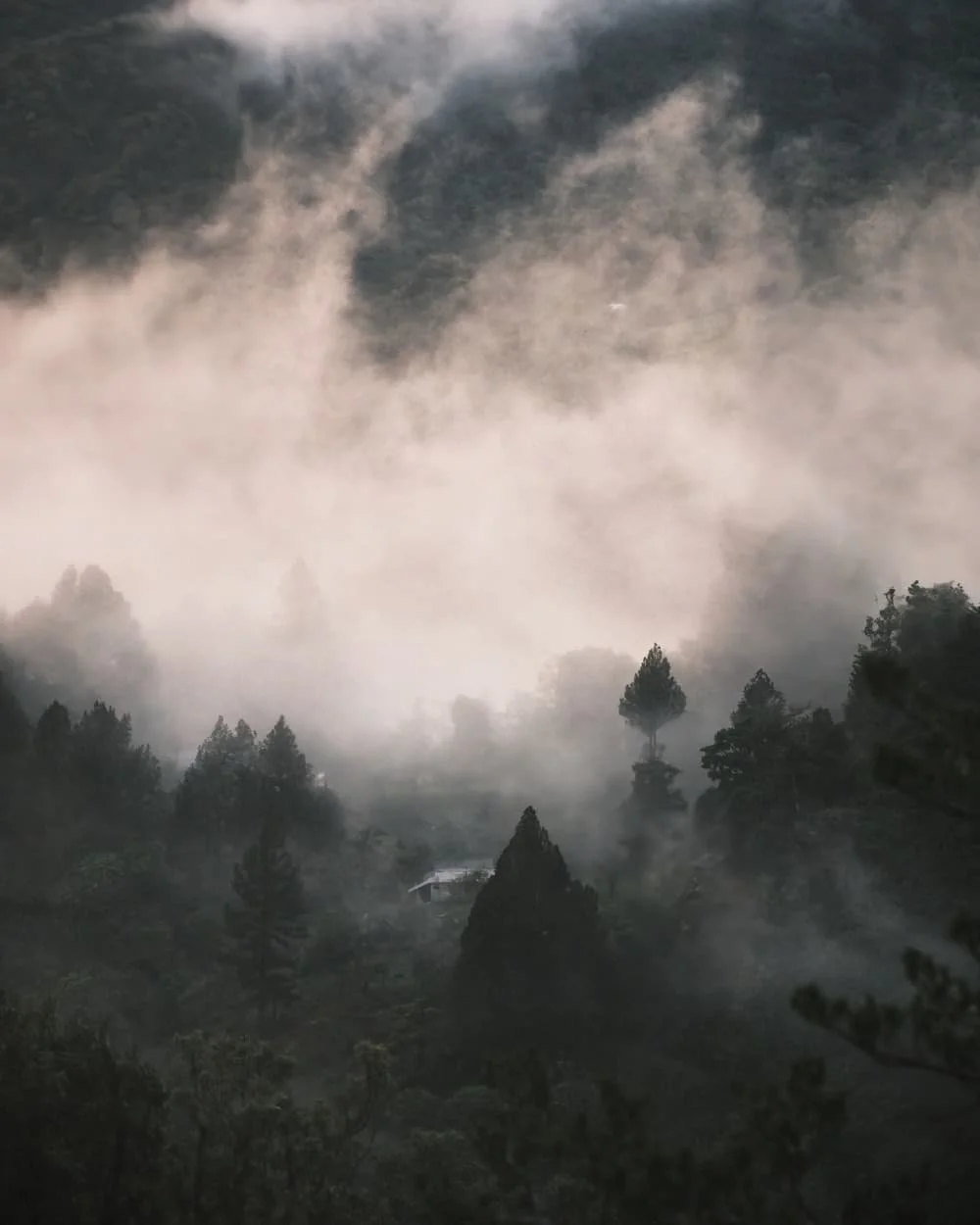
There are few places left in the modern world where a traveler can genuinely feel as though they have stepped into a forgotten realm. Most of the planet has been mapped, photographed, documented, and transformed. Roads reach almost everywhere. Satellites peer into the most remote corners. Information flows instantly across continents. Yet there are still landscapes capable of inspiring the same sense of wonder that explorers must have felt centuries ago. Panama's cloud forests are among those rare places. They are not merely forests. They are living worlds suspended between earth and sky, ancient ecosystems where clouds drift through towering trees, where orchids bloom in the mist, where hidden waterfalls tumble through deep valleys, and where an astonishing abundance of wildlife thrives largely unseen. They are places where every trail seems to lead toward mystery, where every sound emerging from the fog hints at unseen life, and where the natural world still feels vast, unpredictable, and endlessly fascinating.
To understand the cloud forests of Panama, it is important to understand just how unusual they are. These ecosystems occupy a very narrow environmental zone found only in certain mountain ranges around the world. They form where warm moisture laden air rises from the lowlands and cools as it climbs into higher elevations. Instead of passing through as ordinary weather, the clouds become trapped within the forest itself. Trees spend much of their existence immersed in fog. Mosses absorb water directly from the air. Orchids flourish on branches suspended high above the ground. Ferns cover every available surface. The result is an ecosystem that appears almost impossibly green. Visitors often describe their first impression as overwhelming because there is simply so much life everywhere they look. In a desert, life is concentrated around water. In a cloud forest, life seems concentrated around absolutely everything.
What makes Panama especially significant is that the country occupies one of the most important geographic positions on Earth. Millions of years ago, the rise of the Isthmus of Panama changed the course of natural history. Before the isthmus existed, North America and South America were separated by ocean. When the land bridge emerged, it connected two continents that had evolved independently for millions of years. Animals began moving between continents. Plants expanded their ranges. Predators encountered unfamiliar prey. Ecosystems transformed. Scientists often describe this event as one of the most important biological exchanges in Earth's history. The effects are still visible today throughout Panama, particularly within its cloud forests, where species with northern origins coexist alongside species whose ancestors evolved deep within South America. The result is a concentration of biodiversity that is almost impossible to comprehend until one sees it firsthand.
Panama may be a relatively small country on a map, but it contains an astonishing variety of habitats. Tropical rainforests, mangrove forests, coral reefs, mountain valleys, dry forests, rivers, wetlands, cloud forests, and coastlines along two oceans all fit within its borders. This diversity of environments allows an incredible variety of wildlife to flourish. Scientists continue discovering species that are new to science. Researchers travel from around the world to study ecological relationships that remain poorly understood. Conservationists regard Panama as one of the most important biodiversity strongholds in the Americas. Yet among all of these habitats, cloud forests stand apart. They are often described as the crown jewels of Panama's natural heritage because they combine exceptional biodiversity with breathtaking scenery and a sense of wilderness that has become increasingly rare.
Among the greatest examples of this wilderness is the magnificent Fortuna Forest Reserve. Stretching across vast mountainous landscapes in western Panama, Fortuna represents one of the largest and most ecologically important cloud forest systems in Central America. It is a place where mist covered ridges extend toward the horizon, where rivers carve deep valleys through ancient forests, and where wildlife still moves freely through enormous protected habitats. Fortuna does not possess the international fame of some national parks, and perhaps that is part of its appeal. Travelers often arrive with modest expectations and leave astonished by what they discover. The reserve feels wild. It feels authentic. It feels like one of those increasingly rare places where nature still dominates the landscape.
The scale of life within Fortuna is difficult to describe. Every tree seems alive. Every branch supports communities of mosses, orchids, bromeliads, lichens, fungi, insects, and microorganisms. Massive tropical oaks rise through the fog like pillars supporting a green cathedral. Tree ferns create scenes that appear unchanged since prehistoric times. Thick carpets of moss cover trunks and branches. Water drips continuously from leaves. Tiny streams emerge from seemingly nowhere and eventually become rivers. Looking closely at a single square meter of forest can reveal dozens of species interacting in ways that scientists are still trying to understand. Looking across an entire valley reveals one of the richest ecosystems in the hemisphere.
One of the most remarkable characteristics of Panama's cloud forests is the sheer density of plant life. In many forests, trees dominate the landscape and other plants occupy the spaces between them. In a cloud forest, every available surface becomes habitat. Trees support gardens in their branches. Mosses cover rocks. Orchids cling to trunks. Bromeliads collect water in leaf structures that become homes for insects, frogs, and countless microscopic organisms. Vines twist through the canopy. Ferns emerge from cracks in bark. The forest grows outward, upward, downward, and in every direction simultaneously. It is not simply a collection of plants. It is a three dimensional living city extending from the soil to the highest branches.
For birdwatchers, these forests represent one of the greatest destinations on Earth. More bird species occur in Panama than in the United States and Canada combined. The cloud forests contain many of the most spectacular. At sunrise the forest comes alive with movement and sound. Calls echo through hidden valleys. Flocks move through fruiting trees. Trogons perch quietly in the understory. Toucanets glide between branches. Bellbirds produce strange calls that seem to belong in a science fiction film. Tanagers flash brilliant colors through openings in the canopy. Every morning feels like witnessing one of nature's greatest performances.
Yet no bird captures the imagination quite like the Resplendent Quetzal. The quetzal is not merely a bird. It is a symbol of wilderness, beauty, and mystery throughout Central America. Ancient civilizations regarded it as sacred. Legends were built around it. Even today, birdwatchers travel across oceans hoping to glimpse one. When a male quetzal appears in the mist, the experience often feels dreamlike. Emerald feathers shimmer with impossible brilliance. Long tail plumes drift through the air behind it. Its colors shift with the light, changing from green to blue to gold. Against a backdrop of moss covered branches and drifting clouds, the quetzal appears less like a bird and more like a creature from mythology.
The hummingbirds are equally captivating, though for entirely different reasons. Tiny yet powerful, they seem to challenge the laws of physics. Some weigh less than a coin. Yet they hover effortlessly in place. They fly backward. They accelerate with astonishing speed. They can visit hundreds of flowers in a single day. Around flowering plants, the air sparkles with flashes of emerald, ruby, sapphire, violet, and gold as hummingbirds move through the forest. Watching them feed in the cloud forest is mesmerizing. Visitors often find themselves standing motionless for long periods simply observing these remarkable creatures.
Beyond the birds lies a world of mammals that adds mystery to every hike. Jaguars continue to roam portions of Panama's mountain wilderness. These powerful predators represent the ultimate symbol of a healthy ecosystem. Pumas patrol remote ridges. Ocelots move silently through dense vegetation. Margays hunt in the trees. Most travelers never see these elusive cats, but knowing they exist changes the way people experience the forest. Every trail feels wilder. Every remote valley feels more significant. These predators remind visitors that the cloud forest remains a functioning ecosystem rather than a scenic backdrop.
Other mammals are easier to encounter. White nosed coatis forage through leaf litter searching for food. Agoutis dash across trails. Armadillos dig through the soil. Kinkajous emerge after sunset. Bats fill the night skies. Tapirs occasionally move through remote sections of the forest. Each species contributes to the extraordinary complexity of the ecosystem.
The monkeys are among the most charismatic residents of the cloud forest. Mantled howler monkeys produce some of the loudest vocalizations of any land animal. Their calls roll across valleys and through forests with astonishing power. White faced capuchins explore the canopy with endless curiosity. Spider monkeys travel gracefully through the highest branches. Seeing monkeys emerge from the mist and move through ancient trees is one of those experiences that remains vivid long after a journey ends.
Closer to the ground, another universe of life unfolds. Amphibians thrive in the cool moist conditions of cloud forests. Tiny glass frogs cling to leaves above streams. Rain frogs call from hidden corners of the forest after storms. Salamanders inhabit damp logs and moss covered rocks. Many species occur nowhere else on Earth. Scientists study these animals because they provide important insights into environmental change and ecosystem health.
The reptiles are equally fascinating. Eyelash vipers rest among leaves, blending so perfectly into their surroundings that they often remain invisible. Tree dwelling snakes coil among branches. Lizards bask whenever sunlight penetrates the canopy. Discovering one of these creatures often feels like uncovering a hidden treasure.
The insects deserve entire books of their own. Butterflies drift through openings in the forest like floating flowers. Metallic beetles shimmer in brilliant colors. Dragonflies patrol streams. Leaf cutter ants create highways across the forest floor. Giant moths emerge after sunset. Countless pollinators move between flowers. Scientists believe that many insect species in Panama's cloud forests remain undiscovered. Every fallen branch, every patch of moss, and every handful of leaf litter contains a world of life invisible to most visitors.
One of the most fascinating ways to experience this ecosystem is at Lost and Found Hostel, located within the cloud forest environment between Boquete and Bocas del Toro. Unlike accommodations that simply offer access to nature, this location places travelers directly within the ecosystem itself. The forest surrounds the property in every direction. Trails lead immediately into cloud forest habitats. Guests often wake to bird calls echoing through the mist. Hummingbirds visit nearby flowers. Monkeys move through the canopy. Butterflies drift through clearings. The experience feels immersive because wildlife observation begins the moment one steps outside.
What makes cloud forests truly unforgettable is not simply the wildlife that visitors see. It is the wildlife they sense around them at all times. A rustle in the leaves. A distant call from somewhere deep in the fog. A flash of color disappearing into the canopy. A movement in the shadows. Every moment carries the possibility of discovery. Every trail creates anticipation. The forest encourages people to slow down, observe carefully, and appreciate details they might otherwise overlook.
In an increasingly developed world, places like Panama's cloud forests become more valuable every year. They are reservoirs of biodiversity. They protect water resources. They provide habitat for countless species. They support scientific research. They inspire conservation. Most importantly, they remind us that nature is still capable of producing wonders beyond imagination.
The cloud forests of Panama are not simply beautiful places. They are among the most biologically rich ecosystems on Earth. They shelter quetzals, hummingbirds, jaguars, tapirs, orchids, frogs, butterflies, towering trees, hidden waterfalls, and thousands upon thousands of species interacting within one of nature's greatest masterpieces. They are cathedrals built from mist and moss. They are living museums of evolution. They are strongholds of wilderness in a rapidly changing world.
For travelers fortunate enough to explore them, these forests offer far more than wildlife sightings. They offer perspective. They offer wonder. They offer the chance to experience a world where clouds move through the trees, where life exists in astonishing abundance, and where every step deeper into the mist reveals another layer of beauty waiting to be discovered. Few places on Earth can match that experience. Few places on Earth can inspire such awe. And few places demonstrate more clearly why Panama has become one of the most extraordinary destinations for nature lovers anywhere in the world.