
There are beautiful islands, and then there are places that feel almost mythical. Places that seem to belong to another era of the Earth. Places where nature still dominates the landscape, where wildlife remains abundant, where forests stretch uninterrupted to the horizon, and where beaches can remain empty for hours despite being among the most beautiful in the world. Coiba Island is one of those places. Hidden off Panama's Pacific coast, surrounded by a vast marine reserve and protected by its remoteness, Coiba is often described as the Galápagos of Central America. While comparisons can be useful, Coiba ultimately stands on its own. It is not a substitute for somewhere else. It is a destination unlike any other in Panama and unlike almost anywhere else in the Americas. For travelers who make the journey, the island offers a glimpse into a version of the tropical Pacific that has largely vanished elsewhere. This is a world of giant forests, deserted beaches, coral reefs, whales, sharks, sea turtles, monkeys, crocodiles, rare birds, and landscapes so untouched that it sometimes feels as though human civilization never arrived. In a world where it often seems like every corner of the planet has been mapped, developed, reviewed, photographed, and transformed into a tourist attraction, Coiba remains something far rarer: a genuine wilderness.
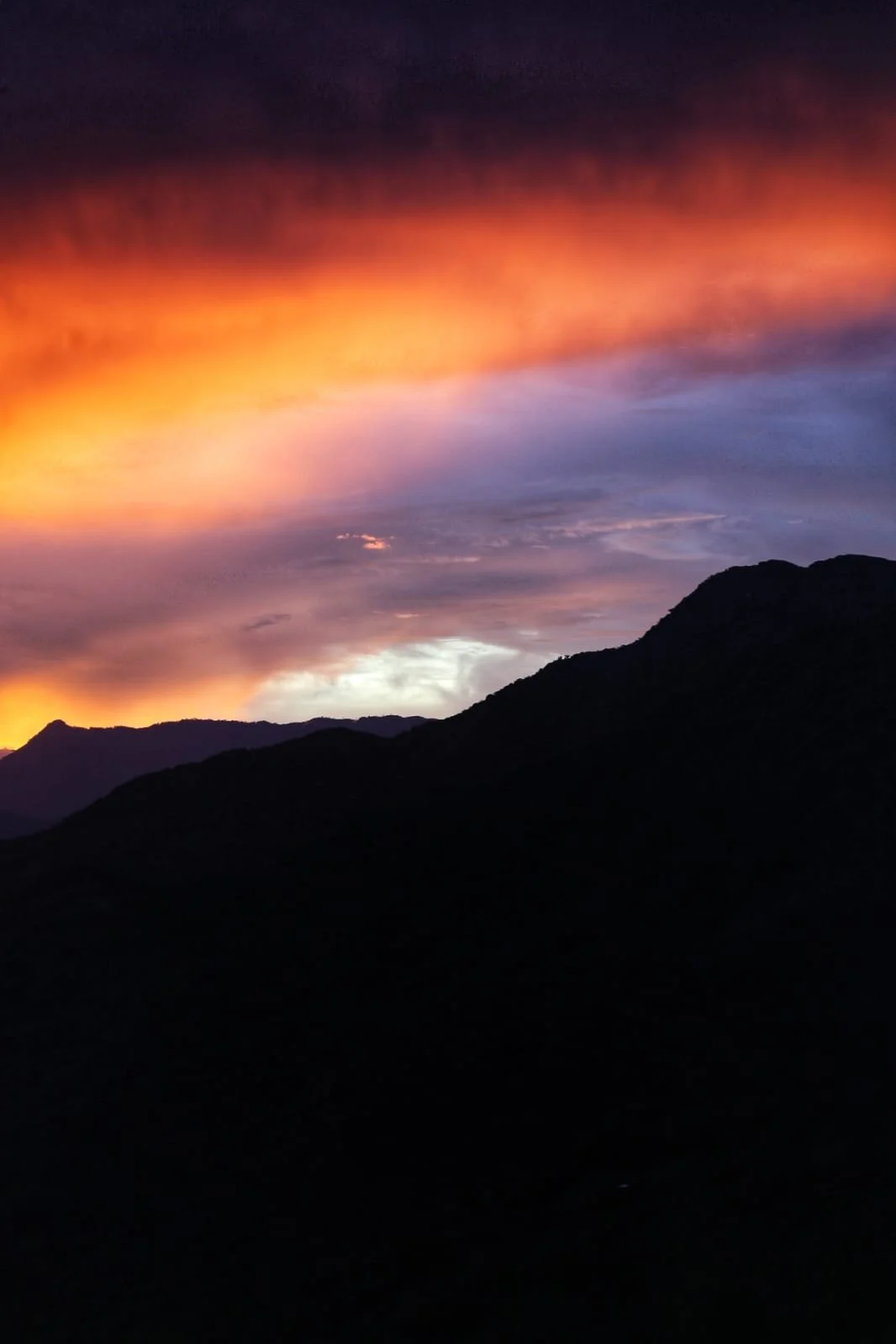
The first thing that surprises many visitors is the sheer scale of the island itself. Most people hear the word island and imagine something relatively small, perhaps a place that can be explored in an afternoon. Coiba is something entirely different. At more than 500 square kilometers, it is the largest island in Central America and one of the largest islands in the entire eastern Pacific. Standing on a boat approaching the island for the first time, it feels less like arriving at an island and more like approaching an unexplored country. Mountains rise from the sea. Dense tropical rainforest blankets the slopes. Rivers disappear into valleys hidden beneath layers of green vegetation. The shoreline twists and turns through bays, coves, mangroves, rocky points, and long stretches of beach. Unlike many tropical destinations where hotels, resorts, roads, and developments dominate the coast, Coiba remains astonishingly natural. The forests reach almost all the way to the water. The beaches often show no signs of development whatsoever. Looking across the landscape, it is easy to imagine how much of tropical America must have appeared hundreds of years ago before roads, cities, agriculture, and tourism transformed so much of the region.
One of the most fascinating aspects of Coiba is that its extraordinary preservation happened almost by accident. Throughout the twentieth century, the island was home to one of Panama's most infamous penal colonies. Established in 1919, the prison operated for decades and gained a reputation for isolation that made escape extraordinarily difficult. The surrounding ocean acted as a natural barrier. Dense jungle covered much of the island. Crocodiles inhabited coastal areas and mangroves. Strong currents and the distance to the mainland discouraged even the most determined escape attempts. While the prison itself represents a darker chapter in Panama's history, it unintentionally protected one of the most important ecosystems in the eastern Pacific. Because the island was largely closed to settlement and development, enormous areas of forest remained untouched. Large scale agriculture never arrived. Urban expansion never occurred. Tourism infrastructure never appeared. Roads remained minimal. While many tropical islands around the world experienced deforestation, habitat loss, and extensive development during the twentieth century, Coiba remained largely frozen in time. By the time the prison finally closed, conservationists recognized that something incredibly rare had survived. An island ecosystem of immense ecological value had escaped many of the pressures that transformed other parts of the tropics.
Today, Coiba forms the heart of Coiba National Park, one of the most important protected areas in the Americas and a recognized UNESCO World Heritage Site. The protected area extends far beyond the island itself. It includes dozens of smaller islands and an enormous marine reserve that protects thousands of square kilometers of ocean. This combination of terrestrial and marine protection has created a sanctuary for wildlife on a scale that few people realize exists in Central America. Scientists continue to study the region because it contains ecosystems that remain remarkably intact. The island functions almost like a living laboratory where researchers can observe ecological processes that have disappeared elsewhere. For travelers, however, the scientific significance often becomes apparent in a simpler way. Wildlife is everywhere. Nature feels abundant. The forests feel alive.
Walking through Coiba's rainforest is an experience that remains etched into the memory of many visitors. The forest is not merely a collection of trees. It is an entire world operating simultaneously at countless levels. High above the canopy, birds call from hidden perches. Monkeys move through the branches. Insects hum and buzz in a constant tropical soundtrack. Vines twist between towering trees. Sunlight filters through layers of leaves and creates shifting patterns on the forest floor. Every few minutes there is something new to notice. A colorful butterfly drifts through a clearing. A lizard disappears into undergrowth. Strange flowers emerge from seemingly impossible places. The sense of life is overwhelming. Unlike some forests that feel quiet and subdued, Coiba's rainforest often feels busy, active, and vibrant.
The island's wildlife is one of its greatest treasures. Because Coiba became isolated from mainland Panama thousands of years ago, several species evolved independently. This isolation led to the development of endemic wildlife found nowhere else on Earth. For birdwatchers, the island is particularly exciting. Species such as the Coiba spinetail evolved in isolation and exist nowhere beyond these forests. Scarlet macaws fly overhead, adding flashes of red, blue, and yellow against the green canopy. Parrots and parakeets move noisily through the trees. Frigatebirds patrol the coastline. Pelicans skim low across the water. Ospreys search for fish. Herons stalk through mangroves. Birdwatchers can spend days exploring the island and still discover new species. Even travelers with little prior interest in birding often find themselves looking skyward repeatedly because the sheer abundance of birdlife is impossible to ignore.
Monkeys are another unforgettable part of the Coiba experience. White faced capuchins often move through the forest in energetic groups, constantly exploring and searching for food. Spider monkeys swing gracefully through the canopy with astonishing agility. Howler monkeys announce their presence long before they are seen. Their deep calls can echo across the landscape and create one of the most memorable sounds in the tropical Americas. Hearing a troop of howlers roaring somewhere deep in the forest while standing on a deserted trail is one of those moments that reminds visitors just how wild Coiba truly remains.
Then there are the reptiles. Large iguanas bask in sunny locations near the shore. Lizards dart across paths. Sea turtles visit certain beaches. American crocodiles continue to inhabit coastal areas and mangrove systems. Unlike many destinations where large wildlife has been pushed into increasingly small pockets of habitat, Coiba still provides the space and protection necessary for these animals to thrive. The island feels less like a zoo and more like an ecosystem functioning as nature intended.
Yet for all its remarkable forests and wildlife, many visitors remember Coiba's beaches above all else. In an era when many tropical beaches are lined with hotels, beach clubs, restaurants, and rows of umbrellas, Coiba's beaches feel almost shocking. Imagine stepping onto a broad stretch of golden sand and seeing no buildings whatsoever. No bars. No resorts. No vendors. No music. No jet skis. No crowds. Just sand, forest, ocean, and sky. Some beaches are so empty that visitors may spend hours without seeing another person. The silence becomes part of the experience. The only sounds are waves, seabirds, wind, and the distant calls of wildlife. This sense of isolation is increasingly rare in the modern world and represents one of Coiba's greatest luxuries. Not luxury in the traditional sense of spas and cocktails, but luxury in the form of solitude and space.
The marine environment surrounding Coiba is equally extraordinary. Beneath the surface lies one of the richest ecosystems in the eastern Pacific. Divers travel from around the world specifically to explore these waters. Massive schools of fish move across reefs. Sea turtles glide effortlessly through the blue. Rays appear like underwater aircraft drifting through the currents. Eels hide among rocky crevices. Coral formations provide habitat for countless species. What truly excites many divers, however, is the possibility of encountering sharks. The waters around Coiba support impressive populations of marine predators, including whitetip reef sharks, blacktip sharks, silky sharks, and schools of hammerheads. During certain seasons, even whale sharks may appear. Encounters with these animals are often described as life changing experiences by divers fortunate enough to witness them.
Whale watching adds another dimension to Coiba's natural spectacle. During migration seasons, humpback whales travel through these waters. Seeing a humpback breach against a backdrop of jungle covered mountains is one of the most dramatic wildlife experiences available anywhere in Panama. The sheer size of these animals is difficult to comprehend until one suddenly emerges from the ocean. Dolphins are also common and frequently accompany boats traveling between the mainland and the islands. Many visitors begin their wildlife encounters before they even reach Coiba.
Part of what makes Coiba so magical is the journey itself. Most visitors travel from Santa Catalina, a laid back Pacific coastal town that serves as the primary gateway to the national park. Boats depart across open ocean toward the island, and the trip often feels like the beginning of an expedition rather than a typical tourist excursion. As the mainland fades into the distance and the silhouette of Coiba grows larger on the horizon, anticipation builds. The island seems to emerge from the sea like a lost world. By the time visitors arrive, they already feel removed from everyday life.
What ultimately makes Coiba so special is not any single attraction. It is the combination of everything. It is the knowledge that vast forests remain intact. It is the sight of scarlet macaws flying over empty beaches. It is hearing howler monkeys in the distance while standing beneath towering rainforest trees. It is snorkeling over coral reefs filled with life. It is watching dolphins race alongside a boat. It is the possibility of seeing whales, sharks, sea turtles, and rare birds during the same journey. It is the realization that there are still places on Earth where nature remains firmly in control.
In an increasingly crowded and developed world, Isla Coiba stands as a reminder of what wilderness looks like. It is one of the last great strongholds of tropical nature in the eastern Pacific. It is a sanctuary for wildlife, a refuge for endangered ecosystems, a dream destination for divers, birdwatchers, photographers, and adventurers, and one of the greatest natural treasures not only in Panama but in the entire Americas. For those willing to make the journey, Coiba offers something increasingly difficult to find in the modern age: the feeling of discovering a truly wild place. And once experienced, it is a feeling that is never forgotten.