
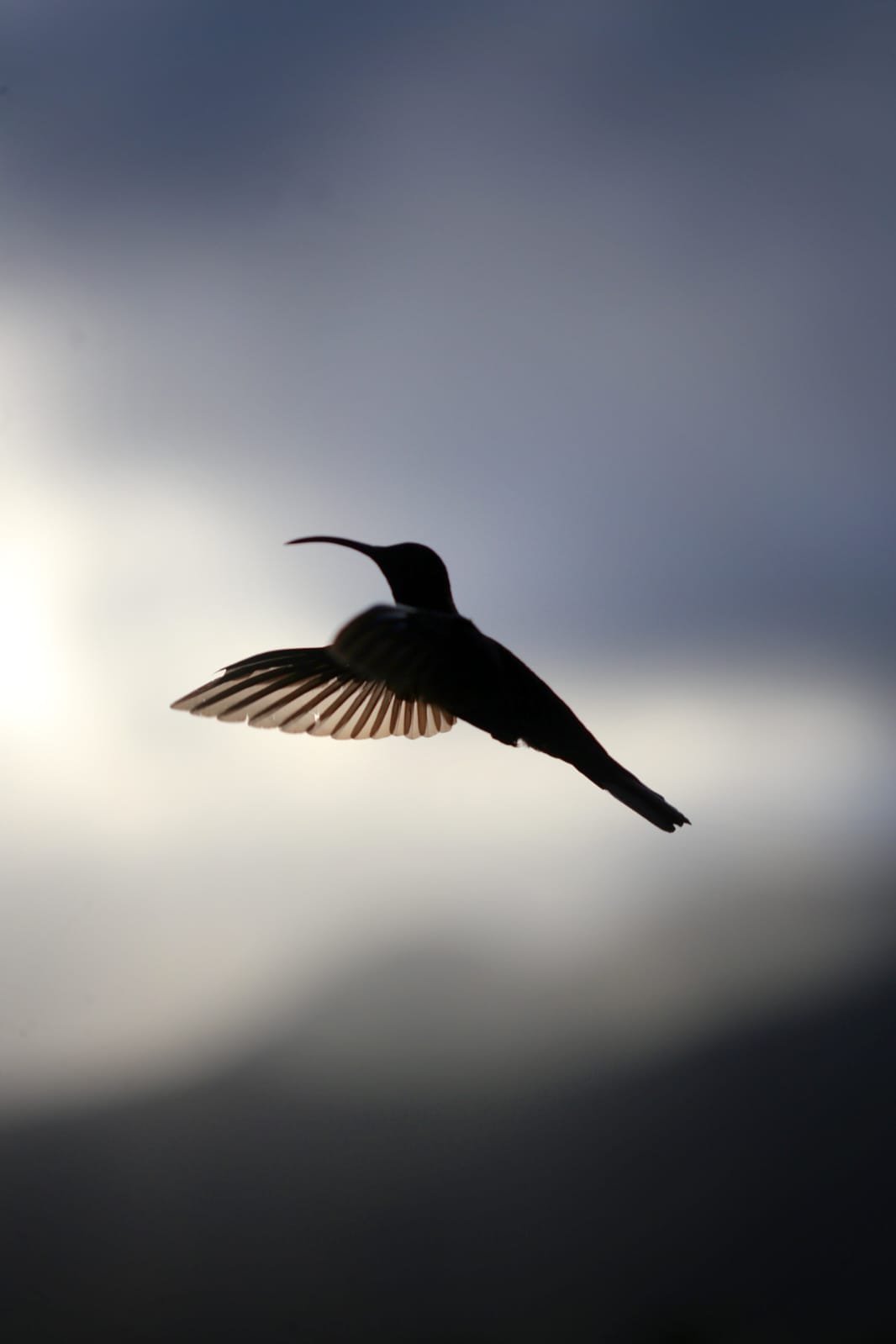
Panama stands as one of the most extraordinary hummingbird regions on the planet, not simply because it hosts a large number of species, but because it compresses an entire continent of ecological variety into a narrow strip of land where birds, forests, weather, and altitude shift constantly over short distances. Roughly fifty to sixty hummingbird species occur in the country, and what makes this remarkable is that many of them can be seen within a single journey if you move from coastal lowlands into foothill rainforest and then up into cloud covered mountain regions. This creates a natural progression where hummingbird communities change almost like turning pages in a book, and each chapter feels completely different from the last even though everything exists within one country. In Panama, hummingbirds are not rare wildlife encounters. They are continuous companions of the landscape, appearing in gardens, river valleys, mountain clearings, deep forest corridors, and even roadside flowers with a frequency that transforms ordinary travel into something that feels constantly alive and unpredictable.
The reason Panama holds such a rich diversity of hummingbirds is its geography, which forms a tight ecological bridge between North America and South America. This bridge is not flat or uniform. It rises and falls dramatically, creating stacked life zones where temperature, humidity, and vegetation shift in tight layers. At sea level there are humid tropical forests and mangrove systems filled with fast moving adaptable species. Higher up there are dense rainforest zones where hummingbird diversity reaches its peak and dozens of species overlap in constant competition. Even higher still, in the cloud forest regions around western Panama, cooler air and mist create specialized habitats where larger and more visually dramatic hummingbirds dominate. Because all of these environments exist so close together, Panama functions like a vertical migration map where hummingbirds replace each other as altitude changes, creating an experience that feels like traveling across multiple countries without ever crossing a border.
In the warmer lowland regions, hummingbirds are bold, energetic, and highly territorial, often living very close to human activity and thriving in disturbed habitats such as gardens and open forest edges. One of the most widespread species in this zone is the Rufous-tailed Hummingbird, a highly adaptable bird with a metallic green body and warm rust colored tail that is often seen chasing other hummingbirds away from feeding spots with surprising intensity. It is one of the first hummingbirds many visitors notice because it is so common and so willing to appear in open spaces, almost acting as a constant presence wherever flowers exist. Another dominant lowland species is the White-necked Jacobin, a striking bird with deep blue plumage and a bright white collar that gives it an almost formal appearance. This species is known for its confident behavior around feeders and its tendency to aggressively defend nectar sources, often creating fast moving aerial chases that add energy and drama to any garden or viewing area. Along coastal and humid lowland zones, the shimmering Sapphire-throated Hummingbird adds another layer of brilliance, with males that flash intense blue violet tones on the throat when light hits them at the right angle. This species often appears delicate and quiet compared to more aggressive hummingbirds, moving between flowers with smooth precision rather than constant confrontation.
As forests become denser and more shaded, hummingbird life shifts into a different pattern where species specialize in navigating darker understory environments and feeding on tubular forest flowers that are inaccessible to many other birds. This is the realm of hermit hummingbirds, which are some of the most fascinating ecological specialists in Panama. The Long-billed Hermit is one of the most iconic representatives of this group, instantly recognizable by its long curved bill and elongated tail. It is especially interesting because of its lekking behavior, where males gather in specific display areas and perform repeated flight patterns and vocalizations to attract females, creating a structured social system that feels unexpectedly complex for such a small bird. Deeper in the shaded forest corridors, species such as the Green Hermit move along consistent feeding routes, following what is known as trapline behavior, where they return repeatedly to the same flowers in a predictable circuit through the forest. The smaller Stripe-throated Hermit is even more secretive, often heard before it is seen, weaving through dense vegetation in carefully repeated paths that make it feel almost like part of the forest’s hidden infrastructure rather than a passing bird.
In the middle elevation zones of Panama, biodiversity reaches an extraordinary level where many hummingbird species overlap and compete in tight ecological space. This is where the forest edges, clearings, and secondary growth areas become alive with constant movement and rapid species turnover. The Crowned Woodnymph is one of the most visually striking residents of this zone, with metallic green and blue tones that shift dramatically depending on light conditions, making it appear almost unreal as it moves through forest openings. The Violet-bellied Hummingbird is another standout species in this elevation range, famous for the deep violet glow that appears on its underside when sunlight hits it directly, creating a brief but unforgettable flash of color that disappears the moment the bird changes angle. The Blue-chested Hummingbird adds further richness to this already crowded ecological zone, frequently appearing at flowering edges where multiple species interact in fast paced competition for nectar resources. In these middle elevation environments, hummingbird activity can feel almost continuous, with multiple species appearing and disappearing within seconds, creating a layered visual experience that rewards patience and attention.
As elevation increases further into the western mountain regions, particularly around Boquete and Volcán Barú, the hummingbird community changes again into a world of cooler air, misty cloud forests, and larger more visually dramatic species. One of the most powerful species in this environment is the Violet Sabrewing, a large hummingbird with deep violet blue coloration and a slow powerful wingbeat that makes it feel almost like a different category of bird entirely compared to the smaller species below it. Its presence in cloud forest environments is often noticeable even from a distance due to its size and strong movement patterns. In the same high elevation regions, the Snowcap stands out as one of the most visually striking hummingbirds in all of Central America, with males displaying a brilliant white cap above a dark metallic body that creates a dramatic contrast that is instantly memorable. Another specialist of these cooler environments is the Volcano Hummingbird, a tiny but highly energetic species adapted to high elevation volcanic landscapes where it moves rapidly among sparse mountain flowers in cold and often windy conditions.
What makes Panama especially remarkable is not only the presence of these species but the way they interact within extremely tight geographic space. In many regions, it is possible to move only a short distance and encounter entirely different hummingbird communities, creating a sense that the landscape is constantly shifting its biological identity. This density of diversity leads to constant interaction, competition, and replacement among species, which means that even a single flowering tree can host a rotating sequence of hummingbirds within minutes. The experience is not static observation but continuous motion, where the viewer becomes aware that the ecosystem itself is operating at a pace far faster and more intricate than it first appears.
In the mountain corridor between Boquete and the Caribbean slope, one particularly immersive place to experience this diversity is Lost and Found Hostel, which sits within a richly forested transition zone where multiple hummingbird habitats overlap. The surrounding environment naturally attracts a wide range of species due to its combination of forest edges, flowering vegetation, and open viewing areas that allow birds to move freely through layered habitat. Visitors often find that hummingbirds are not something they go searching for, but something that arrives repeatedly throughout the day, sometimes hovering at close range in brief moments that feel almost suspended in time. The presence of feeders and natural flowering plants encourages interaction between multiple species, creating dynamic scenes where aggressive territorial birds, shimmering mid elevation species, and more secretive forest hummingbirds all pass through the same space in continuous rotation. What makes this especially memorable is the proximity, because these birds often appear at eye level or even closer, allowing details of color, movement, and wing motion to be seen with unusual clarity. In a place already defined by adventure and rainforest immersion, the hummingbirds add a layer of quiet intensity that transforms everyday moments into something that feels like a living natural performance.
Ultimately, hummingbirds in Panama represent more than biodiversity statistics or birdwatching targets. They represent a living system of motion and adaptation that reflects the country’s geography itself. Every species is tied to a specific layer of forest, every movement is shaped by competition and survival, and every encounter is part of a larger pattern of ecological exchange that plays out continuously across the landscape. To travel through Panama is to gradually learn how to notice these patterns, and once they become visible, the forest is never still again. It is always in motion, always shimmering, and always alive with wings that appear and disappear faster than thought.