
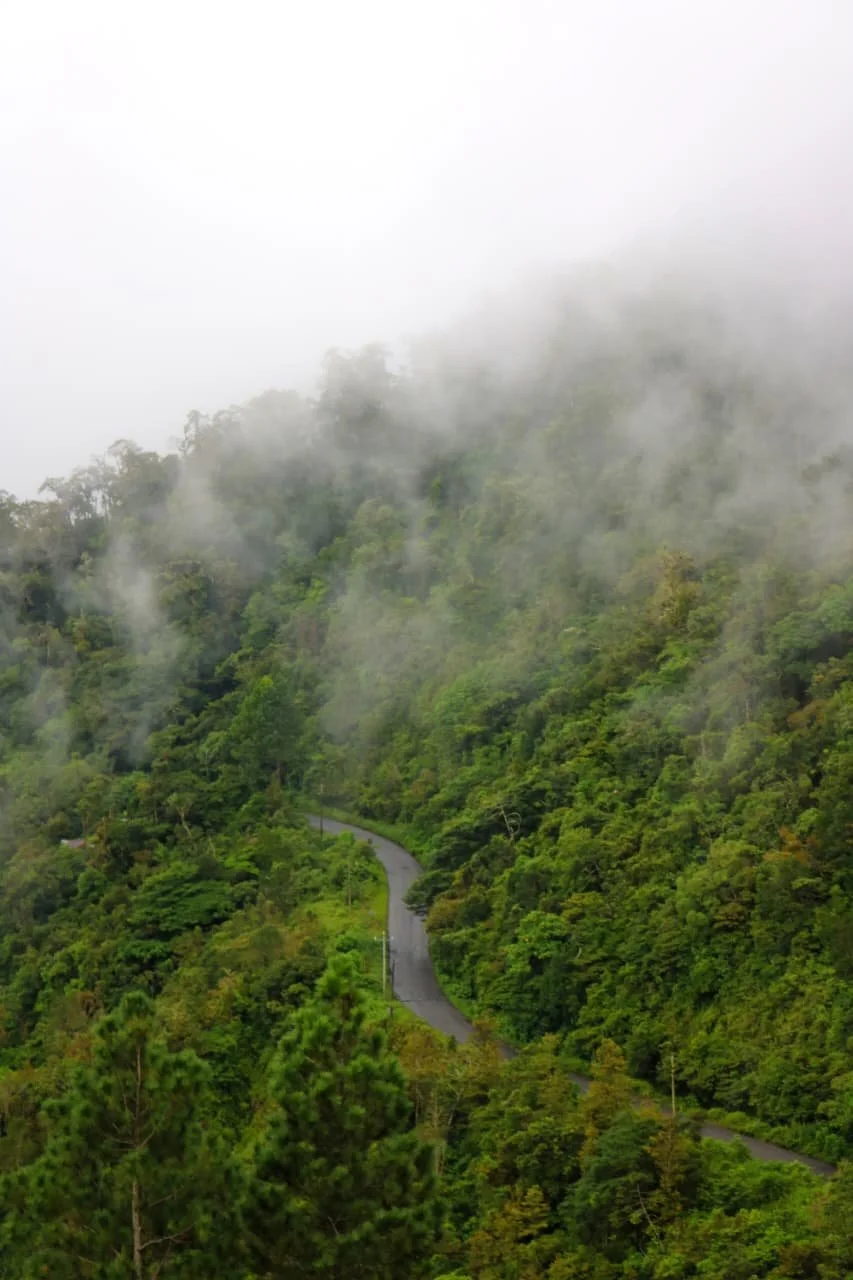
Cerro Punta, located in the highlands of Tierras Altas in Chiriquí Province, is often described as the agricultural heart of Panama. Sitting at roughly 1,900 to 2,300 meters above sea level, it has a cool mountain climate that feels completely different from the tropical heat most people associate with the country. Misty mornings, cold nights, rich volcanic soil, and steady rainfall create near perfect conditions for intensive farming. Because of this, Cerro Punta is one of the most productive agricultural zones in Central America and is responsible for a huge share of the fresh vegetables consumed across Panama.
What makes Cerro Punta especially interesting is not just the volume of food produced, but the diversity. In a relatively small mountain valley, farmers grow a wide range of temperate climate vegetables that would normally be associated with North America or Europe, alongside tropical fruits and high altitude specialty crops. The result is a landscape that feels like a patchwork of greenhouses, open fields, and terraced farms all working together in a highly productive system.
🥔 The backbone crops potatoes, onions, and root vegetables
One of the most important crop groups in Cerro Punta is root vegetables, especially potatoes, which are a cornerstone of the region’s agricultural identity. The cool temperatures and rich volcanic soil create ideal conditions for potato cultivation, allowing farmers to produce multiple varieties throughout the year. Potato farming here is not small scale gardening but large organized production, with fields laid out in neat rows across the slopes of the valley. The crop is a key part of national food supply chains and is shipped to markets throughout Panama City and beyond.
Onions are another major crop and are often grown in rotation with potatoes to maintain soil health and maximize productivity. Onion farming in Cerro Punta is highly developed, with careful attention to soil treatment, pest control, and drying processes after harvest. These onions are a staple in Panamanian cuisine and are produced in large quantities for domestic consumption.
Carrots, beets, radishes, and other root vegetables also thrive in this environment. These crops benefit from the cool soil temperatures and consistent moisture, producing firm textures and strong flavor profiles compared to lowland production.
🥦 Leafy greens and high production vegetables that feed the country
Cerro Punta is especially known for leafy greens and cruciferous vegetables, which grow extremely well in the cool, humid climate. Broccoli is one of the most important commercial crops, and large fields of it can be seen across the valley, often harvested on tight schedules to meet demand in national supermarkets. Cabbage is another major crop, forming dense green fields that are harvested year round and used widely in Panamanian cooking.
Lettuce production is highly developed, including both open field farming and more controlled greenhouse systems. Because lettuce is sensitive to heat, Cerro Punta’s cooler temperatures make it one of the few places in Panama where consistent high quality production is possible without heavy climate control. Spinach, kale, and other leafy greens are also grown, often in smaller but intensive plots that supply local markets and restaurants.
These crops form the “vegetable backbone” of Panama’s food system. It is often said that a large portion of the country’s fresh vegetables originate in this highland region, which highlights just how important Cerro Punta is despite its small population.
🍅 Tomatoes, peppers, and greenhouse agriculture
Tomatoes are another essential crop in Cerro Punta, grown both in open fields and increasingly in greenhouses. The greenhouse system helps protect plants from heavy rainfall, pests, and temperature fluctuations while improving yield consistency. Tomatoes from this region are widely distributed across Panama and are often preferred for their firmness and flavor.
Bell peppers and chili peppers are also widely cultivated. The combination of altitude and temperature stability allows peppers to develop strong color and texture. These crops are often grown in rotation or alongside tomatoes in controlled environments, reflecting a more modern and technical approach to farming in the region.
Greenhouse agriculture has expanded significantly in recent years, introducing hydroponic systems and improved pest management techniques. This shift reflects both increasing demand and the need for more efficient land use in a region where agriculture is intensifying.
🍓 Strawberries and highland fruit production
One of the most iconic crops of Cerro Punta is strawberries. Unlike many tropical regions in Panama, this high altitude zone provides the cool nights and moderate daytime temperatures that strawberries need to thrive. The result is a thriving strawberry industry that has become both economically and culturally important for the region.
Strawberries are often grown in rows on raised beds, sometimes under plastic covering to protect them from excessive rain. Harvesting is labor intensive and usually done by hand, with fruit quickly transported to local markets or distributed to supermarkets in Panama City. Strawberry products such as jams, desserts, and fresh fruit cups are popular throughout the country.
In addition to strawberries, Cerro Punta also supports other fruit production, including blackberries, tree tomatoes (tamarillo), citrus varieties, guava, and passion fruit in smaller quantities. These fruits are often grown in mixed systems or small orchards rather than large industrial farms.
🌱 Specialty crops, herbs, and diversification
Beyond the major commercial crops, Cerro Punta also produces a wide range of herbs and specialty vegetables that contribute to both local consumption and niche markets. Cilantro, parsley, basil, and oregano are commonly grown, often in smaller plots or greenhouse systems. These herbs are essential for Panamanian cooking and are frequently harvested multiple times per season due to the favorable climate.
Some farms in the region also experiment with more diversified and sustainable agriculture systems, mixing vegetables, fruits, and soil regeneration techniques. This diversification helps reduce risk from pests and price fluctuations while improving soil health over time.
There is also increasing interest in organic and reduced chemical farming methods, although conventional agriculture remains dominant due to the scale of production required to supply national markets.
🌄 Why Cerro Punta is so agriculturally powerful
The reason Cerro Punta produces so much food comes down to a rare combination of factors. The elevation creates a cool climate that reduces heat stress on crops. The volcanic soil is rich in minerals and organic content. Rainfall is abundant but balanced by natural drainage in the mountainous terrain. Together, these conditions create one of the most productive agricultural zones in all of Central America.
Because of this, Cerro Punta is often described as the “vegetable pantry of Panama.” It is not just a farming town, but a national food production engine that supplies supermarkets, markets, and distributors across the country.
Cerro Punta is a place where agriculture defines the landscape. Almost every visible slope is cultivated, and almost every crop reflects careful adaptation to altitude and climate. From potatoes and onions to strawberries and broccoli, the region produces an extraordinary mix of temperate vegetables in a tropical country.
What makes it especially fascinating is how global it feels while still being deeply local. The same valley can produce crops that would normally require entirely different climates elsewhere in the world, all within a compact mountain environment shaped by volcanic soil and cool air.