
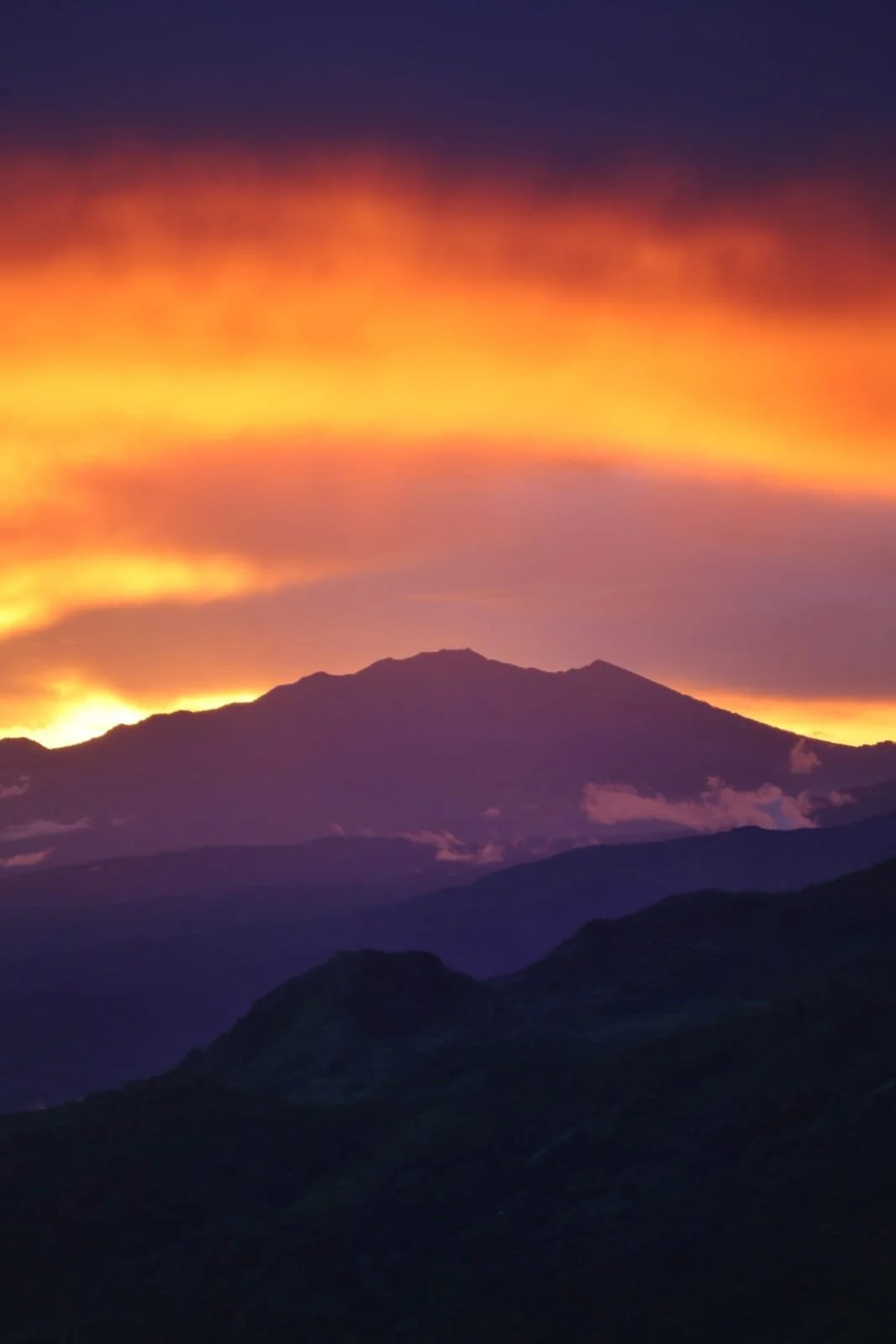
There are few places in the natural world that feel as magical, mysterious, and alive as a cloud forest. Unlike the steamy lowland rainforests that many people associate with the tropics, cloud forests exist in a realm between earth and sky. Here, mountains rise high enough to intercept moisture-laden air, creating a landscape where clouds drift through the trees, mist hangs over ridges for days at a time, and every branch seems coated in moss, orchids, ferns, and strange forms of life. In Panama, these enchanted forests rank among the most biologically rich ecosystems in the Americas. They are places where hummingbirds flash through the fog like living jewels, where rare salamanders hide beneath moss-covered logs, where orchids bloom in impossible shapes and colors, and where elusive mammals move silently through forests that often resemble scenes from a fantasy novel more than real life.
The first thing most visitors notice when entering a Panamanian cloud forest is how different it feels from the tropical lowlands. The air becomes cooler and fresher. Moisture seems to float everywhere. Giant trees disappear into curtains of mist. Moss drapes over branches like green velvet. Every surface appears alive. Rocks are covered in plants. Fallen logs support entire miniature forests. Tree trunks host orchids, bromeliads, lichens, and ferns growing directly from their bark. The cloud forest is not merely a collection of trees. It is a three-dimensional ecosystem in which life occupies every available space from the soil to the canopy.
Panama's cloud forests are found primarily in mountainous regions such as the Volcán Barú area, the forests surrounding Boquete, the mountains around Santa Fe, the uplands near El Valle de Antón, and the biologically rich highlands surrounding Lost and Found Hostel. Together these regions form islands of cool, moisture-rich habitat that support species found nowhere else on Earth.
The Forest That Drinks the Clouds
One of the most fascinating aspects of cloud forests is that they receive water not only from rain but directly from the clouds themselves. As moisture-laden air moves up mountain slopes, it cools and condenses into fog and low clouds. Trees intercept this moisture, capturing water droplets on leaves, mosses, and branches. Some of this water drips to the forest floor, effectively creating rainfall from the clouds.
This constant moisture creates one of the most productive environments on Earth. Plants rarely dry out. Streams remain supplied with water. Humidity stays consistently high. The result is an ecosystem where life flourishes in astonishing abundance. Scientists sometimes describe cloud forests as giant natural sponges because of their ability to collect, store, and gradually release water. Entire river systems depend on these forests for their flow.
Walking through a cloud forest after sunrise can feel surreal. Sunbeams pierce the mist. Water droplets sparkle on leaves. Every breath carries the scent of damp earth, moss, and vegetation. The atmosphere feels ancient, almost unchanged from a prehistoric world.
The Kingdom of Moss
Perhaps no plant group better symbolizes cloud forests than mosses. To many visitors, moss may seem insignificant at first glance. Yet in Panama's mountain forests, moss becomes one of the dominant forces shaping the ecosystem.
Entire trees can be covered in thick carpets of green. Branches become padded with soft layers several inches deep. Rocks, logs, roots, and even signs disappear beneath velvety growth. Some forests look as though every surface has been wrapped in living fabric.
These mosses perform crucial ecological functions. They capture water from clouds, help regulate humidity, provide habitat for insects and amphibians, and create miniature ecosystems within their tangled structures. Tiny creatures spend their entire lives among the moss, hidden from larger animals.
In some cloud forests, the sheer volume of moss is astonishing. Trees can carry hundreds of pounds of epiphytic growth, transforming them into living islands supporting entire communities of organisms.
Orchids: The Jewels of the Mountains
Panama is world-famous for its orchids, and cloud forests are among the best places to encounter them. Thousands of orchid species occur throughout the country, many thriving in cool mountain environments where abundant moisture allows them to flourish.
What makes orchids so captivating is their diversity. Some produce flowers no larger than a fingernail. Others create spectacular blooms large enough to attract attention from a distance. Colors range from pure white to brilliant purple, yellow, orange, pink, and red. Shapes can be equally extraordinary. Certain orchids resemble insects. Others mimic birds, spiders, or strange alien creatures.
Many orchids grow as epiphytes, meaning they live on trees without harming them. Branches become crowded with orchids competing for light and moisture. During flowering seasons, entire sections of forest can burst into color.
Among Panama's most famous orchids is the Holy Ghost Orchid, the national flower. Although rare in the wild, it represents the incredible botanical richness that makes Panama famous among plant enthusiasts.
Bromeliads: Rainwater Reservoirs in the Trees
Sharing the canopy with orchids are bromeliads, some of the most fascinating plants in tropical forests. Their leaves often form natural cups that collect rainwater and cloud moisture. These miniature pools become ecosystems in their own right.
A single bromeliad may contain insects, spiders, mosquito larvae, frogs, salamanders, and microscopic organisms. For many animals, these water-filled structures provide essential habitat high above the ground.
In some cloud forests, bromeliads are so abundant that nearly every tree supports dozens of them. Their bright flowers attract hummingbirds and insects, contributing further to the ecological complexity of the forest.
Ferns From Another Age
Few plants create a stronger prehistoric atmosphere than ferns. Cloud forests support an astonishing variety of them, from tiny species growing on rocks to giant tree ferns that can reach impressive heights.
Walking through areas dominated by tree ferns can feel like stepping back into the age of dinosaurs. Their massive fronds arch overhead, filtering sunlight and creating an almost primeval landscape. Fossil evidence suggests that ancient relatives of modern ferns were already thriving long before flowering plants became dominant.
In Panama's cloud forests, ferns occupy nearly every imaginable habitat. They grow along streams, on cliffs, beside trails, and even directly on tree trunks.
The Hummingbird Capital of the Tropics
If orchids are the jewels of the plant world, hummingbirds are the jewels of the animal kingdom. Panama's cloud forests support an extraordinary variety of these tiny aerial acrobats.
Some species flash brilliant greens, blues, and purples when sunlight strikes their feathers. Others display long tails, curved bills, or iridescent throat patches that seem almost unreal. Their wings beat so rapidly that they produce an audible hum, giving the birds their name.
Hummingbirds play a critical role in pollination. As they move between flowers collecting nectar, they transfer pollen and help countless plant species reproduce. Many cloud forest plants have evolved specifically to attract particular hummingbird species.
Watching hummingbirds in a mountain cloud forest can be mesmerizing. Several species may gather around flowering shrubs simultaneously, darting through the mist like living gemstones.
The Magnificent Resplendent Quetzal
Few birds inspire as much excitement among birdwatchers as the Resplendent Quetzal. Often considered one of the most beautiful birds in the world, the quetzal inhabits cloud forests from southern Mexico to Panama.
Males possess shimmering green plumage and long flowing tail feathers that seem almost too spectacular to be real. Their colors shift dramatically depending on the angle of light, creating an iridescent effect that has fascinated humans for centuries.
The quetzal holds immense cultural significance throughout Central America and was revered by ancient civilizations. Encountering one in the wild remains a dream for many bird enthusiasts.
Frogs Hidden in the Mist
Cloud forests are amphibian paradise. Constant moisture allows frogs and salamanders to thrive in habitats that would be impossible in drier environments.
Some species are brilliantly colored. Others rely on camouflage so effective that they become nearly invisible against moss and leaves. Tiny glass frogs possess translucent skin that allows internal organs to be partially visible. Tree frogs cling to vegetation above streams, while terrestrial species hide beneath logs and leaf litter.
The diversity is astonishing. A single mountain valley may support dozens of amphibian species, many found nowhere else.
Snakes, Lizards, and Secret Reptiles
The cool, moist conditions of cloud forests also support a fascinating array of reptiles. Arboreal snakes move through vegetation searching for frogs and small mammals. Lizards bask briefly when sunlight penetrates the mist. Secretive species spend much of their lives hidden beneath logs, stones, and dense vegetation.
Scientists continue discovering new reptile species in Panama's mountains. The complexity and isolation of cloud forest habitats create opportunities for unique forms of life to evolve.
Mammals of the Mountain Forest
Although often difficult to observe, cloud forests support an impressive collection of mammals. Monkeys move through the canopy. Coatis forage on the forest floor. Agoutis search for fallen fruit. Sloths cling to branches. Bats emerge after dark.
Larger mammals include pumas and, in some regions, even jaguars. Most remain elusive, but their presence contributes to the sense of wildness that defines these ecosystems.
At night, cloud forests come alive with activity. Nocturnal animals emerge from hiding places while the forest fills with unfamiliar sounds.
A Living Museum of Evolution
What makes Panama's cloud forests truly extraordinary is their role as evolutionary laboratories. Isolation, altitude, climate, and geography have produced unique species adapted specifically to these environments. Many occur nowhere else on Earth.
Scientists continue to discover new insects, amphibians, reptiles, and plants in Panama's mountain regions. Even today, entirely new species occasionally emerge from forests that have not been thoroughly studied.
This ongoing discovery highlights how much remains unknown about these ecosystems. Despite decades of research, cloud forests continue to reveal surprises.
Why Cloud Forests Feel Magical
Perhaps the most remarkable thing about cloud forests is the emotional response they inspire. There is something about walking through drifting mist, hearing distant bird calls, and seeing ancient trees covered in orchids and moss that feels profoundly different from ordinary landscapes.
The air is cooler. The sounds are softer. Visibility changes from moment to moment as clouds move through the forest. Every turn in the trail reveals something unexpected. A rare flower. A hummingbird. A tree covered in epiphytes. A stream emerging from the fog.
These forests feel alive in a way that is difficult to describe. They are not simply collections of species. They are entire worlds suspended between mountain and sky.
In Panama, cloud forests represent some of the country's greatest natural treasures. They capture water from the clouds, shelter extraordinary biodiversity, and provide refuge for species found nowhere else. They are places where evolution continues to unfold, where discoveries still await, and where visitors can experience one of the most enchanting ecosystems on Earth. Standing beneath their moss-covered branches while clouds drift silently through the trees, it becomes easy to understand why so many people consider Panama's cloud forests among the most magical places in the Americas.