
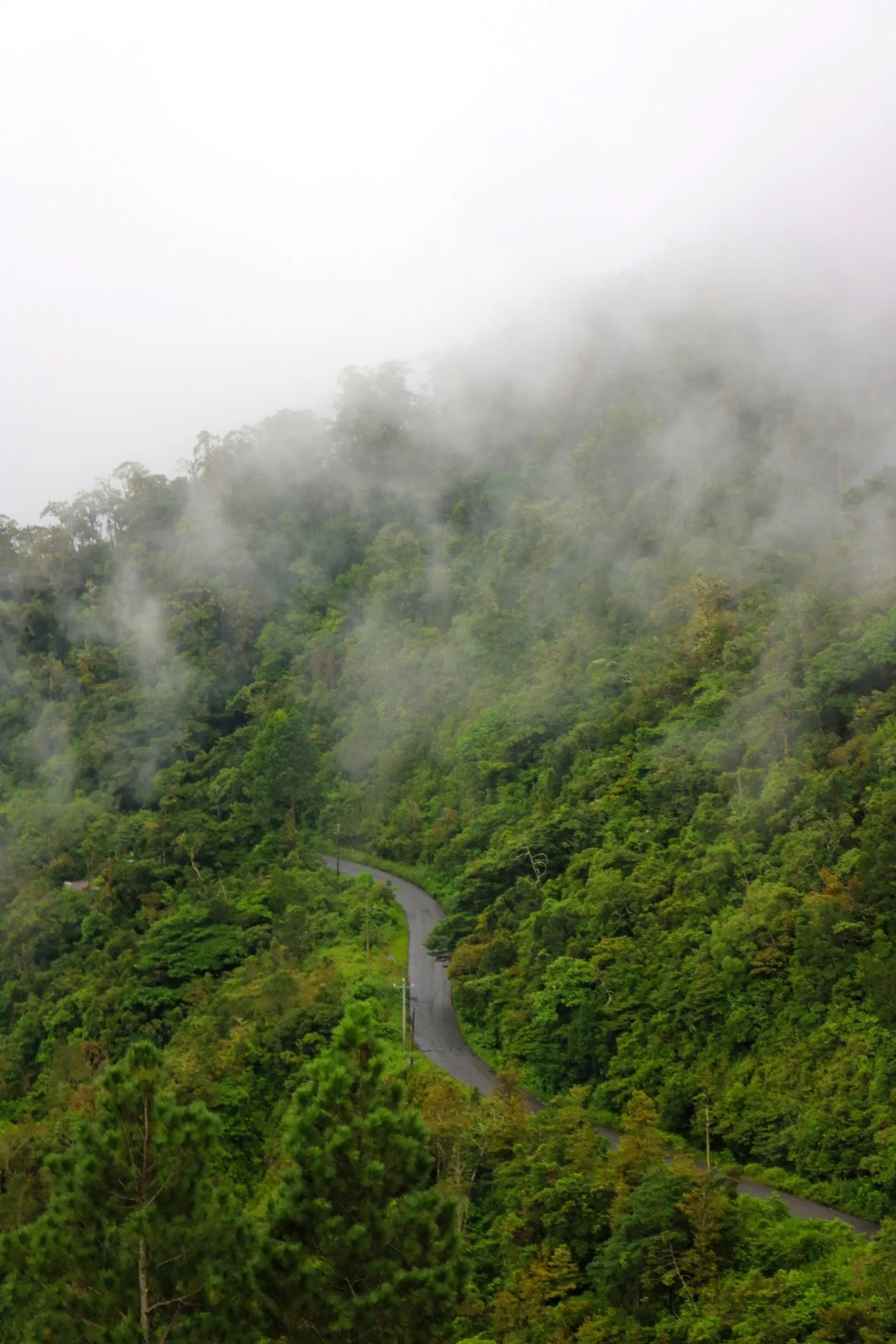
For centuries, Panama has been associated with treasure. Pirates hunted it, empires fought over it, and countless legends claimed that vast fortunes remained hidden somewhere in the country's jungles, rivers, mountains, and coastal waters. Most people imagine treasure as something that belongs to the past, buried forever beneath the rainforest or resting undisturbed on the ocean floor.
Yet what makes Panama remarkable is that genuine treasure discoveries are still happening today.
Not the kind of treasure found in Hollywood movies, where adventurers stumble across chests overflowing with gold coins. Instead, modern treasure discoveries in Panama are often even more fascinating. Archaeologists, historians, and marine researchers continue to uncover extraordinary artifacts that reveal forgotten civilizations, lost trade routes, and hidden chapters of human history.
Some of the most important discoveries have occurred within the last two decades, transforming what we know about Panama's past.
The Golden Kingdom Hidden in Plain Sight
The greatest modern treasure story in Panama is undoubtedly the ongoing discoveries at El Caño Archaeological Park.
For generations, historians knew that sophisticated pre-Columbian societies existed in Panama, but many details remained mysterious. Then archaeologists began uncovering a series of astonishing tombs filled with gold artifacts, ceremonial objects, jewelry, and human remains.
The discoveries were so spectacular that researchers compared them to some of the greatest archaeological finds in the Americas. Gold breastplates, pendants, bracelets, belts, earrings, and ceremonial objects emerged from the ground in quantities that stunned experts. Archaeologists described the discoveries as among the most significant ever made relating to Panama's ancient cultures.
What makes these discoveries especially fascinating is that they reveal the existence of powerful societies that left no written records. These ancient rulers governed wealthy and sophisticated communities, yet their names have been lost to history.
In some tombs, elite leaders were buried surrounded by enormous quantities of gold and accompanied by elaborate ceremonial offerings. The discoveries have fundamentally changed our understanding of pre-Hispanic Panama.
The 1,200-Year-Old Tomb That Shocked Archaeologists
As remarkable as the earlier discoveries were, the surprises did not stop.
In 2024 archaeologists announced the discovery of another extraordinary elite tomb at El Caño. The burial contained gold ornaments, ceramic offerings, musical instruments, jewelry, and the remains of a high-ranking ruler from roughly 1,200 years ago. Researchers believe the tomb belonged to an important Coclé lord who lived between approximately 750 and 800 AD.
Then in 2026, excavations revealed additional richly furnished burials containing more gold artifacts and ceremonial offerings, further expanding our understanding of this forgotten civilization.
Each new excavation seems to answer one question while creating ten new mysteries.
Who exactly were these rulers?
How extensive was their political power?
How did their society become so wealthy?
And why did such a sophisticated civilization disappear without leaving written histories behind?
Treasure Beneath the Caribbean Sea
While gold was emerging from Panama's soil, another form of treasure was being discovered underwater.
Near the mouth of the Chagres River, marine archaeologists identified the remains of the Spanish merchant ship Encarnación, which sank in 1681 during a storm. Amazingly, much of the vessel remained preserved beneath the seafloor. Wooden structures, cargo containers, and artifacts survived centuries underwater.
This discovery was important not because of enormous quantities of gold, but because it provided a remarkably intact time capsule from the Spanish colonial era.
The ship formed part of the treasure fleet system that connected the Americas to Europe. Every recovered artifact helps historians reconstruct how these fleets operated during one of the most important periods in global trade.
The Hidden Treasures of Panamá Viejo
Many visitors walk through the ruins of Panamá Viejo without realizing that treasure discoveries continue beneath their feet.
Archaeological investigations over recent decades have uncovered colonial foundations, household goods, ceramics, workshops, and infrastructure dating back to the original Spanish city founded in 1519. Researchers have even discovered colonial ceramic kilns that reveal how goods were manufactured and distributed across the Spanish Empire.
These discoveries may not glitter like gold, but they are treasures in another sense. They allow historians to reconstruct everyday life in one of the most important cities of the Spanish Pacific world before its destruction by Henry Morgan in 1671.
Every excavation adds another piece to the puzzle of what life was like during Panama's earliest colonial centuries.
Why the Greatest Treasure Is Knowledge
When most people hear the word treasure, they imagine wealth.
Archaeologists think differently.
A gold pendant can be melted down. A gold coin can be spent. But once the historical context of an artifact is destroyed, that information is lost forever.
The discoveries at El Caño are a perfect example. The value of the gold itself is significant, but the real treasure lies in what it teaches us about ancient Panama. The tombs reveal social hierarchies, religious beliefs, artistic traditions, trade networks, and political structures that would otherwise remain unknown.
Each discovery helps illuminate a civilization that vanished centuries before Europeans arrived.
The Treasure Hunters of Today
Modern treasure hunters rarely resemble the adventurers portrayed in films.
Today's explorers are archaeologists using ground-penetrating radar, marine scientists operating underwater survey equipment, conservation experts preserving fragile artifacts, and researchers carefully documenting every object they recover.
Instead of digging randomly in search of gold, they spend years analyzing landscapes, historical records, and scientific data before excavating a single site.
The result is that Panama continues to reveal treasures in a way that protects history rather than destroying it.
What Might Still Be Waiting?
This is perhaps the most exciting question of all.
Panama remains one of the least archaeologically explored countries in the Americas. Vast areas of rainforest, mountain ranges, wetlands, and remote coastlines have never been systematically surveyed.
The Darién alone contains enormous regions where archaeological work has barely begun. Ancient trade routes crossed the isthmus for thousands of years. Colonial treasure fleets sailed along both coasts. Indigenous societies flourished throughout the country long before European arrival.
Many experts believe that some of Panama's greatest discoveries have yet to be made.
Future excavations may uncover entirely new ceremonial centers, forgotten settlements, additional royal tombs, or shipwrecks hidden beneath Caribbean and Pacific waters.
That possibility is what makes Panama so fascinating. Unlike many places where the major discoveries happened generations ago, Panama remains a country where history is still emerging from the ground.
Even today, somewhere beneath a rainforest hillside, beneath a colonial ruin, or beneath the sands of the Caribbean seabed, the next great treasure discovery may already be waiting. And if recent discoveries are any indication, it may reveal a chapter of Panama's story that nobody even knew existed.