
Panama is often described as a bridge between two continents, but from a biological perspective it is something even more extraordinary. This narrow strip of land connecting North and South America contains one of the highest concentrations of wildlife on Earth. Within a country smaller than many U.S. states lives an astonishing variety of mammals, birds, reptiles, amphibians, fish, and insects. Scientists have recorded thousands upon thousands of species, and every year new discoveries continue to emerge from remote forests, mountain valleys, rivers, and reefs.
For many visitors, Panama is a paradise of toucans, sloths, monkeys, butterflies, and tropical flowers. Yet hidden among this beauty is another side of nature. Panama is home to some of the most venomous snakes in the Americas, highly toxic frogs, painful insects, dangerous marine creatures, and a collection of animals that command both caution and respect.
The fascinating truth is that these creatures are not villains. They are not waiting to attack people. Most spend their lives trying to avoid human contact entirely. Their venom, toxins, stingers, and defensive adaptations evolved to catch prey or protect themselves from predators. Humans are usually accidental participants in encounters that these animals never wanted in the first place.
Still, for anyone fascinated by wildlife, few places in the world offer such an impressive collection of dangerous creatures as Panama.
---
The Fer-de-Lance: The Snake That Rules the Lowlands
If there is one snake that dominates discussions of dangerous wildlife in Panama, it is the feared and respected Fer-de-Lance.
This species is responsible for more serious snakebite incidents than any other snake in Central America. Unlike some venomous species that live only in isolated habitats, the fer-de-lance has adapted remarkably well to a variety of environments. It can be found in rainforests, secondary forests, agricultural areas, plantations, riverbanks, and forest edges.
Large specimens may exceed two meters in length. Their bodies are thick, muscular, and beautifully patterned with intricate diamonds, triangles, and zigzags that blend perfectly into the forest floor. A person could walk within a meter of one without noticing it.
This camouflage is what makes the snake so effective. It does not usually chase or hunt humans. Instead, most bites occur when someone accidentally steps near it or startles it.
The venom is exceptionally powerful. It contains compounds that can damage tissue, affect blood clotting, and cause severe swelling. Before modern medicine, bites from large fer-de-lances were among the most feared medical emergencies in rural Panama.
Despite this reputation, fer-de-lances are ecologically important. They consume huge numbers of rats, mice, and other small animals. In doing so, they help control pests that damage crops and spread disease.
A rainforest without fer-de-lances would actually be less healthy.
---
The Bushmaster: The Giant of the Deep Forest
Among snake enthusiasts, few animals inspire more fascination than the enormous Bushmaster.
This is the largest venomous snake in the Americas and one of the largest vipers on Earth. A mature bushmaster can grow longer than many people are tall.
Unlike fer-de-lances, bushmasters prefer remote wilderness. They inhabit some of Panama's least disturbed forests, especially regions associated with Darién National Park and other large rainforest systems.
The bushmaster's appearance is magnificent. Its body is covered in beautiful geometric patterns that disappear into fallen leaves. Its head is broad and triangular. Its eyes seem constantly alert.
Finding one in the wild is considered a major achievement among wildlife photographers and herpetologists. Some researchers spend years searching before finally encountering one.
Their venom is extremely potent, and they can inject substantial amounts during a bite. Yet because they live in remote areas and avoid people whenever possible, encounters remain relatively uncommon.
Many rural stories describe giant bushmasters encountered deep in forests far from roads and settlements. These accounts have helped build the snake's legendary status throughout Panama.
---
Coral Snakes: Tiny Bands of Danger
The coral snakes of Panama are among the country's most beautiful reptiles.
Their vivid rings of red, yellow, black, and orange appear almost artificial in their brilliance. These colors serve as a warning to predators that the snake possesses a powerful neurotoxic venom.
Coral snakes generally spend much of their time hidden beneath logs, underground, or beneath leaf litter. Their secretive nature means they are encountered far less frequently than people imagine.
Unlike vipers, coral snakes belong to the same broader family as cobras and mambas. Their venom primarily attacks the nervous system.
Fortunately, they are usually shy and reluctant to bite. Most incidents occur when people attempt to pick them up or handle them.
---
The Eyelash Viper: A Living Jewel
Perhaps no venomous snake in Panama receives more admiration from photographers than the Eyelash Viper.
These remarkable snakes live among branches and vegetation. Some are bright yellow. Others are green, orange, red, pinkish, or combinations of multiple colors.
The scales above their eyes resemble eyelashes, creating one of the most distinctive appearances in the reptile world.
An eyelash viper resting on a tropical flower looks less like a dangerous predator and more like a piece of living art.
Yet appearances can be deceiving. These snakes possess venom capable of causing serious injury. Their arboreal lifestyle means hikers occasionally encounter them resting on low branches along rainforest trails.
---
The Rainforest Floor Is Alive
One of the most surprising experiences for visitors entering Panama's forests is realizing that every square meter seems occupied by life.
The leaf litter covering the ground is not simply dead vegetation. It is a bustling ecosystem filled with insects, spiders, centipedes, frogs, snakes, scorpions, beetles, and countless other organisms.
A single fallen log may shelter dozens of species.
Every step reveals another hidden world.
This abundance of life is what makes Panama such a biological treasure.
---
Poison Dart Frogs: Tiny Creatures With Powerful Defenses
Panama hosts several species of poison dart frogs, some among the most colorful amphibians on Earth.
The tiny frogs display colors that seem almost impossible. Brilliant blues. Bright yellows. Intense reds. Metallic greens. Orange patterns that glow against dark rainforest backgrounds.
These colors serve as warnings.
Many poison dart frogs contain toxins in their skin that make them unpalatable or dangerous to predators. Birds, snakes, and mammals quickly learn to avoid them.
Interestingly, the frogs do not manufacture all these chemicals themselves. Scientists believe much of their toxicity comes from compounds found in their natural diet of ants, mites, and other tiny invertebrates.
Captive frogs often lose much of their toxicity because their diet changes.
---
Bullet Ants: The Sting That Few Forget
The rainforest is not only home to venomous reptiles. It also contains insects capable of delivering unforgettable experiences.
Among them is the legendary Bullet Ant.
The bullet ant is enormous compared to most ants. Some workers exceed an inch in length.
Its sting has achieved near-mythical status among naturalists. Victims often describe hours of intense pain, trembling, sweating, and discomfort.
Many people who have experienced both bullet ant stings and other painful insect encounters rank the bullet ant at the very top.
Fortunately, these ants are not aggressive unless disturbed.
---
Scorpions Beneath Rocks and Roofs
Panama contains numerous scorpion species.
Most remain hidden during the day beneath stones, fallen wood, roof tiles, and debris. After sunset they emerge to hunt insects and other small prey.
Many species produce painful but manageable stings. However, certain species deserve greater caution, particularly where children are involved.
In rural communities, people learn simple habits early in life.
Always shake out boots.
Check clothing left on the floor.
Look carefully before reaching into wood piles.
These precautions dramatically reduce the chance of unpleasant surprises.
---
Giant Centipedes: Nature's Armored Hunters
Among the most startling creatures in Panama are giant tropical centipedes.
Some species can exceed twenty centimeters in length.
Armed with venomous claws near their heads, these predators hunt insects, spiders, frogs, lizards, and even small mammals.
Their speed is astonishing.
A giant centipede moving across the forest floor can cover ground far faster than many people expect.
Their bites are extremely painful and may produce swelling, fever, and significant discomfort.
Fortunately, they usually prefer escape over confrontation.
---
Spiders of the Rainforest
Panama contains hundreds of spider species.
Many are harmless.
Some are breathtakingly beautiful.
Others are impressively large.
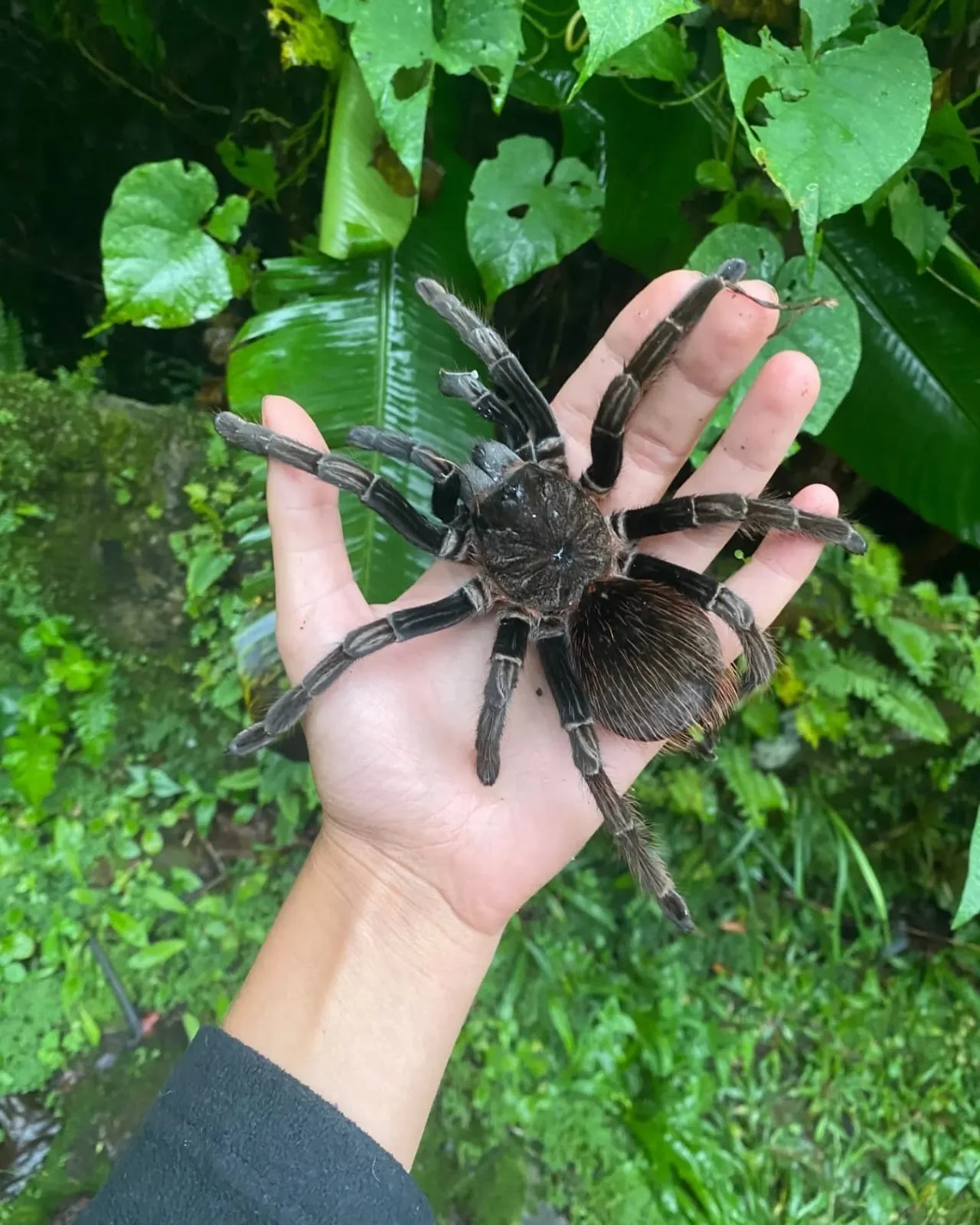
Tarantulas deserve special mention. These giant spiders often inspire fear because of their size. A large tarantula crossing a trail at night can stop hikers in their tracks.
Yet tarantulas are generally far less dangerous than their appearance suggests.
More concerning are certain wandering spiders and other venomous species capable of medically significant bites.
Still, serious spider incidents remain relatively rare.
Most spiders would rather disappear into vegetation than confront a human many thousands of times their size.
---
The Waters Hold Their Own Surprises
Dangerous wildlife is not limited to forests.
Panama's Caribbean reefs and Pacific waters contain their own collection of venomous creatures.
The invasive Lionfish carries venomous spines capable of causing intense pain.
Stingrays rest beneath sand in shallow water.
Certain sea urchins possess sharp venomous spines.
Some catfish species can inflict painful wounds.
Fortunately, most marine injuries occur because animals are stepped on accidentally.
Simple awareness prevents the vast majority of incidents.
---
Crocodiles: The Largest Predator Most People Never See
Although not venomous, crocodiles deserve mention because of their sheer power.
Panama supports populations of the impressive American Crocodile as well as spectacled caimans.
Large crocodiles inhabit rivers, estuaries, mangroves, and coastal environments.
A mature crocodile represents one of the most powerful predators in the Americas.
Most remain wary of humans, but they deserve tremendous respect.
Their presence serves as a reminder that Panama still contains truly wild places.
---
Why Panama's Dangerous Creatures Matter
It may be tempting to view venomous snakes, toxic frogs, giant centipedes, and painful insects as nuisances or threats.
In reality, they are essential pieces of ecological machinery.
Snakes control rodents.
Spiders control insects.
Scorpions remove pests.
Poison frogs indicate healthy forests.
Predators help maintain balance throughout ecosystems.
The disappearance of these species would trigger consequences throughout food webs that scientists are still working to fully understand.
---
The Greatest Treasure of All
The remarkable thing about Panama is not that dangerous creatures live there.
The remarkable thing is that so many still survive.
In many parts of the world, large predators, specialized amphibians, and rare reptiles have disappeared under pressure from development and habitat loss. Panama remains one of the last places where a person can walk through rainforest and know that somewhere nearby may be a bushmaster beneath leaves, an eyelash viper coiled on a branch, a poison dart frog hidden beside a stream, a bullet ant colony marching across the forest floor, and countless other extraordinary creatures carrying on ancient lives that began long before humans arrived.
That is what makes Panama special. It is not simply a country of beaches, skyscrapers, and canals. It is one of the great wildlife strongholds of the Western Hemisphere, a place where nature remains powerful, unpredictable, and astonishingly alive.