
Most travelers experience Panama during the day. They visit beaches under bright sunshine, explore rainforests beneath tropical skies, wander through historic districts in the afternoon, and admire the skyline of Panama City as daylight reflects off glass towers. Yet when darkness falls across the country, an entirely different Panama emerges. The forests change. The oceans come alive. The cities transform. Sounds replace sights. Creatures hidden during the day suddenly become active. What appears familiar under sunlight can become mysterious and fascinating after sunset.
To understand Panama fully, one must experience it at night.
As evening approaches in the rainforest, one of nature's great daily transformations begins. During the day, birds dominate the forest. Colorful toucans, parrots, tanagers, and countless other species fill the canopy with movement and noise. But as darkness spreads beneath the trees, many daytime creatures settle into hiding places. Their shift ends another shift begins.
The first signs are often heard rather than seen.
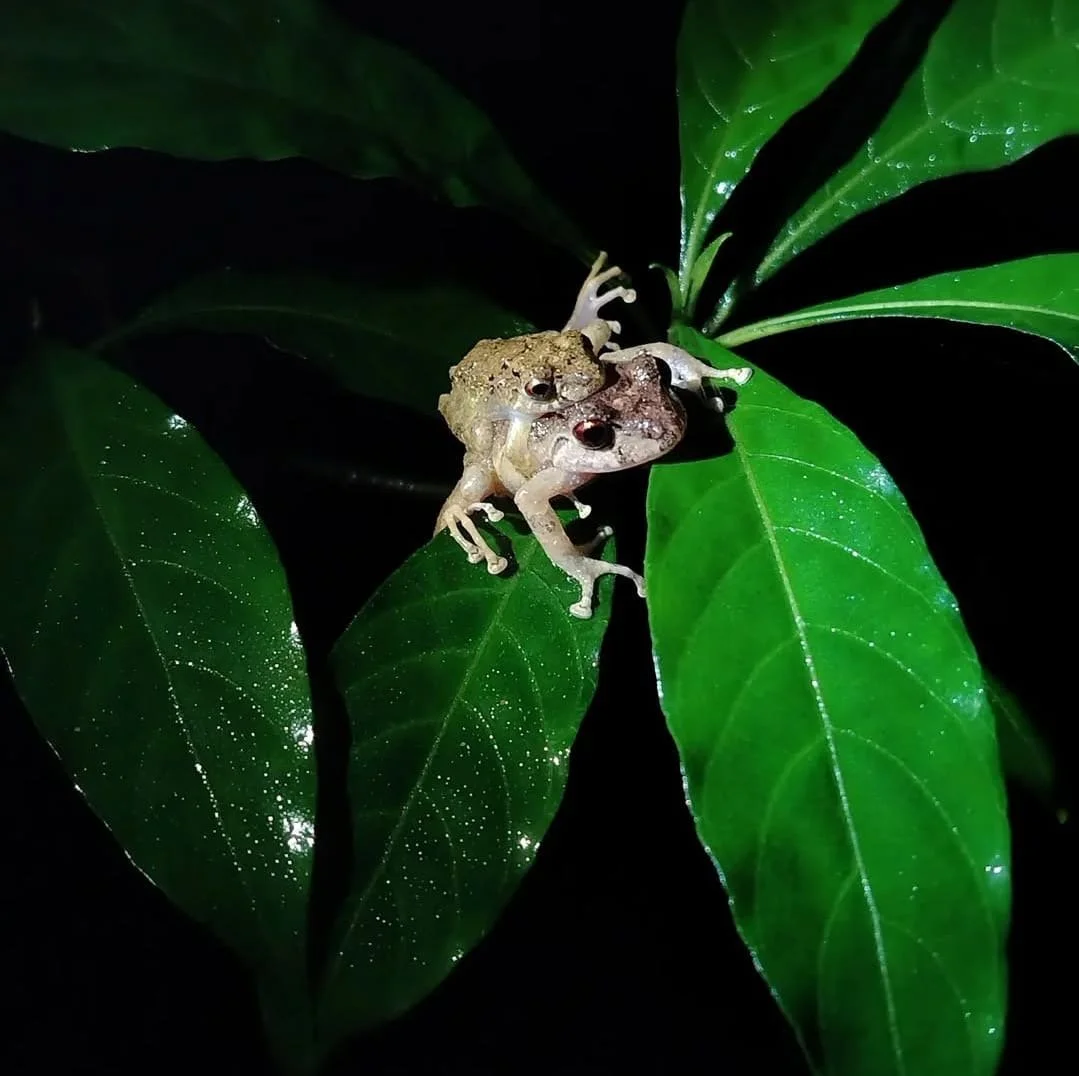
Frogs begin calling from streams, puddles, and hidden pools. Insects create a constant background chorus. Strange whistles, chirps, clicks, and buzzing sounds emerge from every direction. The forest becomes an enormous orchestra composed of thousands of performers, many invisible to human eyes.
Visitors are often astonished by how loud a tropical forest can become at night. What appeared peaceful during daylight may become a world of constant sound after sunset. Every noise serves a purpose. Frogs attract mates. Insects communicate. Predators search for prey. Countless interactions occur simultaneously in the darkness.
Some of Panama's most fascinating wildlife is almost entirely nocturnal.
The forests are home to creatures that many visitors never see simply because they are active while most people sleep. Tree frogs emerge from leaves glistening with moisture. Night monkeys move through the canopy. Bats leave their roosts and begin feeding on insects, fruit, nectar, or other food sources. Owls patrol forest edges searching for prey.
Even creatures commonly seen during the day often behave differently at night.
A rainforest after dark is not merely the daytime forest with less light. It is effectively a different ecosystem operating on a different schedule.
The oceans undergo similar transformations.
Along both the Caribbean and Pacific coasts, nighttime reveals marine activity hidden from daytime observers. Fish move into shallow waters. Crabs emerge from burrows. Rays sometimes glide through coastal shallows. On certain beaches, sea turtles may come ashore under cover of darkness to lay eggs.
Few wildlife experiences are more memorable than witnessing a sea turtle emerge from the ocean on a remote Panamanian beach. Guided by instincts older than human civilization itself, the turtle slowly climbs onto the sand and begins a process repeated for millions of years. Long before the first cities, before agriculture, before written language, sea turtles were already following these ancient rhythms.
The Pacific coast offers another nighttime spectacle.
In some regions, enormous tidal changes transform the landscape after sunset. Areas covered by water during the day may become exposed at low tide. Sandbars emerge. Rocky formations appear. Mangroves reveal intricate root systems. The coastline seems to reshape itself every few hours.
For fishermen, nighttime has always been important.
Across Panama, generations have worked the waters after dark. Lights appear offshore as fishing vessels pursue their catches. Coastal communities continue traditions tied closely to the rhythms of moonlight, tides, weather, and fish movements. Long before electric lights illuminated cities, people along Panama's shores understood the significance of the night.
The mountains experience their own nocturnal transformation.
In the highlands around Boquete, Cerro Punta, and the slopes of Volcán Barú, temperatures drop after sunset. Mist drifts through forests. Clouds move across valleys. The atmosphere can become surprisingly cool. During clear nights, the stars appear with remarkable brilliance.
One of the great advantages of many parts of rural Panama is the relative absence of light pollution. Away from major urban centers, the night sky becomes a spectacular display. The Milky Way stretches overhead. Constellations emerge in extraordinary detail. Meteor showers become unforgettable experiences. In some remote regions, the stars seem almost bright enough to cast shadows.
For thousands of years, indigenous peoples, farmers, sailors, and travelers navigated using these skies. Before GPS, before smartphones, and before modern mapping systems, the heavens served as guides.
Then there is urban Panama after dark.
The transformation of Panama City is dramatic.
As daylight fades, skyscrapers illuminate one by one. Reflections dance across the waters of Panama Bay. Traffic flows through the city. Restaurants fill with customers. Rooftop venues come alive. The modern skyline takes on a completely different character.
Viewed from the Cinta Costera, the city becomes one of the most impressive urban landscapes in Latin America. Towers rise above the waterfront. Ships anchor offshore waiting for canal transits. Historic districts glow under carefully placed lighting. The contrast between old and new becomes especially striking.
In Casco Viejo, nighttime reveals another side of Panama's capital. Colonial architecture takes on a different atmosphere under streetlights. Plazas become gathering places. Music drifts from restaurants and cafes. The district's centuries of history seem more tangible after dark.
Yet perhaps the most fascinating aspect of nighttime Panama is how it connects the modern world with something ancient.
The forests continue operating according to rhythms established millions of years ago.
Sea turtles still follow instinctive routes older than humanity itself.
Frogs continue calling from hidden streams.
Tides continue rising and falling.
Stars continue crossing the sky.
The modern nation exists within these older cycles.
A person can spend an evening in a skyscraper overlooking Panama Bay and then, only a short distance away, find themselves listening to rainforest sounds that would have been familiar to the first humans who entered the region.
That contrast is part of what makes Panama so remarkable.
It is a country where cutting-edge modernity and ancient natural processes coexist side by side.
Most visitors see Panama in daylight and believe they understand it.
But after sunset, another Panama emerges.
A Panama of glowing city skylines and dark rainforests.
A Panama of nocturnal wildlife and ancient coastlines.
A Panama of stars, tides, mountain mist, and unseen creatures moving through the darkness.
It is quieter in some places, louder in others, and in many ways even more fascinating than the country revealed by the sun. For those willing to stay awake and pay attention, nighttime unveils one of Panama's greatest secrets: after dark, the nation becomes an entirely different world.