
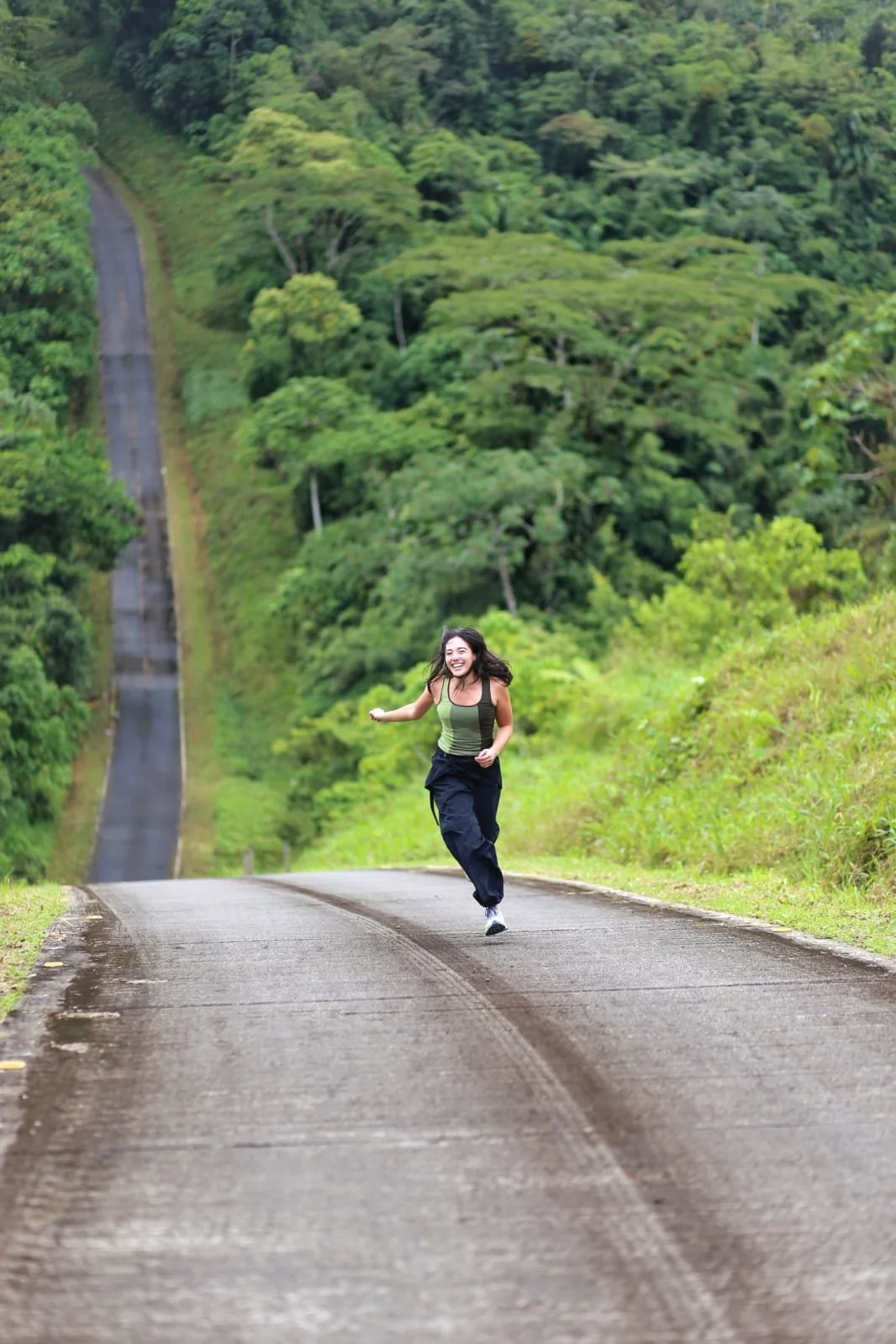
Few ideas capture the imagination of foreigners moving to Panama quite like becoming a coffee farmer. The dream is easy to understand. You picture a beautiful mountain property somewhere in the cool highlands of Chiriquí. Mist drifts across the hills each morning. Hummingbirds dart between flowering plants. The temperatures are pleasant year round. Rows of coffee trees cover the slopes. In the distance, volcanic peaks rise above the clouds. Your mornings begin with a cup of coffee grown on your own land. Tourists stop by to admire the view. Life slows down. The farm produces income. The lifestyle seems perfect.
Then reality arrives.
The truth is that coffee farming in Panama can be one of the most rewarding agricultural businesses in the country. It can also be one of the most frustrating, risky, labor intensive, and financially unpredictable ventures a person can undertake. Whether it becomes a viable business or an expensive hobby depends on several factors, including scale, location, knowledge, capital, expectations, and perhaps most importantly, what kind of coffee you intend to produce.
The first thing that surprises many newcomers is that Panama occupies a very unusual position in the global coffee world. Panama is not a major coffee producer by volume. Countries such as Brazil, Vietnam, Colombia, Honduras, and Ethiopia produce vastly larger quantities. Panama's annual production is tiny by comparison. Yet despite its small size, Panama has achieved something remarkable. It produces some of the most valuable coffee on Earth.
This is where the story becomes fascinating.
In most countries, coffee is largely a commodity. Farmers sell beans into massive global markets where prices rise and fall according to worldwide supply and demand. Profit margins can be razor thin. A farmer may work incredibly hard only to discover that market prices have collapsed. In many coffee producing countries, surviving as a coffee farmer can be extremely difficult.
Panama changed the game.
Particularly in regions such as Boquete, Volcán, Renacimiento, and parts of Tierras Altas, farmers began focusing on quality rather than quantity. The most famous example is the legendary Geisha Coffee variety. Once a relatively obscure coffee plant, Geisha found ideal growing conditions in Panama's volcanic soils and high elevations. When carefully cultivated and processed, the resulting coffee astonished the specialty coffee world. International buyers began paying extraordinary prices. Auction records were repeatedly shattered. Small quantities of Panamanian coffee began selling for hundreds or even thousands of dollars per pound.
These headline grabbing stories create both inspiration and misunderstanding.
Many newcomers hear about Geisha and assume coffee farming in Panama is a path to easy wealth.
It is not.
Those famous auction prices represent a tiny fraction of production from a small number of exceptional farms producing extraordinary coffee under ideal conditions. The average coffee farmer in Panama does not become a millionaire selling beans at international auctions.
In fact, many coffee farmers work extremely hard for relatively modest returns.
Coffee farming is agriculture, and agriculture rarely follows predictable financial models.
One of the biggest realities facing prospective coffee farmers is time. Coffee trees are not like vegetables that can be planted and harvested within months. Coffee is a long term investment. Newly planted coffee trees often require three to five years before meaningful production begins. Peak production may take even longer. This means that someone purchasing land and planting coffee today may spend years investing money before receiving significant income.
Many foreigners underestimate this timeline.
They buy a farm imagining immediate production.
Instead they discover they are entering a long relationship with patience.
The next surprise is labor.
Coffee is surprisingly labor intensive.
The romantic image often involves strolling through coffee fields and occasionally checking on the trees.
The reality includes pruning, fertilizing, weed management, disease monitoring, harvesting, processing, drying, storage, transportation, and marketing.
Harvest season can become particularly demanding because ripe coffee cherries must often be picked by hand. This requires workers. Reliable labor availability becomes one of the most important concerns for many coffee farms.
Then there is the challenge of elevation.
Not all land in Panama is suitable for premium coffee.
This is perhaps one of the most important lessons for newcomers.
A beautiful property may have stunning views and cool weather, yet still lack the elevation needed to produce the highest value specialty coffee.
Generally speaking, the world's most celebrated Panamanian coffees tend to come from higher elevations where cooler temperatures slow cherry development and concentrate flavors. A difference of several hundred meters in elevation can significantly influence coffee quality and market value.
This means that when evaluating coffee land, scenery alone is not enough.
The mountain matters.
The altitude matters.
The microclimate matters.
The rainfall matters.
The soil matters.
The slope matters.
Everything matters.
Climate change has added another layer of complexity. Coffee is famously sensitive to environmental conditions. Rising temperatures, changing rainfall patterns, stronger weather events, and shifting disease pressures create challenges for farmers worldwide. Panama's higher elevations may offer some protection compared to lower growing regions, but climate uncertainty is increasingly part of the coffee business.
One of the pleasant surprises, however, is how much support and knowledge exist within Panama's coffee community. Chiriquí is home to generations of experienced coffee producers. Knowledge about cultivation, processing, varieties, and export markets runs deep. A newcomer willing to learn can benefit enormously from local expertise. Some of the world's most respected coffee professionals operate in Panama, and the region's reputation attracts international buyers, researchers, and specialty coffee enthusiasts from around the world.
Another pleasant surprise is diversification.
The smartest coffee farms often do not rely entirely on coffee.
Many combine coffee with tourism.
Farm tours.
Coffee tastings.
Restaurants.
Cabins.
Guesthouses.
Educational experiences.
Events.
Some farms discover that tourists can generate income almost as valuable as the coffee itself.
Visitors love seeing the production process. They enjoy walking among coffee trees, learning about cultivation, and tasting freshly roasted beans. For small farms, agritourism can become a major financial advantage.
There is also the lifestyle component.
This is where the dream often survives even when the economics become challenging.
The highlands of Chiriquí are among the most beautiful agricultural regions in Central America. Cool temperatures, spectacular scenery, fertile volcanic soils, abundant wildlife, and a strong farming culture create an environment that many people genuinely love. Even farmers who admit coffee is not making them rich often say they would not trade the lifestyle.
This raises an important distinction.
If your goal is maximizing financial returns, there may be easier businesses.
Coffee farming involves risk.
Crop diseases occur.
Markets fluctuate.
Weather changes.
Labor costs rise.
Equipment breaks.
Harvests vary.
Profits can be inconsistent.
However, if your goal combines income with lifestyle, connection to the land, and participation in one of Panama's most respected agricultural traditions, coffee becomes much more attractive.
Perhaps the biggest surprise for newcomers is that coffee farming often transforms from a business into a passion. People arrive thinking they are investing in agriculture. Before long they are discussing fermentation techniques, varietals, roasting profiles, cupping scores, shade management, and harvest timing with an enthusiasm that borders on obsession. Coffee has a way of doing that.
The final answer, then, is that becoming a coffee farmer in Panama can absolutely be viable. There are successful coffee farms generating substantial income and exporting world class products. There are also hobby farms where owners spend far more money than they earn. Most operations exist somewhere between those extremes.
The people who struggle most are often those who view coffee as easy money. The people who succeed tend to understand that coffee is agriculture, hospitality, science, marketing, craftsmanship, and patience all rolled into one. They respect the complexity. They learn continuously. They adapt.
In the end, coffee farming in Panama is neither purely a business nor purely a hobby. It is something far more interesting. It is a long term relationship with one of the world's most fascinating crops, set against some of the most beautiful landscapes in the Americas. For some people it becomes a profitable enterprise. For others it becomes a lifestyle. And for many, it becomes both.