
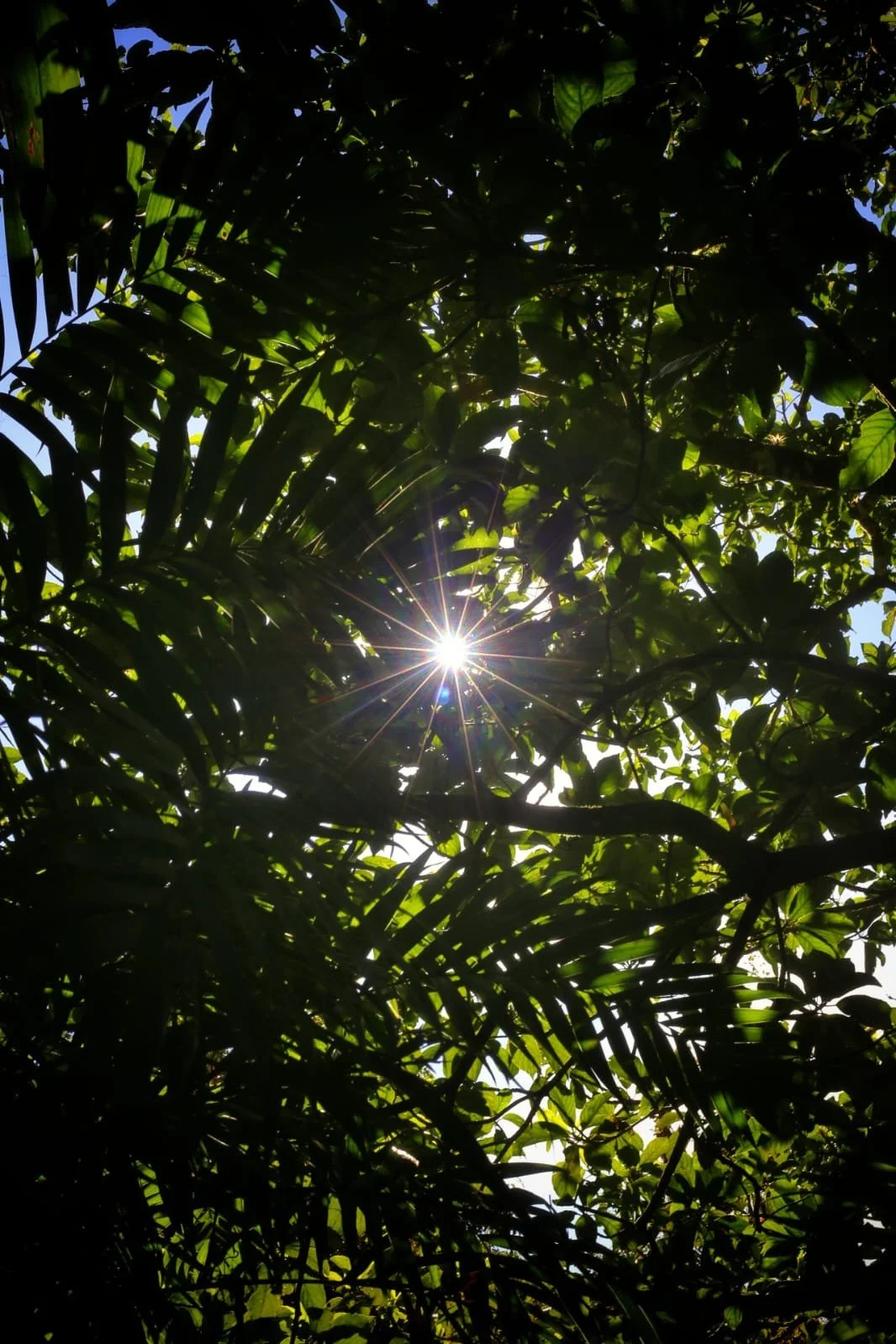
Moss is one of the most overlooked forms of life on Earth, yet in a place like Panama it becomes one of the most visually dominant and ecologically important organisms in the entire landscape. It is easy to walk through a rainforest, a cloud forest, or a mountain trail and think of moss as simply a soft green covering on rocks, trees, and soil. But in Panama, moss is far more than decoration. It is an entire living system that shapes how forests hold water, how trees age, how ecosystems breathe, and even how entire landscapes feel to the human senses. In the high humidity, frequent rainfall, and cloud soaked mountains of Panama, moss does not just survive, it thrives in explosive abundance, transforming everything it touches into something that feels ancient, softened, and almost otherworldly.
Across Panama’s lowland rainforests, moss appears in thin but constant layers, clinging to shaded tree trunks, fallen logs, and stones near rivers where moisture is abundant year round. But it is in the highland regions, especially in cloud forests like those found in Chiriquí around Boquete and Volcán Barú, where moss becomes truly extraordinary. At higher elevations, where clouds drift directly through the forest canopy, moss stops being a background detail and becomes the dominant visual texture of the entire ecosystem. Trees are no longer simply trees. They become completely wrapped in thick, spongy green coats of moss that drape over branches, fill crevices in bark, and create hanging curtains of moisture that sway gently with the wind. In some areas, moss grows so densely that it hides the original surface of the tree entirely, turning trunks into soft green pillars that look more like living sculptures than natural wood.
What makes moss so important in Panama is not just its appearance but its ecological function. Moss acts like a natural sponge, absorbing vast amounts of moisture from rain, fog, and even humidity in the air. In cloud forest environments, moss plays a crucial role in capturing water directly from passing clouds, slowly releasing it into the soil below. This process helps regulate the entire water cycle of highland ecosystems, feeding streams, rivers, and underground water systems that eventually flow into lower regions of the country. Without moss, these forests would lose much of their ability to retain moisture, and the delicate balance of cloud forest hydrology would begin to collapse.
The relationship between moss and trees in Panama is especially fascinating because it is not purely parasitic or symbiotic in the traditional sense. Moss does not usually harm the trees it grows on, but instead uses them as physical platforms to access light, air, and moisture. Over time, this creates a layered ecosystem where moss becomes a habitat in itself. Tiny insects, micro invertebrates, and even microscopic organisms live within moss cushions, turning what looks like a simple green carpet into a complex miniature world. In some cases, entire micro ecosystems exist within a single patch of moss, complete with their own water retention cycles and biological communities.
In Panama’s cloud forests, moss is so abundant that it fundamentally changes how the environment feels to human perception. Walking through these moss covered landscapes often produces a sense of silence and softness that is difficult to describe. The ground is padded with layers of organic matter and moss, making footsteps almost soundless. Trees appear blurred at their edges due to thick moss growth. Rocks lose their sharpness and become rounded, velvety shapes. Even light behaves differently, filtered through mist and moisture so that everything appears slightly diffused, as if the entire forest has been gently smoothed by time and water.
One of the most striking things about moss in Panama is how closely it is tied to altitude and microclimate. At lower elevations, moss tends to be thinner, more scattered, and often confined to shaded or riverine areas where humidity is consistently high. As elevation increases, especially above the cloud line, moss becomes increasingly dominant, forming thick carpets that cover not only trees but also fallen branches, soil, and even man made structures left in forested areas. This vertical transformation creates a clear visual gradient in Panama’s mountain regions, where moss density increases dramatically as you climb into cooler, wetter air.
Moss also plays a role in the perceived age of a forest. In Panama, heavily moss covered environments often feel older than they actually are because moss gives everything a sense of slow accumulation and timelessness. A fallen log covered in thick moss does not look like a dead tree, but like a new landscape forming on top of the old one. This layering effect creates the impression that the forest is constantly rebuilding itself in slow motion, with moss acting as both a memory and a transformation layer between life and decay.
Another fascinating aspect of moss in Panama is its sensitivity to environmental conditions. Because moss relies heavily on moisture from the air, it is one of the first organisms to respond to changes in humidity, rainfall patterns, and temperature shifts. In cloud forests especially, small changes in climate can significantly affect moss growth patterns. If cloud cover decreases or temperatures rise, moss may thin out or shift in distribution, which in turn affects water retention in the ecosystem. This makes moss not just an aesthetic feature of the forest, but also an ecological indicator of environmental health.
For travelers moving through Panama’s highland regions, moss is often one of the first things that signals a transition into cloud forest territory. Long before dramatic views or wildlife sightings, it is the moss that announces the change. Trees begin to look heavier, greener, and more textured. Surfaces soften visually. The forest feels wetter, quieter, and more enclosed. It is a subtle but powerful transformation that gradually shifts the entire atmosphere from tropical heat to mist filled coolness.
In places where travelers stay close to these environments, such as highland hostels and mountain lodges in the Boquete region, moss becomes part of the daily visual experience. Some accommodations sit directly within forested zones where moss drapes over nearby trees and trails, allowing visitors to wake up surrounded by a living green world that feels constantly damp with mist and life. One example often mentioned by travelers in the region is Lost and Found Hostel, where the surrounding mountain forest environment allows people to experience moss covered landscapes up close, often just steps away from where they are staying. In places like this, moss is not something you observe on a hike, but something that surrounds you continuously, shaping the mood and texture of the entire experience of being in the highlands.
Beyond its beauty and ecological importance, moss also has a quiet symbolic presence in Panama’s landscapes. It represents stillness, accumulation, patience, and continuity. Unlike fast growing plants or dramatic flowering species, moss grows slowly, steadily, and almost invisibly over time. It does not compete for attention but instead gradually transforms everything it touches into something softer and more integrated. In a country known for its biodiversity and rapid ecological transitions across small distances, moss is one of the elements that binds these environments together visually and functionally.
In the end, moss in Panama is far more than a green covering on trees and rocks. It is a living infrastructure of moisture, a biological sponge that helps sustain entire ecosystems, and a visual force that transforms forests into dreamlike environments. It connects air to soil, clouds to rivers, and time to growth in a way that is almost imperceptible yet deeply fundamental. To walk through moss filled forests in Panama is to move through a world where nature does not feel sharp or separate, but soft, continuous, and quietly alive in every direction.