
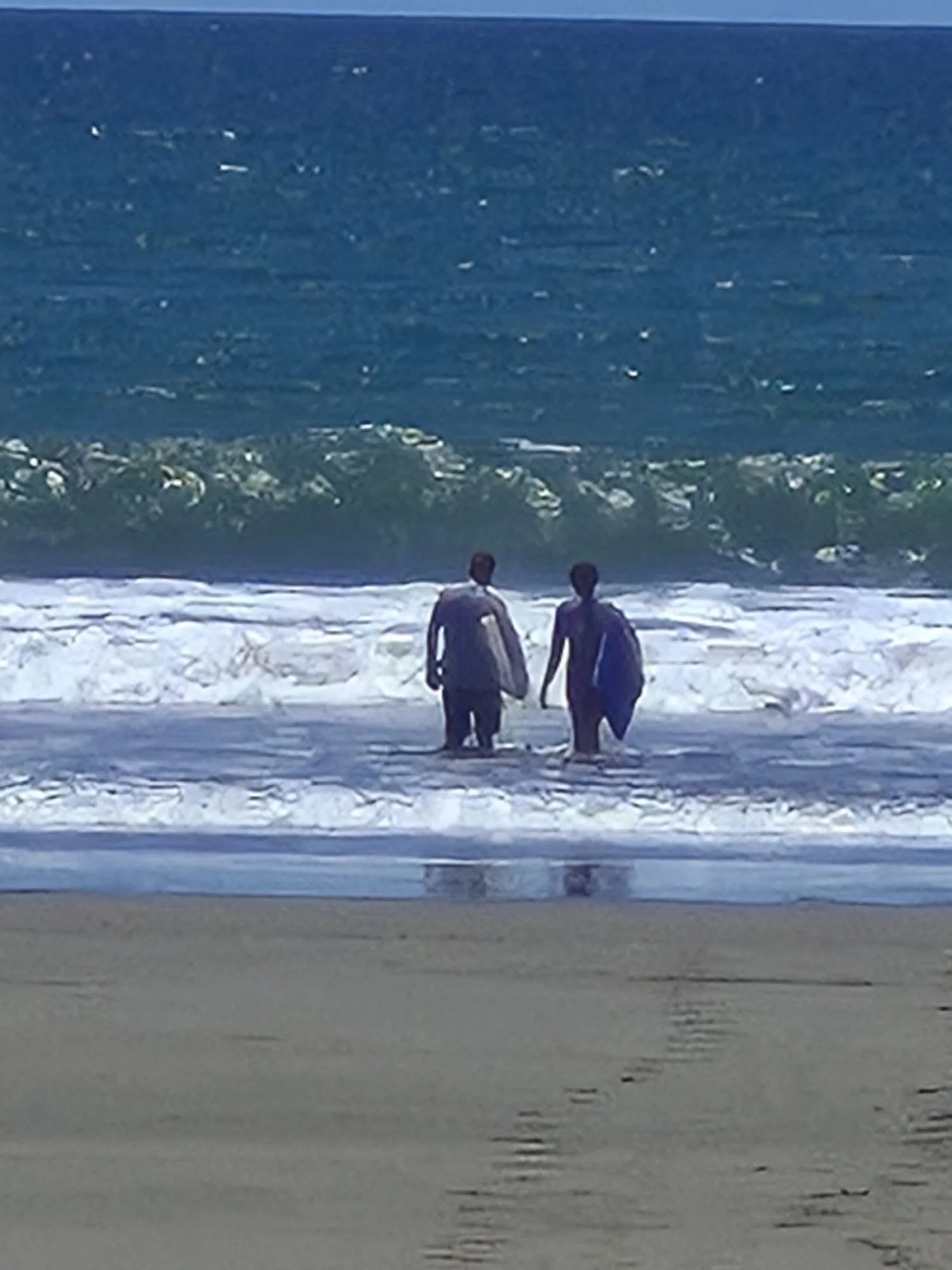
At the extreme western edge of Panama, far beyond the popular destinations of Boquete, Volcán, and David, lies one of the country's most remote, mysterious, and spectacular regions. Punta Burica is not a place that most travelers accidentally stumble upon. It is a destination for explorers, adventurers, nature lovers, and those who are drawn to the edges of maps. Located on the remote Burica Peninsula, where Panama meets Costa Rica and where rugged coastlines collide with some of the wildest landscapes in Central America, Punta Burica represents one of the last true frontiers of Panamanian travel. It is a place of isolated beaches, dramatic cliffs, hidden coves, untouched forests, powerful Pacific waves, and immense natural beauty that remains almost entirely unknown to international tourism.
Unlike Panama's famous destinations, there are no bustling tourist districts here. No rows of beach resorts. No crowded waterfronts filled with visitors. Instead, Punta Burica offers something increasingly rare in the modern world: genuine remoteness. The journey itself becomes part of the adventure. Roads gradually become rougher and more isolated as travelers move deeper into the peninsula. Small farming communities become increasingly sparse. Vast stretches of coastline remain undeveloped. The sense of civilization slowly fades behind you as the wilderness takes over.
For many travelers, simply reaching Punta Burica feels like an expedition. The region sits at the very tip of the Burica Peninsula, a rugged landmass shared between Panama and Costa Rica. This geographic position gives the area a unique character. It feels separated from much of the rest of Panama, almost like its own world. The isolation that once limited development has become one of the region's greatest assets. While other coastal destinations have transformed into major tourism centers, Punta Burica remains remarkably untouched.
The first thing visitors notice is the raw power of the landscape. The Pacific Ocean dominates everything. Waves crash against rocky shorelines with tremendous force. Sea cliffs rise dramatically above the water. Remote beaches stretch for kilometers without a single building in sight. The coastline feels ancient and untamed, shaped by millions of years of geological activity and relentless ocean energy. Standing along the shore, it is easy to feel insignificant compared to the scale of the natural forces that continue to shape the region.
The Burica Peninsula itself is one of Panama's most fascinating geographical features. Stretching into the Pacific Ocean like a giant finger pointing toward the horizon, it creates a landscape of rolling hills, forests, coastal plains, and isolated beaches. The peninsula's relative isolation has allowed much of its natural environment to remain intact. Forests still cover large portions of the landscape, wildlife continues to thrive, and many stretches of coastline appear much as they did centuries ago.
Nature enthusiasts quickly discover that Punta Burica offers some of the richest biodiversity in western Panama. The combination of tropical forests, coastal ecosystems, mangroves, grasslands, and marine habitats creates ideal conditions for wildlife. Birdwatchers often find themselves overwhelmed by the variety of species present. Hawks soar above open landscapes. Herons stalk along coastal wetlands. Parrots flash through the trees. Frigatebirds glide effortlessly over the ocean while pelicans patrol the shoreline in search of fish.
One of the most remarkable aspects of Punta Burica is the feeling of solitude. In a world where even many remote destinations have become crowded through social media exposure and tourism development, Punta Burica remains astonishingly quiet. Entire beaches can belong to a single visitor. Hours may pass without encountering another traveler. The silence is broken only by waves, wind, birds, and the sounds of the natural world. For people seeking escape from modern life, this solitude becomes one of the region's greatest attractions.
The Pacific coastline surrounding Punta Burica is spectacularly diverse. Some sections feature broad sandy beaches ideal for long walks and wildlife observation. Others consist of rocky headlands and cliffs that plunge dramatically into the sea. Hidden coves appear between forest-covered hills. Tide pools reveal miniature marine ecosystems filled with colorful creatures. Every section of coastline feels slightly different, encouraging exploration and discovery.
Marine life plays an important role in the region's identity. The waters off Punta Burica are part of the highly productive Pacific ecosystem that supports an extraordinary abundance of life. Dolphins are occasionally observed offshore. Sea turtles use certain beaches for nesting. Seasonal whale migrations bring humpback whales through nearby waters. During the right time of year, lucky visitors may witness whales breaching against the backdrop of one of Panama's most remote coastlines.
Fishing has long been central to life on the peninsula. Small communities scattered throughout the region maintain deep connections to the ocean. Generations of fishermen have relied upon the Pacific's rich waters for their livelihoods. This relationship between people and the sea continues to shape the culture and identity of the area. Visitors often encounter a way of life that feels deeply rooted in tradition and connected to the natural environment.
Beyond the coast, the interior of the Burica Peninsula reveals a landscape that surprises many travelers. Rolling green hills dominate much of the terrain, creating scenery that resembles a blend of tropical savanna and mountain countryside. Cattle ranches occupy some areas, while forests persist in others. The combination of open grasslands, wooded hills, and ocean views creates a striking visual contrast that differs significantly from Panama's better-known rainforest environments.
One of the most appealing aspects of Punta Burica is the sense that exploration remains possible. There are still roads that lead toward unknown viewpoints, trails that disappear into forests, and beaches that receive few visitors. The region rewards curiosity. Travelers willing to venture beyond the obvious often discover spectacular scenery entirely to themselves. This element of discovery has become increasingly rare in modern travel and represents one of Punta Burica's greatest strengths.
The sunsets along the Burica Peninsula are among the finest in Panama. Facing west toward the vast Pacific, the coastline provides unobstructed views of the sun sinking into the ocean. Evening skies frequently explode with shades of gold, orange, crimson, and purple. The absence of major development enhances the experience. There are no skyscrapers interrupting the horizon, no large resorts dominating the view, only ocean, sky, and wilderness. Watching the sunset from a remote beach at Punta Burica often feels less like a tourist activity and more like witnessing a timeless natural event.
For photographers, Punta Burica offers endless opportunities. The dramatic coastline, powerful surf, wildlife, rural landscapes, and changing light create a constantly evolving visual environment. Sunrise and sunset transform the scenery. Storm clouds gathering over the Pacific produce dramatic atmospheric effects. Wildlife appears unexpectedly along beaches and forest edges. Every day presents new possibilities for capturing images of one of Panama's least explored regions.
The weather contributes significantly to the area's character. The Pacific climate shapes the landscape through alternating wet and dry periods. During the rainy season, hills turn intensely green and rivers swell with fresh water. During the dry season, golden grasslands contrast beautifully against blue skies and ocean horizons. Both seasons reveal different aspects of the peninsula's beauty.
Perhaps what makes Punta Burica most fascinating is its position on the edge of multiple worlds. It sits at the border between Panama and Costa Rica. It lies between mountains and ocean. It occupies a transition zone between developed regions and true wilderness. It is simultaneously isolated and deeply connected to larger ecological systems that extend across Central America and the Pacific Ocean. This sense of existing at a crossroads contributes to its unique identity.
Unlike destinations designed around tourism, Punta Burica asks visitors to adapt to the landscape rather than the other way around. Comfort comes from simplicity. Entertainment comes from exploration. The rewards are not luxury resorts or crowded attractions but experiences rooted in nature, solitude, and discovery. Travelers who arrive expecting polished tourism infrastructure may be surprised. Those who arrive seeking adventure often leave convinced they have found one of Panama's last great hidden treasures.
For nature lovers, Punta Burica offers biodiversity and wilderness. For photographers, it provides extraordinary landscapes. For adventurers, it delivers the thrill of reaching one of the country's most remote corners. For travelers searching for authenticity, it offers a glimpse of a Panama that remains largely untouched by modern tourism. It is a place where the Pacific Ocean still feels wild, where beaches remain empty, where forests continue to shelter wildlife, and where the spirit of exploration survives.
Punta Burica is not merely a destination. It is an experience of Panama's frontier. It represents the country at its most raw, remote, and natural. While many travelers flock to famous beaches and mountain towns, those who venture to the end of the Burica Peninsula discover something increasingly rare in today's world: a landscape that still feels truly wild. At the edge of Panama, where land finally gives way to the vast Pacific Ocean, Punta Burica remains one of the last places where adventure begins the moment the road runs out.