
There are places in the world that become important because they are large, powerful, or resource rich. And then there are places that become important for a very different reason: everything has to pass through them. Panama belongs firmly in the second category, and what makes it especially interesting right now is that global systems are becoming more dependent on “bottlenecks” than ever before. Trade, shipping, climate logistics, migration flows, and digital coordination are all concentrating through narrower and more strategic points. Panama sits at one of the most important of these points on Earth.
What looks like a small country on a map is actually a pressure point in global movement. And pressure points tend to become more important, not less, as systems grow more complex.
The Canal Is Not Just a Shortcut, It Is a Global Dependency
In Panama City, the presence of the Panama Canal is often treated like a historical feature, but in reality it functions more like a permanent organ inside the global economy. It is not just a route between oceans. It is a stabilizer for international trade timing.
Shipping routes around the world are built around the assumption that this passage exists and remains functional. When it slows down, the effects ripple outward across continents. That is what makes Panama different from many other strategic locations. It is not only useful. It is structurally embedded into global expectations.
This creates a rare situation where a single narrow corridor has influence far beyond its physical size.
The Bottleneck Effect: Why Narrow Places Become Powerful
In systems theory, bottlenecks are not weaknesses. They are control points. When movement must pass through a narrow space, that space becomes disproportionately influential over the entire system.
Panama is a physical bottleneck between two oceans, but also a functional bottleneck between global supply chains. Even as shipping technology improves and trade routes diversify, the efficiency of Panama’s canal keeps it relevant.
The result is not just traffic. It is dependency.
The Port Network That Extends the Bottleneck Outward
The canal is only one part of a much larger system. Ports on both the Pacific and Caribbean sides extend Panama’s influence outward into global maritime networks. Container terminals, logistics hubs, and redistribution zones create a layered system where goods are not only passing through but being reorganized.
One of the most important nodes in this system is the Colón Free Zone, which functions as a massive trade redistribution hub for Latin America and beyond.
This means Panama is not just a passage. It is a filtering and sorting mechanism for global goods.
Panama City as a Coordination Hub for Global Flow
In Panama City, the bottleneck effect becomes more complex. The city is not just coastal infrastructure. It is also a financial and administrative coordination center where trade, logistics, banking, and corporate services intersect.
Global companies use Panama not only to move goods, but to structure movement itself. Contracts, shipping schedules, financing systems, and logistics planning often converge here.
This adds a second layer to the bottleneck effect: not just physical movement, but organizational movement.
Climate Pressure Is Increasing the Value of Stable Routes
As global climate patterns become more unpredictable, stable infrastructure corridors become more valuable. Shipping routes that are reliable, predictable, and well managed gain importance in a system where disruptions are increasingly common.
Panama’s canal system depends on controlled water resources, which makes it both sensitive and highly managed. But it also remains one of the most consistent maritime passage systems available.
In this sense, Panama is not just geographically strategic. It is operationally valuable in a world that is becoming less predictable.
The Inland Layer That Supports the System
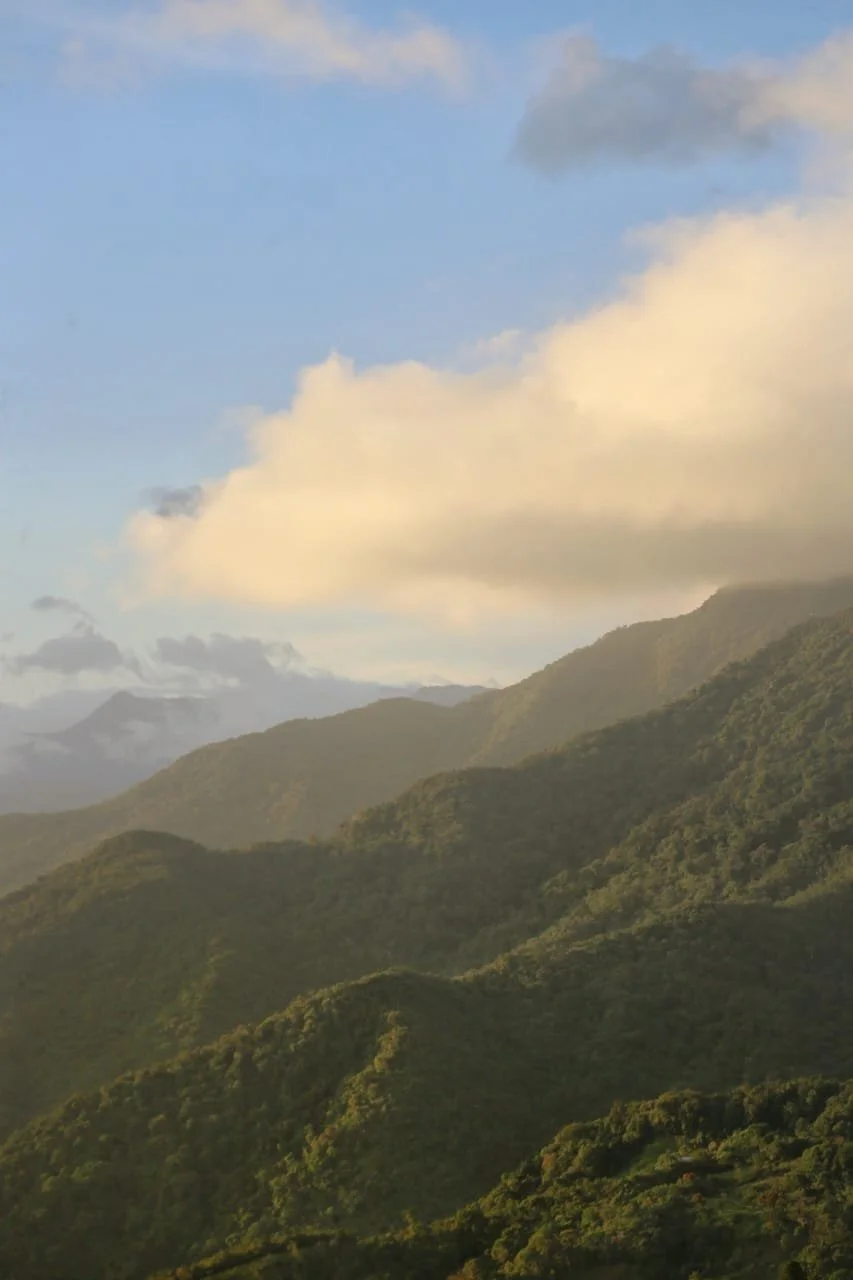
While most attention focuses on the canal and ports, the inland regions are what sustain the system. Watershed areas, rainfall zones, and forest ecosystems provide the water that keeps the canal functioning.
In regions near Soberanía National Park, ecological stability directly supports global logistics. Forests are not separate from infrastructure. They are part of it.
This creates a rare situation where environmental systems are directly tied to global trade performance.
The Human Bottleneck: Migration and Transit Flow
Panama is also becoming more visible in human movement patterns. Migration, tourism, retirement relocation, and business travel all pass through the country in increasing numbers.
Because of its connectivity between North and South America, Panama functions as a transit hub for people as well as goods. Airports, residency systems, and international services all contribute to this role.
This adds another layer to its bottleneck identity: it is not just goods and ships that pass through Panama, but people and decisions.
Why Bottlenecks Become More Valuable Over Time
In a simple system, bottlenecks are problems. In a complex system, they are control points. As global trade, climate systems, and migration flows become more interconnected, places like Panama gain influence not because they expand outward, but because everything else must pass through them.
This is why Panama’s importance is not likely to fade. It is likely to intensify.
Final Thought
Panama is often described as a canal country or a bridge between oceans.
But those descriptions miss the deeper structure.
It is a bottleneck country.
A place where global systems narrow, concentrate, and pass through a single corridor of geography, infrastructure, and coordination.
And in a world that is becoming more complex and more interconnected, bottlenecks are not edges of the system.
They are the system itself.