
There are birdwatching destinations, and then there are places that seem almost purpose-built by nature for birdwatchers. Lost and Found Hostel belongs firmly in the second category. While many birding trips involve setting an alarm long before sunrise, stumbling into a vehicle in the dark, and driving considerable distances to reach productive habitat before the morning activity begins, Lost and Found offers something entirely different. Here, the habitat is already around you. The birdwatching begins the instant you wake up. You can open your eyes, step outside with a cup of coffee in your hand, and immediately find yourself surrounded by cloud forest, mountain views, hummingbirds, and some of the richest birdlife in all of Panama. There are very few places where the transition from sleeping to serious birding takes less than a minute, but Lost and Found is one of them. The hostel occupies an extraordinary position within the Fortuna Forest Reserve, a vast protected wilderness in western Panama that has become one of the country's premier destinations for birdwatchers, wildlife enthusiasts, photographers, and naturalists from around the world.
What makes the location so remarkable is not simply that it is surrounded by forest. Panama has many forests. What makes Lost and Found special is that it sits within a cloud forest ecosystem close to the Continental Divide, one of the most biologically productive and ecologically important regions in Central America. This unique geographical position places visitors at the meeting point of different weather systems, elevations, habitats, and wildlife communities. Moisture arriving from the Caribbean side of the country rises into the mountains and cools, creating the misty, moisture-rich conditions that cloud forests depend upon. These forests are among the most biodiverse ecosystems on Earth. Moss drapes over tree trunks. Orchids cling to branches. Ferns cover the forest floor. Epiphytes grow in every available space. The entire landscape feels alive. For birds, it is paradise. For birdwatchers, it can feel like stepping into a dream.
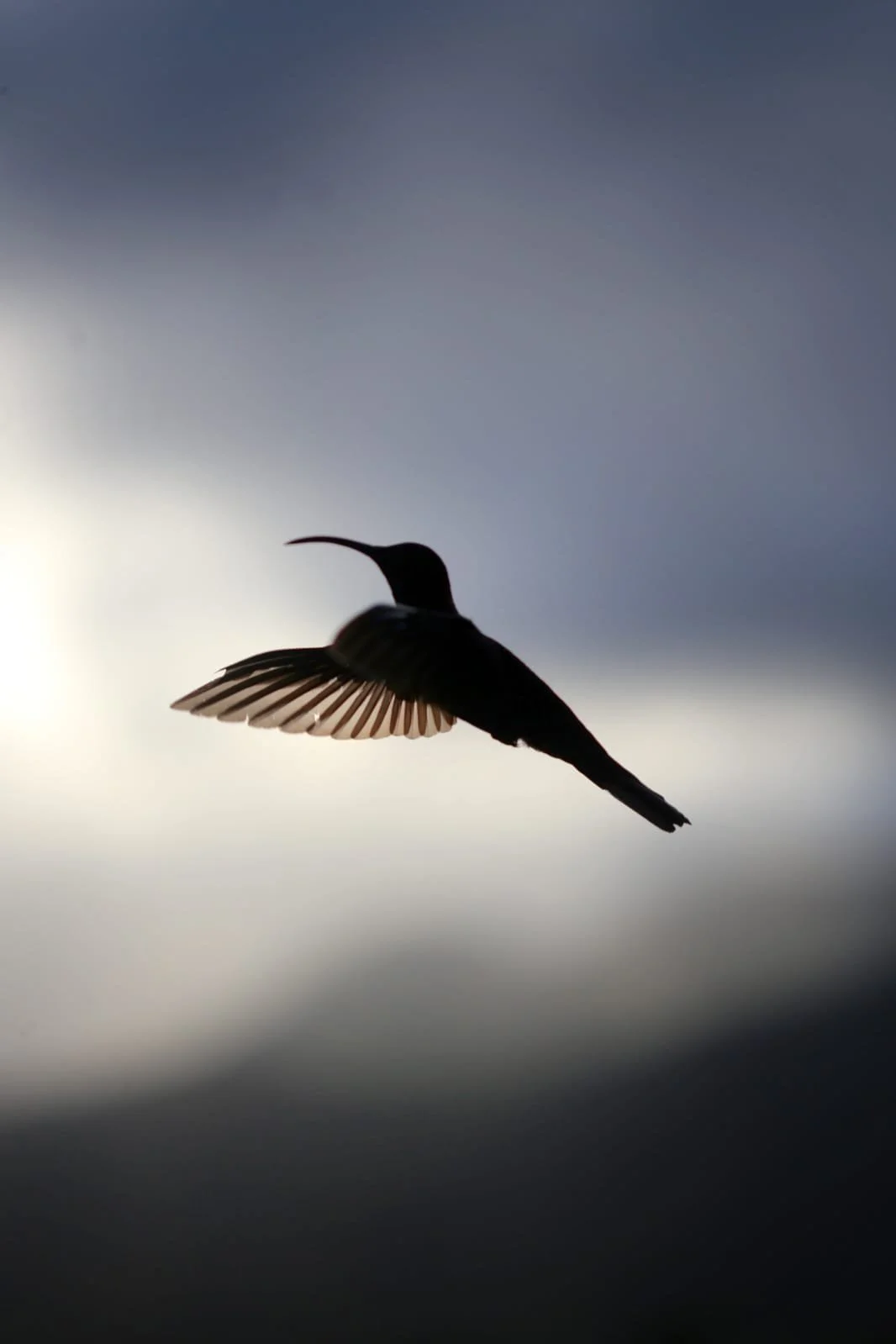
One of the most memorable experiences at Lost and Found begins not on a trail but in the hostel's main social area. Here, a collection of hummingbird feeders has become famous among guests, photographers, and birdwatchers. Many visitors arrive expecting to spend their days hiking through the forest searching for birds, only to discover that some of the most spectacular wildlife viewing occurs while sitting comfortably near the feeders. Throughout the day, hummingbirds arrive in a near-constant stream. Tiny flashes of iridescent green, purple, blue, bronze, and emerald dart through the air with astonishing speed. They hover, chase one another, defend feeding territories, and perform aerial maneuvers that seem to defy physics. It is easy to lose track of time while watching them. Guests often plan to spend ten minutes at the feeders before heading out on a hike and instead find themselves still sitting there an hour later, completely captivated by the spectacle unfolding in front of them.
The hummingbird diversity alone can be extraordinary. Depending on the season and conditions, birders may encounter species such as the Violet Sabrewing, Green Hermit, Stripe-tailed Hummingbird, White-bellied Mountain-gem, Scintillant Hummingbird, Snowy-bellied Hummingbird, Crowned Woodnymph, and other dazzling members of this remarkable family. Each species has its own personality and behavior. Some aggressively dominate the feeders and chase rivals away. Others sneak in for quick visits when the larger birds are distracted. Some perch nearby and patiently wait their turn. Others seem incapable of remaining still for more than a second. Even people who have never considered themselves birdwatchers often become fascinated after spending time observing these tiny flying jewels.
The true magic of Lost and Found, however, extends far beyond the feeders. The hostel serves as a gateway into the immense wilderness of the Fortuna Forest Reserve. Covering tens of thousands of hectares, this reserve protects one of the largest remaining cloud forest systems in Panama. Looking out across the surrounding landscape, you quickly gain an appreciation for its scale. Forested mountains stretch toward the horizon. Deep valleys disappear beneath layers of mist. Ridges emerge and vanish as clouds drift through the terrain. Rivers carve through untouched wilderness. Human development is remarkably limited. Instead of seeing roads, buildings, and infrastructure, you see forest after forest after forest. It is exactly the kind of landscape that allows wildlife to thrive.
For birdwatchers, this translates into an astonishing level of biodiversity. More than simply supporting large numbers of birds, the reserve supports an impressive variety of species representing many different ecological niches. Fruiting trees attract colorful tanagers and toucanets. Flowering plants support hummingbirds. Dead trees provide habitat for woodpeckers. Dense understory vegetation shelters secretive ground-dwelling birds. The canopy hosts mixed feeding flocks that can transform a quiet morning into a frenzy of activity within minutes. Every layer of the forest contains life, and every section of trail offers opportunities for discovery.
The list of species recorded within the Fortuna region reads like a wish list for birdwatchers visiting Central America. Perhaps the most famous of all is the Resplendent Quetzal, a bird so beautiful that many consider it one of the most spectacular species on Earth. Seeing a quetzal in the wild is an unforgettable experience. Its brilliant emerald-green plumage glows against the dark forest backdrop, while males display long flowing tail feathers that seem almost unreal. Birders travel from across the globe hoping for a glimpse of this legendary species, and the cloud forests surrounding Lost and Found provide suitable habitat for these magnificent birds.
Equally sought after is the Three-wattled Bellbird, a species famous for producing one of the loudest and strangest calls in the avian world. Hearing its metallic, bell-like notes echoing across a mountain valley is one of the iconic experiences of birding in western Panama. Then there is the elusive Bare-necked Umbrellabird, a bizarre and fascinating species that seems as though it belongs in a prehistoric world. Black Guans move through the forest canopy. Emerald Toucanets and Yellow-eared Toucanets add flashes of color. Lattice-tailed Trogons perch quietly along forest edges. Golden-browed Chlorophonias bring brilliant shades of green and yellow to fruiting trees. Azure-hooded Jays move through the canopy in noisy groups, often alerting birdwatchers to the presence of mixed feeding flocks.
The diversity does not stop there. The reserve is home to Spangle-cheeked Tanagers, Silver-throated Tanagers, Bay-headed Tanagers, Flame-colored Tanagers, Common Chlorospingus, Ruddy Treerunners, Lineated Foliage-gleaners, Buff-fronted Foliage-gleaners, Black-faced Solitaires, Slate-throated Redstarts, Collared Redstarts, Black-and-yellow Silky-flycatchers, Mountain Elaenias, Yellow-winged Vireos, Golden-crowned Warblers, Wilson's Warblers during migration, and numerous flycatchers, wrens, and woodcreepers. Every morning presents the possibility of encountering a different combination of species, which is one reason birders often return repeatedly to the area.
Another remarkable aspect of birdwatching around Lost and Found is the opportunity to observe mixed-species feeding flocks. These moving assemblages of birds can suddenly appear and transform a seemingly quiet forest into a whirlwind of activity. Tanagers, warblers, woodcreepers, flycatchers, chlorophonias, and other species travel together through the canopy, each exploiting different food resources while benefiting from the increased vigilance provided by the group. Experienced birdwatchers know that finding one of these flocks can be the highlight of an entire day. At Lost and Found, they are a regular feature of the cloud forest experience.
The proximity to the Continental Divide contributes enormously to this biodiversity. The divide creates environmental gradients that support species adapted to different conditions. Small changes in elevation can produce noticeable shifts in vegetation and bird communities. This means that exploring different trails around the hostel can reveal surprisingly different species compositions. A morning spent near the hostel may produce one set of birds, while a hike toward a different ridge or valley may reveal entirely new possibilities. The landscape encourages exploration, and every trail feels filled with potential.
Perhaps the greatest luxury offered by Lost and Found is time. Because the birding begins immediately outside your accommodation, you spend more time observing birds and less time traveling. Those first magical hours after sunrise, when many species are most active, are spent in the forest rather than in a vehicle. You hear the dawn chorus from your room. You watch clouds drift through the trees while drinking your morning coffee. You can check the hummingbird feeders before breakfast, explore trails during the morning, return for lunch, and head back into the forest during the afternoon without ever feeling rushed. The entire experience revolves around immersion rather than logistics.
As evening approaches, the atmosphere changes once again. The sunlight softens. Clouds drift through the valleys. Bird activity shifts. Calls echo across the mountains. The forest begins preparing for night. Standing on one of the viewpoints near the hostel, looking out across the vast wilderness of the Fortuna Forest Reserve, it becomes easy to understand why so many visitors fall in love with this place. The mountains seem endless. The forest appears untouched. The opportunities for discovery feel limitless.
Lost and Found Hostel is much more than a hostel. For birdwatchers, it is a rare opportunity to live temporarily within one of Panama's most important birding ecosystems. The combination of cloud forest habitat, hummingbird feeders, access to extensive trail networks, proximity to the Continental Divide, and location within the extraordinary Fortuna Forest Reserve creates an experience that is difficult to match anywhere else in the country. This is not simply somewhere you stay while looking for birds. It is somewhere you stay among the birds. Every morning begins with birdsong. Every meal can be accompanied by hummingbird activity. Every walk has the potential to reveal something remarkable. Every day feels connected to the living forest that surrounds you. For anyone passionate about birdwatching, wildlife, or simply experiencing one of the most beautiful natural environments in Panama, Lost and Found stands as one of the country's most rewarding destinations, a place where you wake up, step outside, and instantly become part of one of Central America's greatest birding adventures.