
When most people think of apples, they imagine cool autumn mornings, rolling orchards in temperate climates, baskets of fruit harvested beneath colorful leaves, and landscapes more commonly associated with places such as Washington State, New York, southern Chile, France, Germany, or New Zealand. Apples are so strongly connected with cooler climates that the very idea of growing them in a tropical country often sounds impossible. Panama, after all, is known for rainforests, palm trees, tropical beaches, bananas, cacao, coconuts, and coffee. It is a country where temperatures remain warm throughout most of the year and where snow has never fallen on the vast majority of its territory. Yet hidden within Panama's mountains lies one of the country's most intriguing agricultural stories. While Panama will never become a major apple-producing nation, the fact that apples can be grown there at all is a fascinating reminder of just how diverse and surprising the country's geography truly is.
To understand why growing apples in Panama seems so unusual, it helps to understand the biology of apple trees. Traditional apple varieties evolved in regions that experience cold winters. For centuries, apples adapted to climates where trees enter dormancy during winter months before awakening again in spring. Most apple varieties require what horticulturists call "chill hours," a period of exposure to cooler temperatures that allows the tree to properly complete its annual cycle. In many famous apple-growing regions, winter provides hundreds or even thousands of hours of cool conditions. Without sufficient chilling, many apple trees struggle to flower, fruit, or produce high-quality harvests. This requirement immediately creates a challenge in tropical countries where temperatures remain relatively stable year-round.
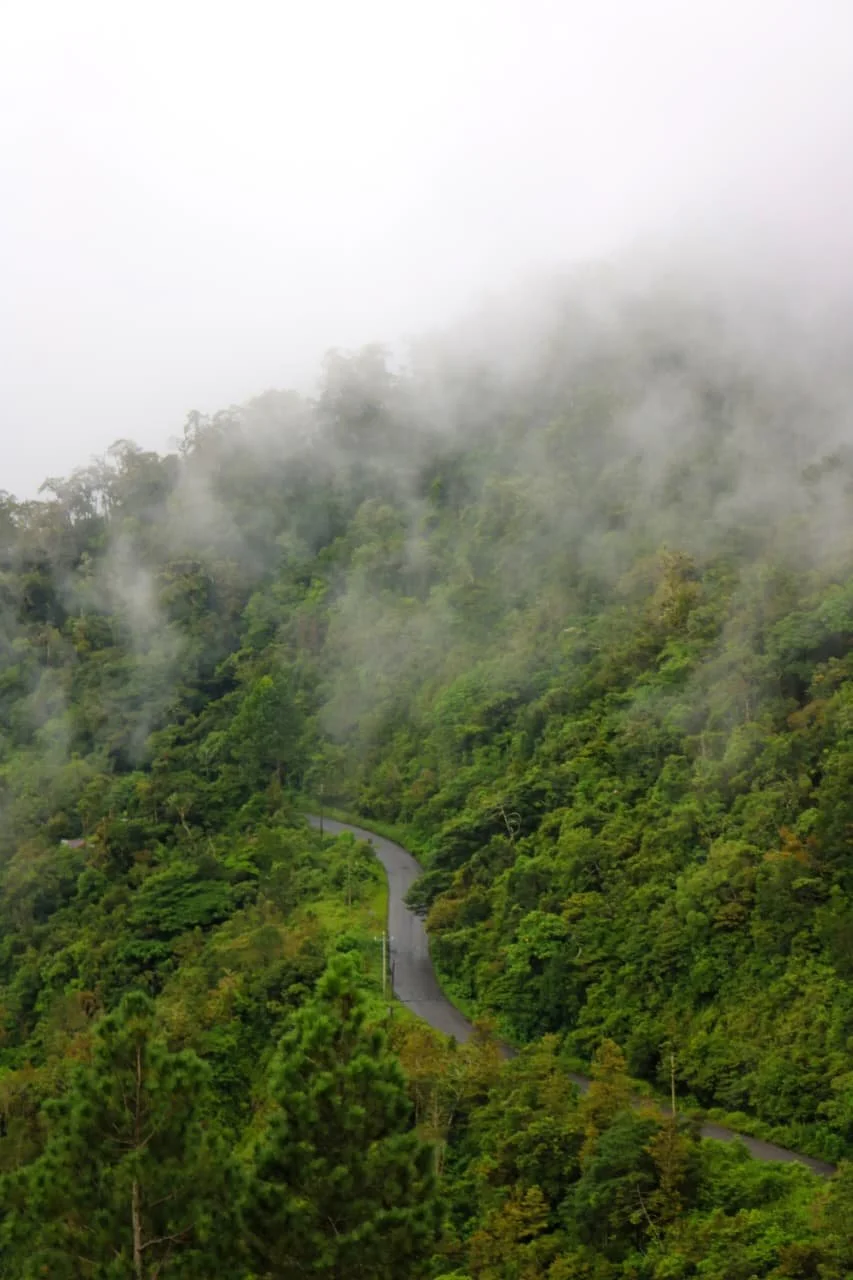
At first glance, Panama appears completely unsuitable for apples. Much of the country experiences tropical heat, high humidity, and warm nights throughout the year. Visitors exploring the beaches of Bocas del Toro, the lowland forests of Darién Province, or the bustling streets of Panama City would likely conclude that apple cultivation is impossible. Yet Panama possesses one remarkable geographic advantage: elevation. Rising above the tropical lowlands are mountain ranges that create dramatically different climates. As altitude increases, temperatures decline. Mist drifts across slopes. Nights become cooler. Conditions begin to resemble environments found far from the tropics. It is within these mountain landscapes that the possibility of growing apples emerges.
The most promising regions for apple cultivation are found in the highlands of Chiriquí Province, particularly around communities such as Volcán, Cerro Punta, and areas surrounding Volcán Barú. These regions sit at elevations high enough to create climates that often surprise visitors. Instead of sweltering tropical heat, travelers encounter cool mornings, refreshing evenings, and temperatures that can feel almost spring-like year-round. The volcanic soils are exceptionally fertile, supporting a wide range of crops not commonly associated with tropical countries. Farmers successfully grow lettuce, broccoli, cauliflower, carrots, strawberries, potatoes, and numerous other crops that many people would never expect to find in Panama. Given this remarkable agricultural diversity, it is perhaps less surprising that apples have also attracted attention.
The history of apple cultivation in Panama is not one of vast commercial success but rather one of experimentation, curiosity, and adaptation. Over the years, farmers, agricultural researchers, and horticultural enthusiasts have explored the possibility of growing apple trees in suitable mountain environments. The challenge has always been selecting varieties capable of performing under conditions that differ significantly from traditional apple-growing regions. Some modern apple varieties have lower chilling requirements than others, making them more suitable for subtropical and tropical highland environments. By carefully choosing these varieties and managing orchards appropriately, growers have demonstrated that apple production is indeed possible.
Walking through an apple orchard in Panama can feel almost surreal. Imagine standing in a cool mountain valley surrounded by rolling hills and fertile farmland while knowing that tropical rainforests and palm-lined beaches exist only a few hours away. The contrast highlights one of the most fascinating aspects of Panama's geography. Within a relatively small country, travelers can move between climatic zones that support entirely different forms of agriculture. One day you might be drinking fresh coconut water on a Caribbean island. The next, you could be examining apple trees in a highland orchard beneath the slopes of a volcano.
One of the major obstacles facing apple growers in Panama is humidity. While cooler temperatures can be found at higher elevations, tropical moisture remains a constant factor. Apple trees are susceptible to various fungal diseases that thrive in humid environments. Managing these risks requires careful orchard design, pruning practices, disease monitoring, and sometimes additional agricultural interventions. Growers must balance the advantages provided by elevation with the challenges created by the surrounding tropical climate. Successful apple production therefore demands a level of expertise and dedication that exceeds what many people might expect.
The flowering cycle of apple trees in Panama is another fascinating subject. Because seasonal temperature changes are less dramatic than in temperate climates, growers often need to adapt management practices to encourage flowering and fruit production. The rhythm of the orchard differs from what one might observe in famous apple-growing regions farther from the equator. Understanding these differences has been an important part of developing successful cultivation techniques. Each orchard effectively becomes an experiment in adapting a traditionally temperate crop to a tropical mountain environment.
Visitors are often surprised to learn that apples are not the only temperate fruit that can be found in Panama's highlands. Alongside apples, farmers have experimented with peaches, plums, pears, and other fruits more commonly associated with cooler climates. Strawberries have become particularly successful in certain regions, demonstrating just how versatile Panama's mountain environments can be. These agricultural experiments challenge conventional assumptions about what can and cannot be grown in tropical countries.
Although Panama's apple production remains small compared to global giants, its significance extends beyond economics. The existence of apple orchards symbolizes the remarkable adaptability of agriculture and the extraordinary environmental diversity found within the country. For local communities, apple cultivation can provide opportunities for diversification and niche markets. Visitors often find great appeal in purchasing fruit grown under such unusual conditions. The story itself becomes part of the attraction.
The highland regions where apples can be grown are also among the most beautiful parts of Panama. Around Boquete, Volcán, and Cerro Punta, landscapes are characterized by rolling farmland, cloud forests, volcanic peaks, and cool mountain air. These areas attract tourists seeking relief from tropical heat as well as opportunities to experience a side of Panama that feels entirely different from the country's coastal regions. The agricultural diversity adds another layer of interest, allowing visitors to discover crops they never expected to encounter.
Climate change may also influence the future of apple cultivation in Panama. Shifting temperature patterns, changing rainfall regimes, and evolving agricultural technologies could create both challenges and opportunities. Researchers around the world are developing new fruit varieties with lower chilling requirements and greater adaptability to diverse environments. Such innovations may expand the possibilities for apple production in tropical highland regions. While Panama is unlikely ever to rival major apple-exporting nations, future developments could make cultivation increasingly practical for specialized producers.
What makes the story of apples in Panama so compelling is that it perfectly captures the country's ability to surprise. Visitors arrive expecting tropical fruits and discover potatoes. They expect coconuts and find strawberries. They anticipate bananas and encounter broccoli fields. Then, perhaps most unexpectedly of all, they learn that apples can grow beneath the shadow of a tropical volcano. The existence of apples in Panama challenges simplistic ideas about climate, agriculture, and geography. It demonstrates that nature is often more flexible and complex than we assume.
In many ways, apples have become a symbol of Panama's hidden diversity. They remind us that this narrow bridge between continents contains far more environmental variation than most maps suggest. Within a single day, it is possible to travel from warm coastal waters to cool mountain valleys where crops associated with distant climates can flourish. Few countries offer such dramatic contrasts over such short distances.
Ultimately, the story of growing apples in Panama is not about massive harvests or international export markets. It is about possibility. It is about human ingenuity, agricultural experimentation, and the remarkable environments found in the country's highlands. It is a story that reveals a lesser-known side of Panama, one where volcanic soils, mountain climates, and determined growers come together to achieve something that many people would consider impossible. The next time someone thinks of Panama solely as a land of tropical beaches and rainforests, it is worth remembering that somewhere high in the mountains, beneath cool skies and surrounded by fertile valleys, apple trees are quietly proving that expectations are meant to be challenged.