
Few insects in Panama attract as much attention as the magnificent tarantula hawk. With shimmering metallic blue-black bodies, long orange wings, and an impressive size that can exceed five centimeters (two inches) in length, these giant wasps often stop hikers in their tracks. At first glance, many people mistake them for enormous hornets or even small birds as they glide effortlessly through the forest. Their striking appearance can be intimidating, but once you understand their behavior, they become one of the most fascinating creatures you can encounter in Panama's tropical forests.
Despite their fearsome reputation, tarantula hawks are surprisingly peaceful insects. They have little interest in people and spend most of their lives searching for nectar, exploring flowers, or looking for one very specific prey: tarantulas. Watching one drift through the jungle is one of those memorable wildlife encounters that many visitors remember long after their trip has ended.
At Lost and Found Hostel, deep within the Fortuna Forest Reserve between Boquete and Bocas del Toro, tarantula hawks can be seen during almost every month of the year. The hostel's extensive hiking trails pass through cloud forest and tropical rainforest, creating ideal habitat for these remarkable insects. Guests often spot them slowly cruising along sunny sections of trail, hovering over flowering plants, or investigating patches of leaf litter where tarantulas may be hiding. Their regular appearance has made them one of the many highlights of the hostel's wildlife.
What Exactly Is a Tarantula Hawk?
Despite the dramatic name, a tarantula hawk is not a hawk at all. It is a large spider wasp belonging to the genus Pepsis and closely related genera. Several species occur throughout Panama, where the warm tropical climate provides perfect conditions for both the wasps and the tarantulas they depend upon.
These wasps rank among the largest flying insects in the Americas. Their glossy bodies almost appear polished in the sunlight, reflecting deep shades of blue and purple. The brilliant orange or amber wings create a spectacular contrast that makes them impossible to confuse with most other insects.
Their long legs dangle beneath them during flight, giving them a graceful, almost floating appearance as they move through the forest. Unlike many wasps that dart rapidly from place to place, tarantula hawks often fly slowly and deliberately, allowing lucky observers to admire them for several seconds.
Why Are They Called Tarantula Hawks?
Their name comes from their incredible hunting strategy.
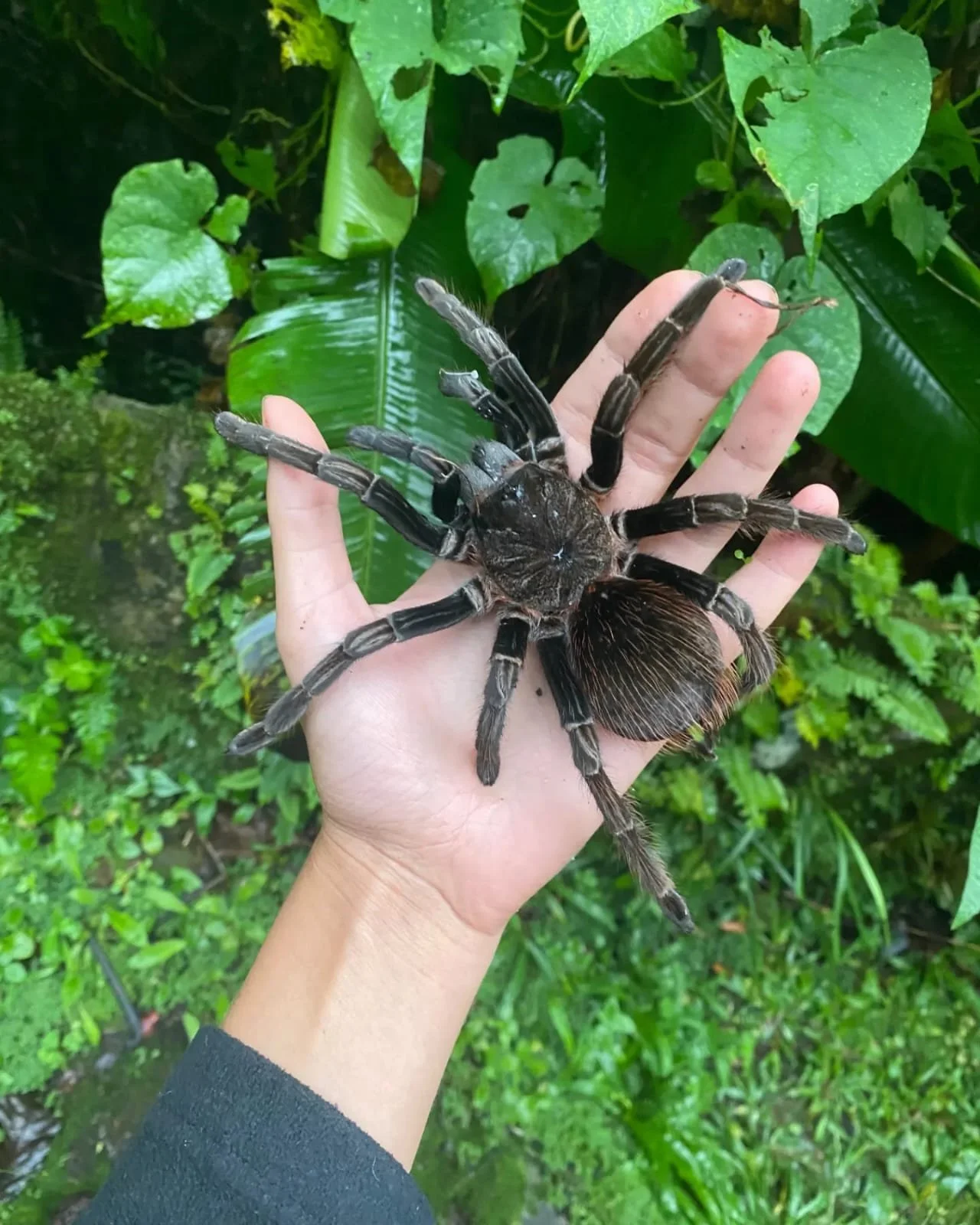
Female tarantula hawks specialize almost exclusively in hunting tarantulas. They search patiently through the forest floor until they locate a spider, often hidden inside a burrow beneath roots, rocks, or fallen logs.
Once a tarantula is found, an extraordinary battle begins.
The spider attempts to defend itself using its powerful fangs and impressive size, while the wasp carefully maneuvers to avoid being bitten. When the opportunity arises, the female delivers a precisely placed sting that temporarily paralyzes the tarantula without killing it.
She then performs one of nature's most astonishing feats of strength.
Although the spider often weighs considerably more than the wasp herself, she drags the immobilized tarantula across the forest floor, sometimes over surprisingly long distances, until reaching a prepared burrow.
Inside, she lays a single egg on the spider before sealing the chamber. The tarantula remains alive but immobilized, providing fresh food for the developing larva after it hatches. While this life cycle may sound dramatic, it is a natural ecological relationship that has evolved over millions of years.
Should You Be Afraid?
Not at all.
Although female tarantula hawks possess a powerful sting for subduing spiders, they are remarkably non-aggressive toward people.
They do not defend nests in large colonies like yellowjackets or social wasps because each female lives alone. Without a colony to protect, they have little reason to attack anything much larger than themselves.
Most people can stand only a few feet away and watch one feeding on flowers without causing any concern.
The simplest rule is to admire them without attempting to catch, handle, or trap them.
What Do They Eat?
While their larvae depend on tarantulas, adult tarantula hawks are primarily nectar feeders.
They visit a wide variety of tropical flowers throughout Panama, making them important pollinators.
If you see one hovering around brightly colored blossoms along a forest trail, it is almost certainly feeding rather than hunting.
Their need for nectar explains why they are frequently encountered in sunny forest clearings where flowering plants receive enough light to bloom.
Where Can You Find Them in Panama?
Tarantula hawks occur across much of the country, from lowland rainforests to mountain forests.
Some of the best places to encounter them include forest edges, nature reserves, national parks, and tropical gardens where flowering plants are abundant.
One particularly reliable location is Lost and Found Hostel in the Fortuna Forest Reserve. Because the hostel sits within pristine cloud forest surrounded by extensive hiking trails, visitors regularly encounter these giant wasps while exploring the jungle. Unlike many wildlife sightings that depend heavily on luck, tarantula hawks are seen so frequently here that many guests notice one during a stay of just a few days.
Their presence is also a sign of a healthy ecosystem. Tarantulas require intact forest habitat, and the wasps can only thrive where healthy spider populations exist. Seeing them is therefore an indication that the surrounding rainforest remains rich in biodiversity.
When Are They Most Active?
Unlike some insects that appear only during a short season, tarantula hawks can be seen throughout much of the year in Panama.
Because Panama's tropical climate remains warm year-round, adults emerge during many different months.
They are most active during warm, sunny parts of the day, particularly during the late morning and early afternoon when flowers produce abundant nectar and temperatures allow efficient flight.
After rain showers, activity often increases once the sun returns.
How Can You Spot One?
Fortunately, these are not insects that hide easily.
Their large size alone makes them surprisingly conspicuous.
Walk slowly along sunny sections of forest trail and watch flowering shrubs carefully. Their bright orange wings usually catch your eye long before you notice the body.
Listen as well.
Their large wings produce a deep buzzing sound that is noticeably louder than that of smaller wasps or bees.
Sometimes you'll hear one approaching before you actually see it.
Keep an eye on the ground too. A female searching for a tarantula often flies low over leaf litter, stopping occasionally to investigate potential hiding places.
Patience is rewarded. Standing quietly beside flowering plants for a few minutes often results in one drifting past.
An Important Part of the Rainforest
Although many people focus on monkeys, sloths, toucans, and colorful frogs, insects such as tarantula hawks play equally important roles in maintaining healthy forests.
As pollinators, they help many tropical plants reproduce.
As predators, they help regulate tarantula populations.
They also provide food for certain birds and other animals, becoming one link in the extraordinarily complex rainforest food web.
Every encounter with one reminds visitors that even the smallest inhabitants of Panama's forests have evolved extraordinary adaptations.
A Memorable Wildlife Encounter
Many travelers arrive in Panama hoping to see monkeys swinging through the canopy or sloths sleeping in the trees. While those encounters are certainly unforgettable, some of the most fascinating wildlife experiences happen much closer to the ground. Watching a tarantula hawk glide silently through the forest, its orange wings glowing in shafts of sunlight, is a moment that captures the incredible diversity of tropical nature.
For guests staying at Lost and Found Hostel, these remarkable insects are simply part of everyday life. Whether you're hiking to a hidden waterfall, exploring the hostel's extensive trail network, or relaxing near the edge of the forest, there's an excellent chance you'll spot one at some point during your visit. Once you know what you're looking for, you'll quickly realize that these giant wasps are not monsters to fear, but elegant hunters that have perfected one of nature's most extraordinary lifestyles.
In the end, the tarantula hawk is a perfect symbol of Panama's rainforests. It is bold, beautiful, mysterious, and unlike almost anything many visitors have ever seen before. Spotting one in the wild is a reminder that the country's forests are filled with remarkable creatures, each playing its own unique role in one of the most biodiverse ecosystems on Earth.