
Panama has earned a legendary reputation among anglers from around the world. The country is surrounded by two oceans, crossed by hundreds of rivers, dotted with lakes and reservoirs, and blessed with an astonishing variety of fish species. Whether you dream of catching a giant yellowfin tuna far offshore in the Pacific, casting for snook in a quiet mangrove estuary, or spending a peaceful afternoon beside a mountain river, Panama offers opportunities that few countries can match. It is one of the rare places where world record fish have been landed only a short boat ride from shore, while small villages still depend on fishing much as they have for generations. For many visitors, fishing becomes much more than simply catching dinner. It becomes a chance to experience Panama's incredible biodiversity, meet local fishermen, and discover beautiful places that many tourists never see. Even people who have never considered themselves anglers often find themselves buying a simple fishing rod after arriving in Panama because the temptation to cast a line into one of the country's countless rivers, lakes, or beaches is simply too difficult to resist.
One of the first questions many newcomers ask is whether they need a fishing license before they cast a line. The answer is slightly more complicated than in many countries because it depends on how and where you are fishing. Casual recreational anglers fishing from shore or joining most sport fishing charters generally do not need to obtain the same permits required for commercial fishing operations. Commercial fishermen, artisanal fishermen, and people operating licensed fishing vessels are subject to different regulations administered by Panama's aquatic resources authority. Special permits may also apply in protected marine areas or for certain regulated activities. For the average backpacker, tourist, retiree, or expat who simply wants to spend a relaxing afternoon fishing, the process is usually very straightforward. If you book a fishing charter, the captain normally ensures that everything is operating within the appropriate regulations. If you fish from a beach, pier, riverbank, or lake for recreation, there is generally very little paperwork involved compared with many countries where recreational licenses are required for nearly everyone. Even so, it is always wise to check local rules before fishing because regulations can change, and certain national parks, protected waters, or indigenous territories may have additional restrictions.
One thing that surprises many visitors is how relaxed fishing culture feels in Panama. Fishing is woven into everyday life, especially outside the larger cities. Walk through almost any coastal village early in the morning and you will see fishermen preparing their boats before sunrise. Return in the afternoon and many will be cleaning fresh catches along the waterfront while neighbors gather to chat, swap stories, and buy seafood directly from the boats. Fish markets overflow with tuna, snapper, corvina, dorado, mackerel, grouper, and dozens of other species. In mountain communities, rivers continue to provide food for local families, while lakes attract both recreational anglers and professional guides. Fishing is not viewed simply as a hobby or a sport. For many Panamanians it remains an important tradition passed from one generation to the next, and visitors are often welcomed into that culture with genuine warmth and enthusiasm.
One of the nicest things about fishing in Panama is that it does not always have to be a serious expedition involving an expensive charter boat or specialized equipment. In fact, many people simply keep a small fishing rod in the trunk of their car or tucked away in a backpack, ready whenever they come across an inviting stretch of water. It is perfectly normal to see locals standing on a bridge casting into a slow moving river after work, children fishing from a small dock in a village, or retirees relaxing on a quiet beach with a single line disappearing into the surf. Fishing in Panama often feels wonderfully informal and unhurried. You are not competing with crowds for the perfect fishing spot or worrying about complicated regulations every time you want to wet a line. Instead, it becomes another excuse to spend a few peaceful hours outdoors surrounded by nature. There is something deeply satisfying about pulling over beside a beautiful river that catches your eye, assembling a simple rod in a matter of minutes, and seeing what might be swimming beneath the surface. Even if you never catch a fish, you rarely leave disappointed because the scenery itself is often spectacular.
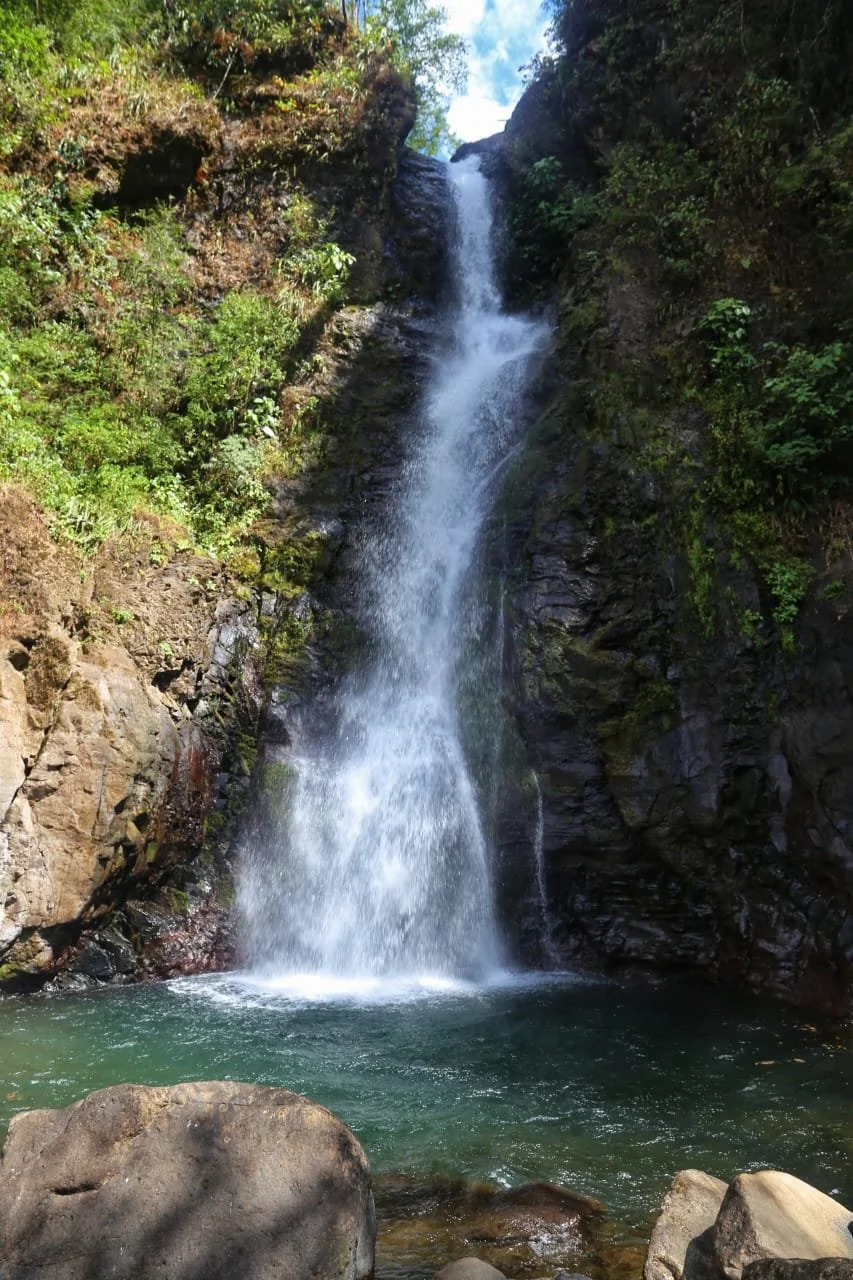
For someone exploring Panama by car, motorcycle, bicycle, or even backpack, there are countless opportunities to stop beside a river or lake simply because it looks promising. Mountain streams flowing through Chiriquí, rivers winding across Veraguas, quiet lakes surrounded by rainforest, and coastal estuaries hidden among mangroves all invite curiosity. Perhaps you are driving toward Boquete and notice a crystal clear river flowing beneath a bridge. Maybe you are hiking through the countryside and come across a deep pool where locals mention there are fish. You may decide to spend an hour casting a lure simply for the enjoyment of being there. Even if you catch nothing, you have spent time beside a beautiful river where blue morpho butterflies drift through shafts of sunlight, hummingbirds dart among flowering plants, monkeys call from the surrounding forest, and kingfishers plunge into the water in search of their own meal. In Panama, fishing is often less about filling a cooler and more about immersing yourself in the country's extraordinary natural beauty.
The same relaxed atmosphere exists along much of Panama's coastline. Many beaches offer excellent shore fishing, especially during the cooler hours around sunrise and sunset when fish move closer to shore to feed. It is common to see local fishermen standing knee deep in the surf, casting repeatedly into the breaking waves with spinning rods, while others fish from rocky points, docks, jetties, or river mouths where fresh water mixes with the sea. These productive areas often hold snook, jack crevalle, ladyfish, small snapper, and countless other species that provide exciting action on relatively light tackle. On calm evenings, few experiences compare with standing barefoot on a deserted tropical beach, listening to the waves roll in while your fishing line disappears into the ocean. Every cast brings a sense of possibility because you never know what may decide to bite next.
Many expats who settle in Panama eventually develop the habit of always carrying a lightweight travel fishing rod. Modern telescopic rods collapse into compact cases that fit easily inside a backpack or the trunk of almost any vehicle. This simple piece of equipment opens the door to endless spontaneous adventures. Panama is full of unexpected fishing spots. A lonely bridge crossing a jungle river, a quiet reservoir high in the mountains, a hidden beach reached by a short forest trail, or a peaceful stretch of coastline beside a sleepy fishing village can all become the highlight of your day. Unlike many countries where access to rivers and lakes is restricted by fences and private property, Panama still offers an incredible sense of freedom to explore. Of course, it is important to respect private land, protected areas, and local communities, but the opportunity to discover your own favorite fishing spots remains one of the country's greatest pleasures.
The Pacific coast is considered one of the finest sport fishing destinations anywhere in the world. Offshore waters hold enormous yellowfin tuna, mahi mahi, wahoo, sailfish, roosterfish, cubera snapper, marlin, and many other prized species. Some of the country's most famous fishing grounds lie around Coiba National Park, Hannibal Bank, and the Gulf of Chiriquí, where nutrient rich waters attract astonishing numbers of large pelagic fish. Anglers travel from every corner of the globe to experience these waters, and even beginners often have opportunities to catch fish that would represent the achievement of a lifetime elsewhere. Charter captains know these waters intimately and are constantly monitoring bird activity, currents, water temperature, and baitfish movements to maximize the chances of success.
The Caribbean coast offers a completely different style of fishing. The calm turquoise waters surrounding Bocas del Toro and other Caribbean destinations are home to tarpon, snook, barracuda, jack crevalle, permit, and an incredible variety of reef fish. Mangrove channels provide ideal habitat for ambush predators, while nearby coral reefs support healthy marine ecosystems filled with colorful species. Fishing here often feels more relaxed than on the Pacific. The smaller tides and calmer seas make it easier to explore by small boat, and many anglers enjoy combining a morning of fishing with snorkeling, swimming, or simply relaxing on white sand beaches beneath coconut palms.
Freshwater fishing is another hidden treasure that many visitors overlook. Panama's rivers, reservoirs, and lakes support an impressive range of freshwater species. Lake Gatún, created during the construction of the Panama Canal, is internationally famous for peacock bass, a spectacular fighting fish that attacks lures with explosive aggression. Freshwater snook, tarpon in some connected waterways, and numerous native species also provide exciting opportunities. Beyond the fishing itself, freshwater adventures often take place in breathtaking surroundings where monkeys, toucans, crocodiles, sloths, iguanas, turtles, and hundreds of bird species share the same waterways. Sometimes the wildlife viewing becomes just as memorable as the fishing.
If you decide to hire a guide, you will quickly discover that Panamanian fishing guides possess an extraordinary understanding of their local waters. They know where fish move with the tides, which lures perform best during different seasons, where baitfish are gathering, and how changing weather conditions influence feeding activity. Most guides provide all the necessary equipment, including rods, reels, bait, tackle, refreshments, safety equipment, and often lunch, making guided fishing a stress free experience for visitors who arrive without their own gear.
For anglers bringing their own equipment, Panama is wonderfully accommodating. A medium spinning outfit works well for many types of freshwater and inshore fishing, while heavier rods and reels are recommended for offshore adventures targeting tuna, marlin, sailfish, and other powerful species. Artificial lures perform exceptionally well in many situations, although fresh bait is widely available in fishing villages throughout the country. Larger towns also have tackle shops where anglers can purchase additional gear or receive advice on current fishing conditions.
Respect for nature remains an important part of fishing in Panama. Many anglers voluntarily practice catch and release, particularly when targeting iconic sport fish such as marlin, sailfish, roosterfish, and tarpon. These magnificent fish are far more valuable alive than harvested, supporting a thriving sport fishing industry that benefits countless coastal communities. Other species such as snapper, corvina, mahi mahi, and tuna are commonly kept for the table, providing some of the freshest seafood imaginable. A meal prepared from a fish caught only hours earlier is one of the simple pleasures that keeps many anglers returning to Panama year after year.
Visitors should always use common sense when fishing. Avoid casting lines in clearly marked protected areas unless fishing is specifically permitted, be respectful if crossing private property to reach a river or beach, and never leave behind discarded fishing line, hooks, or litter that could harm wildlife. If you are unsure whether fishing is allowed in a particular location, asking a local resident is usually the quickest and friendliest way to find out. Panamanians are generally welcoming and are often delighted to point visitors toward productive fishing spots or share stories about what has been biting recently.
One of the greatest joys of fishing in Panama is that the experience extends far beyond simply catching fish. A day beside the water may include dolphins surfing alongside your boat, humpback whales breaching offshore during migration season, scarlet macaws flying overhead, crocodiles basking along muddy riverbanks, monkeys crashing through the forest canopy, or sea turtles surfacing quietly beside your kayak. Even days when the fish refuse to cooperate often become unforgettable wildlife adventures.
For many people who move to Panama, fishing gradually becomes more than an occasional hobby. It becomes part of everyday life. A fishing rod sits permanently in the car. A handful of lures remain tucked inside a backpack. Whenever a beautiful river, peaceful lake, or deserted beach appears around the next bend in the road, there is always the possibility of spending an hour casting into the water. Sometimes dinner is caught. Sometimes nothing bites at all. But almost every time, the experience itself becomes the reward. In a country blessed with thousands of kilometers of coastline, hundreds of rivers, crystal clear mountain streams, jungle lakes, mangrove estuaries, and beautiful freshwater reservoirs, simply throwing a line into the water whenever the opportunity presents itself is one of life's great pleasures. It is this wonderful simplicity, combined with Panama's extraordinary natural beauty, that makes fishing here so much more than a pastime. It becomes another way of discovering the country, slowing down, appreciating nature, and creating memories that often last a lifetime.