
There are rainforests, and then there are cloud forests. While both are rich in life, cloud forests feel as though they belong to another world entirely. They are quieter, cooler, stranger, and infinitely more mysterious. Instead of towering jungle trees reaching into bright tropical sunshine, cloud forests exist in a realm where the forest itself disappears into swirling mist. Clouds drift silently through the branches rather than floating high above them. Moss hangs from every trunk like ancient green curtains. Orchids bloom from impossible places. Ferns the size of small trees blanket the hillsides. Every surface seems alive, covered with a thick carpet of moisture loving plants that have been quietly growing for centuries.
Panama is home to some of the finest cloud forests in all of Central America. Found mostly between 1,000 and 2,500 metres above sea level, these remarkable ecosystems cover the country's highest mountains, including the forests surrounding Volcán Barú, the Talamanca Mountains, Santa Fe National Park, La Amistad International Park, Cerro Hoya, and the spectacular Fortuna Forest Reserve. Together they protect some of the greatest concentrations of biodiversity anywhere on Earth.
The first thing visitors notice is the climate. As you climb into the mountains, the tropical heat slowly fades away. The air becomes cooler, fresher, and wonderfully crisp. Soon the road enters the clouds themselves. Wisps of mist drift across the highway, trees appear and disappear in the fog, and everything takes on an almost dreamlike quality. It is easy to understand why so many people describe their first visit to a cloud forest as magical. There is an atmosphere here that simply does not exist anywhere else.
Unlike ordinary forests that receive most of their water from rainfall, cloud forests have another remarkable source of moisture. The clouds themselves. As mist drifts through the trees, tiny droplets collect on every leaf, branch, vine, and moss covered trunk before slowly dripping onto the forest floor. Scientists call this process cloud stripping or fog interception. In many cloud forests, this hidden source of water is just as important as rainfall itself. It feeds rivers, replenishes underground springs, and allows an astonishing variety of plants to flourish even during relatively dry periods.
This constant moisture creates one of the richest plant communities on the planet. Instead of competing for space on the ground, many plants simply grow on other plants. Orchids cling to tree branches high above the forest floor. Bromeliads collect rainwater inside their leaves, creating miniature ponds where frogs, insects, and even tiny crabs may live. Mosses cover almost every surface in thick emerald blankets, while delicate ferns unfurl from fallen logs and rocky cliffs. Walking through a Panamanian cloud forest often feels like stepping into a living botanical garden created entirely by nature.
One of the most extraordinary features of cloud forests is that life exists in layers. Look down and you may see colourful fungi pushing through the leaf litter, salamanders hiding beneath fallen branches, and insects carrying leaves many times their own size. At eye level, butterflies flutter between wildflowers while hummingbirds dart from blossom to blossom with astonishing speed. Look upward and towering trees disappear into the mist, their branches supporting entire hanging gardens filled with orchids, vines, bromeliads, and mosses. Every few metres reveals another world waiting to be discovered.
Wildlife thrives in this cool, humid environment. Panama's cloud forests shelter hundreds of bird species, making them one of the finest birdwatching destinations anywhere in the Americas. The most famous resident is undoubtedly the resplendent quetzal, whose shimmering emerald and crimson feathers have inspired legends for centuries. Spotting one gliding silently through the mist is an unforgettable experience that attracts birdwatchers from around the world.
Yet birds are only part of the story. White faced capuchin monkeys sometimes wander the forest canopy. Agoutis quietly search the undergrowth for fallen fruit. Coatis investigate the trails with their constantly twitching noses. Kinkajous and olingos emerge after dark, while elusive ocelots and jaguarundis move almost invisibly through the dense vegetation. Hundreds of butterfly species, countless frogs, remarkable insects, tarantulas, and brilliantly coloured snakes all call these forests home.
Perhaps what makes cloud forests most fascinating is how little we still know about them. Although scientists have been studying Panama's mountains for decades, new discoveries continue to emerge with surprising regularity. Every year researchers identify plants, insects, fungi, amphibians, and reptiles that were previously unknown to science. These forests are not simply museums preserving ancient life. They remain active frontiers of scientific discovery.
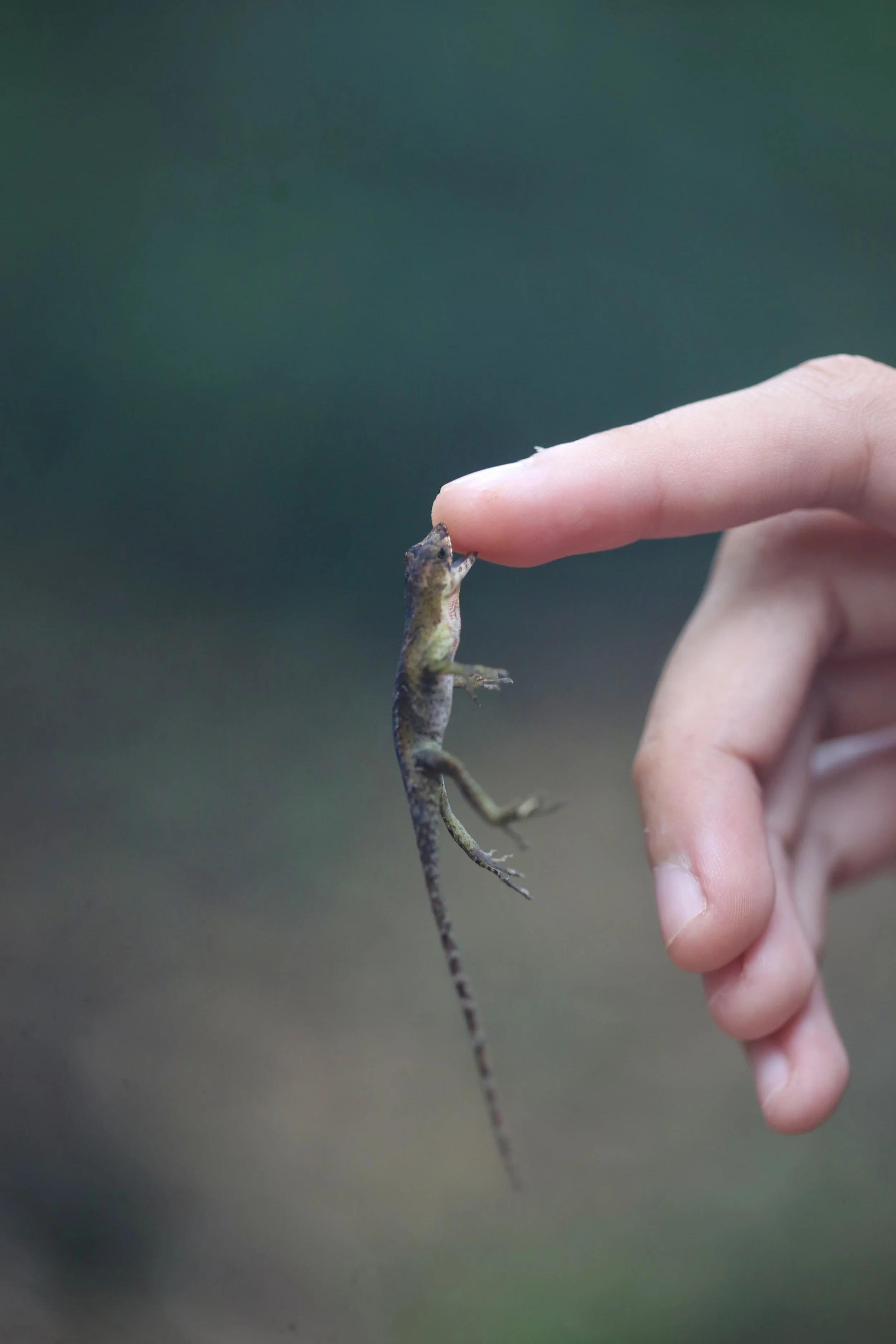
A remarkable example comes from the forests surrounding Lost and Found Hostel in the Fortuna Forest Reserve. Researchers working in this region have discovered species completely new to science, including both a previously unknown lizard and a new species of snake. Think about that for a moment. In the twenty first century, in a country visited by millions of travellers, entirely new reptiles are still being found in the cloud forests. It is a powerful reminder that these mountains continue to guard secrets that have remained hidden for thousands, perhaps millions, of years.
Part of what makes cloud forests so mysterious is that they are naturally difficult to explore. Thick vegetation, steep slopes, swirling fog, and constantly changing weather create countless hidden valleys and isolated ridges. Some areas remain visited only by scientists or experienced researchers. Tiny streams disappear beneath tangled roots. Massive strangler figs conceal hollow chambers. Fallen trees become miniature ecosystems supporting hundreds of different species. Every step into the forest reveals another layer of complexity.
The weather itself becomes part of the experience. Sunshine may break through for only a few minutes before clouds roll back across the mountains. Light filters through the mist in brilliant rays that illuminate moss covered branches like spotlights on a theatre stage. Raindrops cling to spider webs, transforming them into sparkling works of art. Every photograph looks different because the forest never appears exactly the same twice.
Cloud forests also perform an essential role far beyond their beauty. They act as giant natural water towers for Panama. The moisture captured by the trees feeds countless rivers that provide drinking water, support agriculture, generate hydroelectric power, and ultimately help sustain millions of people. Protecting these forests is not simply about preserving wildlife. It is about protecting one of the country's most important natural resources.
For travellers, visiting a cloud forest offers something increasingly rare in today's world: genuine wonder. Unlike many destinations where every viewpoint has been photographed millions of times, cloud forests remain unpredictable. One visitor may spend an afternoon surrounded by butterflies while another watches monkeys leap overhead. Some are rewarded with sightings of the elusive quetzal. Others stumble upon luminous fungi glowing faintly beneath fallen logs after dark. Every visit tells a different story.
Perhaps the greatest gift of Panama's cloud forests is the feeling they leave behind. They slow you down. Conversations become quieter. Footsteps soften against thick carpets of moss. The constant movement of modern life fades into the background, replaced by birdsong, dripping water, rustling leaves, and drifting clouds. Time itself seems to move differently here.
Standing among ancient trees disappearing into the mist, it becomes easy to understand why cloud forests have inspired myths, legends, and scientific curiosity for generations. They are places where evolution continues to write new chapters, where species still wait to be discovered, and where nature reminds us that even in our modern world there are still landscapes filled with mystery.
Panama's cloud forests are far more than beautiful mountain scenery. They are living laboratories, vast reservoirs of biodiversity, and some of the most enchanting ecosystems on Earth. Whether you come to search for rare birds, hike through emerald forests, photograph orchids dripping with dew, or simply breathe the cool mountain air, you will quickly realise that these forests possess a quiet magic that is impossible to describe fully. They must be experienced. And even then, as the clouds close once more around the trees, you cannot help but wonder what secrets still remain hidden just beyond the mist.